Why the Middle East Is the Contact Lens Market Nobody’s Talking About (Yet)
If you’re building a contact lens brand right now, there’s a decent chance your market map looks like this: North America, maybe Europe, Southeast Asia if you’re feeling adventurous. The Middle East? Probably somewhere near the bottom of the list, if it’s on there at all.
That’s a mistake. And I’ll tell you exactly why.
The Numbers Don’t Lie
Let’s start with something concrete. The global contact lens market is projected to hit around $15-16 billion by 2028. The Middle East and Africa segment — long treated as an afterthought — is growing at roughly 6-8% annually, outpacing several “established” markets that everyone’s already fighting over.
But here’s what the aggregate figures hide: within that broad “MEA” category, the Gulf Cooperation Council countries (UAE, Saudi Arabia, Qatar, Kuwait, Bahrain, Oman) punch way above their weight. These are high-spending, highly connected markets with young populations, massive social media adoption, and a genuine appetite for eye beauty products.
Saudi Arabia alone has a population of over 36 million, with roughly 70% under the age of 35. The UAE’s per-capita spending on personal care and cosmetics ranks among the highest in the world. These aren’t emerging markets in the traditional sense — they’re wealthy, modern consumer economies that happen to be underserved in the contact lens category.
The Beauty Culture Advantage
If you’ve spent any time in the GCC, or even just scrolling through beauty content from the region, you already know something that many Western brand owners don’t: eye makeup is central to Gulf beauty culture. The region’s fashion and beauty traditions have always emphasized the eyes — from kohl to dramatic liner looks to the modern popularity of lash extensions.
Contact lenses — especially colored and cosmetic lenses — fit naturally into this existing beauty ecosystem. They’re not a foreign concept that needs to be explained. They’re an extension of something that’s already deeply embedded in daily beauty routines.
This matters for brand builders because it means you’re not starting from zero. You’re entering a market where consumers already understand the category, already use the products, and are actively looking for more options. The question isn’t “will they buy colored contacts?” It’s “which brand will they choose?”
Color Preferences That Actually Matter
One thing I’ve learned from years in this industry: you can’t just take your US or EU color lineup and ship it to the Middle East. The palettes that work in Dubai are different from what sells in Dallas.
The GCC market tends to favor:
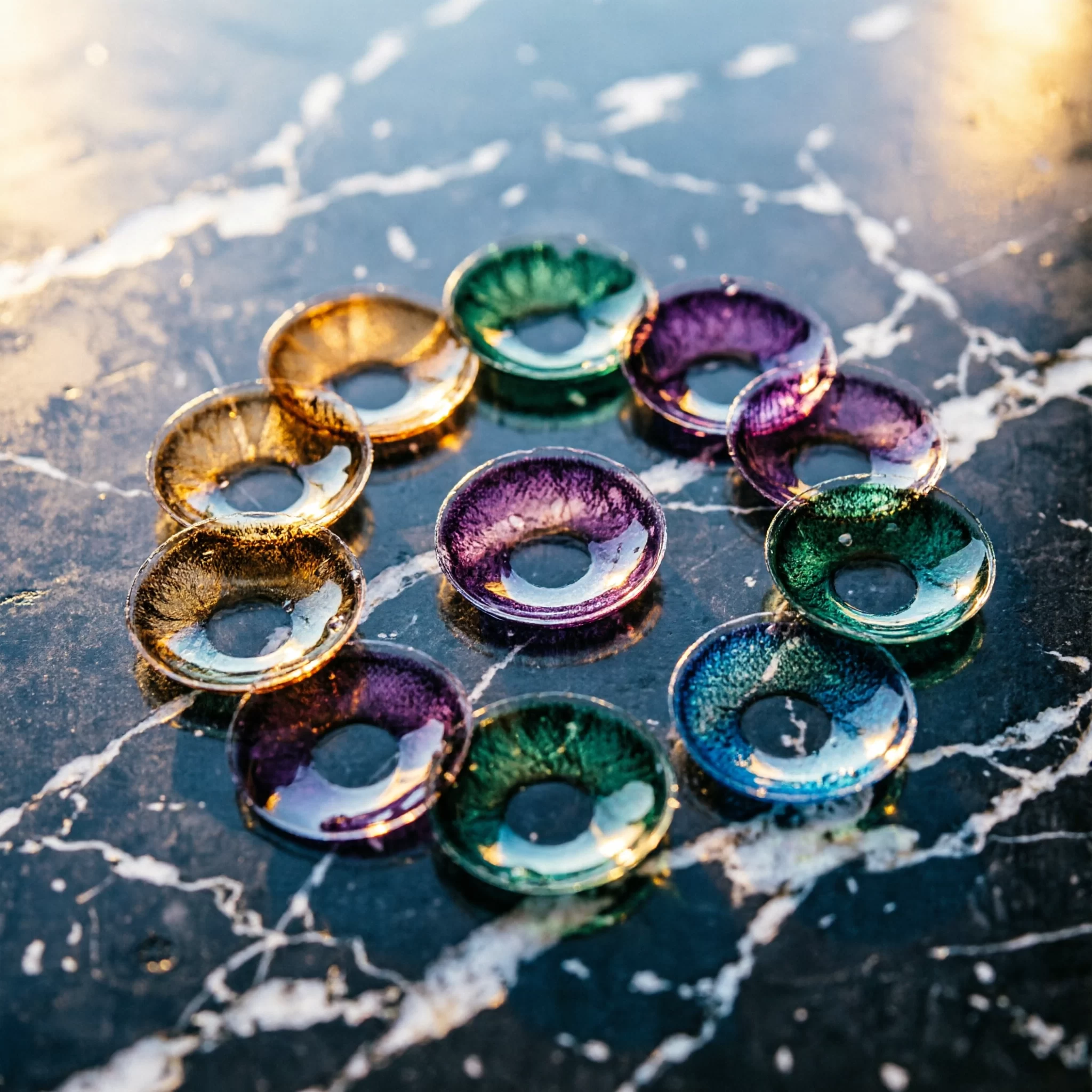
Honey and golden brown tones. These enhance natural brown eyes without looking artificial. Think warm amber, caramel, and hazel — colors that add depth and dimension while still reading as “your eyes, but better.”
Green and gray for contrast. For consumers who want something more noticeable, emerald and steel gray tones are popular choices. They create visible change on darker irises while maintaining a natural-looking transition.
Bold options for content creators. There’s a growing segment — driven by Instagram and TikTok influencers — that wants more dramatic looks. Think vivid blue, striking purple, and even graphic designs for photo shoots and special occasions.
The brands that win here are the ones offering layered, multi-tone designs that work with Middle Eastern eye coloring rather than against it. Flat, single-tone colors that look great on light eyes often look flat or unnatural on darker irises. It’s a product design problem, not just a marketing one.
The Social Commerce Engine
Social media penetration in the GCC is extraordinary. Saudi Arabia and the UAE consistently rank in the global top 10 for per-capita time spent on social platforms. Instagram, TikTok, and Snapchat are not just popular — they’re cultural infrastructure.
For contact lens brands, this creates a distribution dynamic that’s different from Western markets. Word-of-mouth doesn’t happen at coffee shops; it happens in Instagram Stories and TikTok reviews. A single viral review from a local influencer can move more inventory than a month of traditional advertising.
This is both an opportunity and a risk. The opportunity is that customer acquisition costs can be significantly lower when you tap into the right creator network. The risk is that product quality issues spread just as fast. In a market this socially driven, your product has to actually be good. Marketing can’t cover up a bad lens.
What This Means for Brand Owners
If you’re considering the Middle East — and specifically the GCC — as a market for your contact lens brand, here’s what you need to know:
1. Regulatory requirements vary by country. The UAE’s ESMA registration process is different from Saudi Arabia’s SFDA requirements. Kuwait and Qatar have their own systems. You can’t treat “the Middle East” as a single regulatory market. Work with manufacturers who have experience navigating these different frameworks and can provide the documentation each country requires.
2. Local partnerships matter. The most successful foreign brands in the GCC market don’t try to go it alone. They work with local distributors who understand retail dynamics, have existing pharmacy and optical shop relationships, and know which platforms consumers actually buy from. If you’re operating purely online, you’re missing a significant portion of the market.
3. Private label is the fastest entry route. For brands that are already established elsewhere, launching a GCC-specific line through private label manufacturing lets you test the market without the capital commitment of building your own production. You can adapt your color palette, adjust packaging for local preferences, and scale based on real sales data rather than assumptions.
4. Quality perception is high. GCC consumers are willing to pay premium prices, but they expect premium quality in return. Certifications matter. Packaging matters. Even small details like the quality of the blister pack and the clarity of printed instructions signal whether your brand is serious or not. This is not a market where the cheapest option wins.
5. Ramadan and holiday seasons drive spikes. Like many markets, the GCC has seasonal purchasing patterns. Ramadan, Eid, and the winter holiday season all see increased demand for colored and cosmetic lenses. Brands that plan their inventory and marketing around these cycles significantly outperform those that don’t.
The Competitive Landscape
Right now, the GCC contact lens market is fragmented. You’ll find Korean brands with strong color technology, Malaysian manufacturers competing on price, European brands with regulatory credibility, and a growing number of local private-label brands that understand the market intimately.
But here’s the thing: there isn’t yet a single dominant player that everyone agrees is “the best.” The market is still fluid. Brand loyalty exists, but it’s not locked in the way it is in North America, where a few legacy players have decades of head starts.
For a new or mid-size brand, this is exactly the kind of market structure you want to enter. The door is still open.
The Bottom Line
The Middle East — and the GCC in particular — represents one of the most underserved high-value markets in the global contact lens industry right now. Young population. High disposable income. Deep cultural emphasis on eye beauty. Extraordinary social media engagement. And a competitive landscape that’s still up for grabs.
If you’re a brand owner who’s been looking for your next growth market, this is the one I’d put on your shortlist.
The brands that establish themselves here over the next two to three years will have a significant first-mover advantage. The ones that wait until it becomes “obvious” will be competing with everyone else who just figured it out.
Looking to launch or expand your contact lens brand in the Middle East? MIOMI Optical specializes in OEM/ODM manufacturing with full certification support for GCC markets. Contact us to discuss your project.