Why Latin America Is Becoming a Serious Growth Market for Colored Contact Lenses
When contact lens brands talk about international growth, Latin America often gets mentioned after Asia, the Middle East, Europe, and North America. That is understandable. The region is fragmented, import rules can be confusing, and logistics are not always simple.
But ignoring Latin America is becoming a mistake.
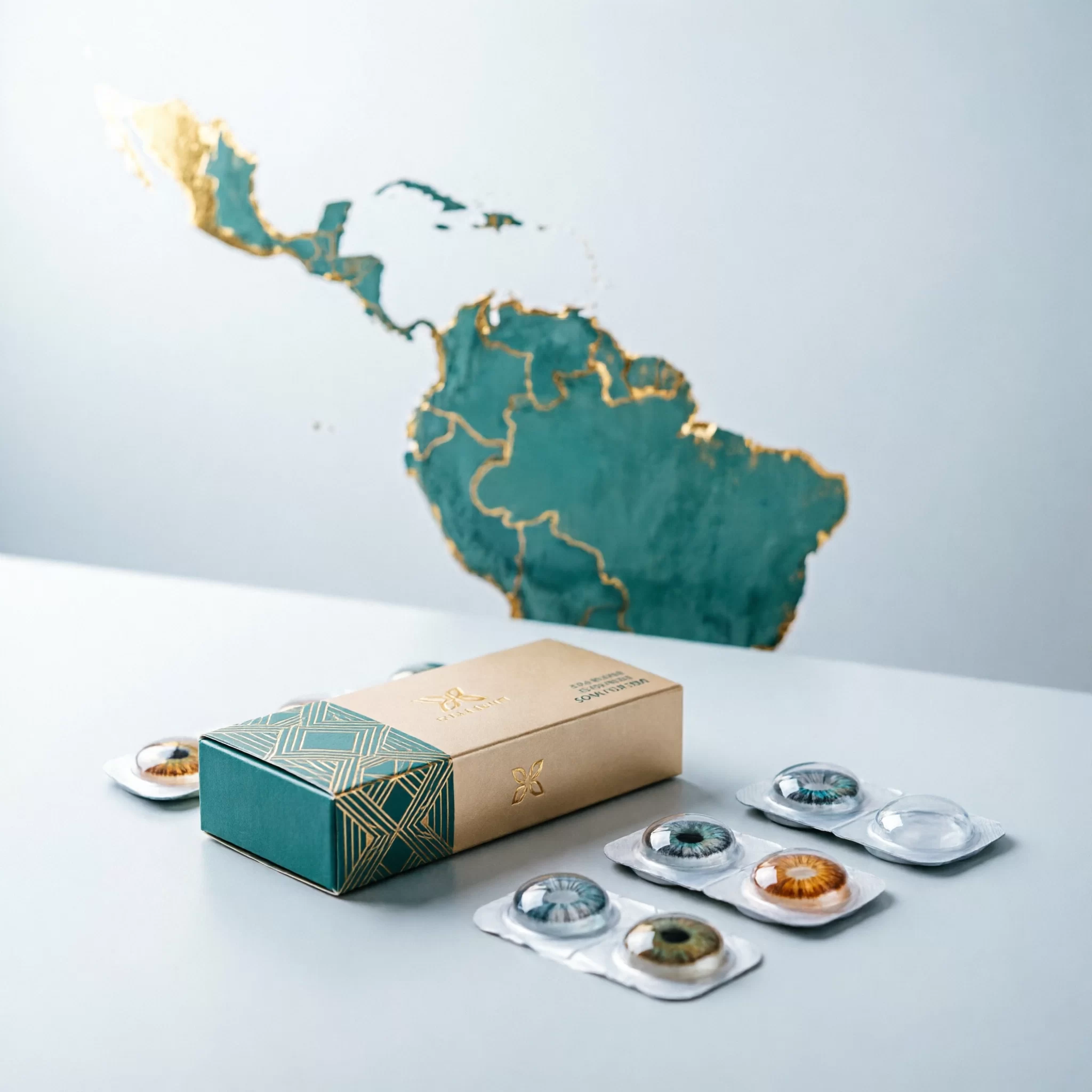
The market has the ingredients contact lens brands care about: young consumers, strong beauty culture, heavy social media usage, growing e-commerce adoption, and a clear appetite for affordable but trustworthy products. For colored contact lenses in particular, Latin America is no longer just a “maybe later” region. It is turning into a practical growth market for brands that know how to enter carefully.
The opportunity is real. But it is not a copy-paste market. What works in the United States, Southeast Asia, or the Gulf may not work in Mexico, Brazil, Colombia, Chile, or Peru. The brands that win here will be the ones that understand local pricing, product preferences, distribution, and trust barriers.
Why Latin America Deserves Attention Now
Latin America has a large beauty and personal care market, and beauty spending is deeply embedded in daily life across much of the region. Makeup, haircare, skincare, lashes, and eye-focused beauty products already have strong consumer demand. Colored lenses fit naturally into that ecosystem.
Three trends are making the category more attractive in 2026:
- Social commerce is influencing beauty discovery. TikTok, Instagram, WhatsApp groups, and local influencers are shaping product choices, especially among younger consumers.
- Consumers are more interested in natural enhancement. Many buyers want lenses that brighten or soften the eye without looking artificial.
- Local entrepreneurs are launching beauty brands faster. More small distributors and online sellers want private label products instead of only reselling existing imported brands.
This combination creates room for manufacturers and private label partners that can support smaller batches, clear documentation, and product lines adapted to local preferences.
Mexico: The Gateway Market
Mexico is often the most logical first stop for brands looking at Latin America. It has a large population, strong beauty retail culture, and close commercial links with the United States. Consumers are familiar with both international brands and local sellers, which makes the market competitive but accessible.
For colored contact lenses, natural brown, hazel, honey, and gray tones tend to be practical choices. Dramatic colors can work for content creators, Halloween, cosplay, and event-driven sales, but everyday natural designs are usually easier to scale.
Mexico also has a wide range of channels: optical shops, beauty stores, marketplaces, social sellers, and distributors. That gives brands several entry paths, but it also means positioning matters. A product that looks too cheap may struggle to build trust, while an overly premium product may be hard to scale outside higher-income segments.
Brazil: Large Market, Higher Complexity
Brazil is impossible to ignore. It is one of the world’s largest beauty markets, and Brazilian consumers are highly engaged with appearance, fashion, and personal care. In theory, that makes Brazil a very attractive contact lens market.
In practice, it is also more complex. Import procedures, local regulatory requirements, taxes, and logistics can be challenging for inexperienced brands. This does not mean Brazil should be avoided. It means it should be entered with preparation.
For brand owners, Brazil may be better approached through an experienced local distributor or partner rather than a direct-to-consumer experiment from overseas. Documentation, labeling, and product registration questions need to be handled carefully.
The product opportunity is strong, especially for natural enhancement lenses, premium color designs, and influencer-driven launches. But the operational side must be planned properly.
Colombia, Chile, and Peru: Smaller but Practical
Not every opportunity in Latin America needs to start with the biggest market. Colombia, Chile, and Peru can be practical entry points for smaller brands because they may offer more manageable test conditions.
Colombia has a strong beauty and fashion culture, with social media playing a major role in consumer discovery. Chile has a relatively stable retail environment and consumers who respond well to quality and trust signals. Peru is price-sensitive but has growing online beauty activity and room for well-positioned affordable products.
For private label sellers, these markets may be useful for testing product-market fit before expanding regionally. A focused SKU line, good product education, and reliable distributor support can go a long way.
What Product Styles Work Best?
Latin America is diverse, so there is no single “Latin American lens style.” Still, several patterns are worth noting.
Natural enhancement colors are the safest base. Brown, hazel, honey, caramel, and soft gray tones usually make sense for first orders. These colors work well on darker irises and are easier to wear daily.
Large, overly artificial designs can be risky. Some customers enjoy bold looks, but for broad distribution, natural-looking lenses tend to generate fewer complaints and better repeat purchase behavior.
Comfort claims need to be backed by real performance. Warm climates, long wearing hours, and air-conditioned environments can create dryness complaints. Product specification matters: water content, base curve, diameter, edge design, and material choice should all be considered together.
Packaging should communicate trust. In markets where counterfeit or low-quality beauty products exist, packaging is not only about design. It signals whether the product is serious. Clear instructions, clean labeling, batch information, and professional presentation all help.
Pricing: The Middle Ground Wins
One of the biggest mistakes overseas brands make in Latin America is misunderstanding price sensitivity.
Consumers are price-aware, but that does not mean the cheapest product always wins. With contact lenses, extremely low pricing can create safety concerns. Many buyers want affordability, but they also want confidence that the lens is safe, comfortable, and properly manufactured.
This creates an opening for mid-range positioning: not luxury, not bargain-bin. A brand that offers trustworthy quality, attractive natural colors, good packaging, and reasonable pricing can compete well.
For wholesale and private label projects, this means you should not build the product around the lowest possible factory cost. You need enough margin for import costs, distributor markup, local marketing, customer service, and returns.
Distribution Is Local
Latin America is not a region where one distribution model solves everything.
In some markets, optical shops and pharmacies still matter. In others, Instagram sellers, beauty retailers, and marketplace stores are powerful. WhatsApp is also important for customer communication and sales follow-up in many countries.
If you are a brand owner entering Latin America, ask these questions before placing a large order:
- Will the product be sold through optical stores, beauty shops, influencers, or marketplaces?
- Does the distributor understand contact lens compliance, or only beauty sales?
- Who handles customer education and after-sales questions?
- Are product instructions and warnings localized properly?
- How will reorders be forecasted?
A good product with the wrong distribution partner can still fail. Local execution matters.
Compliance Cannot Be an Afterthought
Contact lens regulations vary across Latin America. Requirements may differ by country, product classification, prescription status, importer role, and sales channel.
That means overseas sellers should not assume that one certificate works everywhere. CE, FDA-related documentation, ISO 13485, test reports, and manufacturing records may support trust and registration discussions, but local requirements still need to be checked with partners or professional advisors.
For manufacturers, the best approach is to prepare clean documentation from the start. For brand owners, the best approach is to choose markets carefully and work with partners who understand local rules.
A Practical Market Entry Plan
If you are considering Latin America, start with a controlled approach:
- Pick one or two markets first. Mexico plus one smaller market may be more realistic than launching region-wide.
- Start with 4 to 6 natural colors. Build around daily-wear designs before adding bold seasonal colors.
- Use professional but cost-controlled packaging. Make it trustworthy without overinvesting before sales data exists.
- Work with a local distributor or experienced seller. Local customer behavior, payment habits, and returns management matter.
- Track sales by color and channel. Use the first order to learn what deserves a reorder.
- Prepare compliance documents early. Do not wait until a distributor asks for them.
The Bottom Line
Latin America is not the easiest contact lens market, but it is becoming too important to ignore. The region has strong beauty culture, growing online sales, and rising interest in natural-looking colored lenses. For private label brands and distributors, the opportunity is especially interesting because many local sellers want products that feel trustworthy, attractive, and affordable.
The key is to enter with discipline. Do not launch too many colors. Do not rely only on low price. Do not ignore local compliance. Do not assume every country works the same way.
Brands that approach Latin America with the right product mix, reliable documentation, and strong local partners can build real long-term growth.
At MIOMI, we help overseas brand owners and distributors develop private label and OEM/ODM contact lens lines for different regional markets. If you are exploring Latin America and want support with product selection, low MOQ planning, packaging, and manufacturing documentation, contact us or email sales@miomicon.com.