The Low MOQ Trap: Why Small Contact Lens Orders Often Lose Money
Low MOQ sounds like the perfect starting point for a new contact lens brand. You can test the market, avoid heavy inventory, and launch without tying up too much cash. For many brand owners, that is exactly why low MOQ manufacturing is attractive.
But there is a trap here that people do not talk about enough: a low MOQ order can still lose money if the product line is planned badly.
I have seen this happen many times. A new buyer places a small order, chooses too many colors, spends money on packaging, pays international shipping, launches with weak pricing, and then realizes the gross margin looked fine on paper but disappears after all the real costs are counted.
Low MOQ is not the problem. Poor order planning is the problem.
If you are building a private label or wholesale contact lens business, here is how to use low MOQ properly — as a market test that protects cash flow, not as a small order that quietly eats your margin.
First: Understand What MOQ Does and Does Not Solve
MOQ solves one problem: entry risk. It lets you start with a smaller production quantity instead of committing to thousands of pieces per color before you know what the market wants.
But MOQ does not automatically solve:
- Product positioning
- Retail pricing
- Shipping efficiency
- Packaging cost
- Inventory mix
- Repeat purchase strategy
- Regulatory requirements
A low MOQ order with the wrong structure can be more expensive per unit than expected. That does not mean low MOQ is bad. It means you need to treat it like a test batch with a clear business model.
Trap 1: Choosing Too Many Colors Too Early
This is probably the most common mistake.
A new brand wants to look complete, so it launches with 10 or 12 colors. On Instagram, that looks good. On a spreadsheet, it usually looks dangerous.
Let’s say your first order is 2,000 pairs. If you spread that across 10 colors, each color only gets 200 pairs. That sounds diversified, but it creates problems:
- Your best colors sell out too quickly
- Your weak colors sit in stock
- You cannot collect reliable sales data
- Your product photos and content cost increase
- Your packaging and labeling work becomes more complex
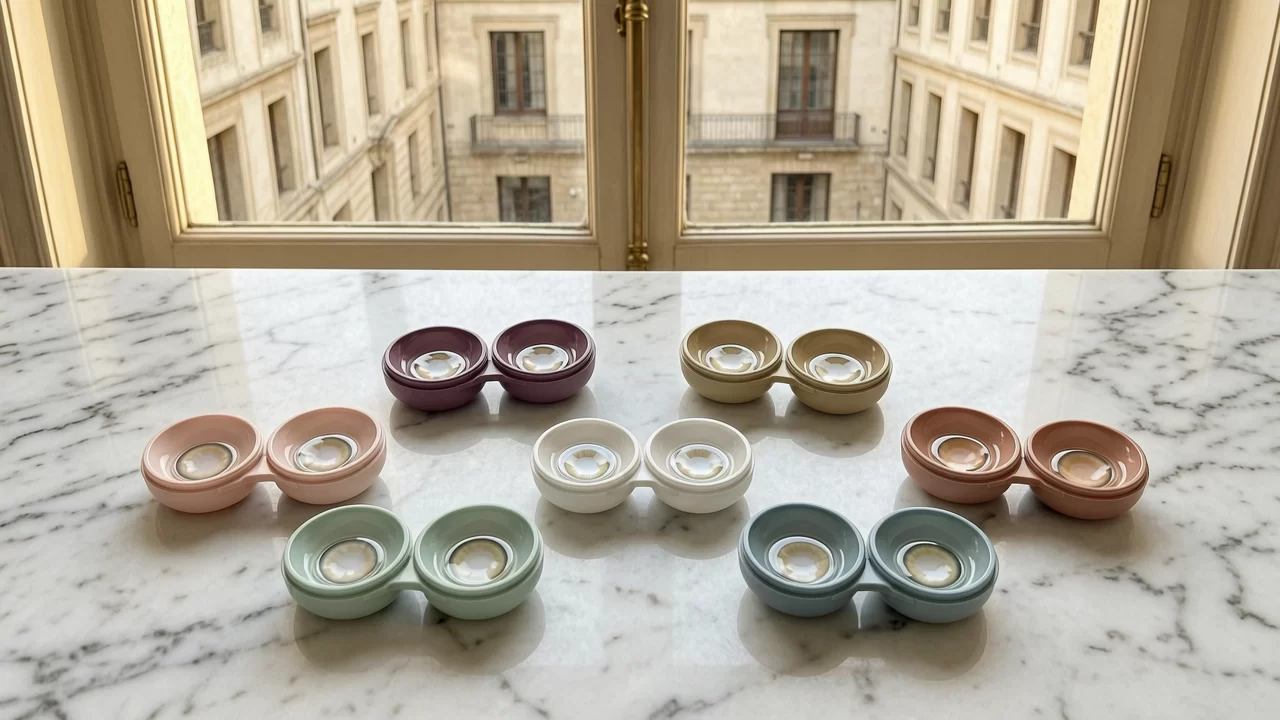
A better first order often has fewer colors with stronger logic. For example:
- 2 natural daily-wear colors
- 1 gray or green statement color
- 1 best-seller test color for social content
Four well-chosen colors can outperform twelve random colors because each SKU has enough quantity to sell, test, and reorder.
Trap 2: Treating Packaging Like Decoration Instead of Cost Structure
Packaging matters. It affects trust, shelf appeal, influencer content, and whether your product feels like a real brand rather than a generic item.
But custom packaging can also kill low MOQ profitability if you overdo it too early.
New buyers often want custom boxes, custom labels, printed inserts, stickers, outer cartons, and luxury finishes from the first order. The problem is not that these things are wrong. The problem is timing.
If your first order is small, packaging cost per unit can become disproportionately high. A box that adds $0.40 per pair may look harmless, but on a product with a tight wholesale margin, it can remove a large part of your profit.
A practical approach is to phase packaging:
- First test batch: clean private label packaging, simple but professional
- Second reorder: improve inserts, labels, and visual identity
- Proven product line: invest in premium box design and seasonal packaging
Your packaging should support sales, not consume your testing budget.
Trap 3: Ignoring Landed Cost
Many buyers calculate profit like this:
Retail price minus factory price equals margin.
That is not enough.
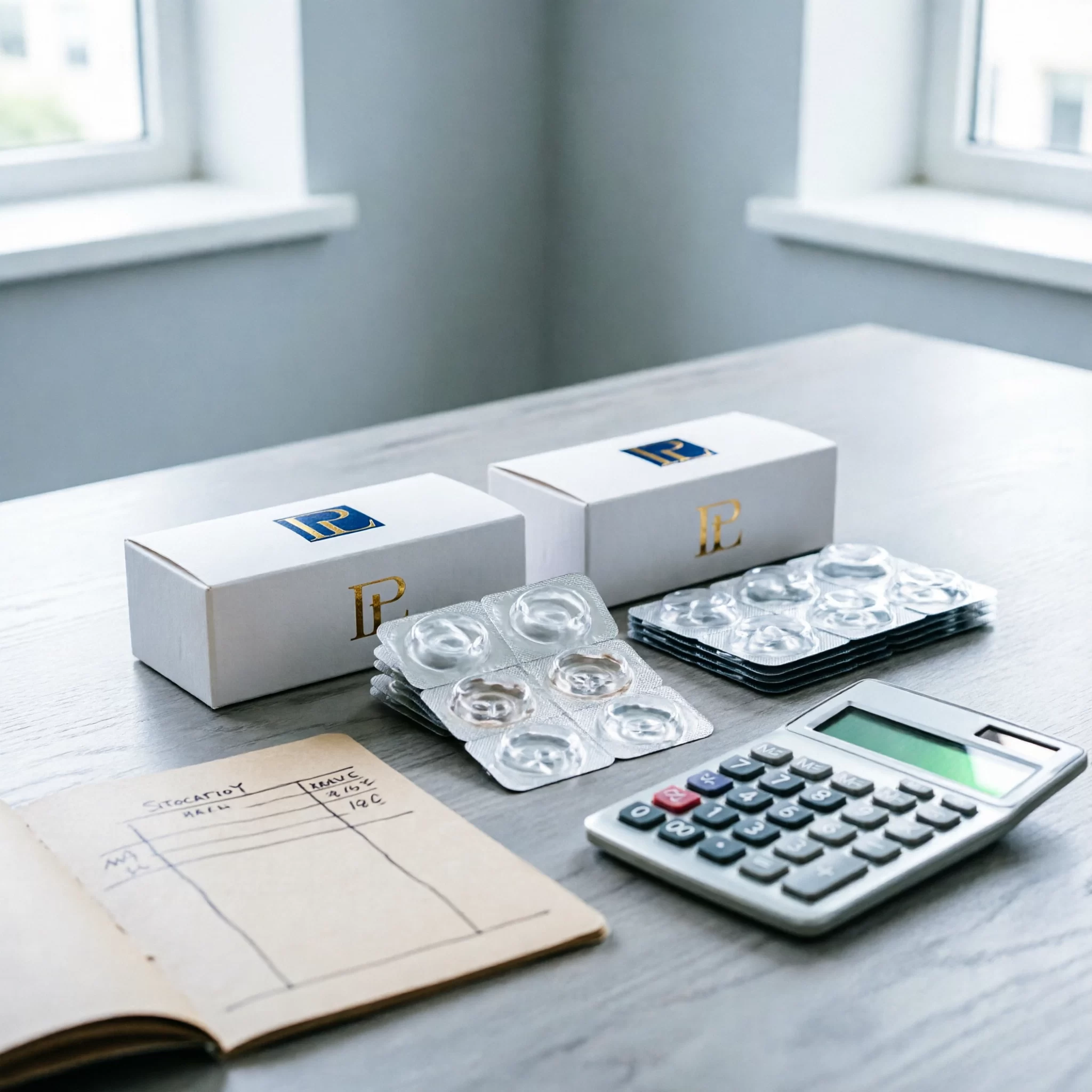
You need to calculate landed cost. That includes the factory cost plus everything required to get the product into your warehouse or selling channel:
- Product cost
- Packaging cost
- International shipping
- Customs duties and import taxes
- Payment fees
- Local labeling or registration costs
- Storage and fulfillment cost
- Damaged or unsellable stock allowance
For small orders, shipping can be especially painful. Air shipping may be fast, but the cost per pair can be high. If you do not include it in your pricing, your “profitable” product may become break-even after delivery.
Before confirming an order, build a simple landed cost sheet. Even a basic one is better than guessing.
Trap 4: Pricing Too Low to Look Competitive
New brands often price too low because they are afraid customers will not trust them yet. The thinking is understandable: start cheap, get buyers, then increase price later.
In contact lenses, that strategy can backfire.
Contact lenses are not a casual accessory. They touch the eye. If the price is too low, some customers may question quality and safety. For B2B buyers, very low pricing can also signal weak documentation, unstable supply, or poor product control.
Instead of competing only on price, build value into the offer:
- Clear specification information
- Comfort and wearing guidance
- Professional product photos
- Certification documents where applicable
- Consistent color naming
- Reliable reorder support
- Fast communication and after-sales handling
A brand that explains its product well can often sell at a healthier margin than a brand that only says “cheap lenses available.”
Trap 5: Not Planning the Reorder Before the First Order
The purpose of a low MOQ order is not just to sell the first batch. The purpose is to learn what deserves a reorder.
Before you launch, decide what data you will track:
- Which colors sell fastest?
- Which colors get repeat purchases?
- Which designs get the most photo/video engagement?
- What complaints appear in the first 30 days?
- Which customer segment buys again?
- Which channel performs better: wholesale, TikTok, Instagram, optical shops, or marketplace?
If you wait until stock is nearly gone to think about reorder strategy, you will lose momentum. Contact lens production, quality checks, documentation, and shipping all take time. A good brand plans the second order while the first order is still selling.
A Better Low MOQ Strategy
Here is a more practical structure for a first private label contact lens order:
Step 1: Pick a clear customer type
Do not launch “for everyone.” Decide whether you are selling to beauty consumers, optical shops, influencers, natural-look daily users, cosplay buyers, or premium private label distributors.
Your customer type determines color, diameter, packaging, content style, and pricing.
Step 2: Start with a focused SKU mix
For most new brands, 3 to 5 colors is enough for a serious test. Choose colors with different roles:
- One safe natural brown
- One soft hazel or honey tone
- One gray/green contrast color
- One social-media-friendly statement design
This gives variety without fragmenting your inventory too much.
Step 3: Keep packaging professional but not overbuilt
Customers need to trust the product. That does not mean you need the most expensive box on the first batch. Use clean branding, accurate information, and good product presentation. Upgrade after you have sales proof.
Step 4: Calculate landed cost before setting retail price
If your landed cost is $3.20 per pair and you sell wholesale at $4.00, you do not have much room for returns, promotions, platform fees, or samples. Build pricing from real cost, not from competitor screenshots.
Step 5: Decide reorder rules
For example:
- Reorder a color if 60% sells within 30 days
- Drop a color if it has low sales and low engagement
- Increase quantity only for proven SKUs
- Add one new color per reorder cycle, not ten
This turns low MOQ into a learning system.
What a Healthy First Order Looks Like
A healthy low MOQ order is not necessarily the cheapest order. It is the order that gives you useful market feedback without damaging your cash flow.
It should have:
- A focused product line
- Clear pricing logic
- Controlled packaging cost
- Enough quantity per SKU to test demand
- A realistic shipping plan
- Basic compliance documents ready for the target market
- A reorder plan before launch
If those pieces are in place, low MOQ becomes powerful. It lets you move fast, test safely, and improve with each order.
The Bottom Line
Low MOQ is not a shortcut to easy profit. It is a tool. Used badly, it creates scattered inventory, weak margins, and unclear sales data. Used well, it helps new contact lens brands test the market intelligently and scale with less risk.
The goal is not to order as little as possible. The goal is to order smart enough that your first batch teaches you what to do next.
At MIOMI, we work with brand owners on low MOQ private label and OEM contact lens projects, including SKU planning, packaging options, product specifications, and reorder strategy. If you are preparing your first contact lens order and want to avoid the common low MOQ mistakes, contact us or email sales@miomicon.com.