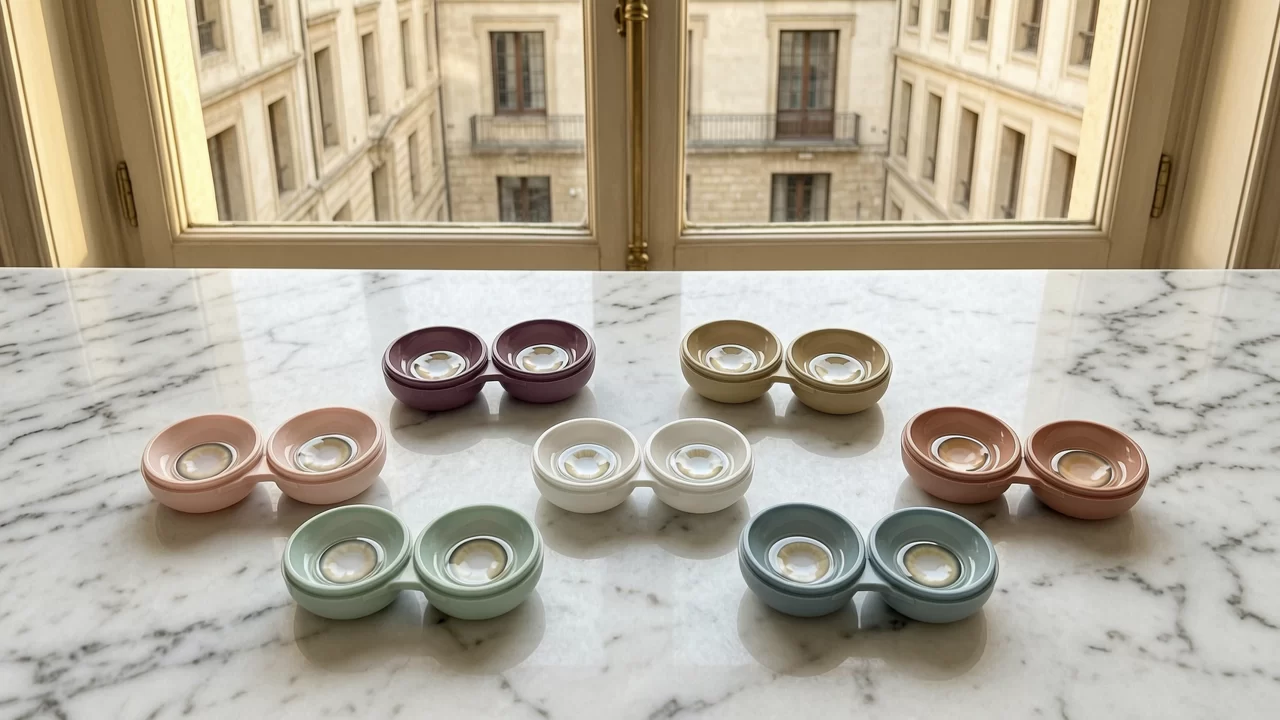
Walk into any beauty store in Almaty, Warsaw or Belgrade and you will see the same thing: colored contact lenses sitting next to mascara and lip gloss, treated as a beauty product rather than a medical device. That small detail tells you a lot about where this market is heading.
While most international brands fight over the same saturated markets in Western Europe and North America, a quieter and often more profitable opportunity is growing to the east. Eastern Europe, Russia and the CIS countries (Kazakhstan, Uzbekistan, Belarus, Armenia, Georgia and others) have become one of the most interesting regions for colored contact lens businesses. Not because they are huge, but because demand is growing faster than supply, and competition is still thin.
Here is what we have seen working with buyers in this region, and what it means if you are thinking about entering it.
Why this region, and why now
Three forces are pushing demand upward at the same time.
First, beauty culture is strong and lens-friendly. In Russia, Kazakhstan and the Caucasus, expressive eyes are a deeply rooted part of beauty standards. Colored lenses fit naturally into a market where women already spend meaningfully on cosmetics, lashes and brows. Unlike some Western markets where colored lenses are still seen as a costume or cosplay item, here they are everyday beauty. Daily wear, natural-looking colors, subtle enhancement: that is what sells.
Second, social media drives the discovery cycle. Instagram and Telegram remain the dominant beauty discovery channels across the region, and local influencers have been normalizing colored lenses for years. TikTok is growing fast in Kazakhstan and Uzbekistan. The result is a customer who already knows what she wants before she walks into the store. Retailers do not need to educate from zero. They need stock that matches the looks people are already searching for.
Third, local supply is weak. There are almost no local manufacturers of colored lenses in the region. Almost everything is imported, historically from Korea, and increasingly from China. For years, buyers had to deal with Korean factories that demanded high MOQs and long lead times. That left a gap that lower-MOQ manufacturers have been filling. Smaller retailers and new brands can now start with a few hundred pairs per design instead of thousands, and that has opened the market to many more players.
What customers in this region actually buy
If you are building a range for Eastern Europe and the CIS, these are the patterns we see repeatedly.
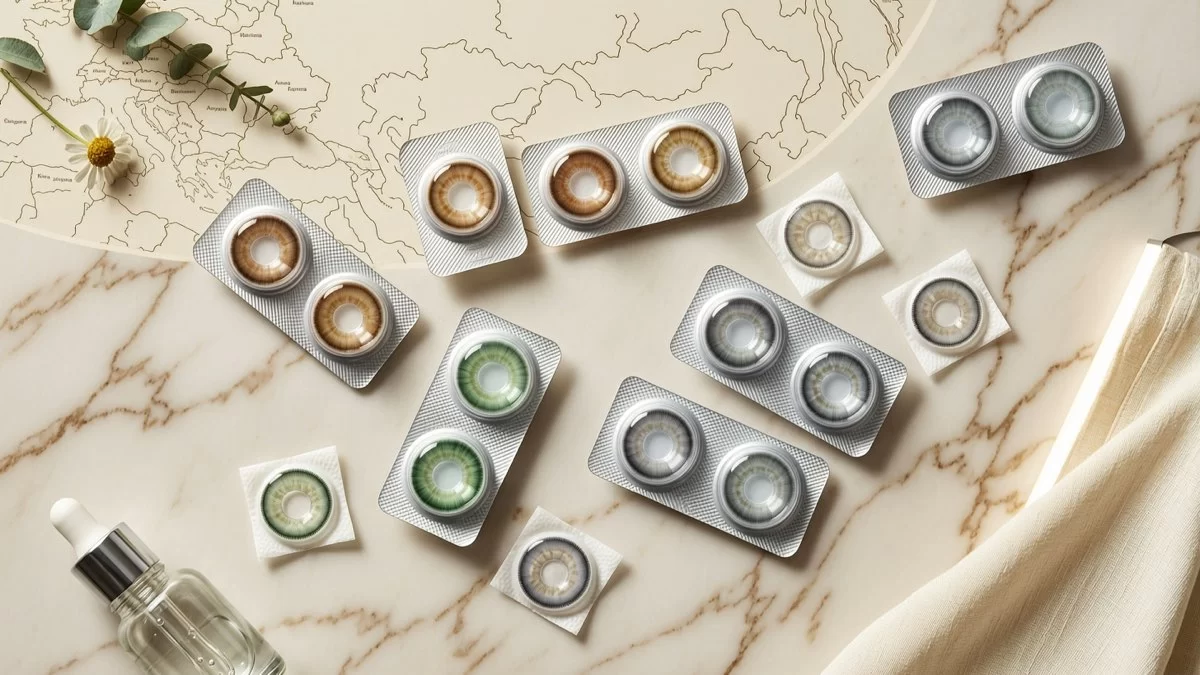
Natural tones beat bold colors. Gray, green, hazel and honey-brown dominate. These customers mostly want enhancement, not transformation. A lens that changes dark brown eyes into a believable hazel will outsell a vivid blue every time in this region. Korean-style “doll eye” designs do sell, but mainly to a younger segment in big cities.
Diameter preferences run modest. Something around 14.0 to 14.2 mm is the sweet spot. Oversized, heavy-limbal-ring designs perform better in parts of Southeast Asia than here.
Monthly and quarterly formats are popular. Price sensitivity matters. A significant share of demand is for monthly lenses, which keep the per-purchase price low. But yearly formats still do well among experienced wearers who treat lenses as a staple purchase, and daily disposables are growing among younger, convenience-oriented buyers. Offering all three formats lets a retailer cover the whole market with one supplier.
Packaging matters more than you think. In this region, the packaging is part of the product. Elegant, minimal blister cards and boxes photograph well, and that matters in a market driven by Instagram. Buyers routinely choose between two factories with similar lenses based on which packaging looks better on a shelf or in a story post.
Regulation: the part everyone underestimates
This is where many new entrants get hurt.
Colored contact lenses are regulated as medical devices across most of the region. Russia requires a registration certificate (РУ, the registration document issued for medical devices), and Kazakhstan and other EAEU members follow the Eurasian Economic Union framework, which has its own conformity assessment process. These are real regulatory processes, not paperwork formalities. They take time and cost real money.
What this means in practice for you as a brand or wholesaler:
- Ask your manufacturer for full documentation early. You will need CE certificates, ISO 13485 records, test reports and free-sale certificates to support local registration. A factory that cannot produce these documents cleanly is not a partner for this region, however good the price is.
- Do not promise registration timelines to your retail customers. Work with a local regulatory consultant and build a realistic schedule first. The brands that win here are the ones that treat compliance as a competitive advantage, because once your product is registered, latecomers face the same wall you already climbed.
- Watch the gray-market dynamic. A lot of lenses still flow into the region through informal channels. That keeps prices low but creates risk. Retailers are increasingly cautious, especially larger chains and marketplaces, because they face fines and product seizures. Compliant supply is becoming a genuine selling point.
How local businesses actually sell lenses
Understanding the distribution landscape helps you pick the right partners.
Independent beauty shops and lens studios remain the backbone in Kazakhstan, Uzbekistan and the Caucasus. These are small businesses, often run by women entrepreneurs, ordering a few dozen pairs at a time. They value low MOQs, fast restock and reliable quality far more than the lowest possible unit price.
Marketplaces are the growth channel. Wildberries and Ozon in Russia, Kaspi in Kazakhstan. Marketplace sellers move serious volume, but they also demand competitive pricing, proper documentation and packaging that survives logistics. If you want volume, get marketplace-ready.
Telegram stores are the dark horse. Across the CIS, a huge amount of beauty commerce happens in Telegram channels and groups. Many small lens businesses run entirely on Telegram, taking orders and payments directly. These sellers are often first-movers on new designs and make excellent launch partners for a new collection.
What we would do if entering this market today
Based on the patterns above, here is the playbook we suggest to buyers who are just starting.
Start narrow. Pick six to eight natural-tone designs in one format (monthly is usually the safest), order low MOQs, and test through two or three local retail partners or a Telegram-based seller. You learn the market in eight weeks, not eight months.
Build for registration from day one. Choose a manufacturer whose documentation can support a proper medical device registration. It costs more upfront, but it builds a moat around your business that gray-market competitors cannot cross.
Invest in packaging. Budget for custom blister design or at least custom box sleeves. In a visually driven market, this is the cheapest marketing you will ever buy.
Price for the middle. The region is price-sensitive but not bottom-fishing. There is a clear premium segment in Moscow, Almaty and Baku that pays for quality and brand. Positioning at the very bottom races you against gray imports; positioning in the middle-to-premium range gives you margin and a defensible brand.
The honest risks
No market is free of friction. Currency volatility (the ruble and tenge both swing), logistics disruptions and shifting import rules are real operational concerns. Payment channels can be complicated for cross-border settlements in some countries right now. The brands that succeed here treat these as solvable logistics problems and build relationships with reliable local importers, rather than trying to handle everything themselves.
The takeaway
Eastern Europe and the CIS are not the flashiest markets in the contact lens world. They will not trend on a global industry report. But for a small or mid-size brand, they offer something rare: growing demand, weak competition, customers who already love the product, and a regulatory wall that rewards the businesses willing to climb it properly.
If you are exploring this region, start with a small, focused collection and a manufacturer who understands the documentation requirements. The rest is execution.
MIOMI works with buyers across Europe, Russia and Central Asia, offering low-MOQ colored contact lens manufacturing with full compliance documentation (CE, ISO 13485). If you are planning a launch in this region, we are happy to share samples, parameter options and realistic lead times. Contact us at sales@miomicon.com.