FDA vs CE Contact Lenses: What Overseas Sellers Need to Understand
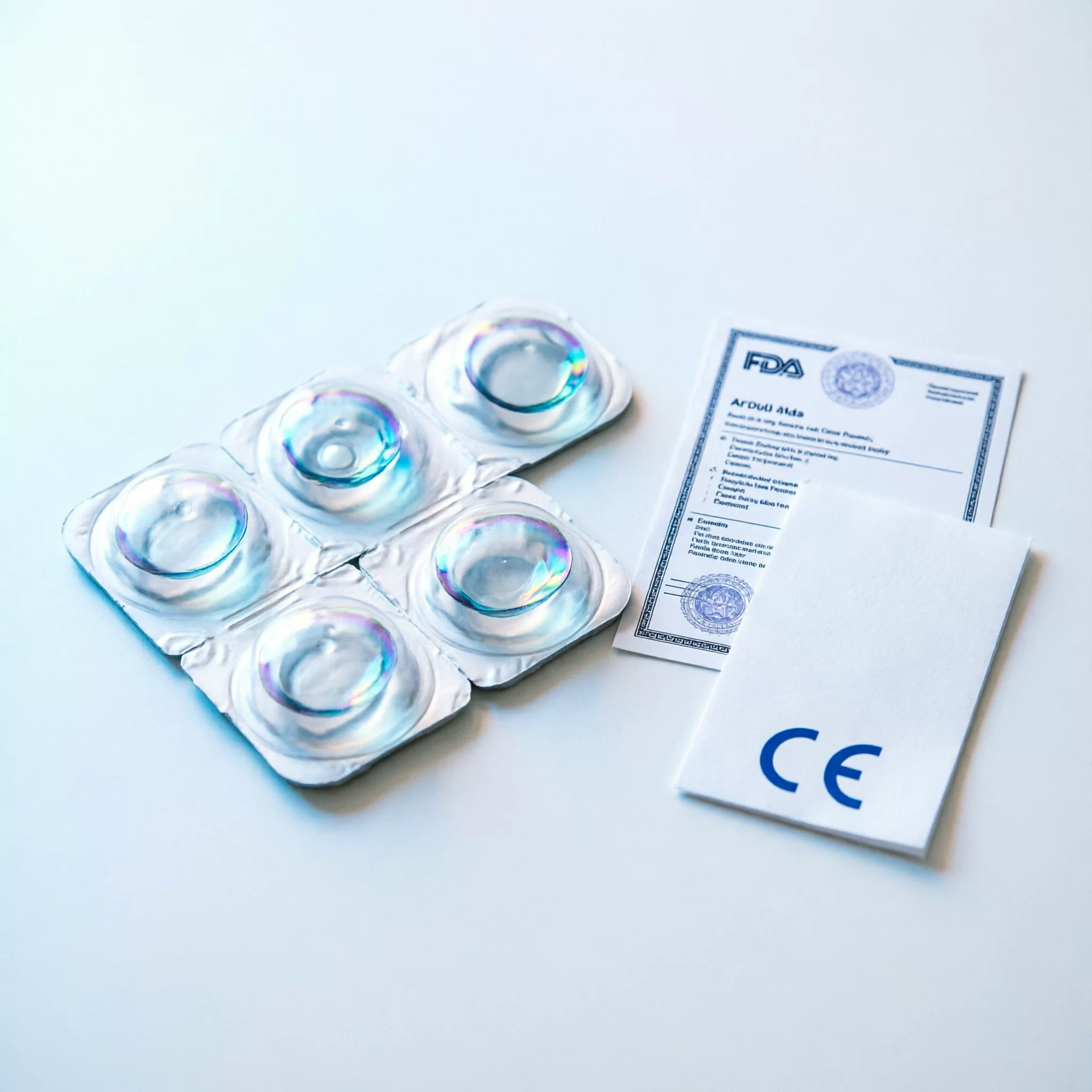
When contact lens brands sell overseas, two certifications often appear in every discussion: FDA and CE.
Most buyers know these abbreviations stand for important regulatory requirements. But few know exactly how they affect product selection, packaging, labeling, import procedures, or marketing claims.
The truth is that FDA and CE are not just “check boxes” for a catalog. They represent different regulatory philosophies, documentation requirements, and market expectations. Choosing the wrong certification type or misunderstanding the requirements can lead to delayed shipments, customs issues, sales channel restrictions, or damaged brand reputation.
This is especially true for colored contact lenses, which blur the line between medical devices and beauty products in many countries. For brand owners, distributors, and private label sellers, understanding FDA vs CE is not optional—it is a critical part of international expansion planning.
First: Understand the Basics
FDA stands for the U.S. Food and Drug Administration. CE stands for “Conformité Européenne” (European Conformity).
Both are mandatory for their respective markets, but they cover different regions and product classifications.
FDA Requirements
For the United States, contact lenses are classified as medical devices. This includes both prescription and non-prescription cosmetic lenses that touch the eye.
The FDA requires manufacturers and importers to comply with specific quality system regulations, pre-market notification or approval, labeling requirements, and adverse event reporting.
For overseas sellers, this means:
- Your manufacturer must have a quality management system
- You may need to prepare 510(k) pre-market notification for certain products
- Labeling must be accurate, complete, and in English
- Instructions must include proper use, storage, and safety information
- You may need a U.S. agent for regulatory communication
The FDA process can be slower and more detailed than many other markets, but it carries strong trust value with American consumers and retailers.
CE Marking
CE marking indicates compliance with applicable European Union directives. For contact lenses, this usually means the Medical Devices Regulation (MDR) or the former Medical Devices Directive (MDD), depending on the product and date of introduction.
CE requirements cover:
- Quality management system (ISO 13485 or equivalent)
- Technical documentation
- Conformity assessment procedures
- Labeling and instructions in local languages
- Post-market surveillance
- Economic operator responsibilities
The MDR, which is stricter than the previous MDD, places more emphasis on clinical evidence, risk management, and post-market monitoring. It also affects packaging requirements and product traceability.
CE marking is recognized in all EU member states and many non-EU countries in Europe, the Middle East, and Africa.
Key Differences That Affect Your Business
FDA and CE both aim to ensure product safety and effectiveness, but they approach this goal differently. Here are the most practical differences for contact lens sellers:
1. Product Classification
The FDA classifies contact lenses into different risk classes (Class I, II, or III) based on their intended use and potential harm. Most soft contact lenses fall into Class II.
Under the EU MDR, contact lenses are classified as Class I, IIa, IIb, or III. Most soft cosmetic lenses fall into Class IIa or IIb, depending on their design complexity.
Higher risk classes require more rigorous conformity assessment procedures, which can increase development and compliance costs.
2. Conformity Assessment
For FDA, most soft contact lenses require a 510(k) pre-market notification. This involves demonstrating that your product is “substantially equivalent” to an existing legally marketed product (a predicate device).
For CE under MDR, conformity assessment can involve internal control (for low-risk Class I), notified body involvement (for higher-risk Classes IIa, IIb, and III), or a combination of both.
Notified body assessment adds time and cost, but it can also enhance product credibility in many markets.
3. Labeling and Instructions
FDA labeling requirements are very specific. Instructions must include detailed safety information, adverse event reporting procedures, and proper storage and handling guidance.
CE under MDR also has strict labeling requirements, including language requirements, unique device identifiers (UDIs), and risk information.
One practical difference is that CE often requires instructions in multiple languages for different EU member states. This can complicate packaging design and increase printing costs.
4. Post-Market Surveillance
Both FDA and MDR require post-market surveillance, but the specific requirements differ.
The FDA requires manufacturers to report adverse events and maintain quality system records. It also conducts periodic inspections to ensure ongoing compliance.
The MDR places more emphasis on post-market clinical follow-up, risk management updates, and reporting of field safety corrective actions. It also requires economic operators to have a designated person responsible for regulatory compliance.
5. Import Procedures
Importing to the U.S. requires working with the FDA’s Center for Devices and Radiological Health (CDRH). You may need to register your facility, list your products, and comply with import procedures.
Importing to the EU under MDR requires an economic operator (such as an authorized representative) within the EU. The product must bear a CE mark and be accompanied by the necessary documentation.
Customs authorities in both regions may inspect shipments to verify compliance. Non-compliant products can be detained or refused entry.
Which Certification Do You Need?
The answer depends on your target market and sales channel strategy.
If You Sell to the U.S.
You need FDA compliance. This includes both prescription and non-prescription cosmetic lenses sold directly to consumers or through retailers.
Failing to comply with FDA requirements can result in civil penalties, product seizures, or criminal charges.
If You Sell to the EU
You need CE marking under the MDR. This applies to all contact lenses sold in EU member states.
If You Sell to Other Regions
Many countries outside the U.S. and EU accept either FDA or CE as a trusted certification. This includes parts of Asia, the Middle East, and Africa.
However, some countries may have their own regulatory requirements. You should check local rules before importing.
Practical Implications for Colored Contact Lens Brands
Colored cosmetic lenses present unique challenges because they are both medical devices and beauty products. Here is what you need to know:
1. FDA Requirements for Cosmetic Lenses
The FDA classifies cosmetic lenses as “decorative contact lenses” and regulates them as medical devices. This means they require the same compliance as prescription lenses.
You cannot sell decorative lenses without proper FDA clearance or approval. This includes lenses sold through beauty supply stores, online retailers, or at costume parties.
2. CE Requirements for Cosmetic Lenses
Under the MDR, cosmetic lenses are classified as medical devices. The classification depends on their design complexity and intended use.
For most soft cosmetic lenses, this means Class IIa or IIb. This requires notified body involvement and more rigorous compliance procedures.
3. Marketing Claims
Both FDA and CE restrict marketing claims. You cannot make unsubstantiated claims about comfort, durability, or health benefits.
For example, you cannot claim that a lens “prevents eye fatigue” or “improves vision” unless you have clinical evidence to support the claim.
4. Labeling and Instructions
Both certifications require clear, accurate labeling and instructions. For cosmetic lenses, this includes information about:
- Proper use and removal
- Storage and cleaning
- Wearing schedule and replacement frequency
- Potential adverse reactions
- When to seek medical attention
- Contraindications and precautions
Instructions must be in the local language and easy to understand.
How to Choose the Right Certification
Before deciding which certification to pursue, ask yourself these questions:
- Which markets do I plan to target?
- What sales channels will I use?
- What is my budget for compliance and documentation?
- How will I handle import procedures and customs?
- What is the risk profile of my product?
- How will I manage post-market surveillance?
If you are new to international selling, you may want to start with one certification and expand to others as you grow.
Working with Your Manufacturer
Your manufacturer should be able to help you navigate the certification process. Here are some questions to ask:
- What certifications do you currently hold?
- Do you have experience with FDA and/or CE under the MDR?
- Can you provide technical documentation and test reports?
- How will you handle post-market surveillance?
- What is the lead time for certification?
- What are the costs involved?
A reliable manufacturer will have a clear process for certification and will be able to provide you with the necessary documentation.
Common Mistakes to Avoid
Here are some of the most common mistakes contact lens sellers make with FDA and CE:
- Assuming that one certification works for all markets
- Failing to understand the specific requirements for colored lenses
- Overlooking labeling and instructions requirements
- Not preparing for post-market surveillance
- Working with manufacturers who do not have proper certifications
- Making unsubstantiated marketing claims
By avoiding these mistakes, you can save time, money, and reputational damage.
The Bottom Line
FDA and CE are critical certifications for contact lens sellers who want to expand overseas. But they are not interchangeable. They represent different regulatory requirements, market expectations, and business implications.
By understanding the differences between FDA and CE, you can make informed decisions about product selection, packaging, labeling, import procedures, and marketing claims. This will help you avoid compliance issues and build a strong reputation in international markets.
At MIOMI, we work with overseas brand owners and distributors to navigate the certification process for colored contact lenses. If you are planning to sell overseas and need help with FDA or CE compliance, contact us or email sales@miomicon.com.