European Colored Contact Lens Market: Opportunities and Challenges for Overseas Brands
Europe is one of the most mature and competitive colored contact lens markets in the world. With a large population of beauty-conscious consumers, well-developed retail infrastructure, and strict regulatory requirements, it offers both significant opportunities and unique challenges for overseas brands.
For many Asian manufacturers and private label brands, Europe is an attractive target market. However, entering the European market requires careful planning, compliance with local regulations, and a deep understanding of consumer preferences. In this article, we will explore the opportunities and challenges of the European colored contact lens market and provide practical advice for overseas brands.
Market Overview
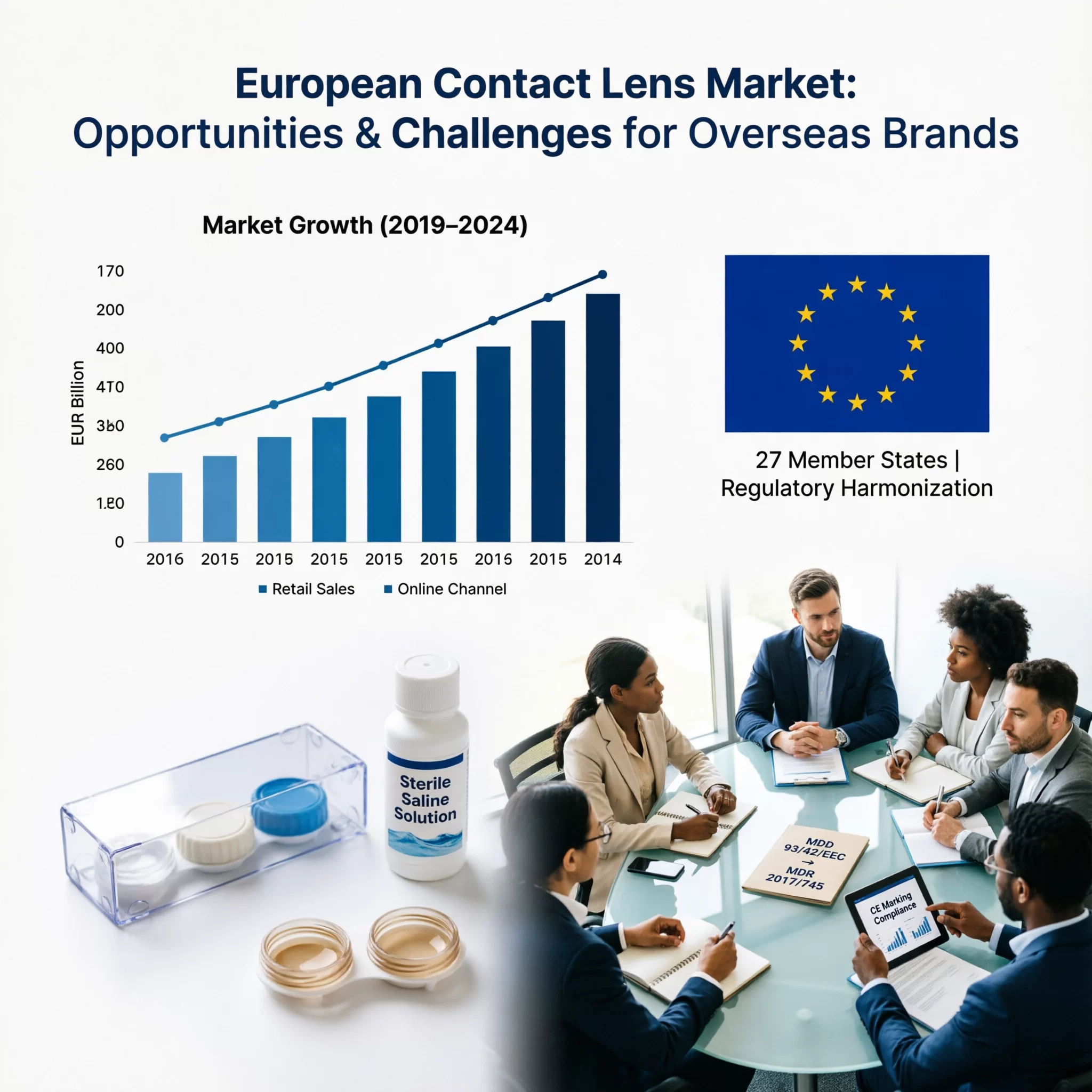
The European colored contact lens market is estimated to be worth billions of euros, with steady growth expected in the coming years. The market is driven by factors such as:
- Strong beauty culture and fashion consciousness
- Growing demand for natural-looking colored lenses
- Increasing popularity of daily disposable lenses
- Rising social media influence and e-commerce sales
- Aging population and increasing myopia rates
Key markets in Europe include Germany, France, the United Kingdom, Italy, and Spain. These countries have large populations, high disposable incomes, and well-established optical retail chains.
Opportunities
1. Natural-Looking Colors
European consumers generally prefer natural-looking colored lenses that enhance their eye color rather than change it dramatically. Shades such as brown, gray, blue, and green are popular, especially those with subtle patterns and gradients.
Overseas brands that offer a range of natural-looking colors with high-quality materials and comfortable designs have a good chance of succeeding in the European market.
2. Daily Disposable Lenses
Daily disposable colored lenses are becoming increasingly popular in Europe. Consumers are willing to pay a premium for the convenience and hygiene of daily disposable lenses. This trend is expected to continue in the coming years.
Brands that offer daily disposable colored lenses with competitive pricing and high-quality materials can tap into this growing market segment.
3. E-Commerce Sales
E-commerce is a fast-growing channel for colored contact lenses in Europe. Online retailers such as Amazon, eBay, and local e-commerce platforms are gaining popularity among consumers. Social media platforms such as Instagram and TikTok are also playing an important role in product discovery and marketing.
Overseas brands that have a strong online presence and effective digital marketing strategies can reach a large number of consumers in Europe.
Challenges
1. Regulatory Compliance
The European Union has strict regulatory requirements for medical devices, including contact lenses. All contact lenses sold in the EU must comply with the Medical Devices Regulation (MDR) and carry the CE mark.
Complying with the MDR requires extensive documentation, testing, and quality management systems. This can be a significant barrier to entry for small and medium-sized overseas brands.
2. Competitive Market
The European colored contact lens market is highly competitive, with established brands such as Acuvue, CooperVision, and Alcon dominating the market. These brands have strong brand recognition, extensive distribution networks, and large marketing budgets.
Overseas brands need to differentiate themselves from established brands by offering unique products, competitive pricing, or superior customer service.
3. Cultural Differences
European consumers have different preferences and buying behaviors compared to consumers in other regions. For example, consumers in Northern Europe may prefer more natural-looking colors, while consumers in Southern Europe may prefer more dramatic colors.
Overseas brands need to conduct market research and adapt their products and marketing strategies to the local culture and preferences.
Practical Advice for Overseas Brands
1. Conduct Market Research
Before entering the European market, overseas brands should conduct extensive market research to understand consumer preferences, regulatory requirements, and competitive landscape.
Market research can include:
- Surveying consumers
- Analyzing sales data
- Studying competitor products and pricing
- Consulting with local distributors and retailers
2. Ensure Regulatory Compliance
Overseas brands should ensure that their products comply with the MDR and carry the CE mark. This may require working with a local authorized representative and conducting extensive testing and documentation.
3. Partner with Local Distributors
Partnering with local distributors and retailers can help overseas brands establish a presence in the European market. Local distributors have extensive knowledge of the market and can help brands navigate the regulatory landscape and distribution networks.
4. Adapt Products and Marketing Strategies
Overseas brands should adapt their products and marketing strategies to the local culture and preferences. This may include offering natural-looking colors, daily disposable lenses, and effective digital marketing campaigns.
Conclusion
The European colored contact lens market offers significant opportunities for overseas brands. However, entering the market requires careful planning, compliance with local regulations, and a deep understanding of consumer preferences. By conducting market research, ensuring regulatory compliance, partnering with local distributors, and adapting products and marketing strategies, overseas brands can succeed in the European market.
At MIOMI, we have extensive experience in manufacturing and exporting colored contact lenses to the European market. We can help overseas brands with product development, regulatory compliance, and distribution. If you are interested in entering the European market, please contact us for more information.