How to Qualify a Contact Lens Manufacturer Before Placing Your First Order
Lessons from brand owners who learned the hard way.
You found a supplier on Alibaba. Their profile looks solid — five years of history, a few certifications uploaded, responsive sales rep. You’re tempted to place a trial order right away.
Hold on.
I’ve watched too many brand owners skip the qualification step and end up with inventory they can’t sell, shipments stuck at customs, or a supplier who ghosts them after the first payment. The contact lens industry is not like sourcing phone cases. You’re dealing with a medical device that goes directly onto someone’s eye. The stakes are higher, and the verification bar should be too.
Here’s the framework we recommend to every new brand owner who comes to us. Use it before you commit to any manufacturer.
1. Start With the Certifications — Not the Price
I know, everyone tells you this. But most brand owners still lead with “what’s your best price for 10,000 pairs” and treat certifications as an afterthought.
Flip that order.
Before you discuss pricing, ask for these documents:
- ISO 13485 — the baseline quality management standard for medical device manufacturers. If they don’t have it, walk away.
- CE marking (EU MDR) — required if you plan to sell anywhere in Europe. Since 2024, the transition period for the old MDD is over, and MDR compliance is non-negotiable.
- FDA 510(k) clearance — needed for the US market. Note: this is not the same as “FDA registered.” Registration is a formality. 510(k) clearance means the product has been reviewed for safety and effectiveness.
- Country-specific registrations — if you’re targeting markets like Brazil (ANVISA), South Korea (MFDS), or Indonesia (BPOM), ask whether the manufacturer already holds those registrations or has experience obtaining them.
A legitimate manufacturer will have these documents ready to share. If they hesitate, send you blurry scans, or say “we’re working on it,” that’s your answer.
2. Visit the Factory — Or Hire Someone Who Can
I know not every brand owner can fly to China on short notice. But you’d be surprised how many issues surface during a physical factory visit that you’d never catch through a video call.
Things to look for:
- Clean room standards — contact lens manufacturing requires controlled environments. Ask about their clean room classification (ISO Class 7 or better for production areas).
- Production line organization — is the workflow logical? Are raw materials separated from finished goods? Is there visible quality checkpoint signage?
- Equipment age and maintenance — older molding machines can produce lenses with inconsistent parameters. Ask when their equipment was last serviced or upgraded.
- On-site lab capabilities — do they test in-house, or send samples to a third party? In-house testing means faster feedback loops and tighter quality control.
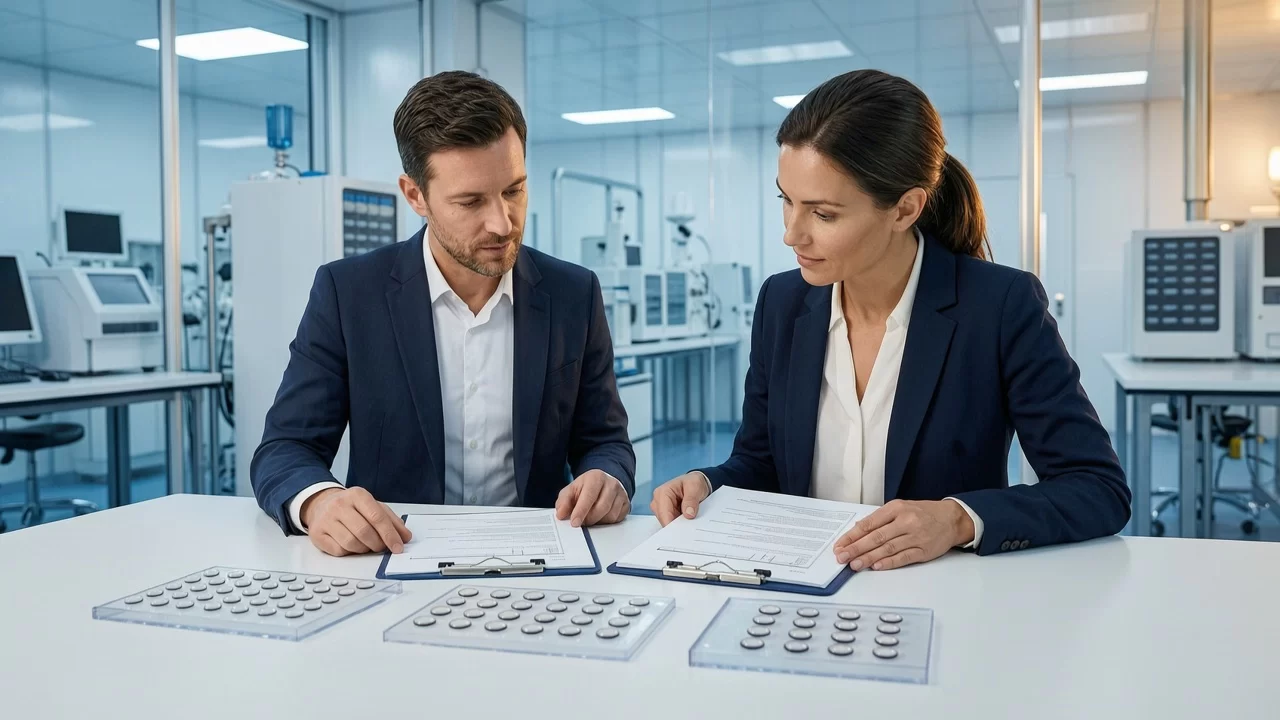
If you can’t visit personally, hire a third-party inspection company (SGS, Bureau Veritas, or a local agent) to do a factory audit for you. It typically costs $500–$1,500 and is worth every penny.
3. Request Samples — and Test Them Yourself
Never place a bulk order without receiving and testing physical samples first.
When samples arrive, check:
- Parameter accuracy — do the diameter, base curve, and water content match what was promised? Send them to an independent lab if you have doubts.
- Color consistency — for colored lenses, compare the sample to your approved Pantone or design file. Hold it against a white background and check for banding, uneven pigment distribution, or color shift at the edge.
- Comfort and wearability — if possible, have someone actually wear the sample for a few hours. Comfort issues (dryness, lens movement, edge awareness) are often tied to manufacturing parameters that you can’t see with the naked eye.
- Packaging quality — the lens vial, blister seal, and labeling should all feel professional. Flimsy packaging often reflects sloppy manufacturing overall.
Ask for at least two rounds of samples: one to evaluate the baseline quality, and a second after you’ve given feedback on what needs adjustment. A good manufacturer expects this and builds it into their process.
4. Check Their Track Record — Specifically, With Brands Like Yours
A manufacturer might have great certifications and a beautiful factory, but if they’ve only ever produced generic clear lenses for bulk commodity buyers, they may struggle with the nuances of custom colored lens production.
Ask for:
- Case studies or references from brands similar to yours (same market, similar product type, comparable order volumes).
- Client retention signals — how long have their existing brand clients been with them? High turnover is a red flag.
- Experience with your target market’s regulations — a manufacturer who’s shipped to the EU dozens of times will navigate CE compliance far more smoothly than one who’s just getting started.
If they can’t share any references, that’s a problem. Every established manufacturer should have a portfolio of past work they can show (under NDA if needed).
5. Evaluate Communication Speed and Transparency
This one sounds soft, but it’s not.
In my experience, the way a manufacturer communicates before you place an order is exactly how they’ll communicate after. If they’re slow to respond during the sales phase, they’ll be even slower when you have a quality complaint or need to adjust a production schedule.
Pay attention to:
- Response time — do they reply within 24 hours? In the same timezone business hours?
- Clarity of answers — are they direct and specific, or do they dodge questions with vague reassurances?
- Willingness to discuss problems — every manufacturer has had production issues. The good ones talk about how they solved them. The bad ones pretend nothing ever goes wrong.
- English proficiency (or your language) — miscommunication about specs, timelines, or compliance requirements can cost you thousands of dollars. Make sure you can have detailed technical conversations without constant back-and-forth confusion.
6. Understand Their Capacity and Lead Times — Realistically
A manufacturer who promises 15-day lead times on custom orders is either lying or doesn’t understand your product complexity.
Realistic timelines:
- Stock items (standard parameters, standard colors): 5–10 days
- Semi-custom (your branding, standard lens specs): 15–20 days
- Full custom (custom parameters, new colors, special packaging): 25–35 days
Ask about their current production queue. If they’re running at full capacity, your order might sit in line for weeks before production even starts. A transparent manufacturer will tell you this upfront.
Also ask about their **minimum order quantities** and whether they offer tiered pricing. Some manufacturers quote attractive per-unit prices at 50,000 pairs but won’t budge on MOQ for new brands. Others are more flexible and understand that brand owners need to start small and scale up.
7. Get It in Writing — Every Detail
This is where deals go wrong.
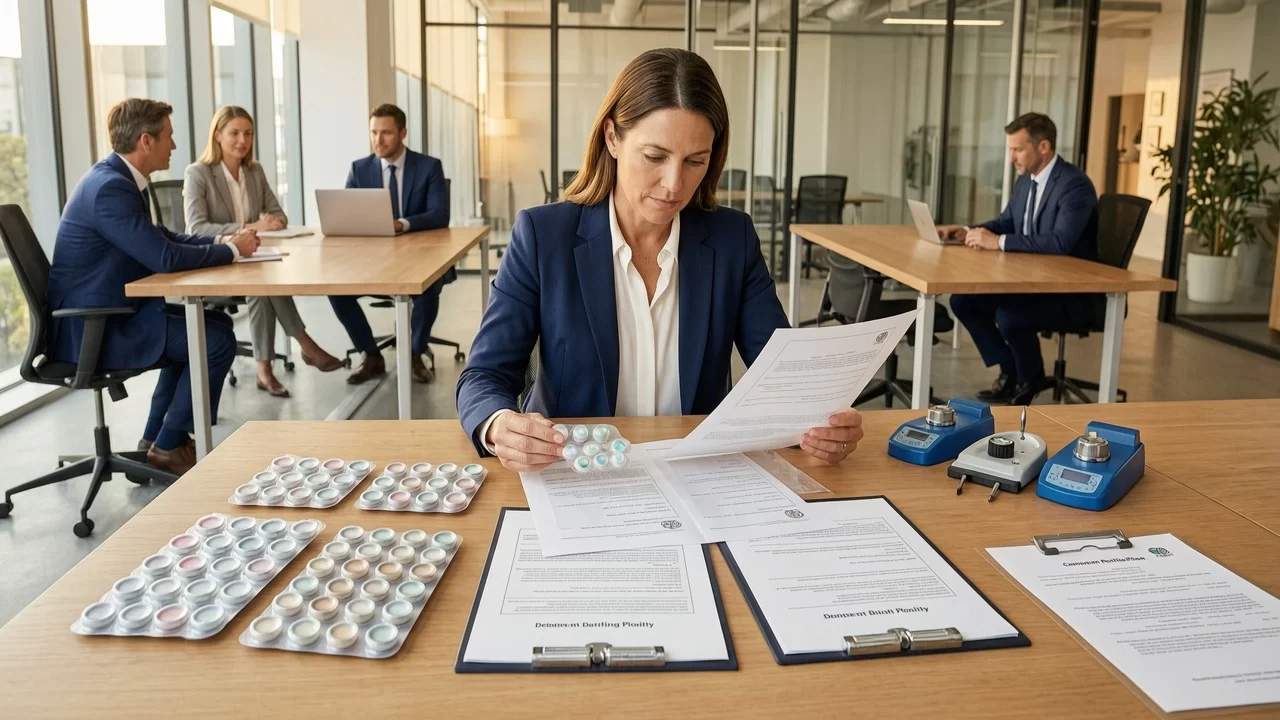
Before you place your first order, make sure you have a written agreement that covers:
- Product specifications — diameter, base curve, water content, color design (with approved reference samples), material type
- Quality standards — acceptable defect rates, inspection procedures, what happens when a batch fails QC
- Packaging and labeling — exact artwork files, language requirements, regulatory markings
- Timeline and penalties — what happens if they miss the delivery date? What if you need to delay payment?
- IP protection — your lens designs, brand assets, and customer data should be contractually protected
- Payment terms — typical structure is 30% deposit, 70% before shipment. Negotiate if you can, but don’t expect net-60 terms as a new client
A handshake deal with a factory overseas is not a contract. Get everything signed, stamped, and dated.
The Bottom Line
Qualifying a manufacturer takes time — usually 4 to 8 weeks from first contact to placing your first order. That might feel slow when you’re excited to launch your brand. But the alternative is far more expensive.
I’ve seen brand owners lose $20,000 on a batch that failed customs because the manufacturer didn’t actually have the certifications they claimed. I’ve seen others spend months trying to get a refund for lenses that didn’t match the approved samples. These are not edge cases. They happen every day in this industry.
Do the homework upfront. Visit the factory, test the samples, check the references, and get everything in writing. Your future self — and your customers’ eyes — will thank you.
At MIOMI Optical, we’ve helped over 200 brand owners navigate the OEM/ODM process from first sample to market launch. If you’re evaluating manufacturers and want a second opinion on what to look for, reach out at sales@miomicon.com — we’re happy to share what we’ve learned.