If you are in the color contact lens business right now, you already know: the action has shifted. Europe is mature. North America is heavily regulated and competitive. But Southeast Asia? That is where the real momentum is, and it has been building for a while now.
Let me break down what is actually happening in this market, why it matters for your business, and — most importantly — how you can position your brand to take advantage of it before everyone else catches on.
The Numbers Tell a Clear Story
Southeast Asia is home to over 680 million people. More importantly, it has one of the youngest demographics in the world — a median age of around 30 years old. In countries like Indonesia, the Philippines, and Vietnam, that median age drops even lower.
Young demographics drive color contact lens sales. Period.
The regional colored contact lens market has been growing at roughly 8–10% annually over the past few years, outpacing the global average of around 5–6%. By most estimates, the Asia-Pacific contact lens market will exceed $3 billion by 2028, and Southeast Asia accounts for a rapidly growing share of that.
But raw numbers only tell half the story. What makes Southeast Asia genuinely interesting is how the market is evolving — and that evolution creates real opportunities for brands that understand the local dynamics.
What Is Driving Demand in Southeast Asia
Three factors are pushing color lens demand in this region higher, and they are not going away anytime soon.
1. Social Media Is the New Sales Floor
Platforms like TikTok, Instagram, and Shopee Live have fundamentally changed how beauty products are discovered and purchased in Southeast Asia. A single viral video featuring a specific lens design can move thousands of units in days.
Consider the Philippines: it consistently ranks as one of the highest-engagement countries on social media globally. Indonesian and Thai users are not far behind. When a beauty influencer in Jakarta posts a GRWM (Get Ready With Me) video wearing a particular gray lens design, her followers want that exact look — and they want it now.
This creates a fast-moving, trend-driven market. Brands that can respond quickly to what is popular on social media have a massive advantage.
2. The Rise of the Everyday Wearer
Color contacts used to be considered a niche product — something people wore occasionally for special events or photography. That has changed dramatically.
In urban centers across Southeast Asia — Bangkok, Manila, Ho Chi Minh City, Kuala Lumpur — colored lenses are increasingly worn as part of daily beauty routines, not just for occasional use. Young professionals want natural-looking enlarging lenses for the office. Students want subtle color enhancements for campus life.
This shift from occasional to everyday use means higher purchase frequency and larger lifetime customer value. A customer who wears lenses three times a week is buying four to five times more than someone who wears them once a month.
3. E-Commerce Is Eating the Beauty Category
Southeast Asia’s e-commerce GMV hit over $130 billion in 2024 and continues growing. Beauty and personal care is consistently one of the top three categories on platforms like Shopee, Lazada, and TikTok Shop.
What this means for contact lens brands is clear: your customers are shopping online. If your brand is not present on the platforms they use, you are losing sales to competitors who are.
Why Chinese Manufacturers Are Winning in This Market
Here is the part that directly affects your sourcing strategy.
Southeast Asian brands and retailers are increasingly turning to Chinese manufacturers for their contact lens supply. And there are solid reasons for this shift.
Cost competitiveness is real. Chinese manufacturers offer quality products at price points that Korean and Taiwanese competitors simply cannot match. For a brand selling in the $5–15 per box range — which is the sweet spot in most Southeast Asian markets — that cost difference directly translates into better margins or more competitive retail pricing.
Quality has caught up. The days of “cheap means bad” for Chinese-made contact lenses are over. Established manufacturers now operate under ISO 13485 certification, hold CE marks for European compliance, and in many cases have FDA clearance for the US market. The quality gap that existed a decade ago has essentially closed.
Speed matters more than ever. Chinese factories can typically deliver stock orders within 7 days and custom OEM orders within 20 days. For a market driven by fast-moving social media trends, that turnaround time is a competitive weapon. When a lens design goes viral, brands that can restock quickly capture the demand. Brands that cannot watch their competitors take it.
How to Position Your Brand for the Southeast Asian Opportunity
Understanding the market is one thing. Acting on it is another. Here is what actually works.
Design for Local Preferences
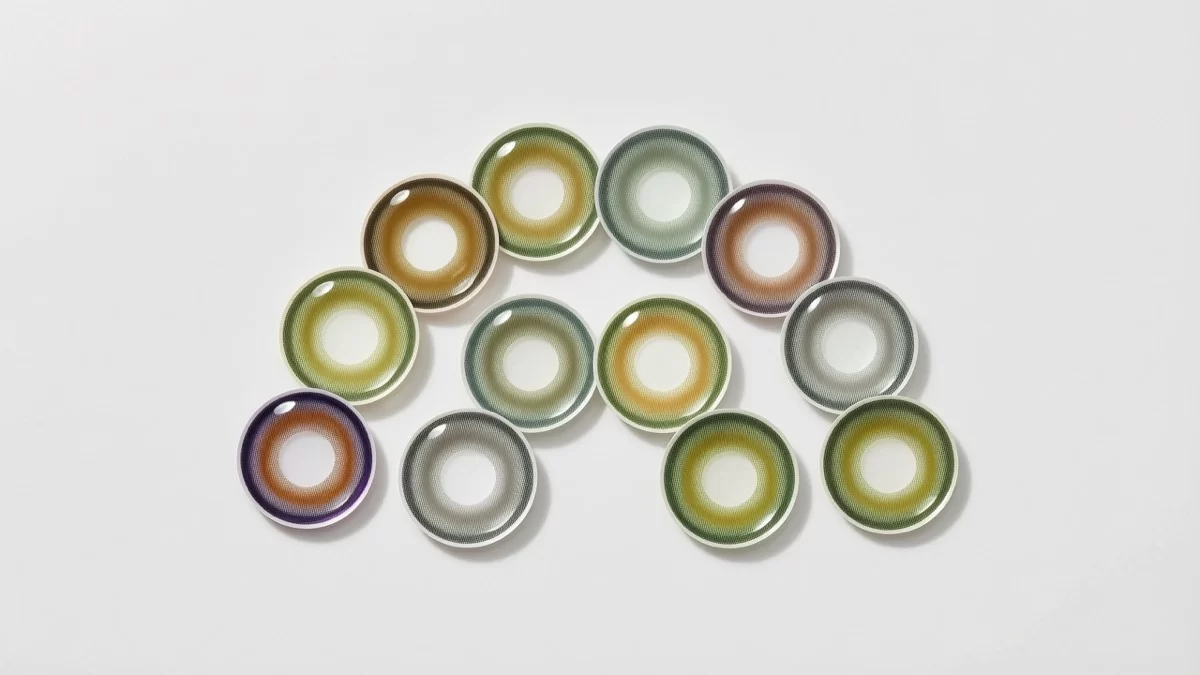
Lens designs that perform well in Southeast Asia tend to share specific characteristics. Natural enlarging effects — what the industry calls “limbal ring enhancement” — are consistently popular. Colors like brown, hazel, and gray outsell bold blues and greens by a significant margin. Subtle is the word.
The Korean natural-look aesthetic dominates regional preferences. Customers want lenses that make their eyes look bigger and brighter without anyone being able to tell they are wearing colored lenses at all.
If your product line is heavy on dramatic, bold designs, you might want to rebalance.
Get Your Pricing Right
The Southeast Asian market is price-sensitive but not cheap. Customers will pay more for quality — but the bar for “quality at a reasonable price” is different here than in Europe or North America.
A good starting point: aim for a wholesale cost that allows retail pricing in the $8–20 per box range, depending on the market and channel. This positions your brand in the accessible-premium segment, which is where the highest volume sits.
Build Platform Presence
If you are selling in Southeast Asia without a presence on Shopee, Lazada, or TikTok Shop, you are leaving money on the table. These are not supplementary channels — they are primary ones.
For brands operating wholesale or OEM models, this means ensuring your retail clients and distributors have the product images, descriptions, and marketing materials they need to succeed on these platforms. Give them assets that convert, and they will sell more of your product.
Move Fast on Trends
The trend cycle in Southeast Asia is measured in weeks, not months. A lens design can go from unknown to bestseller in less than 30 days.
This means your supply chain needs to be responsive. Work with manufacturers who can turn custom orders around quickly. Keep popular designs in stock. Monitor social media trends in your target markets so you can anticipate demand before it peaks.
The brands winning in this space are not necessarily the ones with the best designs — they are the ones who can get the right designs to market fastest.
The Bottom Line
Southeast Asia is not a “future opportunity.” It is a present-tense growth market for color contact lenses, and the window for early positioning is still open — but it is narrowing.
The brands that will dominate this market over the next five years are the ones making strategic moves right now: building relationships with reliable manufacturers, designing products that match local preferences, pricing for the market, and establishing strong platform presence.
If you are already sourcing from China and selling into Southeast Asia, you are ahead of many competitors. If you are not, the question is not whether you should — it is how quickly you can get started.
MIOMI Optical specializes in OEM/ODM contact lens manufacturing with ISO 13485 and CE certification. We serve brands across Southeast Asia, the Middle East, Europe, and beyond. Get in touch to discuss how we can support your market expansion.