# Low MOQ Custom Contact Lenses: How to Start Small and Scale Your Brand
You want to launch your own contact lens brand. You have a vision, a name, and a target market. But when you reach out to manufacturers, you hit the same wall again and again:
*”Minimum order is 10,000 pieces per design.”*
For a new brand, that’s a massive commitment. We’re talking about tying up tens of thousands of dollars in inventory before you’ve even made your first sale. It’s risky, and frankly, it keeps a lot of great brands from ever getting off the ground.
The good news? You don’t need to start big anymore. Low MOQ (Minimum Order Quantity) custom contact lenses have changed the game for emerging brands. In this guide, we’ll cover exactly what low MOQ means, how to find the right supplier, and a step-by-step strategy to start small and scale up.
—
## What Is “Low MOQ” for Contact Lenses, Exactly?
Let’s get on the same page. In the contact lens manufacturing world, MOQs vary wildly:
– **Traditional big OEM factories:** 10,000 – 50,000 pieces per design
– **Mid-tier manufacturers:** 3,000 – 5,000 pieces per design
– **Low MOQ specialists:** 300 – 1,000 pieces per design
– **Ultra-low / sample runs:** 50 – 100 pieces (for testing only)
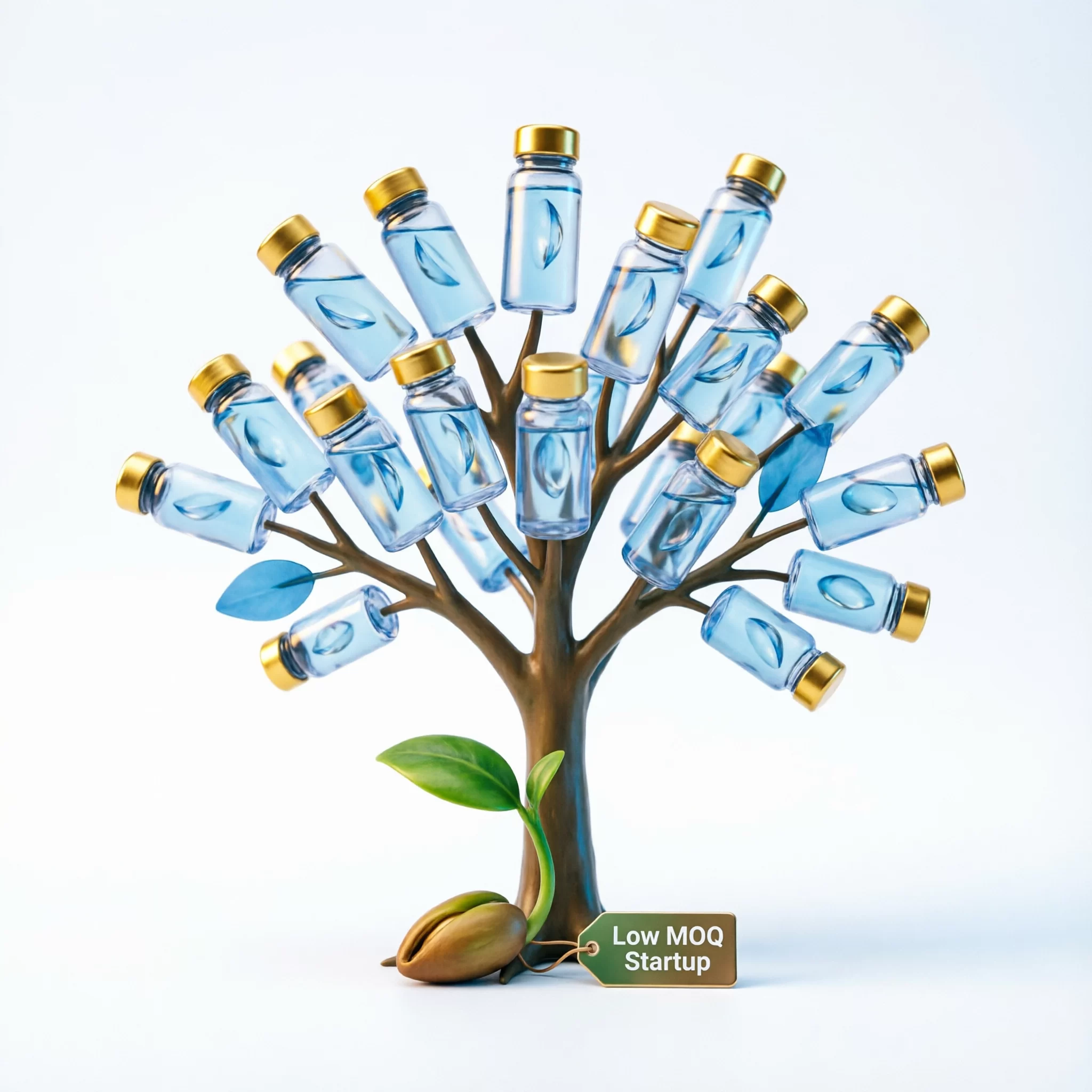
For a new brand, **300-1,000 pieces per design** is the sweet spot. It’s enough to validate your product with real customers, but small enough that you’re not risking your entire startup budget on one bet.
**Important caveat:** Low MOQ doesn’t mean “cheap.” The per-unit cost will be higher than a large order. That’s the trade-off — you pay more per pair for the flexibility of starting small. But when you factor in reduced inventory risk and faster time-to-market, it’s almost always worth it for a new brand.
—
## Why Starting with Low MOQ Is Smart (Even If You Can Afford More)
You might be thinking, *”I have the budget for a large order. Why would I start small?”*
Good question. Here are four reasons even well-funded brands should start with low MOQ:
### 1. Validate before you scale
You think your brand concept is great. Your friends say it’s great. But will **actual paying customers** buy it? There’s only one way to find out — put it in the market and see what happens. A 500-piece order tells you everything you need to know about product-market fit at a fraction of the cost of a 10,000-piece order.
### 2. Test designs without commitment
Most new brands launch with 3-5 color designs. But how do you know which ones will sell? With low MOQ, you can order a small batch of each, see what moves, and double down on the winners. If you had ordered 5,000 of each and one design bombs, you’re stuck with dead inventory.
### 3. Iterate faster
Your first version won’t be perfect. Maybe the color isn’t quite right. Maybe the comfort needs improvement. With small batches, you can gather customer feedback, make adjustments, and launch version 2.0 in weeks instead of months. This “lean startup” approach is how the best brands get great.
### 4. Build cash flow before scaling
Starting small lets you generate revenue early. That revenue then funds your next, larger order. Instead of dumping all your capital into inventory upfront, you let your customers fund your growth. It’s a much healthier way to build a business.
—
## How to Find the Right Low MOQ Contact Lens Supplier
Not all low MOQ suppliers are created equal. Here’s what to look for:
### Must-have #1: Proper certifications
This is non-negotiable. If you’re selling in regulated markets, your supplier needs:
– **CE marking** (European Union and many other countries)
– **FDA clearance** (United States)
– **ISO 13485** (quality management system for medical devices)
– **KFDA / MFDS** (Korea — for Korean-made lenses, which are highly regarded)
Some low MOQ suppliers cut corners on certifications. Don’t work with them. The risk to your brand — and your customers’ eye health — isn’t worth it.
### Must-have #2: Real manufacturing capability
There are “suppliers” out there that are just middlemen. They take your order, go to a factory, mark up the price, and deliver. There’s nothing inherently wrong with that, but you’ll pay more and have less control.
Ask to see:
– Factory photos and videos
– Production capacity numbers
– Quality control processes
– Existing client references
A real manufacturer will be transparent about their facility.
### Must-have #3: Design support
If you’re a new brand, you probably don’t have an in-house design team that knows how to create contact lens artwork. A good low MOQ supplier will help you with:
– Color design and pattern development
– Packaging design
– Branding on the vials/boxes
– Regulatory documentation support
This support is worth its weight in gold when you’re just starting out.
### Must-have #4: English communication (or your language)
You’re going to be discussing complex specifications, timelines, and quality issues. Don’t underestimate how important clear communication is. If you and your supplier can’t understand each other, things will go wrong — guaranteed.
### Red flags to watch for:
– 🚩 Prices that seem too good to be true
– 🚩 Unwillingness to provide samples before ordering
– 🚩 Vague answers about certifications
– 🚩 No contract or formal agreement
– 🚩 Pressure to place a large order “for the best price”
—
## Step-by-Step: Launching with Low MOQ
Here’s the exact process we recommend for new brands:
### Step 1: Define your brand concept
Before you contact any supplier, know what you want:
– Who is your target customer?
– What’s your brand aesthetic? (natural, bold, cosplay, everyday wear)
– What’s your price point?
– Which markets will you sell in?
The more specific you are, the better a supplier can help you.
### Step 2: Source samples
Order sample lenses from 2-3 potential suppliers. Wear them yourself. Have friends or potential customers test them. Evaluate:
– Comfort
– Color accuracy
– Packaging quality
– Delivery time
Samples usually cost $5-20 per pair, plus shipping. It’s the best investment you can make.
### Step 3: Place your first order
Start with 3-5 designs, 300-500 pieces each. Here’s why:
– **3-5 designs** = enough variety for customers to choose from, but not so many that you can’t manage inventory
– **300-500 pieces each** = low enough to be low-risk, high enough that you get reasonable per-unit pricing
If you’re on a very tight budget, start with 2 designs at 300 pieces each. You can always add more later.
### Step 4: Build your sales channels
While your first order is in production (typically 20-30 days), start building:
– Your website / Shopify store
– Social media accounts (Instagram, TikTok, Facebook)
– Email list
– Influencer partnerships (seeding products for reviews)
Don’t wait until you have inventory in hand to start marketing. Build anticipation.
### Step 5: Launch and learn
When your inventory arrives, launch. Run targeted ads. Send products to influencers. Collect customer feedback.
Pay attention to:
– Which designs sell best?
– What do customers say about comfort?
– Where are you getting the most traffic?
– What’s your conversion rate?
### Step 6: Reorder and optimize
After 2-3 months of sales data, you’ll know what works. Then:
– Reorder the best sellers in larger quantities (lower per-unit cost)
– Discontinue or redesign the slow movers
– Add 1-2 new designs based on customer feedback
– Gradually increase your order sizes as demand grows
This is how you scale smartly — data-driven, not guess-driven.
—
## How Much Does It Actually Cost?
Let’s talk real numbers. The exact cost depends on many factors — design complexity, material, packaging, certifications — but here’s a rough range:
| Item | Low MOQ (300 pcs) | Mid MOQ (1,000 pcs) | Large MOQ (10,000 pcs) |
|——|——————-|———————|———————–|
| Per pair cost | $3.50 – $6.00 | $2.50 – $4.00 | $1.20 – $2.50 |
| 5 designs | $5,250 – $9,000 | $6,250 – $10,000 | $30,000 – $62,500 |
| Tooling/design fee | $200 – $500 | $0 – $300 | $0 – $200 |
| Total (5 designs) | $5,450 – $9,500 | $6,250 – $10,300 | $30,000 – $62,700 |
As you can see, low MOQ dramatically lowers the barrier to entry. You can get started for under $10,000 instead of needing $30,000+.
**Other costs to budget for:**
– Website and e-commerce platform: $300 – $2,000
– Initial marketing / ads: $1,000 – $5,000
– Product photography: $200 – $1,000
– Shipping and customs: varies by destination
—
## Common Mistakes to Avoid
### Mistake 1: Launching with too many designs
We get it — you’re excited and you want to offer everything. Resist the urge. Start with 3-5 designs, learn what sells, then expand. A focused product line outperforms a scattered one almost every time.
### Mistake 2: Neglecting packaging
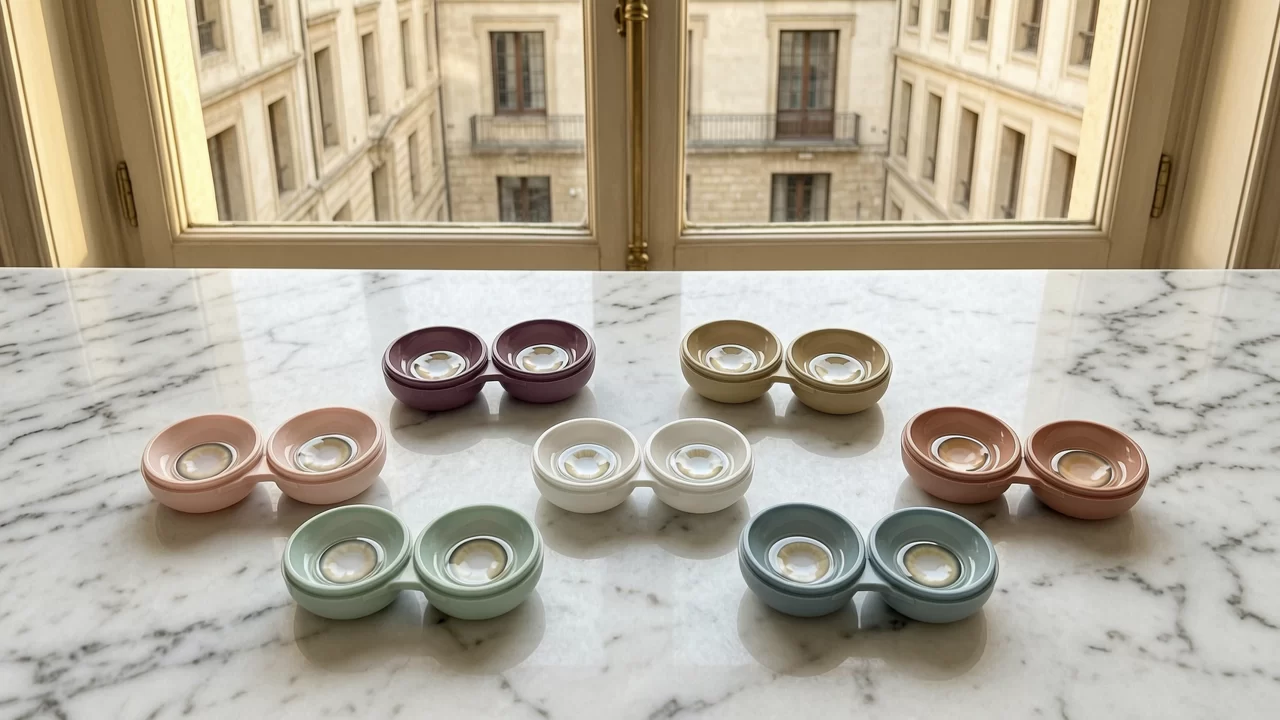
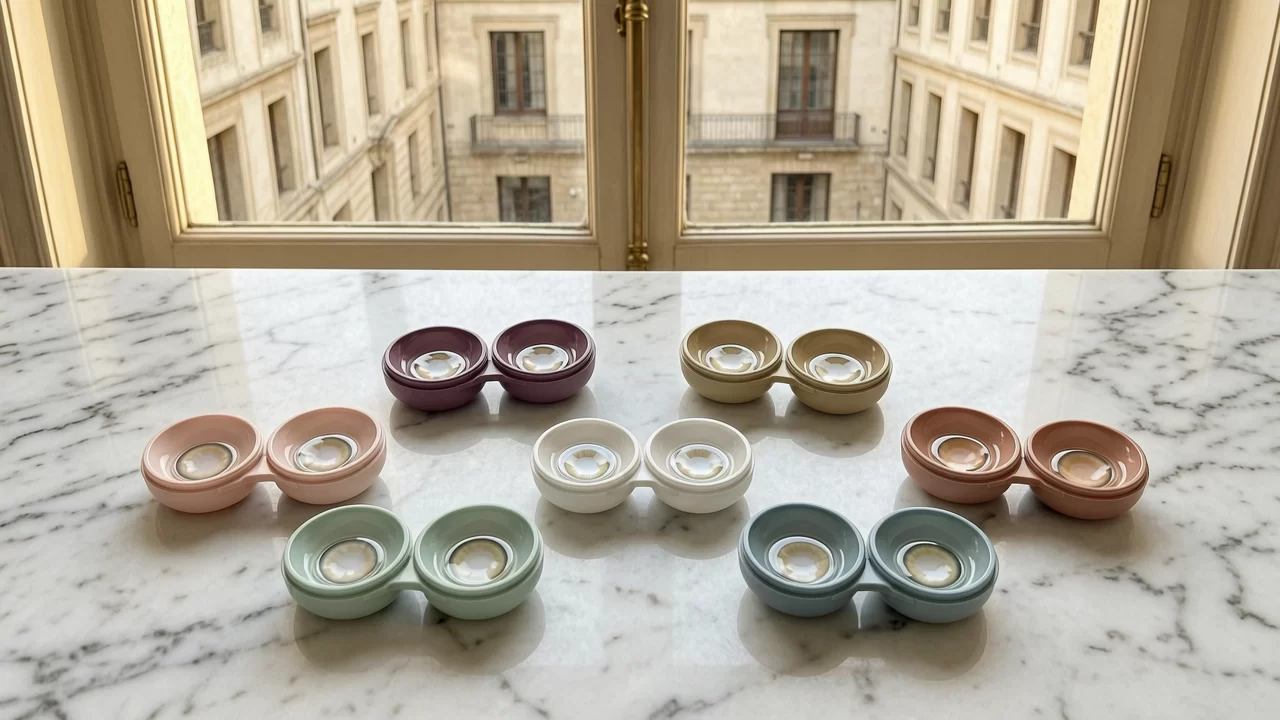
Your packaging is the first physical touchpoint customers have with your brand. If the vials look cheap, people will assume the lenses are cheap too. Invest in good design — it’s worth it.
### Mistake 3: Skipping the test phase
Don’t go from zero to 5,000 pieces. Start small, test, iterate, then scale. The data you gather from a small launch will save you from expensive mistakes later.
### Mistake 4: Not planning for reorder lead times
It takes 20-30 days to manufacture a new batch. If you wait until you’re sold out to reorder, you’ll have a 4-week gap with no inventory — and you’ll lose momentum. Plan ahead. Reorder when you hit 30-40% of your stock remaining.
### Mistake 5: Underpricing your product
When you’re paying higher per-unit costs with low MOQ, it’s tempting to price low to compete. Don’t. Build a brand, not a commodity. Price based on value, not cost. Customers pay more for brands they trust.
—
## The Bottom Line
Low MOQ custom contact lenses have democratized the industry. Ten years ago, you needed a small fortune and deep industry connections to launch a contact lens brand. Today, with the right supplier, you can get started for under $10,000 and build from there.
The key is to start smart:
1. Find a reputable supplier with proper certifications
2. Start with 3-5 designs at low MOQ
3. Test the market and gather data
4. Double down on what works
5. Scale gradually
It’s not about being the biggest. It’s about being the smartest. Start small, learn fast, and build a brand that lasts.
—
*Ready to launch your contact lens brand with low MOQ? MIOMI specializes in helping emerging brands get started with custom OEM/ODM orders as low as 300 pieces per design. Reach out to our team at sales@miomicon.com or connect on WhatsApp for a free consultation — we’ll walk you through the process and help you find the right starting point.*