Why Small Colored Contact Lens Brands Should Not Compete on Price Alone
For many new colored contact lens brands, price feels like the easiest way to enter the market. Lower prices can attract attention quickly, especially on social media and e-commerce platforms where customers compare products in seconds. But competing only on price is one of the fastest ways to weaken a young brand.
In the contact lens industry, price is never just a marketing decision. It affects product quality, packaging, customer service, compliance, repeat purchase, and distributor confidence. If a brand builds its entire strategy around being cheaper than everyone else, it often ends up with thin margins, unstable suppliers, and customers who leave as soon as another seller offers a lower price.
For small brands, the goal should not be to become the cheapest option. The goal should be to become the option customers trust, understand, and want to buy again.
The Problem With Price-Only Competition
1. It attracts low-loyalty customers
Customers who buy only because of the lowest price are often difficult to retain. They may try your lenses once, but if another shop offers a similar-looking product for a lower price, they will move quickly. This makes customer lifetime value weak and forces the brand to keep spending on acquisition.
2. It leaves no room for quality control
Colored contact lenses require careful material selection, production control, testing, packaging, and storage. When margins are too low, brands may feel pressure to cut costs in areas customers cannot immediately see. Over time, this can lead to inconsistent quality, higher complaint rates, and damaged trust.
3. It weakens brand positioning
If customers only remember your brand as “cheap,” it becomes difficult to introduce premium products later. Even if your lens quality improves, customers may resist a higher price because the brand image has already been trained around discounts.
4. It makes distributors less confident
B2B partners and distributors want products that can sell repeatedly with stable margins. If a brand competes only through low prices, distributors may worry about price wars, poor after-sales support, and limited long-term value.
What Small Brands Can Compete On Instead
1. Better product curation
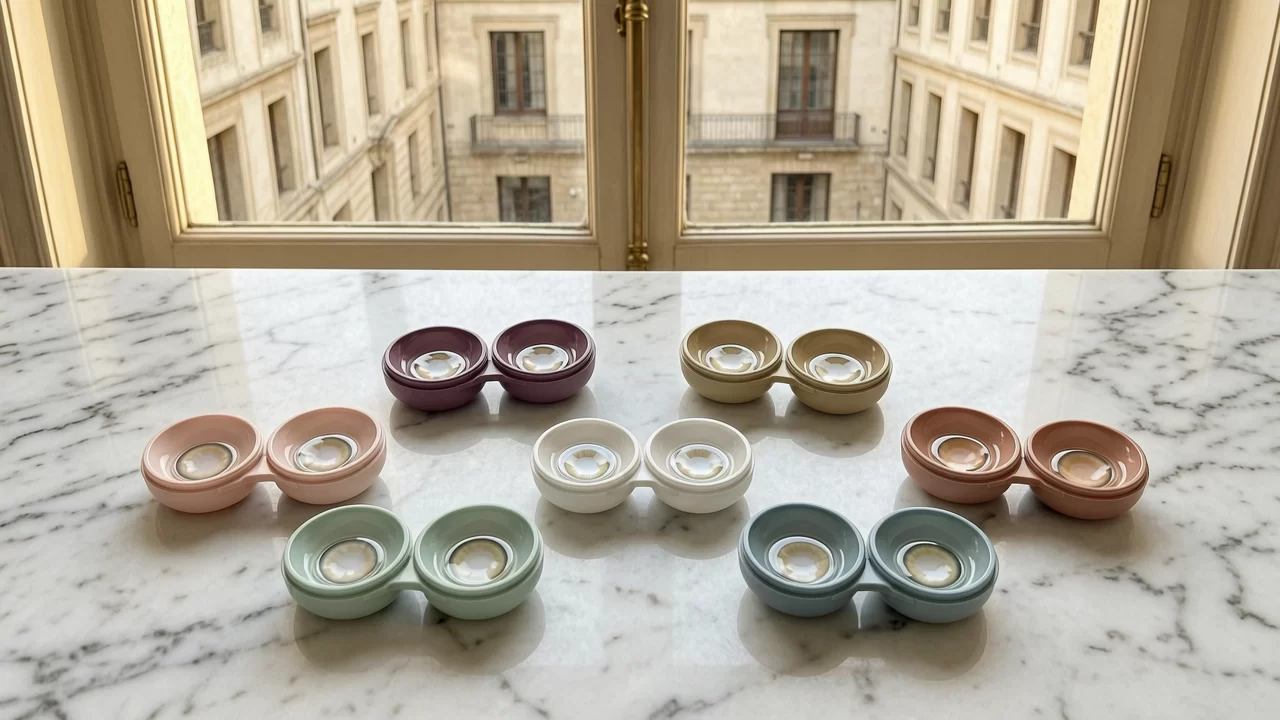
A small brand does not need hundreds of SKUs to look professional. In fact, too many colors can confuse customers and create inventory pressure. A focused product line with carefully selected shades can perform better than a large catalog with weak planning.
For example, a new brand may start with a compact range: two natural brown lenses, one soft grey, one daily-use enlarging style, and one more expressive social-media style. This gives customers enough choice without making the brand look random.
2. Clearer education
Many customers do not fully understand base curve, diameter, water content, wearing cycle, or lens care. Brands that explain these topics simply can build trust faster. Educational content also reduces customer service pressure because buyers know what to expect before purchasing.
Simple guides such as “how to choose a natural brown lens,” “daily vs monthly lenses,” or “why diameter affects the look” can make a small brand feel more reliable than a cheaper shop with no product education.
3. Stronger visual consistency
In the beauty market, customers judge professionalism quickly. Consistent product photos, packaging style, website layout, and social media tone can make a small brand look serious. This does not always require luxury packaging, but it does require a clear visual direction.
4. Better customer experience
Fast replies, clear shipping information, honest product descriptions, and useful after-sales support can create more loyalty than a small discount. Customers remember how a brand handles problems. If a lens color does not suit them or shipping takes longer than expected, a professional response can protect trust.
5. Reliable supply and restocking
One of the biggest hidden advantages for small brands is consistency. If customers like a color but cannot buy it again, the brand loses repeat purchase. Working with a supplier that supports stable quality, repeatable color production, and practical MOQ planning is more valuable than chasing the lowest unit price.
How to Price Without Losing Trust
Understand your real landed cost
Many new sellers calculate price only from product cost. This is risky. Real cost should include lens cost, packaging, shipping, customs, platform fees, advertising, returns, payment fees, samples, and possible inventory waste. If these are not included, the brand may look profitable on paper but lose money in practice.
Keep enough margin for service
A healthy price gives the brand room to provide customer support, improve packaging, replace defective items when needed, and invest in marketing. Extremely low margins may look attractive at launch, but they often prevent the brand from improving.
Use promotions carefully
Discounts can help with launch campaigns, seasonal sales, and inventory movement. But if every week has a “limited-time discount,” customers stop believing the original price. Promotions should support the brand strategy, not replace it.
Create product tiers
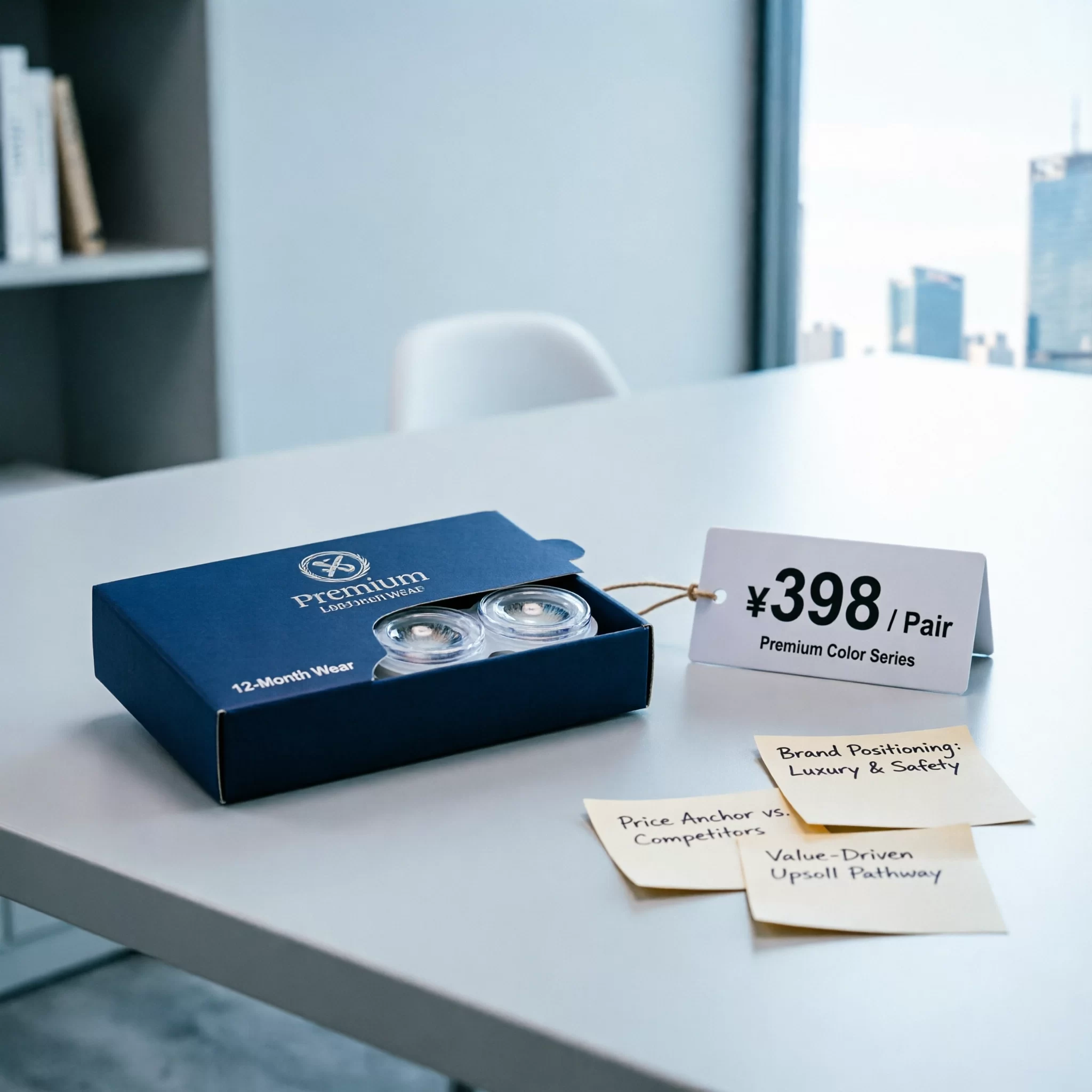
Instead of making every product cheap, brands can create clear tiers. For example, a basic natural series for daily customers, a premium comfort series for higher-margin buyers, and a limited trend series for social media campaigns. This gives customers choice without forcing the entire brand into a low-price position.
What Buyers Should Ask Suppliers
If you are building a colored contact lens brand, your supplier should help you think beyond unit price. Useful questions include:
- Which styles have the most stable repeat production?
- Which designs are suitable for a beginner product line?
- What MOQ structure supports small-batch testing without too much inventory risk?
- Can packaging be upgraded step by step as sales grow?
- What documentation is available for target markets?
- How long does restocking usually take?
- Can the same design be repeated consistently in future orders?
A supplier that only answers with “lowest price” may not be the right partner for a brand that wants to grow sustainably.
A Healthier Strategy for Small Brands
Small brands should focus on building a narrow but strong foundation: a clear product line, practical pricing, consistent packaging, useful customer education, and dependable supply. This approach may grow more slowly at the beginning, but it creates better repeat purchase and more stable margins.
The market already has many cheap colored lenses. What many customers and distributors still need is a brand they can trust: clear, consistent, safe, and easy to buy again.
Final Thoughts
Price matters, but it should not be the only reason customers choose your colored contact lens brand. A small brand can win by being more focused, more helpful, more consistent, and more reliable than competitors who only reduce prices.
At MIOMI, we support overseas brands with OEM/ODM and small-batch wholesale solutions, including low MOQ planning, product selection, packaging customization, and repeat-order support. If you are building a colored contact lens brand and want a sustainable product strategy, contact us to discuss your market and product plan.