Here’s something that surprises most people when they first enter the colored contact lens business: demand doesn’t flow evenly through the year. It spikes. Sometimes by 3x or more.
Sell costume lenses into October and you’ll struggle to keep stock. Sell the same lenses in March and they’ll sit in your warehouse gathering dust. Same product, same price, completely different results — all because of timing.
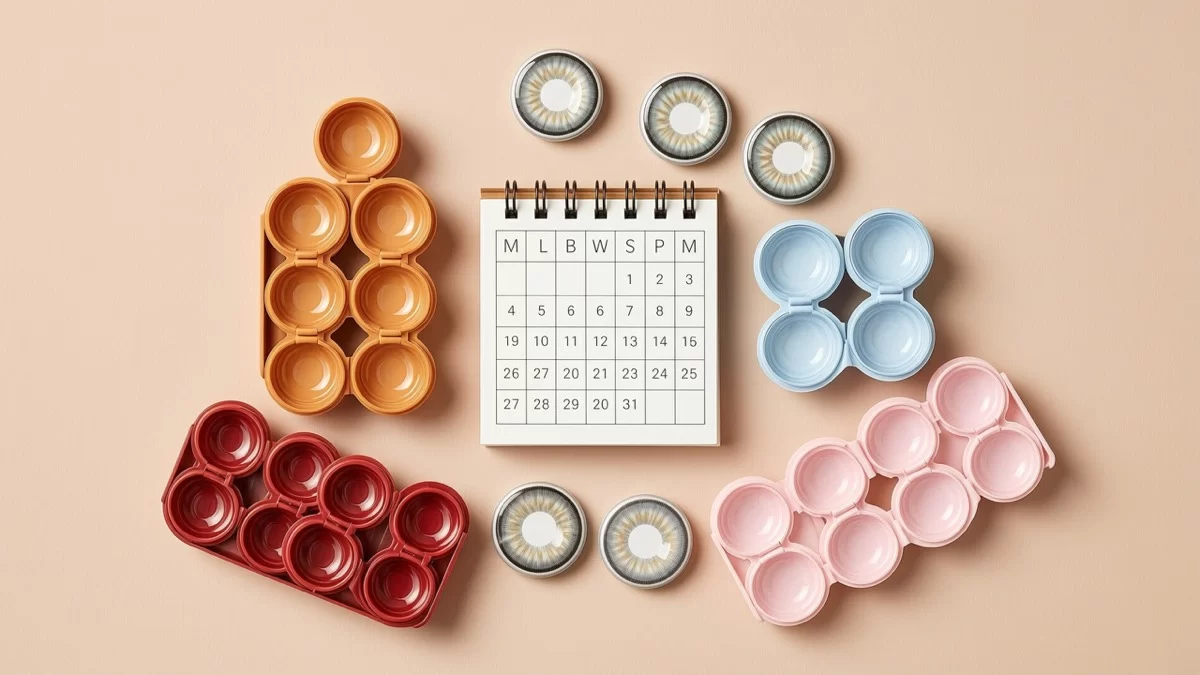
After years of watching order patterns across markets, we’ve mapped out what a typical year actually looks like. If you’re a wholesaler, retailer or brand owner, this calendar is worth pinning to your wall.
Why Seasonality Is So Extreme in This Business
Three forces drive the seasonal swings in colored contact lenses:
1. Costume and cosplay culture. Halloween is the single biggest demand event for colored lenses worldwide. Carnival, festivals, Comic-Con-style events and cosplay conventions create secondary spikes. These occasions need bold, opaque, dramatic designs — the kind of lenses people would never wear to the office.
2. Beauty and social calendar. Wedding season, festival season (Coachella, summer music festivals, Eid celebrations), graduation and back-to-school all lift demand for natural and enhancement-style lenses. People buy subtle colors when they have events to attend and photos to post.
3. Retail rhythm. Black Friday, 11.11, Christmas and New Year gifting pull demand forward. And January brings the classic new-year, new-look wave — consumers experimenting with a fresh style as part of their resolutions.
Layer regional differences on top — Eid moves with the lunar calendar, Carnival timing varies, summer starts at different months in the Northern and Southern hemispheres — and you get a year with multiple distinct peaks.
The Seasonal Calendar, Quarter by Quarter
Q1 (January–March): The “New Look” Wave + Carnival
- January: Strong month for natural and enhancement colors. New-year style experiments drive trial purchases. Good moment to launch new SKUs or run “new year, new eyes” campaigns.
- February: Valentine’s Day gives a modest lift to romantic and natural styles. Also a good month for planning stock ahead of spring.
- March: Carnival season hits (timing varies by country — Brazil’s Carnival, Venice, various European carnivals). Bold colors, crazy lenses and costume designs spike in those markets. Southern hemisphere markets are also in late summer with steady fashion-lens demand.
Wholesaler move: January is your launch window. Have new designs ready to pitch in December, ship in January.
Q2 (April–June): Wedding Season and the Run-Up to Summer
- April: Demand builds steadily. Bridal and wedding-guest purchases start — subtle grays, greens and honey tones move well.
- May: Peak wedding month in Europe and North America. Also when retailers start prepping summer stock. Wholesale order volume picks up significantly.
- June: Graduation season + pre-summer. Young consumers buying lenses for summer events, festivals and travel. This is often one of the strongest wholesale months of the year, because retailers are stocking ahead of summer rather than buying for immediate need.
Wholesaler move: Q2 is about serving retailers before the consumer spike. Push stock to your retail partners in May–June, not July.
Q3 (July–September): Festivals, Back-to-School — and Halloween Prep Begins
- July–August: Summer festivals (music festivals, beach season) sustain demand for fashion lenses, especially in Europe. In hot climates, daily disposables win on comfort.
- September: Back-to-school lifts everyday fashion lenses among younger buyers. And — critically — this is when smart wholesalers start Halloween production and ordering. Custom Halloween designs with ~20-day lead times need to be locked in by early September to hit October shelves.
Wholesaler move: Don’t wait for October to think about Halloween. September is the month to confirm Halloween orders; by mid-October, shipping windows are already tight for most markets.
Q4 (October–December): Halloween, Then the Gifting Rush
- October: Halloween. The biggest single demand spike of the year for bold and costume lenses. Expect stockouts industry-wide if you under-ordered. Prices hold firm — this is not the moment to discount.
- November: The pivot month. Costume demand collapses after Halloween, and Black Friday / 11.11 / Cyber Monday immediately take over — but for fashion and natural-style lenses, gift sets and bundles. Asia’s 11.11 is huge for cross-border e-commerce sellers.
- December: Christmas and New Year gifting. Premium packaging sells. Retailers also place their January orders this month, so B2B volume stays healthy even as retail traffic shifts to gifts.
Wholesaler move: Split your Q4 brain — costume lenses until late October, then immediately pivot inventory and marketing to gift-oriented fashion lenses.
Regional Differences That Matter
The calendar above is a Northern hemisphere baseline. Key adjustments:
- Middle East: Eid al-Fitr and Eid al-Adha create real demand spikes for beauty and fashion lenses — timing shifts ~11 days earlier each year. Ramadan itself is slower, but pre-Eid shopping surges.
- Southeast Asia: Demand is steadier year-round with festival-driven bumps (local holidays, K-pop events, cosplay conventions). Social-commerce spikes follow TikTok trends more than calendar seasons.
- Europe: Strong summer festival season; Carnival matters in Italy, Germany, Spain and Brazil-facing markets. Halloween has grown substantially in Western Europe over the past decade.
- North America: Halloween is enormous; back-to-school is the second peak. FDA-compliant products are a hard requirement year-round.
Three Practical Takeaways
1. Plan backwards from the spike. If you want product on shelves in October, sampling must be done by July and production locked by September. Work the timeline in reverse for every major event.
2. Match design style to season. Bold/opaque designs peak around costume events; natural/enhancement colors peak around weddings, festivals and New Year. Stock both, but weight them by calendar.
3. Use wholesale partners who can move fast. Seasonal peaks punish slow supply chains. A manufacturer that ships stock items in ~7 days and custom orders in ~20 days is the difference between catching the Halloween spike and watching it from the sidelines.
That’s exactly how we run production for our wholesale and OEM/ODM partners — low MOQs so you can test seasonal designs without big risk, and lead times short enough to hit the window.
Planning your seasonal stock for Q4? Contact sales@miomicon.com and we’ll map out the timeline with you.