The Right Way to Explain Water Content in Colored Contact Lenses to Overseas Retailers and Customers
Water content is one of the most common specifications mentioned in colored contact lens product descriptions, but many retailers and customers do not fully understand what it means for real-world wear.
Some brands over-simplify water content, implying that higher water content is always more comfortable. This is not entirely true. Water content interacts with material type, lens thickness, edge design, wearing cycle, and climate in complex ways. For overseas brands, explaining water content correctly can reduce customer confusion and support more informed purchasing decisions.
What Is Water Content in Colored Contact Lenses?
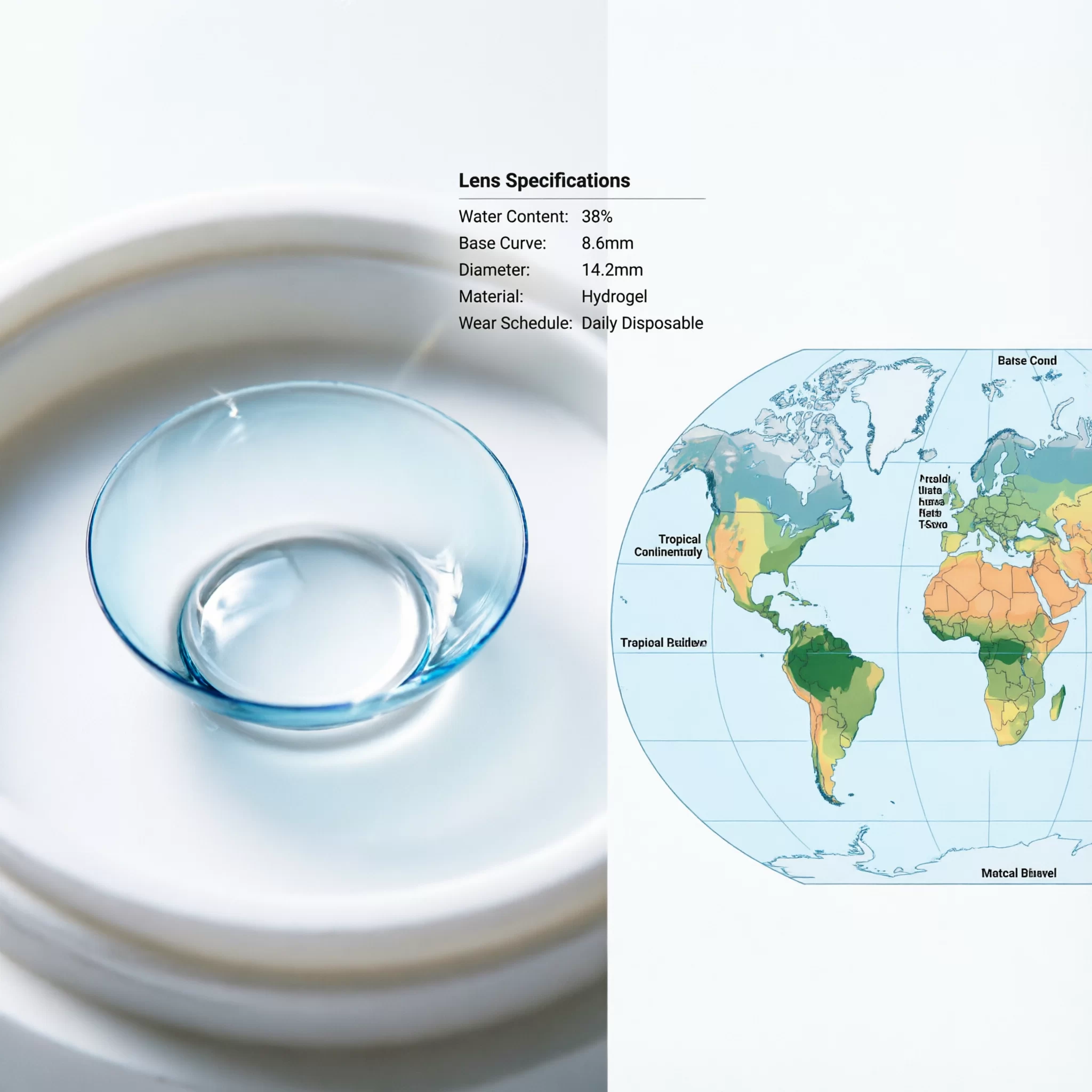
Water content is the percentage of water that a contact lens material absorbs and retains when fully hydrated. For most soft contact lenses, this ranges from around 38% to 78%, depending on material, design, and wearing cycle. Daily disposable colored lenses may have different water content than monthly or quarterly lenses.
Common Misconceptions About Water Content
Misconception 1: Higher water content is always more comfortable
Higher water content lenses may feel very soft and moist when first removed from the blister pack. But they tend to dehydrate more quickly on the eye, especially in dry or air-conditioned environments. This dehydration can cause discomfort, blurry vision, and may lead to frequent lens replacement. For customers who wear lenses in dry offices or hot climates, extremely high water content lenses may not be the most comfortable choice.
Misconception 2: All lenses with the same water content feel identical
Water content is only one factor. A 55% water content lens made from silicone hydrogel will feel very different from a 55% water content lens made from a traditional hydrogel material. The manufacturing process, lens thickness, and edge design also affect how the lens feels and performs.
Misconception 3: Lower water content means worse comfort
Modern low water content materials (around 38-42%) are often very comfortable for long wear. They tend to maintain their hydration better in dry environments, reducing the risk of dehydration-related discomfort. Many premium monthly colored lenses use lower water content for this reason.
How Water Content Affects Colored Lens Performance
1. Daily disposable vs monthly lenses
Daily disposable colored lenses often use higher water content to create a soft, fresh feel. Since they are discarded after one day, dehydration is not a major concern. Monthly lenses may use lower water content to maintain consistent performance over time.
2. Climate considerations
Water content choice should reflect local climate. In hot, dry, or high-altitude areas, lower water content lenses may be more comfortable. In humid regions, higher water content lenses may feel more natural.
3. Wearing habits
Customers who wear lenses for extended periods may prefer lower water content for better hydration retention. Occasional users may prioritize the soft, fresh feel of higher water content daily lenses.
Practical Guidance for Overseas Brands
1. Focus on real-world benefits, not just numbers
Instead of only stating “55% water content,” explain what that means for the customer. For example:
- “This daily disposable lens has 58% water content for a soft, fresh feel, ideal for special occasions”
- “This monthly lens uses 42% water content to maintain comfort in dry environments, even for extended wear”
2. Match material and water content to your target market
Consider your target region’s climate and customer habits when selecting water content. If you are selling in desert climates, prioritize lower water content. If you are targeting humid, tropical markets, higher water content may be more appropriate.
3. Train your sales team and customer service
Ensure that your sales team and customer service representatives understand the interaction between water content, material, and comfort. They should be able to answer questions like:
- “Why is this lens more comfortable for my dry office?”
- “Should I choose a different lens for my upcoming trip to the desert?”
- “Why do two lenses with the same water content feel different?”
4. Use simple, clear language in product descriptions
Avoid overly technical jargon. Explain water content in terms that customers can relate to. Use comparisons and examples rather than just specifications.
Common Water Content Options for Colored Contact Lenses
Daily Disposable Lenses (38-58% water content)
These are typically designed for comfort and convenience. Higher water content creates a soft, fresh feel, while lower water content may offer better hydration retention for all-day wear.
Monthly Lenses (38-45% water content)
Monthly colored lenses often use lower water content to maintain consistent performance over time. This reduces the risk of dehydration-related discomfort and ensures lens integrity for the full wearing cycle.
Quarterly and Yearly Lenses (38-42% water content)
Longer wearing cycle lenses almost always use lower water content to ensure durability and consistent performance. Higher water content lenses may become too soft or dehydrated over time.
Questions to Ask Your OEM/ODM Supplier
If you are developing your own colored contact lens line, ask your supplier about water content choices. Key questions include:
- What water content options are available for my target market?
- How will water content affect lens comfort in my target climate?
- Can you provide samples with different water content for testing?
- How does water content interact with my chosen material and design?
- What water content is most popular in similar markets?
Final Thoughts
Water content is an important specification for colored contact lenses, but it should not be considered in isolation. For overseas brands, explaining water content correctly means focusing on real-world benefits, matching specifications to target markets, and providing clear, actionable information.
By avoiding common misconceptions and tailoring your message to your target audience, you can reduce customer confusion, improve satisfaction, and support more informed purchasing decisions.
At MIOMI, we understand the importance of water content in colored contact lens design. Our OEM/ODM services include customized water content options based on your target market and product requirements. Contact us to learn more about how we can help you develop colored contact lenses that meet the specific needs of your customers.