The European Colored Contact Lens Market in 2026: What Brand Owners Actually Need to Know
If you’re thinking about selling colored contact lenses in Europe, you’ve probably already noticed something: it’s not one market. It’s dozens of them, stacked on top of each other, each with its own language, beauty standards, and regulatory quirks.
That makes Europe complicated. But it also makes it interesting — and potentially very profitable — if you approach it the right way.
I’ve been working with brands that sell into Europe for years now. Here’s what I’ve learned about what actually works, what doesn’t, and where the real opportunities are hiding.
Europe Isn’t a Monolith — Stop Treating It Like One
The biggest mistake I see from new brands is launching “in Europe” as if the continent works like a single country. It doesn’t.
The UK and Ireland have their own beauty trends, heavily influenced by social media and celebrity culture. Think subtle enhancement — hazel tones, gray blends, the kind of lenses that make people ask “did you change something?” rather than “are those colored lenses?”
Germany and the Netherlands skew practical. Consumers there read ingredient lists. They check certifications. They’ll pay more for a product that feels safe and well-documented.
Southern Europe — Italy, Spain, Greece — leans bolder. Vivid colors, dramatic looks, lenses that make a statement. These markets respond well to visual marketing and influencer partnerships.
Scandinavia is small but wealthy, with consumers who value minimalism and natural-looking products. If your packaging and branding feel clean and premium, you’ll do well there.
Eastern Europe is where a lot of brands sleep — and that’s their loss. Poland, Romania, Czech Republic, Hungary — these markets are growing fast, price-sensitive but brand-curious, and way less competitive than Western Europe.
The point? You don’t launch in “Europe.” You launch in specific markets, with specific positioning, and you expand from there.
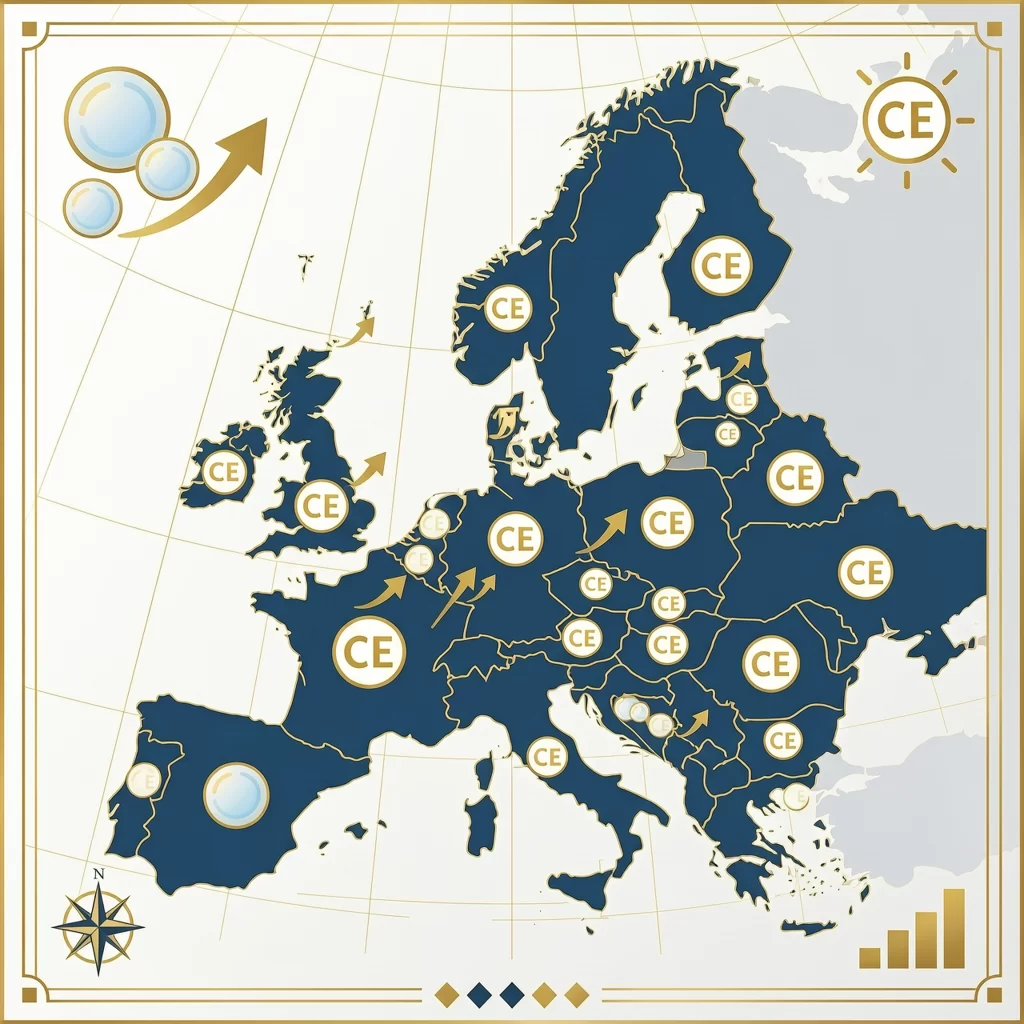
The Regulatory Landscape: CE Marking Is Non-Negotiable
Let’s talk about the thing nobody wants to talk about until they have to: regulation.
Colored contact lenses are classified as medical devices in the European Union. That means you need CE marking before you can legally sell them in any EU country. The UK, post-Brexit, has its own UKCA marking requirement — which is similar but separate.
Here’s what CE marking actually involves:
- A technical file documenting your product specifications
- A risk assessment
- Clinical evaluation data
- Quality management system documentation (typically ISO 13485)
- A declaration of conformity
If your OEM supplier already has CE certification for their standard products, the process is smoother. You’re essentially adding your brand as a private label under their existing certification umbrella. But you still need your own authorized representative in the EU, and you need to register with the relevant national authorities.
Don’t try to skip this. I’ve seen brands get shut down at customs, fined, or blacklisted because they thought they could “figure out compliance later.” Later is expensive.
For the UK specifically, you’ll need a UK Responsible Person and UKCA documentation. It’s not dramatically different from CE, but it is separate paperwork and a separate relationship.
What European Consumers Actually Want
After watching purchase patterns across multiple markets, here’s what stands out:
Natural-looking is king. The most popular colored lenses in Europe aren’t the wild, vivid ones. They’re the subtle enhancements. Gray, green, hazel — colors that look like they could be natural. European consumers tend to want lenses that enhance rather than transform.
Comfort matters more than in other regions. European buyers are vocal about comfort. If your lenses have a short wearing time or cause dryness, you’ll hear about it — in reviews, in return requests, and in social media posts. High water content and breathable materials aren’t optional here.
Daily disposables are growing fast. Europeans are increasingly willing to pay the premium for daily disposables. The convenience factor, combined with hygiene awareness (thanks, pandemic), has pushed daily lenses from niche to mainstream.
Sustainability is starting to matter. It’s not the #1 purchase driver yet, but European consumers are more environmentally conscious than most. Brands that can show they’re thinking about waste reduction — even in small ways — get a positive reaction.
Pricing: Where You Sit Matters
European consumers are used to paying more for contact lenses than, say, Southeast Asian buyers. But that doesn’t mean you can price arbitrarily high.
The sweet spot for colored dailies in Western Europe is around €20–35 for a box of 30. Below €15, consumers start questioning quality. Above €40, you’re competing with established premium brands like Anesthesia and Desio, and you need serious brand equity to justify that.
In Eastern Europe, price sensitivity is higher. You’re looking at €12–22 for the same product. The lenses might be identical, but the perceived value is different, and your pricing needs to reflect that.
One thing that works well: offering starter packs or trial sizes at a lower price point. Europeans are cautious about trying new brands. If you can lower the barrier to first purchase, you’ll build a customer base faster.
Marketing That Actually Works in Europe
Influencer marketing works, but the approach needs to be local. A German beauty influencer has zero credibility with Italian consumers, and vice versa. You need market-specific partnerships.
Instagram and TikTok are the dominant platforms for colored lens marketing across Europe. Pinterest is surprisingly strong in the UK and Scandinavia for beauty inspiration content.
Content that works:
- Before/after comparisons (real customers, not stock photos)
- “Which color suits me?” style guides
- Wearing comfort reviews and long-term wear tests
- Behind-the-scenes content about how lenses are made (Europeans love transparency)
One more thing: make sure your website and packaging are available in the local language. English works in Scandinavia and the Netherlands, but in Germany, France, Italy, and Spain, local language is expected. It’s a trust signal.
Where I See the Biggest Opportunities Right Now
If I were launching a colored lens brand in Europe today, here’s where I’d focus:
1. Eastern Europe first. Lower competition, growing middle class, high social media engagement. Poland and Romania are good starting points.
2. Daily disposable natural tones. This is the highest-demand, fastest-growing segment across the continent.
3. UK + Germany as phase two. Once you have traction in smaller markets, these give you volume. But they’re more competitive and more expensive to enter.
4. Southern Europe for brand building. If you can crack Italy or Spain with the right influencer strategy, the brand awareness pays off across the region.
The European market rewards patience and localization. It’s not a quick win. But brands that do the work — proper certification, local marketing, market-specific positioning — tend to build loyal customer bases that stick around for years.
The Bottom Line
Europe is worth the effort. It’s a high-value market with consumers who’ll pay fair prices for quality products. But it demands respect — for its diversity, its regulations, and its consumers’ intelligence.
Don’t try to boil the ocean. Pick two or three markets, do them properly, and expand from there. Get your compliance sorted before you spend a euro on marketing. And for the love of everything, don’t treat Europe like it’s one country.
If you’re building a colored contact lens brand and thinking about Europe, the question isn’t whether there’s opportunity. There’s plenty. The question is whether you’re willing to do the work properly.
The brands that are? They’re doing very well.
Looking for a reliable OEM/ODM partner for the European market? MIOMI Optical has years of experience producing CE-certified colored contact lenses for brands across the continent. Get in touch to discuss your project.