If you’ve been watching the global contact lens industry, you already know that Southeast Asia is having a moment. But “having a moment” doesn’t quite capture what’s happening on the ground in cities like Bangkok, Jakarta, Manila, and Ho Chi Minh City. The demand for color contact lenses in this region isn’t just growing — it’s reshaping how brands think about their product strategy, pricing, and distribution.
Here’s what brand owners and wholesalers need to know before making their next move.
The Numbers Tell the Story
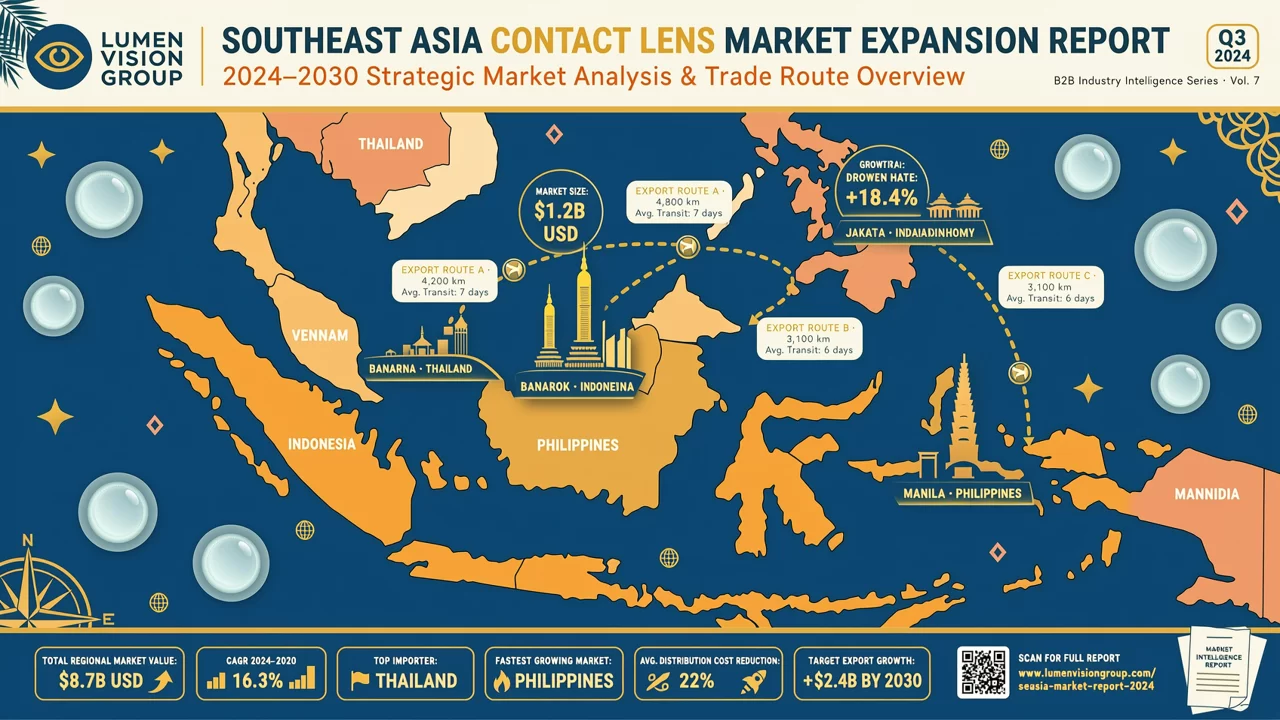
Southeast Asia’s contact lens market is projected to reach $2.8 billion by 2027, with color contacts accounting for nearly 40% of that growth. That’s not a rounding error — that’s a structural shift in consumer behavior.
Several factors are driving this:
- Young, digitally connected population. The median age across ASEAN is 30. These consumers discover products on TikTok and Instagram, not in optometry clinics.
- Rising disposable income. The middle class in Vietnam and Indonesia has expanded faster than almost any forecast predicted five years ago.
- K-beauty and J-beauty influence. Korean and Japanese beauty trends — including the subtle eye-enlarging effect of colored lenses — have gone mainstream across the region.
The result? A market that’s hungry for product variety, responsive to trend cycles, and surprisingly price-sensitive even at premium quality tiers.
What Makes Southeast Asia Different from Other Markets
If you’re already selling in Europe or North America, Southeast Asia might feel familiar at first glance. Don’t let that fool you. The dynamics here are genuinely different.
1. Color Preferences Run Distinct
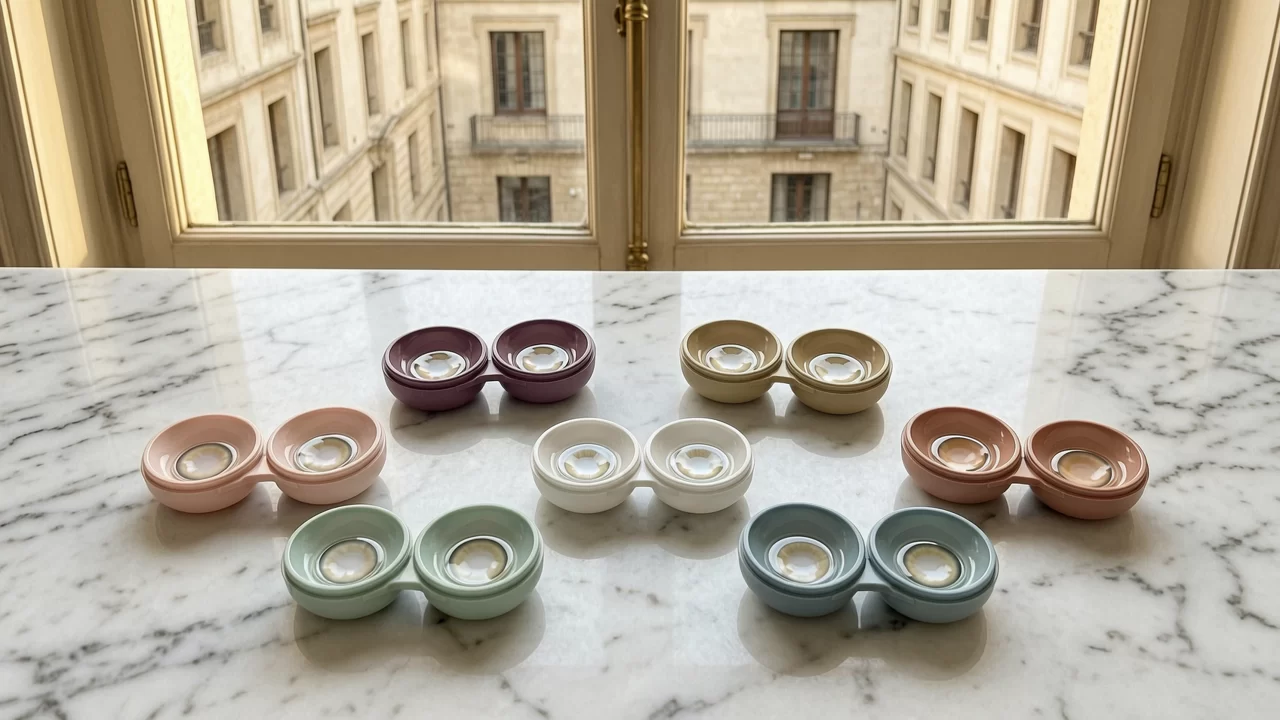
In Western markets, the bestsellers tend to be natural-looking enhancement tints — hazel, green, honey. In Southeast Asia, the preference skews toward slightly larger, brighter looks. Gray and ice blue are surprisingly popular in Thailand and the Philippines, while warm brown and violet dominate in Indonesia and Malaysia.
This matters for your SKU planning. You can’t just ship your European bestseller lineup to Jakarta and expect the same sell-through rate.
2. Regulatory Landscapes Vary Wildly
Thailand requires FDA registration for all contact lenses sold domestically. Indonesia has its own BPOM certification process. The Philippines falls somewhere in between. Vietnam is still tightening its framework.
For OEM/ODM brands, this means you need a compliance strategy per country — not per region. A CE mark gets you into some doors, but it doesn’t open all of them.
3. Distribution Channels Are Fragmented
Unlike North America, where Amazon dominates, or Europe, where Shopify stores and optical chains split the market, Southeast Asia runs on a mix of:
- Shopee and Lazada (the regional e-commerce giants)
- TikTok Shop (growing explosively for beauty-adjacent products)
- Independent Instagram and Facebook sellers
- Traditional optical shops (still significant, especially for prescription lenses)
If your distribution strategy is “put it on Shopify and run Google Ads,” you’re leaving most of the revenue on the table here.
The OEM/ODM Opportunity
Here’s where it gets interesting for brand owners and wholesalers.
Most of the color contact lenses sold in Southeast Asia are manufactured in China — specifically from facilities in Jiangsu and Zhejiang provinces. The region has become the world’s production hub for soft contact lenses, and the supply chain is mature.
What this means for you:
Lower MOQs are now standard. Five years ago, factories expected orders of 50,000+ pairs per design. Today, many reputable manufacturers — including MIOMI — offer MOQs as low as 500 pairs per color. That’s a game-changer for brands testing new markets.
Customization is expected, not optional. Southeast Asian consumers want exclusivity. They don’t want the same lens that’s sold in 40 other shops on Shopee. They want their own brand, their own colors, their own packaging. OEM and ODM services aren’t a luxury add-on anymore — they’re table stakes.
Speed matters more than ever. The trend cycle in Southeast Asian beauty is measured in weeks, not seasons. A color that goes viral on TikTok in Bangkok today might be “so last month” by the time it hits Manila. Brands that can iterate on designs and get new SKUs to market within 30 days have a massive advantage.
Practical Steps for Entering the Market
If you’re considering launching or expanding in Southeast Asia, here’s a realistic roadmap:
Step 1: Pick one or two countries to start. Don’t try to cover all of ASEAN at once. Thailand and the Philippines are good entry points because of their large, beauty-conscious consumer bases and relatively clear regulatory paths.
Step 2: Research local color preferences. Look at what’s trending on local TikTok and Shopee. Talk to distributors. Order samples in the colors that are moving fast.
Step 3: Find a manufacturing partner with low MOQ and fast turnaround. You need a factory that can produce 500–1,000 pairs per design, deliver samples within a week, and turn around full orders in 20–25 days.
Step 4: Build your brand identity before you list products. Packaging, branding, and product photography need to feel local — not like a Chinese factory’s default English template. Invest in this.
Step 5: Start on Shopee or TikTok Shop, then expand. These platforms have built-in traffic and lower customer acquisition costs than standalone websites. Once you have traction, you can build a Shopify store for your premium line.
The Bottom Line
Southeast Asia isn’t a “someday” market anymore. It’s a “right now” market. The consumers are there, the platforms are there, the supply chain is there, and the margins are still healthy enough to support new entrants.
The brands that win in this region over the next three years won’t necessarily be the biggest ones. They’ll be the ones that move fast, customize for local preferences, and build genuine trust with their customers.
If you’re thinking about launching a color contact lens brand in Southeast Asia — or if you already have one and want to expand your product line — the window is open. The question isn’t whether to enter. It’s how quickly you can get started.
At MIOMI Optical, we specialize in OEM/ODM color contact lenses with low MOQ (starting from 500 pairs per design), fast sampling, and full customization for brands entering emerging markets. Contact us to discuss your Southeast Asia expansion.