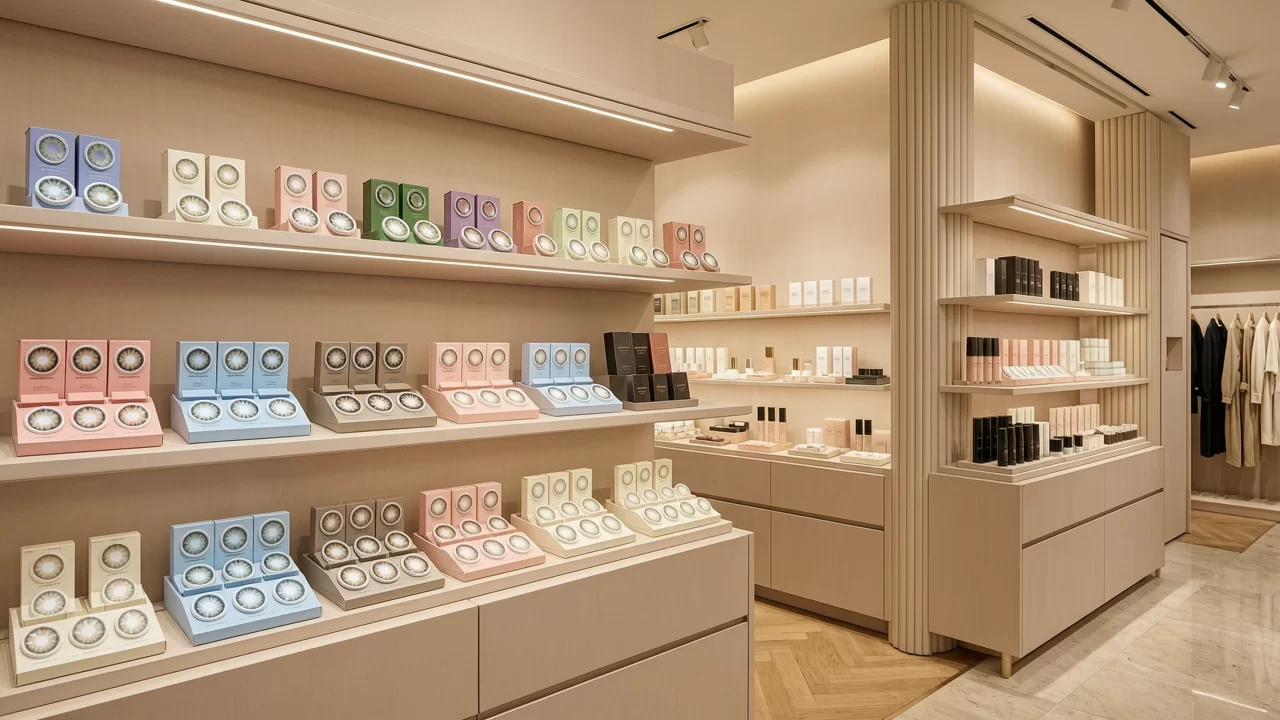
# The Complete OEM/ODM Guide for Contact Lens Brand Owners in 2026
## Introduction: Why Your Brand Needs an OEM/ODM Strategy
If you’re reading this, you’re probably already familiar with the contact lens market’s explosive growth. Maybe you’re a startup founder with a brilliant vision for a new brand, or an established retailer looking to expand your product line. Whatever your starting point, one truth remains constant: building your own contact lens brand is one of the most rewarding business moves you can make in the beauty & wellness space — but it’s also one of the most complex.
The OEM (Original Equipment Manufacturer) and ODM (Original Design Manufacturer) models are the two primary pathways to bringing your vision to life. Understanding the distinctions, advantages, and pitfalls of each is essential for any brand owner who wants to succeed without wasting time or money.
In this comprehensive guide, we’ll walk through everything you need to know about OEM/ODM for contact lenses in 2026 — from the fundamentals to practical steps, common mistakes, and how to choose the right partner for your brand.
—
## OEM vs. ODM: Understanding the Difference
Many new brand owners use these terms interchangeably, but they represent fundamentally different approaches to product development and manufacturing. Knowing which model fits your situation can save you months of rework.
### OEM: Manufacturing to Your Exact Specifications
**What it is:** An OEM manufactures products based on your complete specifications, design, and branding. You provide the detailed requirements — including lens parameters, materials, packaging design, and even the manufacturing process — and the factory produces exactly what you specify under your brand name.
**Key characteristics:**
– You own the complete product design and specifications
– The factory follows your instructions without input on design improvements
– Your brand identity is entirely on the product and packaging
– Higher minimum order quantities (MOQs) typically required
– You’re responsible for all R&D, testing, and regulatory compliance
**Best for:** Brands with existing design resources, established quality standards, or specific requirements that differ from market offerings.
### ODM: Ready-Made Designs You Can Rebrand
**What it is:** An ODM offers pre-designed product lines that you can rebrand as your own. The factory has already developed the lens designs, tested the materials, and created the packaging — you simply choose a design from their catalog and add your branding.
**Key characteristics:**
– Lower MOQs compared to OEM (often starting at 100-300 units per design)
– Faster time-to-market (weeks instead of months)
– Limited design customization (though many ODMs offer some modification options)
– The factory shares responsibility for basic compliance and testing
– You’re primarily responsible for branding, marketing, and distribution
**Best for:** New brands, test markets, seasonal lines, or businesses wanting to enter the contact lens space quickly without heavy R&D investment.
—
## The OEM/ODM Workflow: Step by Step
Regardless of which model you choose, most successful contact lens brands follow a similar workflow. Here’s the typical process from concept to shelf:
### Phase 1: Research and Partner Selection (1-3 months)
**1. Define Your Vision**
Before contacting any manufacturer, clarify:
– Target price point and positioning (premium, mid-market, budget)
– Target market demographics (age, lifestyle, geography)
– Key differentiators (daily disposable, specific color options, unique features)
– Budget for initial inventory and marketing
**2. Shortlist Potential Partners**
– Attend industry trade shows (Cosmoprof, GCC, APAC optical exhibitions)
– Search industry directories and referrals
– Verify certifications (ISO 13485, FDA registration, CE marking)
– Request samples and quality documentation
**3. Evaluate and Select**
– Request detailed quotations for both OEM and ODM options
– Compare MOQs, lead times, and pricing structures
– Assess communication responsiveness and technical expertise
– Check factory capacity and scalability
### Phase 2: Product Development (2-6 months)
**For OEM:**
– Submit complete specifications (base curve, diameter, water content, color chart)
– Request material samples for testing
– Approve prototype lenses
– Develop packaging design and regulatory labels
– Conduct fit testing and user trials
**For ODM:**
– Select base design from manufacturer’s catalog
– Customize available options (color, packaging, packaging size)
– Approve prototype and request modifications
– Finalize branding and artwork
### Phase 3: Sampling and Testing (1-3 months)
This phase cannot be rushed. Proper testing protects your brand reputation and ensures regulatory compliance.
**Essential tests:**
– Optical performance (base curve fitting, edge quality)
– Material safety (USP Class VI biocompatibility, hemolysis testing)
– Durability and wear characteristics
– Packaging integrity and sterility validation
– Regional regulatory submission preparation
**Typical timeline:**
– Initial samples: 2-4 weeks
– Testing and iteration: 4-8 weeks
– Final approval: 2-4 weeks
### Phase 4: Production and Launch (2-4 months)
**Production planning:**
– Confirm production lead times (typically 20-45 days for first production run)
– Arrange quality control inspections
– Plan inventory levels for launch period
– Set up distribution channels and logistics
**Launch preparation:**
– Finalize marketing assets and product descriptions
– Prepare e-commerce listings (Amazon, Shopify, regional platforms)
– Develop launch promotions and influencer partnerships
– Establish customer service and feedback mechanisms
—
## Critical Success Factors for Contact Lens Brands
After working with dozens of brand owners, I’ve identified several factors that separate successful launches from costly failures:
### 1. Start with a Niche, Not a Broad Line
Many new brands make the mistake of trying to launch with 10+ SKUs across different lens types, colors, and replacement schedules. This spreads your marketing budget too thin and makes it difficult to build momentum for any single product.
**Better approach:** Launch with 2-3 core SKUs that complement each other — perhaps a daily disposable in your most popular color, a monthly disposable for budget-conscious customers, and a specialty option (astigmatism or multifocal) for your most engaged segment.
### 2. Invest in Proper Testing — Don’t Cut Corners
I’ve seen brand owners skip independent testing to save money, only to face recalls or reputational damage later. The cost of proper testing (typically $3,000-8,000 depending on the scope) is insurance against much costlier problems down the road.
**Must-have tests:**
– Biocompatibility certification for your target markets
– Oxygen permeability measurements (Dk/t values)
– UV blocking verification (if claiming UV protection)
– Colorfastness and migration testing for colored lenses
### 3. Understand Regional Regulatory Requirements
What works in one market may not fly in another. The EU has different requirements than the US, and Asia-Pacific markets have their own certification processes.
**Key regions and requirements:**
– **USA:** FDA registration, 510(k) clearance if applicable, labeling compliance
– **Europe:** CE marking, EU MDR compliance, national registrations as required
– **Canada:** Health Canada licensing
– **Australia:** TGA assessment
– **Middle East:** SFDA, HALAL certification may be required
– **Southeast Asia:** Country-specific registrations (KFDA Indonesia, HSA Singapore, etc.)
### 4. Plan Your Supply Chain Early
Manufacturing lead times for contact lenses are not trivial. From order placement to receiving finished product, expect 20-45 days for first production, and even longer for customized packaging or special materials.
**Buffer your timeline:** If you’re launching for a specific season or promotional period, place your order at least 3 months in advance. Factor in potential delays from material shortages, quality issues, or customs hold-ups.
### 5. Build Relationships, Not Just Transactions
The most successful brand-owner/manufacturer relationships are partnerships, not one-off transactions. Invest time in:
– Regular communication about market feedback and product performance
– Collaborative problem-solving when issues arise
– Long-term volume commitments in exchange for better pricing and priority
– Joint innovation projects for new product lines
—
## Common OEM/ODM Mistakes to Avoid
### Mistake #1: Choosing Based on Price Alone
The lowest quote is rarely the best value when you factor in communication delays, quality issues, and hidden costs. A manufacturer charging 10-15% more but with reliable lead times, responsive communication, and proven quality control is often the cheaper option overall.
### Mistake #2: Underestimating Packaging Complexity
Contact lens packaging involves more than just a box and blister pack. You need to consider:
– Material compliance (BPA-free, recyclability claims)
– Multi-language labeling for export markets
– Child safety features (RSSL compliant)
– Desiccant packs and moisture control
– Secondary packaging for retail display
**Budget 15-25% of your total product cost for packaging development and tooling.**
### Mistake #3: Not Clarifying IP and Formulary Ownership
Before signing any agreement, clarify:
– Who owns the lens material formulation?
– Can the manufacturer sell similar designs to your competitors?
– What rights do you have to modify the design later?
– Are there restrictions on where you can sell the product?
**Get everything in writing before production begins.**
### Mistake #4: Skipping the Sampling Phase
Never move straight from quotation to full production. Always order and thoroughly test samples first. Test them yourself, send them to friends or focus groups, and have them evaluated by an optometrist if possible. The cost of one round of sampling is negligible compared to a failed production run.
### Mistake #5: Overpromising on Delivery Timelines
Be realistic with your customers about when products will be available. It’s better to under-promise and over-deliver than the reverse. Set up your pre-order and launch messaging with buffer room for production contingencies.
—
## Choosing Your Path: Decision Framework
Not sure whether OEM or ODM is right for you? Use this framework:
### Choose OEM if:
– ✅ You have existing design specifications or an in-house design team
– ✅ You need unique product features not available in the market
– ✅ You’re targeting a premium positioning with differentiated benefits
– ✅ You have capital for higher MOQs (typically 500-2000+ units per SKU)
– ✅ You want complete control over every aspect of the final product
### Choose ODM if:
– ✅ You’re new to the contact lens business and want to test the waters
– ✅ You need to launch quickly (within 3-4 months)
– ✅ Your budget is limited and you can work with lower MOQs (100-500 units)
– ✅ You’re comfortable with some design limitations in exchange for speed
– ✅ You’re launching a seasonal or test line rather than your flagship brand
**Many successful brands start with ODM for their initial line, then transition to OEM as they grow and have more resources to customize their products.**
—
## Finding and Vetting Potential Manufacturers
### Where to Look
1. **Industry Trade Shows**
– Cosmoprof Worldwide Bologna (Italy) — largest global cosmetic & optical trade show
– GCC (Guangzhou) — major Asian optical exhibition
– Mido (Milan) — optical industry focus
– APAC regional shows for Southeast Asia market
2. **Online Directories**
– Alibaba Gold/Platinum suppliers (verify carefully)
– ThomasNet for North American manufacturers
– Industry association directories (Contact Lens Association of manufacturers)
3. **Referrals and Peer Networks**
– Other brand owners in non-competing niches
– Optometrist recommendations
– Industry forums and LinkedIn groups
### Red Flags to Watch For
– Reluctance to provide certifications or test reports
– No physical factory location or only virtual presence
– Unwillingness to provide references from current clients
– Significantly lower pricing than market average (may indicate compromised quality)
– Pressure to pay large upfront fees without clear contracts
– No clear understanding of your market requirements or regulatory needs
### Due Diligence Checklist
Before signing any agreement, verify:
– ✅ ISO 13485 certification (medical device manufacturing)
– ✅ FDA registration or equivalent for target markets
– ✅ CE marking for European sales
– ✅ Sample availability and test results
– ✅ Clear MOQ and pricing structure
– ✅ Production lead times and capacity
– ✅ Quality control processes and inspection procedures
– ✅ Shipping and logistics capabilities
– ✅ Communication protocols and responsiveness
– ✅ Contract terms, IP rights, and exit clauses
—
## Negotiating Your First Contact Lens Production Run
Once you’ve identified a promising manufacturer, these negotiation tips can help you secure better terms:
### For OEM Projects:
**1. Start with a pilot run**
Request 300-500 units as an initial production run rather than committing to full MOQ immediately. This lets you validate the partnership before scaling up.
**2. Negotiate tooling costs**
Packaging tooling (molds, printing plates) can cost $2,000-10,000+ depending on complexity. Negotiate who bears these costs — some manufacturers waive tooling fees for committed volume, others pass them through.
**3. Clarify revision policies**
How many design revisions are included in the quoted price? What additional revisions cost? Get this documented upfront.
**4. Agree on quality metrics**
Define acceptable quality levels (AQL) for defects, response times for quality issues, and return/replacement policies.
### For ODM Projects:
**1. Request customization options**
Even with ODM products, many manufacturers offer modification options (color variations, packaging changes, size adjustments). Ask what’s possible and at what cost.
**2. Negotiate exclusive or territory-exclusive rights**
Can you secure exclusive rights within your target market or channel? This is valuable for brand differentiation.
**3. Discuss reorder processes and pricing**
Understand how pricing changes on reorders, what the minimum reorder quantity is, and whether volume discounts apply.
**4. Clarify branding flexibility**
Ensure you have full control over packaging design, labeling, and brand messaging without manufacturer restrictions.
—
## Red Flags: When to Walk Away
Trust your instincts, but also watch for these concrete warning signs:
– Manufacturer cannot provide verifiable certifications
– Vague or evasive answers about lead times, MOQs, or quality processes
– Poor communication during the pre-sale phase (if they’re hard to reach now, they’ll be harder later)
– No willingness to provide samples for testing
– Pressure to commit without clear contract terms
– No clear process for handling quality issues or recalls
– unwillingness to accommodate your market-specific requirements
—
## Your Action Plan: First 30 Days
If you’re ready to start your OEM/ODM journey, here’s what to do in your first 30 days:
**Week 1-2: Clarify Your Vision**
– Define your target market, price point, and key differentiators
– Sketch your ideal product and packaging concepts
– Research 5-10 potential manufacturers
**Week 2-3: Reach Out and Connect**
– Send introduction emails to your shortlisted manufacturers
– Request catalogs and price lists for both OEM and ODM options
– Prepare a list of specific questions for each partner
**Week 3-4: Evaluate and Select**
– Compare responses based on your decision framework
– Request samples from your top 2-3 candidates
– Begin testing and evaluation process
**Week 4+: Deep Dive**
– Conduct factory audits or video calls
– Negotiate terms for your first production run
– Plan your launch timeline and marketing strategy
—
## Final Thoughts: Building a Brand That Lasts
The contact lens market in 2026 offers unprecedented opportunities for new brands, but success doesn’t happen by accident. The brands that thrive are those that approach OEM/ODM partnerships strategically, invest in proper testing and compliance, and build genuine relationships with their manufacturing partners.
Remember that your brand’s reputation rests on product quality and safety. Cutting corners on manufacturing, testing, or regulatory compliance might save money short-term but will cost you dearly in customer trust and brand equity long-term.
Take your time, do your homework, and choose partners who share your commitment to quality and transparency. The right OEM/ODM partnership can be the foundation of a successful, sustainable contact lens brand that serves customers for years to come.
—
**Key Takeaways:**
1. **OEM** = you specify, they manufacture; **ODM** = they specify, you rebrand
2. **Start narrow** — 2-3 SKUs maximum for launch
3. **Test thoroughly** — don’t skip the sampling phase
4. **Know regulations** — requirements vary by market
5. **Budget for packaging** — 15-25% of total product cost
6. **Build relationships** — partnerships outlast transactions
7. **Be patient** — quality production takes time (20-45 days typical lead time)
—
*This guide was written for MIOMI Optical Ltd, your trusted partner in contact lens OEM/ODM solutions. Whether you’re just starting your brand journey or looking to expand your existing line, we’re here to help you navigate the complexities of contact lens manufacturing with confidence.*
*For personalized consultation on OEM/ODM opportunities, contact: sales@miomicon.com*
*Published: October 2026 | miomicon.com*