Southeast Asia Contact Lens Market 2026: Opportunities for Brand Owners
The Southeast Asia contact lens market is experiencing remarkable growth in 2026, driven by increasing consumer awareness about eye health, rising disposable income, and a growing fashion-conscious population. This region presents significant opportunities for brand owners looking to expand their presence in the global market.
Market Overview
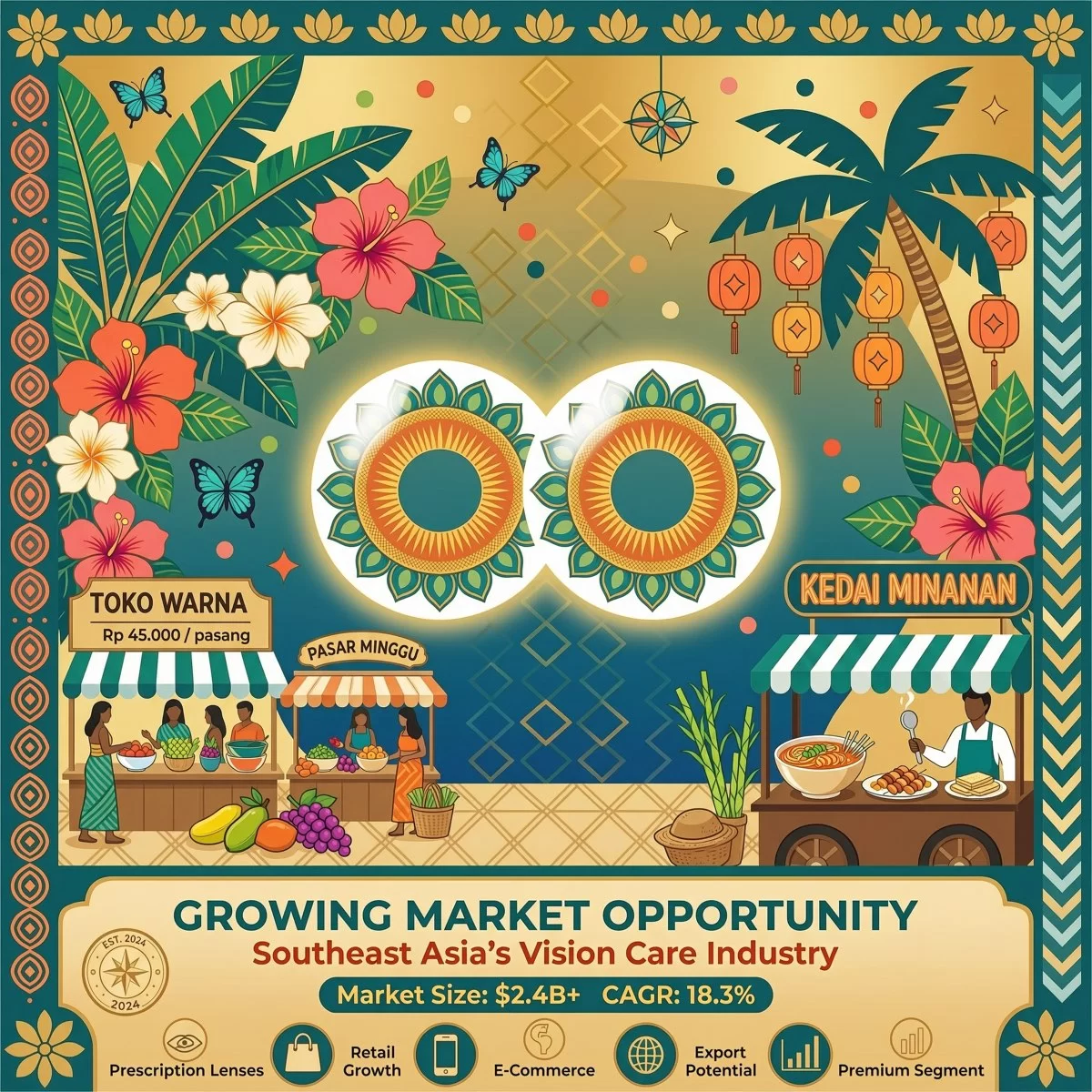
The Southeast Asia contact lens market is projected to reach .2 billion by 2026, with a CAGR of 8.5% from 2021 to 2026. Key drivers include:
- Growing youth population with high smartphone penetration
- Increasing demand for cosmetic and colored contact lenses
- Rising healthcare expenditure and eye care awareness
- Expansion of e-commerce platforms for easy product access
Key Markets in Southeast Asia
Indonesia
As the largest market in Southeast Asia, Indonesia has a population of over 270 million. The contact lens market here is growing rapidly due to urbanization and increasing disposable income. Cosmetic lenses are particularly popular among young consumers.
Thailand
Thailand’s contact lens market is driven by a strong tourism industry and a high concentration of fashion-conscious consumers. The market is characterized by a mix of international and local brands.
Vietnam
Vietnam’s contact lens market is experiencing significant growth due to economic development and increasing awareness about eye health. The government’s initiatives to improve healthcare infrastructure are also contributing to market expansion.
Opportunities for Brand Owners
Brand owners can capitalize on the Southeast Asia market by:
- Offering a diverse range of products, including cosmetic lenses
- Investing in digital marketing and e-commerce
- Partnering with local distributors and retailers
- Adapting products to local preferences and cultural norms
Challenges
While the Southeast Asia market offers significant opportunities, there are also challenges to consider:
- Regulatory complexity and varying standards across countries
- Intense competition from both international and local brands
- Price sensitivity among consumers
- Infrastructure and logistics challenges
Conclusion
The Southeast Asia contact lens market presents exciting opportunities for brand owners in 2026. By understanding the unique characteristics of each market and adapting their strategies accordingly, brands can position themselves for success in this rapidly growing region.