OEM vs ODM Contact Lenses: Which Model Fits Your Brand Best?
When a new contact lens brand starts talking to manufacturers, two terms appear very quickly: OEM and ODM.
Most buyers know the basic definition. OEM usually means producing under your brand according to your requirements. ODM usually means using an existing manufacturer-developed product or design and adapting it for your brand.
But in real contact lens sourcing, the difference is not always as simple as a textbook definition. The right model affects your MOQ, sampling time, design freedom, packaging options, compliance preparation, budget, and launch speed.
If you choose the wrong model, you may either spend too much too early or limit your brand more than necessary. If you choose the right model, you can launch faster, control risk, and scale more intelligently.
Here is a practical way to think about OEM vs ODM for contact lenses.
What ODM Means in Contact Lens Manufacturing
ODM is usually the easier starting point for new brands. The manufacturer already has existing lens designs, colors, parameters, materials, or product structures. You select from available options, then customize certain brand elements such as packaging, labels, color names, and product presentation.
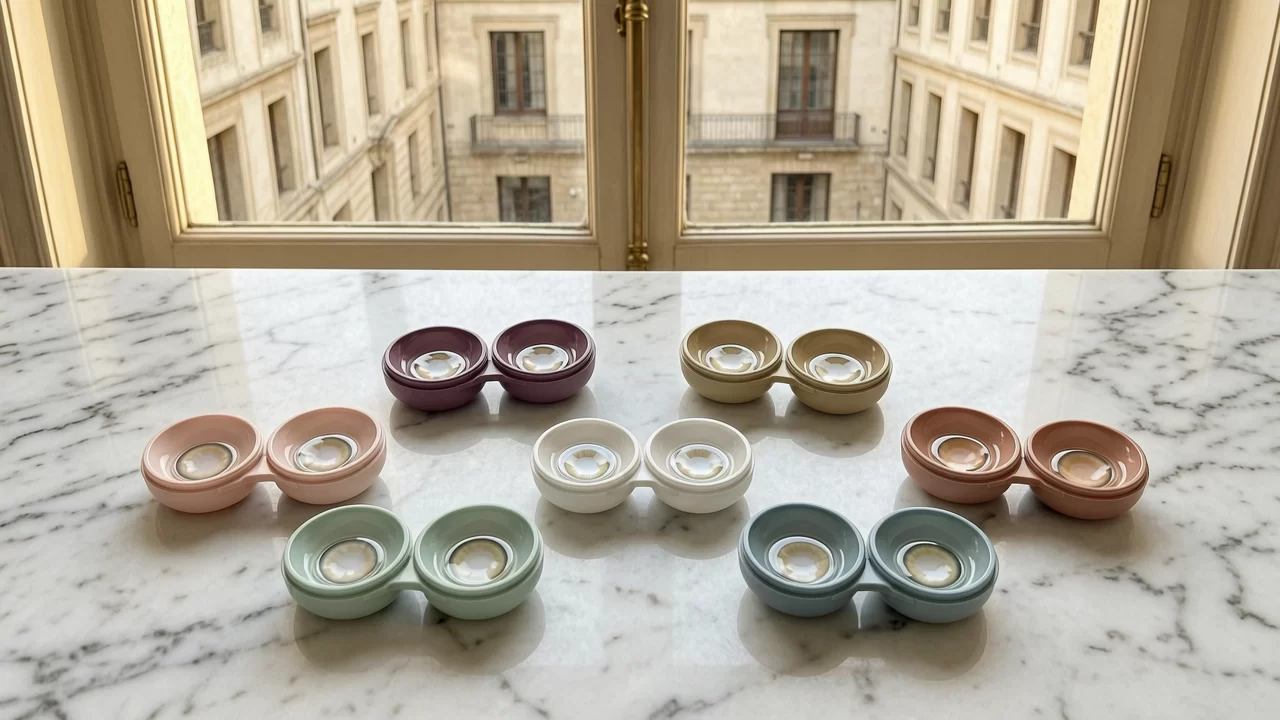
For example, you may choose from an existing natural brown, hazel, gray, or green color series and sell it under your private label. The lens itself is not fully developed from scratch for your brand, but your packaging and marketing can be customized.
ODM is useful because it lowers development risk. The product has usually been tested before, production is more predictable, and the sample process is faster.
Typical ODM advantages include:
- Lower entry cost
- Faster launch timeline
- Lower MOQ compared with fully custom development
- Existing color and parameter options
- Easier sampling
- More suitable for market testing
For many first-time contact lens brands, ODM is the most practical way to start.
What OEM Means in Contact Lens Manufacturing
OEM gives the brand more control. You may request specific product specifications, custom lens patterns, packaging details, prescription ranges, or a product concept developed more closely around your target market.
In contact lenses, OEM can involve custom color design, custom diameter strategy, special packaging structure, product line planning, or a more exclusive design direction. It is better suited for brands that already understand their market and want to differentiate beyond standard catalog products.
OEM usually requires more planning. You need clearer requirements, more sample review, more communication with the manufacturer, and sometimes higher MOQ or longer lead time.
Typical OEM advantages include:
- Stronger brand differentiation
- More control over product design
- Better fit for established brand positioning
- Potential exclusivity depending on agreement
- More room for long-term product line strategy
OEM is powerful, but it should not be rushed. A custom product that is poorly planned can be expensive to fix.
The Biggest Difference: Risk and Control
The simplest way to compare OEM and ODM is this:
ODM gives you speed and lower risk. OEM gives you control and differentiation.
Neither is automatically better. The right choice depends on your current business stage.
If you are testing whether your audience wants natural brown lenses, daily disposable colored lenses, or small-diameter office-friendly designs, ODM may be enough. You do not need to invent everything from zero before proving demand.
If you already know your best-selling style, understand customer feedback, and want a more unique design that competitors cannot easily copy, OEM becomes more attractive.
When ODM Is the Better Choice
ODM is usually better if you are:
- Launching your first contact lens brand
- Testing a new market
- Working with limited cash flow
- Trying to reduce inventory risk
- Unsure which colors will sell best
- Need faster launch timing
- Want low MOQ private label options
For example, a new beauty brand in Southeast Asia may start with 4 to 6 existing natural color designs, private label packaging, and a focused marketing campaign. After collecting sales data, the brand can reorder winning colors and gradually develop custom styles.
That is a smart use of ODM. It lets the market teach you before you invest heavily in custom development.
When OEM Is the Better Choice
OEM is usually better if you are:
- An established brand with clear customer data
- A distributor with proven best-selling categories
- Trying to create a signature lens style
- Targeting a specific regional preference
- Building a premium or differentiated product line
- Planning long-term repeat orders
- Ready to invest in sampling and development
For example, a Middle East-focused brand may want a lens series designed specifically for dark irises, warm makeup tones, and high-impact but natural-looking eye definition. In that case, OEM development can create a stronger product-market fit than simply choosing a generic catalog color.
MOQ Differences Between OEM and ODM
MOQ is one of the biggest practical differences.
ODM products often allow lower MOQ because the manufacturer already has existing designs or production experience. Private label packaging may still have its own MOQ, but the lens development burden is lower.
OEM usually requires higher MOQ because custom development, production setup, color testing, packaging coordination, or special specifications require more resources. The exact MOQ depends on design complexity, prescription range, packaging type, and whether the product is fully custom or semi-custom.
Before comparing prices, always ask:
- MOQ per design
- MOQ per color
- MOQ per prescription power
- MOQ for custom packaging
- Sample cost and sample lead time
- Reorder MOQ
- Whether the design is exclusive or shared
Many misunderstandings happen because buyers hear one MOQ number but do not clarify what it applies to.
Packaging: OEM and ODM Can Both Look Professional
Some new buyers assume ODM products look generic and OEM products look premium. That is not always true.
A well-planned ODM private label line can look very professional if the packaging, color naming, product photos, instructions, and website presentation are handled properly. On the other hand, an OEM product can still look weak if packaging is rushed or brand positioning is unclear.
Packaging should match your business stage. A first test batch does not need the most expensive box structure, but it does need to look trustworthy. Clear labeling, batch information, responsible instructions, and clean design matter more than decoration.
Compliance Considerations
Whether you choose OEM or ODM, compliance cannot be ignored. Contact lenses are regulated products in many markets, and requirements vary by country.
ODM may be easier from a documentation perspective if the product already has existing test reports or export history. But you still need to confirm whether the documents match your target market and sales channel.
OEM may require more documentation coordination because the product may involve custom design or specifications. If you plan to sell in markets that require FDA, CE, ISO 13485-related documentation, or local medical device registration, discuss this early.
Do not wait until production is finished to ask about documents. By then, fixing gaps can be slow and expensive.
A Practical Path for New Brands
For many contact lens brands, the best path is not choosing OEM or ODM forever. It is using them in stages.
Stage 1: ODM market test
Start with a focused selection of existing designs. Keep the SKU count controlled. Use private label packaging. Test color preference, price response, customer feedback, and repeat purchase.
Stage 2: Improve the winning line
After sales data comes in, reorder best-selling colors, remove weak designs, improve packaging, and refine product descriptions. This stage is about making the line more stable.
Stage 3: OEM differentiation
Once you know what your customers want, develop custom designs or specifications that make your brand harder to copy. This is where OEM becomes more valuable.
This staged approach protects cash flow and makes custom development more informed.
Questions to Ask Before Choosing
Before deciding between OEM and ODM, ask yourself:
- Do we already know which colors and styles sell?
- How much inventory risk can we accept?
- Do we need speed or uniqueness more right now?
- Is our budget better used for product development or marketing?
- Do we have enough customer feedback to justify custom design?
- What compliance documents will our market require?
- Can our supplier support stable reorders?
If your answers are uncertain, start simpler. A focused ODM launch is often better than an overcomplicated OEM project.
The Bottom Line
OEM and ODM are not just manufacturing labels. They are business choices.
ODM helps you move faster, test the market, and reduce early risk. OEM helps you build stronger differentiation once you understand your customers. The smartest brands often use both: ODM first to learn, OEM later to build something more defensible.
At MIOMI, we support both low MOQ private label ODM projects and OEM/ODM contact lens development for growing brands. If you are unsure which model fits your budget, target market, and product plan, contact us or email sales@miomicon.com.