Introduction
If you’re building a contact lens brand or expanding your product line, one of the most important decisions you’ll make is choosing the right lens material. For years, traditional hydrogel lenses dominated the market. Then came silicone hydrogel — a game-changer that promised better oxygen flow and longer wear times.
But here’s the truth: it’s not about which one is “better.” It’s about which one fits your brand’s positioning, target market, and product strategy.
In this guide, we’ll break down the real differences between hydrogel and silicone hydrogel contact lenses, and what each means for your brand. Whether you’re launching your first line or optimizing an existing catalog, this breakdown will help you make smarter product decisions.
What Are Traditional Hydrogel Lenses?
Traditional hydrogel lenses are made from soft, water-absorbing plastics called hydrogels. Think HEMA (2-hydroxyethyl methacrylate) — the original soft lens material that’s been around since the 1970s.
Key Characteristics
- Water content: Typically 38% to 58%
- Oxygen transmissibility (DK/t): Usually 20-40 for daily wear lenses
- Comfort: Soft, flexible, great initial comfort
- Cost: Generally more affordable to manufacture
- Deposits: Tend to accumulate protein and lipid deposits over time
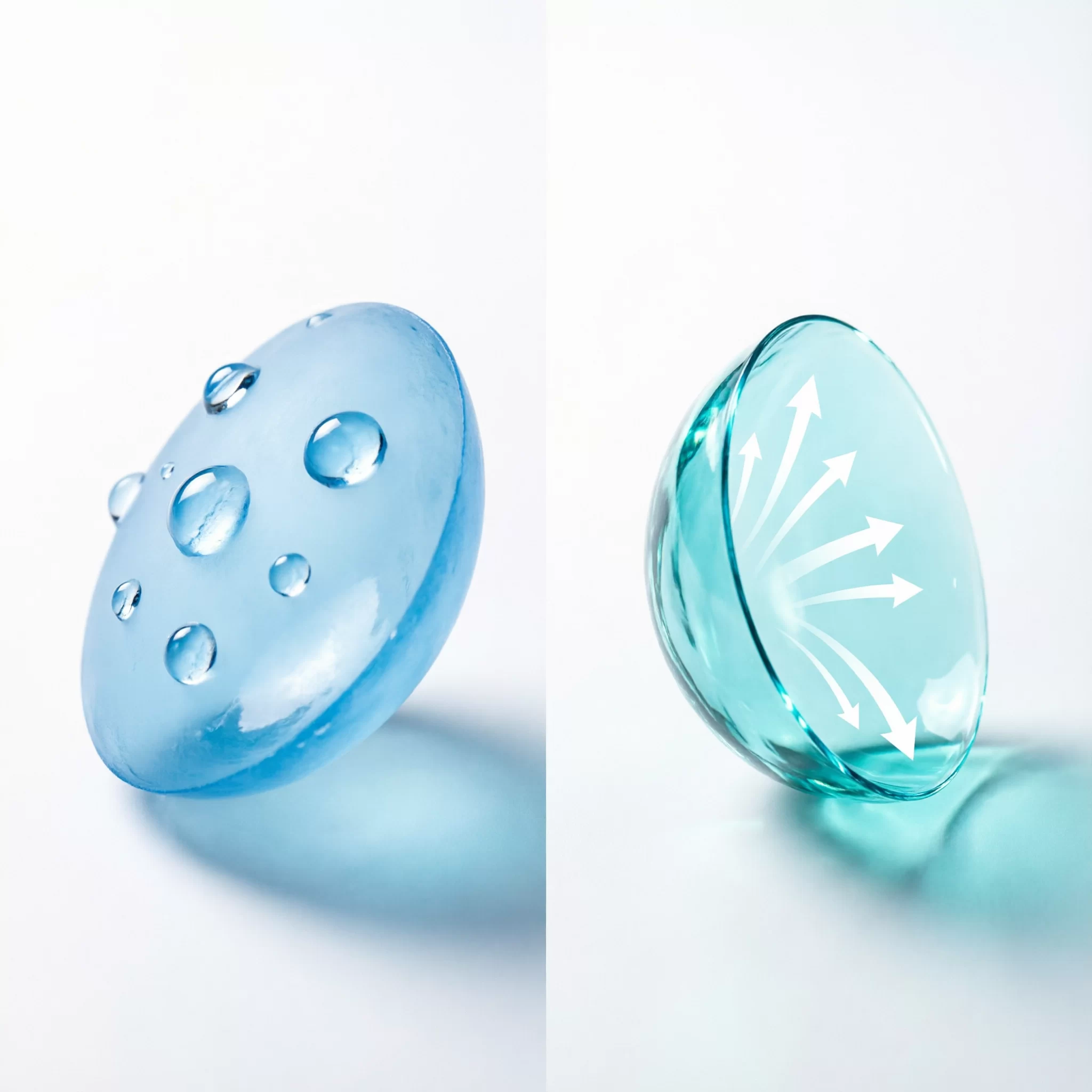
The biggest limitation of traditional hydrogel is oxygen. The material relies on water to carry oxygen through to the cornea, and there’s only so much water a lens can hold while maintaining its shape and durability.
For many users, this is perfectly fine for daily wear (8-10 hours). But for people who wear lenses longer or have naturally dry eyes, the oxygen limitation becomes noticeable — especially by the end of the day.
What Are Silicone Hydrogel Lenses?
Silicone hydrogel was introduced in the late 1990s and fundamentally changed what contact lenses could do. By adding silicone to the hydrogel mix, manufacturers created a material that allows much more oxygen to pass through the lens — without relying entirely on water content.
Key Characteristics
- Oxygen transmissibility (DK/t): Ranges from 70 to over 180 — that’s 3-5x more than traditional hydrogel
- Water content: Often lower (24% to 50%) because silicone carries the oxygen, not water
- Surface treatment: Most require special coatings to offset silicone’s natural hydrophobic (water-repelling) properties
- Cost: Higher manufacturing cost, usually passed to consumers as premium pricing
- Durability: Generally more rigid and less prone to tearing
The breakthrough here is straightforward: more oxygen means healthier eyes, especially for people who wear their lenses for extended periods. For daily disposable lenses, the difference might be less noticeable, but for monthly or biweekly replacement lenses, silicone hydrogel is often the preferred choice for eye health.
Side-by-Side Comparison
Let’s put these two materials head-to-head across the factors that matter most to brand owners and their customers.
Oxygen Permeability
This is where silicone hydrogel wins by a mile.
A typical hydrogel daily wear lens might have a DK/t of 20-30. Silicone hydrogel lenses start at around 70 and go up from there. The FDA considers anything above 125 to be “high oxygen transmissibility” for daily wear.
Why it matters for your brand: Higher oxygen permeability is a strong marketing story — “breathable,” “healthy,” “all-day comfort.” It justifies premium pricing and appeals to consumers who care about eye health.
Comfort
This is where things get interesting. Traditional hydrogel often feels better at first — it’s softer, more water-rich, and moves more naturally on the eye. Many first-time contact lens wearers prefer the feel of hydrogel lenses.
Silicone hydrogel, on the other hand, can feel slightly firmer. Modern surface treatments have narrowed the comfort gap considerably, but some users still notice a difference.
However, there’s a twist: end-of-day comfort. Many hydrogel wearers report dryness and discomfort after 8+ hours of wear. Silicone hydrogel wearers often say their eyes feel better later in the day because more oxygen is getting through.
Why it matters for your brand: If your target audience is first-time wearers or people who prioritize initial comfort, hydrogel might be your entry-level option. If you’re targeting experienced wearers who value eye health and all-day comfort, silicone hydrogel is the way to go.
Cost
Traditional hydrogel lenses are cheaper to manufacture. The materials are simpler, the production process is well-established, and there are more suppliers who can produce them reliably.
Silicone hydrogel requires more sophisticated materials and manufacturing. The raw materials cost more, and the quality control standards are typically higher.
Why it matters for your brand: Cost affects your pricing strategy and profit margins. Hydrogel lenses can be positioned as affordable everyday options with healthy margins. Silicone hydrogel commands higher retail prices but also has higher COGS — so your per-unit margin might be similar or slightly better depending on your positioning.
Durability and Handling
Silicone hydrogel lenses are generally more durable. They’re less likely to tear during insertion or removal, which is a big plus for new users who are still learning to handle lenses.
Traditional hydrogel lenses are softer and more flexible, which means they can tear more easily — especially when they’re thin (like many daily disposables).
Why it matters for your brand: Durability affects customer satisfaction and return rates. A lens that tears easily leads to complaints and lost customers. If you’re targeting first-time wearers, the durability of silicone hydrogel might actually justify the higher cost even if they don’t need the oxygen benefit.
Replacement Cycle Compatibility
Both materials work across all replacement cycles — daily, weekly, biweekly, monthly. But silicone hydrogel makes more sense for longer-wear modalities.
- Daily disposable: Both work well. Hydrogel is often cheaper; silicone hydrogel is premium.
- Biweekly/Monthly: Silicone hydrogel has a clear advantage because deposit buildup and oxygen deprivation become bigger concerns with longer wear.
- Extended/overnight wear: Only certain silicone hydrogel lenses are approved for this. Traditional hydrogel is generally not recommended for overnight wear.
Why it matters for your brand: Your product line’s replacement cycle strategy should align with material choice. If you’re launching a monthly lens line, silicone hydrogel is the standard today. If it’s daily disposables, you might offer both tiers.
What This Means for Your Brand Strategy
Now let’s get practical. How should you choose between these materials for your brand?
Scenario 1: Budget-Friendly Entry-Level Brand
If your strategy is to capture price-sensitive customers — think college students, first-time wearers, or emerging markets — traditional hydrogel daily disposables are a solid choice. They’re affordable to manufacture, comfortable enough for most users, and the lower price point encourages trial.
Product positioning: “Quality everyday lenses at a price you’ll love.”
Scenario 2: Premium Health-Focused Brand
If your brand story centers on eye health, comfort, and quality — and your customers are willing to pay for it — silicone hydrogel is the clear choice. You can market around “breathable technology,” “all-day comfort,” and “doctor-recommended materials.”
Product positioning: “Advanced lens technology for healthy, comfortable eyes — all day, every day.”
Scenario 3: Mid-Range Brand with Multiple Tiers
Many successful brands offer both. A hydrogel line at an entry-level price point, and a silicone hydrogel line for premium buyers. This gives customers options and allows you to capture a broader market.
The key here is making the difference clear. Don’t just say “premium” — explain why it’s premium: more oxygen, healthier eyes, better end-of-day comfort.
Product positioning: “Choose what’s right for you. Everyday comfort or advanced breathability — both made with the same quality standards.”
Scenario 4: Colored Contact Lenses
This is where MIOMI specializes, and the rules are a bit different. Colored contact lenses have additional layers (the color pigment layer), which affects both oxygen permeability and comfort.
For colored lenses:
- Most colored lenses are made from traditional hydrogel materials
- The color layer can reduce overall oxygen transmission
- Silicone hydrogel colored lenses exist but are less common and more expensive
- For daily wear colored lenses (6-8 hours), hydrogel is generally sufficient and more cost-effective
- FDA (USA): Both materials are approved. Silicone hydrogel lenses may have specific labeling about oxygen transmissibility and extended wear.
- CE (Europe): Both are CE-markable. Oxygen permeability claims must be backed by test data.
- KFDA (South Korea): Both are approvable. Testing requirements are similar to FDA.
What this means for your color lens brand: If you’re selling fashion/cosmetic colored lenses for occasional wear, hydrogel is the practical choice. If you’re positioning as a premium health-conscious color lens brand, you might explore silicone hydrogel options — but be prepared for higher costs and longer development timelines.
Regulatory Considerations
Both materials are widely accepted by major regulatory bodies, but there are differences in what you can claim.
The important thing: make sure your manufacturing partner provides all the necessary test data and certification documentation for whatever material you choose.
How to Decide: A Simple Framework
Ask yourself these five questions:
- Who is my target customer? If they’re health-conscious and willing to pay more, go silicone hydrogel. If they’re price-sensitive and wear lenses occasionally, hydrogel works.
- What’s my price point? Premium pricing = silicone hydrogel. Value pricing = hydrogel.
- What replacement cycle am I selling? Daily disposables can be either. Monthly lenses should probably be silicone hydrogel.
- Are these colored or clear lenses? Colored lenses are almost always hydrogel for cost and practicality reasons.
- What’s my brand story? If it’s about health, technology, and premium quality, silicone hydrogel supports that narrative. If it’s about accessibility, style, and everyday value, hydrogel fits better.
Working With Your OEM/ODM Partner
When you’re ready to develop your lens line, a good manufacturing partner like MIOMI will walk you through material selection based on your specific goals. Here’s what to ask for:
- Material options across price points
- Oxygen permeability (DK) data for each option
- Sample lenses for wear testing
- Certification status for each material
- Minimum order quantities for each material type
- Lead times for tooling and production
Don’t be afraid to ask for samples and test them yourself — or with a small group of target users. The on-eye feel and real-world performance are hard to predict from spec sheets alone.
Final Thoughts
Hydrogel versus silicone hydrogel isn’t about picking a winner. It’s about matching the right material to your brand, your customers, and your business model.
Traditional hydrogel is proven, affordable, and comfortable — perfect for entry-level brands, colored lenses, and price-sensitive markets.
Silicone hydrogel is the premium choice — better oxygen flow, healthier eyes, and a strong marketing story — for brands that want to position themselves as quality-first and health-focused.
Either way, what matters most is choosing a reputable manufacturer that can deliver consistent quality, proper certifications, and reliable supply. The material matters, but the quality of manufacturing matters even more.
Ready to build or expand your contact lens line? Whether you’re leaning toward hydrogel, silicone hydrogel, or still figuring it out, MIOMI can help you navigate the options and find the right fit for your brand. Get in touch with our OEM/ODM team to discuss your project.
—
MIOMI Optical specializes in high-quality colored contact lens manufacturing, offering OEM/ODM services with low minimum order quantities. With CE, FDA, and KFDA certified production, we help brands worldwide launch and grow their contact lens businesses.