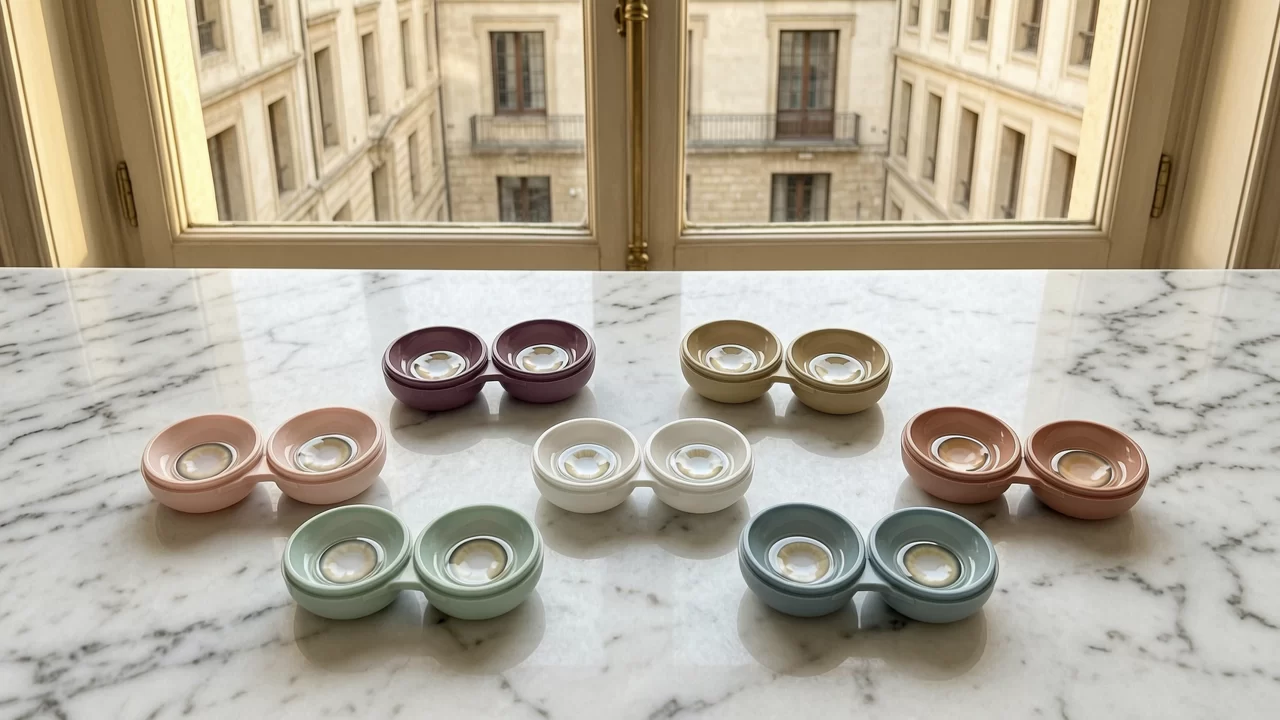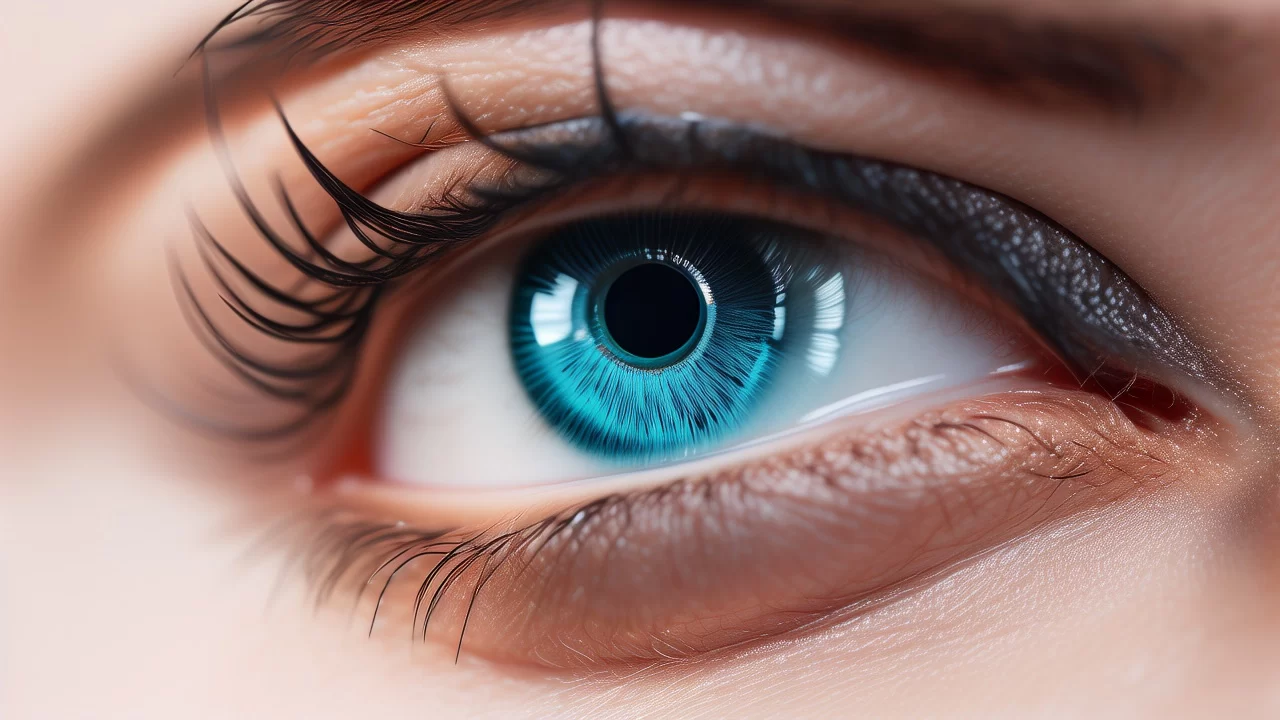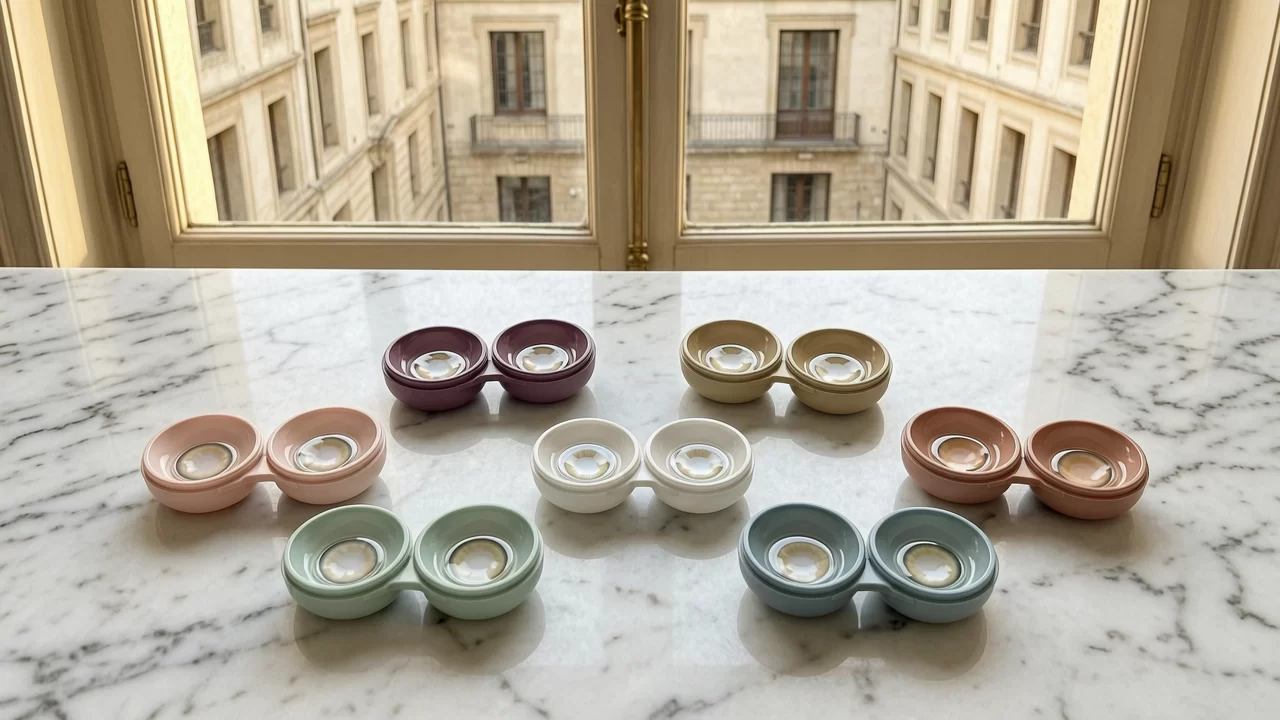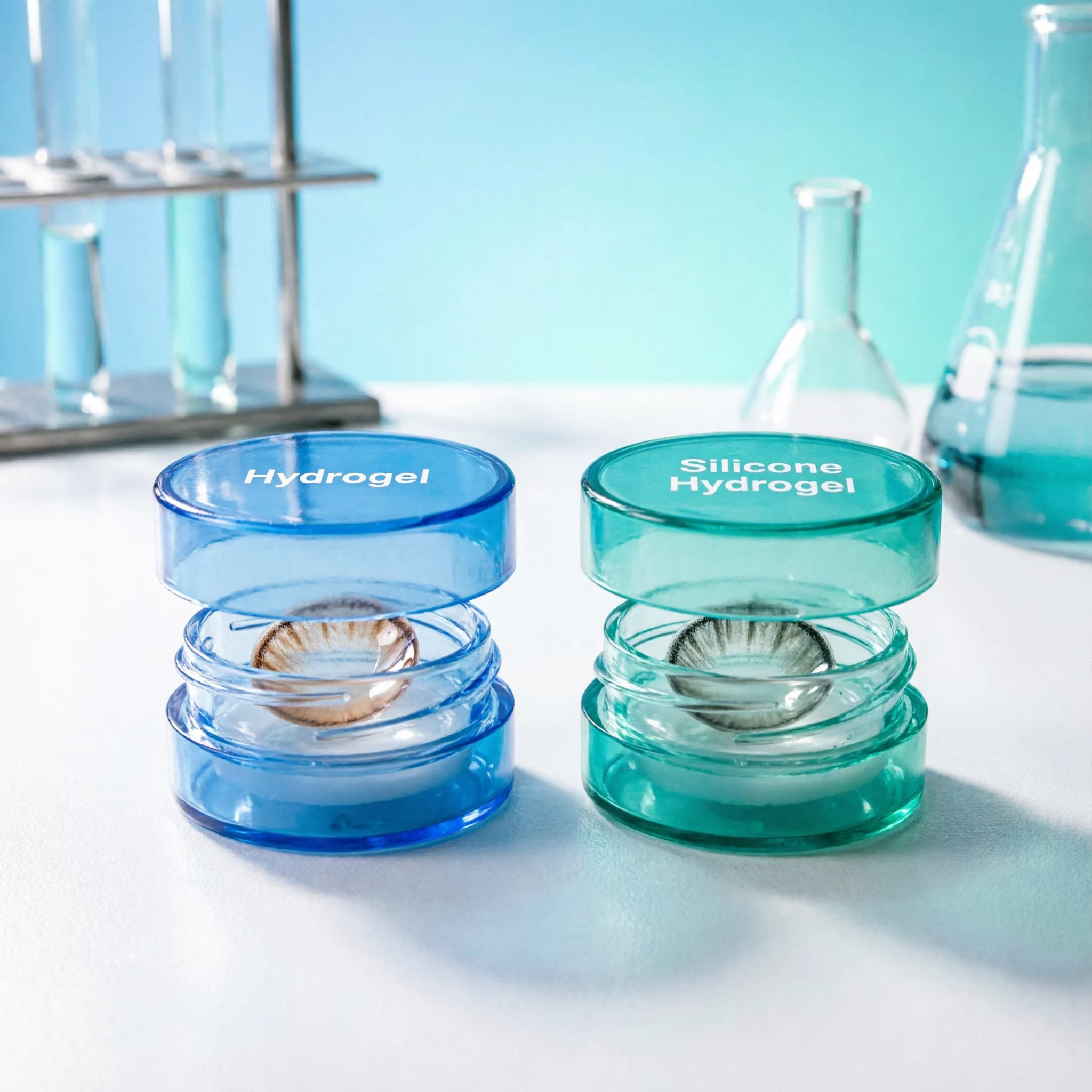
If you’re building a colored contact lens brand, one of the first and most important decisions you’ll make is what material your lenses are made of. Yet I’ve talked to dozens of new brand owners who haven’t thought about this at all — they focus entirely on colors and packaging, and let the factory pick the material.
That’s a mistake.
The material determines everything: how comfortable the lenses feel, how long people can wear them, what certifications you need, how much they cost, and ultimately how loyal your customers are. Get it right and you’ve got customers coming back every month. Get it wrong and you’ll be dealing with complaints, returns, and a reputation you can’t recover.
In this guide, I’m going to break down the two main categories of contact lens materials — hydrogel and silicone hydrogel — explain what they mean for your brand, and help you figure out which one is right for your market and your customers.
The Basics: What Are We Actually Talking About?
Let’s start with the basics so we’re all on the same page.
Hydrogel contact lenses have been around since the 1970s. They’re made from a water-absorbing plastic (HEMA and related polymers) that’s soft, flexible, and comfortable. The water in the lens carries oxygen from the air to the cornea — which is how your eye “breathes.”
Silicone hydrogel lenses came along in the late 1990s. They add silicone to the hydrogel material, which dramatically increases oxygen permeability. Silicone lets more oxygen pass through than water alone, so the cornea gets more oxygen even when the lens is on your eye.
Sounds simple, right? Silicone hydrogel is better because more oxygen is better. But in practice, it’s way more nuanced than that, especially for colored lenses.
The Oxygen Question: Dk/t and Why It Matters
Before we go further, you need to understand one term: Dk/t. It stands for the oxygen transmissibility of a lens — basically, how much oxygen gets through to your eye.
- Dk = the permeability of the material itself
- t = the center thickness of the lens
- Dk/t = how much oxygen actually reaches the cornea
For daily wear (8–12 hours a day), the minimum recommended Dk/t is about 24. For extended or overnight wear, you need much higher — around 125 or more.
Traditional hydrogel lenses typically have Dk/t values between 20 and 30, right around the minimum threshold for daily wear.
Silicone hydrogel lenses can have Dk/t values from 60 all the way up to 180+, depending on the material and design.
So why doesn’t everyone just use silicone hydrogel? Great question. Let’s talk about the trade-offs.
Hydrogel Lenses: The Workhorse of the Colored Lens Industry
What’s Good About Hydrogel
Cost-effective. Hydrogel materials are cheaper to produce, which means lower unit costs for you and lower price points for your customers. For emerging markets where price sensitivity is high, this is a big deal.
Great for colored lenses. This is the big one that most people don’t realize. The pigments and color layers in colored contact lenses sit inside the lens material (or between layers in the sandwich method). Hydrogel materials are generally easier to tint and work with for color applications. The color shows up consistently, and the manufacturing process is well-established.
Soft and comfortable on day one. Hydrogel lenses have a high water content (usually 38–58%), making them soft and immediately comfortable for most wearers. First-time users often find hydrogel lenses easier to get used to.
Widely available manufacturing. Almost every contact lens factory in the world produces hydrogel lenses. You’ll have more options, faster lead times, and more suppliers to choose from.
What’s Not So Good
Lower oxygen permeability. This is the main drawback. For people who wear lenses 8–10 hours a day, hydrogel is generally fine. But for those who wear them 12+ hours, or who have naturally dry eyes, the lower oxygen flow can lead to discomfort, redness, and in severe cases, corneal issues.
Not suitable for overnight wear. Due to the lower Dk/t, hydrogel lenses are never approved for extended or overnight wear. If your brand wants to market 30-day night-and-day wear lenses, you need silicone hydrogel.
Faster dehydration. Hydrogel lenses can lose water during the day, especially in dry environments (airplanes, air-conditioned offices, desert climates). This can make them uncomfortable later in the day.
Silicone Hydrogel Lenses: The Premium Choice
What’s Good About Silicone Hydrogel
Exceptional oxygen flow. This is the whole point. Silicone hydrogel lenses deliver 3–5x more oxygen to the cornea compared to traditional hydrogel. For long wear days, this means less redness, less fatigue, and better overall eye health.
Approved for extended wear. Some silicone hydrogel materials are approved for up to 30 days of continuous wear, including overnight. If your target market values convenience and “set it and forget it” lens wear, this is a major selling point.
Slower dehydration. Silicone hydrogel lenses tend to hold their moisture better throughout the day, especially in low-humidity environments. Many wearers report they still feel comfortable at the end of a 12-hour day.
Premium positioning. Silicone hydrogel is generally perceived as the “better” material by consumers who know anything about contact lenses. You can price at a premium and market it as a higher-end product.
What’s Not So Good
Higher cost. Silicone hydrogel materials are more expensive — both the raw materials and the manufacturing process. Expect unit costs to be 30–80% higher than comparable hydrogel lenses. This affects your pricing strategy and your minimum order quantities.
Harder to color. Here’s the catch for colored contact lens brands. Silicone is inherently harder to tint than hydrogel. The color vibrancy and consistency can be trickier to achieve, especially for bold or highly pigmented colors. Many factories that do colored silicone hydrogel lenses are still refining their process.
Stiffer material. Silicone hydrogel lenses are slightly stiffer than hydrogel ones. For some people, this means a longer adaptation period. The lenses can also feel drier on insertion until they warm up to eye temperature — though they stay comfortable longer once they do.
Fewer factory options. Not every contact lens manufacturer produces silicone hydrogel colored lenses. Your supplier choices are more limited, which can mean longer lead times, higher MOQs, and less negotiating power.
A Quick Side-by-Side Comparison
Let me put this all together in a simple table:
| Factor | Hydrogel | Silicone Hydrogel |
|---|---|---|
| **Oxygen (Dk/t)** | 20–30 | 60–180+ |
| **Cost** | Lower | 30–80% higher |
| **Coloring process** | Mature, consistent | Developing, trickier |
| **Initial comfort** | Very soft | Slightly stiffer, needs adaptation |
| **All-day comfort (12h+)** | May dry out | Generally better |
| **Dry environments** | Can be problematic | Better moisture retention |
| **Overnight wear** | No | Some approved |
| **Factory availability** | Abundant | Limited |
| **Typical MOQ** | Lower (varies) | Higher |
| **Market perception** | Standard | Premium |
How to Choose: Which Material Is Right for Your Brand?
This is the question you’re probably asking. The answer depends on who you’re selling to, where you’re selling, and what kind of brand you want to build.
Choose Hydrogel If:
You’re targeting price-sensitive markets. Southeast Asia, parts of Latin America, and emerging markets where consumers are more price-conscious. Hydrogel colored lenses at a $15–25 price point will sell better than premium silicone hydrogel at $35–50.
Your selling point is color variety and fashion. If your brand is all about bold colors, seasonal collections, and fashion-forward designs, hydrogel gives you more consistent coloring and faster turnaround on new designs.
You’re just starting out with a limited budget. Hydrogel lenses have lower MOQs and lower unit costs, which means you can launch with less capital and test your market without a huge upfront investment.
Your target customer wears lenses occasionally. If your customers wear colored lenses for special occasions, weekends, or a few hours a day, the oxygen advantage of silicone hydrogel doesn’t matter as much. Hydrogel is perfectly fine for intermittent wear.
Choose Silicone Hydrogel If:
You’re targeting mature, health-conscious markets. North America, Western Europe, Australia — markets where consumers are more educated about eye health and willing to pay more for premium products.
Your brand positioning is premium. If you’re building a luxury or professional-grade brand, silicone hydrogel is almost a requirement. It’s table stakes for competing with established premium brands.
Your customers wear lenses all day. If your target audience is professionals who wear lenses from 7 AM to 10 PM, the all-day comfort of silicone hydrogel will be a major competitive advantage.
You want to stand out in the colored lens space. Most colored contact lens brands still use hydrogel. Offering silicone hydrogel colored lenses is a genuine differentiator and gives you something to market that many of your competitors can’t match.
The Middle Ground: Is There a Third Option?
Sort of. Some factories are now offering high-water-content hydrogel lenses (55–62% water) with slightly improved Dk/t values (30–40 range). They’re not as permeable as silicone hydrogel, but they’re an upgrade over standard hydrogel at a more modest price increase.
There are also hybrid designs that use different materials in different zones — though these are mostly in prescription/clear lenses rather than colored ones.
For most colored contact lens brands in 2026, your real choice is still hydrogel vs. silicone hydrogel. But keep an eye on materials science — this space is moving fast, and I expect we’ll see new materials and coating technologies in the next 2–3 years that blur the lines even further.
A Word on Certifications
Regardless of which material you choose, you need the right certifications for your target market:
- FDA clearance for the US market
- CE marking under MDR for the EU
- UKCA for the UK
- Health Canada for Canada
- TGA for Australia
Silicone hydrogel lenses generally have more requirements for clinical testing, especially if you’re claiming extended wear capabilities. This adds to your timeline and your costs.
My advice: if you’re launching a new brand with silicone hydrogel lenses, budget at least 3–6 months for certification testing on top of your manufacturing timeline.
Our Experience at MIOMI
Since we work with both hydrogel and silicone hydrogel materials at MIOMI, I see the difference firsthand. Here’s what we’ve observed:
For colored lens brands starting out, we almost always recommend starting with hydrogel. You get lower MOQs, faster time-to-market, more color options, and lower risk. Once you’ve validated your market and built some revenue, you can add a silicone hydrogel line as a premium upgrade.
For established brands expanding into Europe or North America, silicone hydrogel is worth the investment. The retail price points in those markets support the higher cost of goods, and consumers there are more likely to seek out premium materials.
For brands focused on natural-looking colored lenses, silicone hydrogel works well because you don’t need heavy pigmentation. The more subtle the color, the easier it is to achieve consistent results with silicone hydrogel materials.
For bold, vibrant fashion colors, hydrogel is still the more reliable choice in 2026. The coloring technology for silicone hydrogel is improving every year, but hydrogel still has the edge for intense, consistent color payoff.
Final Thoughts
There’s no universal “best” material — it depends entirely on your brand strategy, target market, and customer needs. Hydrogel is the reliable, cost-effective workhorse that’s perfect for fashion-focused brands and emerging markets. Silicone hydrogel is the premium option that delivers better eye health and all-day comfort, at a higher cost.
The biggest mistake I see new brands make is not thinking about material choice at all. They pick lenses based on color samples alone and then wonder why they get complaints about dryness or discomfort after 8 hours of wear.
Don’t be that brand. Understand your materials, know your customer, and build your product line accordingly. Your customers will feel the difference — and so will your bottom line.
Ready to talk through which material makes sense for your brand? At MIOMI, we produce both hydrogel and silicone hydrogel colored contact lenses for brands worldwide. Whether you’re looking for low-MOQ hydrogel fashion colors or premium silicone hydrogel for mature markets, we can help you find the right fit. Reach out to our team to start the conversation.