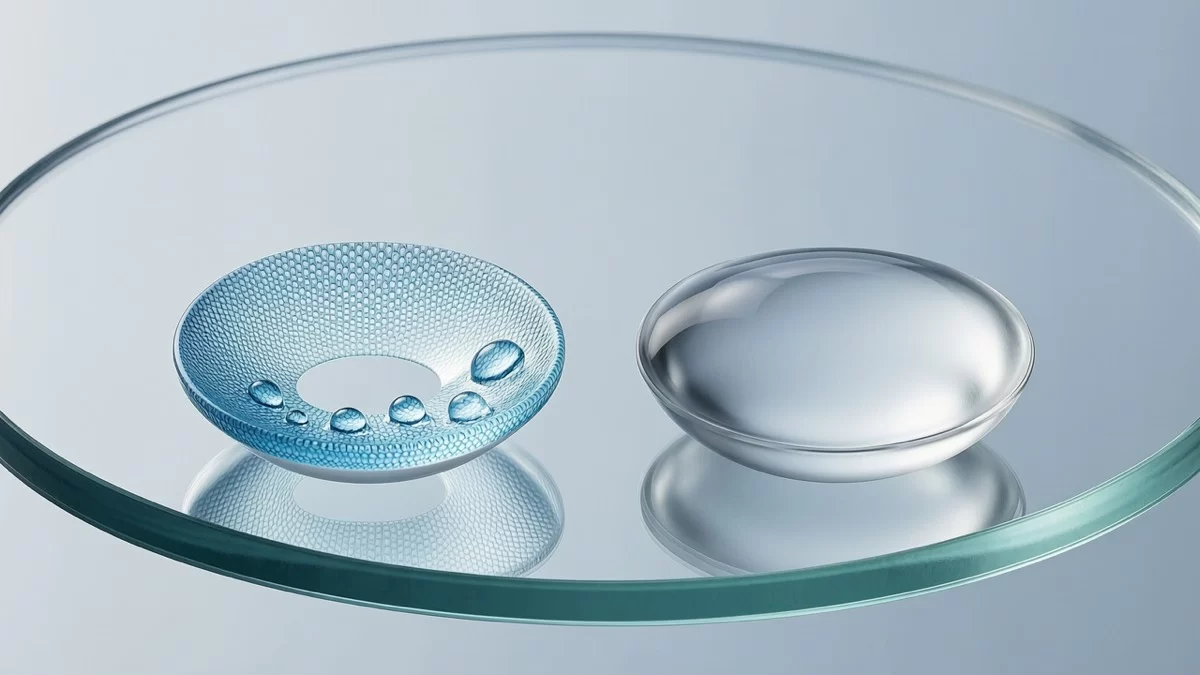
One of the first questions any new contact lens brand faces: which material should our lenses be made from?
The answer usually comes down to two options — hydrogel and silicone hydrogel. They sound similar, they’re both soft lenses, and the spec sheets can look confusingly alike. But the differences matter, both for how the lenses perform and for how you position and price your brand.
Here’s the honest breakdown, from someone who fields this question from brand owners regularly.
The Basics: What Each Material Actually Is
Hydrogel is the classic soft lens material — a water-absorbing polymer that’s been used for decades. Its comfort comes from water content: typical hydrogel lenses sit around 38% to 55% water. The water carries oxygen to the cornea, so in hydrogel lenses, higher water content generally means more oxygen transmission.
Silicone hydrogel adds silicone to the polymer structure. Silicone transmits oxygen directly through the material itself, not just through water. The result: silicone hydrogel lenses typically deliver 3 to 6 times more oxygen to the cornea than standard hydrogel lenses, regardless of water content.
That oxygen difference is the entire story in one sentence — but its business implications run deeper than most buyers realize.
Oxygen: Why It Matters More Than Comfort Marketing Suggests
The cornea has no blood vessels; it gets oxygen directly from the air. When a lens blocks too much oxygen, the eye compensates in ways that are bad news long-term: redness, neovascularization (new blood vessels growing into the cornea), and general intolerance after years of wear.
For daily wear of 8–10 hours, a good hydrogel lens with adequate water content works fine for most people. For longer wear days, sensitive eyes, or markets where consumers wear lenses from morning to night, silicone hydrogel is meaningfully safer and more comfortable.
This is why eye care professionals overwhelmingly recommend silicone hydrogel for regular wearers — and why it’s become the standard material for clear prescription lenses in developed markets.
So Why Isn’t Every Colored Lens Silicone Hydrogel?
Here’s the complication brand owners need to understand: colored lens technology and silicone hydrogel don’t combine easily.
The pigment layer in colored lenses needs to be printed or embedded within the lens structure. Silicone hydrogel materials are stiffer, more hydrophobic, and harder to work with in the printing process. Making a colored silicone hydrogel lens that has good pattern quality, maintains high oxygen transmission, AND stays affordable is genuinely difficult engineering.
That’s why the colored lens market still runs heavily on hydrogel — especially in the fashion and beauty segments, where typical wear time is moderate (events, workdays, daily fashion) rather than extended.
The gap is closing: more manufacturers, including us, now offer silicone hydrogel colored options, but they come at a higher production cost, and the color pattern range is usually narrower than hydrogel.
The Decision Framework for Brand Owners
Here’s how we advise brands to think about it:
Choose hydrogel when:
– Your market is fashion/beauty-driven with typical daily wear of 6–10 hours
– You want the widest color range and most advanced pattern designs (hydrogel printing is more mature)
– You’re targeting price-sensitive segments or emerging markets
– Your wearers skew younger and wear lenses situationally rather than all day every day
Choose silicone hydrogel when:
– Your positioning is premium, comfort-focused or “eye health conscious”
– Your market is North America, Europe or other regions where consumers and regulators emphasize oxygen transmissibility
– You’re selling daily disposables (the premium daily segment increasingly expects silicone hydrogel)
– You’re also offering prescription versions alongside plano fashion colors
The hybrid strategy is increasingly common: a fashion line in hydrogel for the broad color range, plus a premium daily line in silicone hydrogel for comfort-focused customers. This covers both segments without forcing one material to do everything.
What to Check in Samples Whichever You Choose
Material choice is only half the story. When evaluating samples:
- Ask for the Dk/t value (oxygen transmissibility). For full-day wear, aim for Dk/t of 20+ in hydrogel or 60+ in silicone hydrogel as rough comfort benchmarks.
- Check water content context. High water content in hydrogel sounds good, but very high water content lenses can actually dehydrate on the eye in dry environments, pulling moisture from the tear film. Mid-range (around 40–50%) is often the sweet spot.
- Test edge comfort. Material stiffness affects how the lens edge feels; silicone hydrogel is slightly stiffer, so edge design quality matters more.
- Verify the printing method. Sandwich printing (pigment encapsulated between layers) is non-negotiable for either material.
- Confirm certification for your market. CE for Europe, FDA-cleared manufacturing for the US — material type doesn’t change regulatory requirements.
Pricing and Positioning Implications
Silicone hydrogel lenses cost more to produce, and consumers know the term. In markets like the US, UK and Germany, “silicone hydrogel” on packaging is a genuine premium signal that supports a 20–40% price uplift. In markets where the term isn’t yet widely understood, the material benefit is real but harder to communicate — positioning matters less than actual comfort performance there.
For new brands with limited budget: start hydrogel, prove your designs and build volume, then add a silicone hydrogel premium tier once you have traction. That’s the path most of our successful OEM partners have followed.
The Bottom Line
There’s no universally “correct” material — only the right material for your market, your price point and your wearers’ habits. Hydrogel remains the workhorse of the colored lens world for good reasons: mature technology, rich color options, comfortable for normal wear, and cost-effective. Silicone hydrogel is the premium, oxygen-rich upgrade that’s becoming expected in health-conscious and prescription-leaning segments.
Whichever you choose, work with a manufacturer who can show you Dk/t numbers, sample both materials, and test on real wearers in your target market before committing to bulk production.
We produce both hydrogel and silicone hydrogel colored lenses with low MOQs for first orders — contact sales@miomicon.com to request samples of each and compare in your own market.