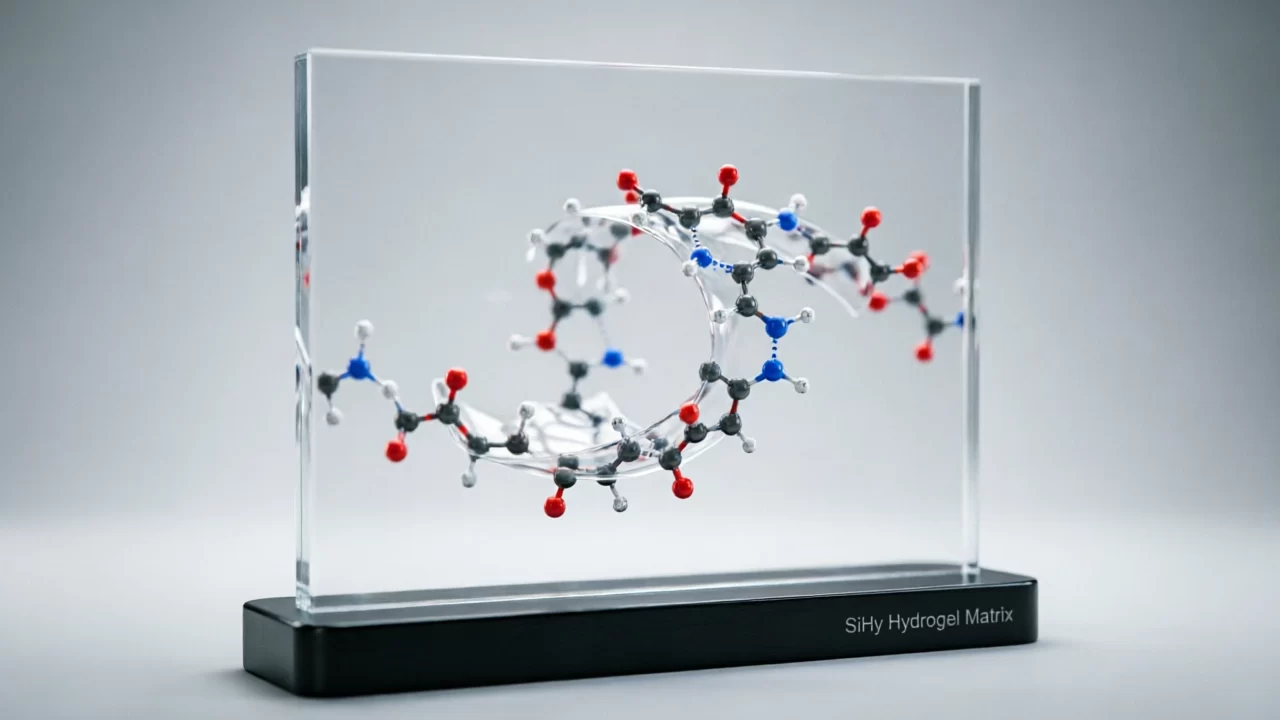
Material choice is one of the most important decisions for your contact lens brand. The two main options are hydrogel and silicone hydrogel. Understanding the differences helps you position your brand correctly.
What Is Hydrogel?
Hydrogel lenses have been the standard since the 1960s. They are soft, comfortable, and affordable.
Key Characteristics
- Water content: 38%-70%
- Oxygen permeability: Low to moderate (Dk/t 8-40)
- Comfort: Excellent initial comfort
- Cost: Lower production cost
Best For
- Daily wear (8-10 hours)
- Occasional wear customers
- Budget-conscious markets
- Colored cosmetic lenses
Limitations
- Lower oxygen transmission
- Can cause dryness with extended wear
- Not suitable for overnight wear
- Protein buildup faster than silicone hydrogel
What Is Silicone Hydrogel?
Silicone hydrogel is the modern standard, introduced in the late 1990s. It combines silicone (for oxygen) with hydrogel (for comfort).
Key Characteristics
- Water content: 24%-60%
- Oxygen permeability: High (Dk/t 60-160+)
- Comfort: Good, improves with technology
- Cost: Higher production cost
Best For
- Extended wear (12+ hours)
- Daily full-time wearers
- Premium market positioning
- Customers with dry eye concerns
- Medical/therapeutic applications
Advantages
- 5x more oxygen than hydrogel
- Reduced risk of hypoxia-related complications
- Better for sensitive eyes
- Longer comfortable wear time
- Lower protein buildup
Comparison Table
| Feature | Hydrogel | Silicone Hydrogel |
|---|---|---|
| Oxygen Permeability | Dk/t 8-40 | Dk/t 60-160+ |
| Water Content | 38-70% | 24-60% |
| Max Wear Time | 8-10 hours | 12-16 hours |
| Comfort (Initial) | Excellent | Good |
| Comfort (Extended) | Fair | Excellent |
| Dry Eye Friendly | No | Yes |
| Production Cost | Lower | Higher |
| Retail Price | $10-20/pair | $20-40/pair |
| Best Market | Budget/Mass | Premium |
Market Positioning Strategy
Hydrogel Brand Positioning
- Target: Young customers, occasional wear, fashion-focused
- Price: Affordable, accessible
- Message: Beauty, variety, fun
- Examples: Olens, Lensme (Korean brands)
Silicone Hydrogel Brand Positioning
- Target: Daily wearers, professionals, health-conscious
- Price: Premium, quality-focused
- Message: Comfort, health, science
- Examples: Acuvue, Air Optix (major brands)
Regional Preferences
Southeast Asia
Preference: Hydrogel (80%+ market share)
Customers prioritize color variety and affordability over extended wear comfort.
Middle East / GCC
Preference: Mixed (60% hydrogel, 40% silicone hydrogel)
Growing demand for premium options in UAE, Saudi Arabia.
Europe
Preference: Silicone hydrogel (70%+ market share)
Health-conscious market, willing to pay premium for comfort.
North America
Preference: Silicone hydrogel (80%+ market share)
Daily disposables in silicone hydrogel dominate.
For Brand Owners: Decision Framework
Choose Hydrogel If:
- Target market is price-sensitive
- Customers wear lenses occasionally (weekends, events)
- Fashion/color variety is the main selling point
- Entering Southeast Asia or developing markets
- Starting with limited budget
Choose Silicone Hydrogel If:
- Target market values comfort and health
- Customers wear lenses daily (work, school)
- Premium positioning is part of brand strategy
- Entering Europe, North America, or developed markets
- Have budget for higher MOQ and production costs
Hybrid Strategy
Many successful brands offer both:
- Hydrogel line: Fashion colors, affordable, high variety
- Silicone hydrogel line: Natural colors, premium, daily wear
This approach captures both market segments and allows customers to upgrade as their needs change.
At MIOMI Optical
We offer both material options:
- Hydrogel: Standard and premium grades, 38-55% water content
- Silicone Hydrogel: Advanced materials, Dk/t 100+
- MOQ: Hydrogel from 100 pairs, Silicone hydrogel from 300 pairs
- Certifications: Both materials FDA registered, CE marked
Contact us: eye@miomi.cc | miomicon.com