Colored contact lenses used to be a niche category reserved for cosplay and costume shops. That changed years ago, and by 2026 the market has matured into something genuinely interesting for entrepreneurs: a beauty category with repeat buyers, strong margins, and room for new brands that understand their audience.
If you’ve been thinking about launching your own colored contact lens line, this guide walks through the whole process — what the market looks like, how manufacturing models differ, how to pick a factory, and what the actual launch timeline looks like from first inquiry to delivery.
The Market Opportunity in 2026
The global colored contact lens market keeps growing at a healthy clip, driven by a few converging forces:
- Beauty and cosmetics convergence. Colored lenses have moved from the novelty aisle into everyday beauty routines, especially in Asia, the Middle East, and increasingly in Europe and Latin America. For a lot of consumers, lenses are now as routine as mascara.
- Social commerce. TikTok, Instagram, and regional platforms like Xiaohongshu have made lens try-on content a genre of its own. A single viral try-on video can move thousands of pairs. Brands that give creators good visual content sell.
- Prescription + cosmetic overlap. A meaningful share of buyers need vision correction and want color at the same time. Brands that offer powered lenses (not just plano) capture a segment that pure-cosplay players miss.
- Low price sensitivity at the premium end. Consumers buying lenses for daily wear will pay for comfort and safety. That gives quality-focused brands real pricing room compared to commodity sellers.
None of this means the market is easy. It’s regulated, buyers are more educated than they used to be, and weak products get exposed quickly in review culture. But for a brand with a clear point of view and a reliable manufacturer, the fundamentals are good.
OEM vs ODM vs Private Label: Know the Difference
These three terms get mixed up constantly, so let’s be precise.
OEM (Original Equipment Manufacturer) means the factory manufactures a product based on your design and specifications. You bring the concept — the color design, the packaging, the positioning — and the factory executes it. You get maximum control and genuine differentiation, but you carry more of the design risk and usually face higher minimum order quantities.
ODM (Original Design Manufacturer) means the factory designs the product and you sell it under your brand. The factory already has lens designs, molds, and formulas in place. You pick from their catalog, possibly with small tweaks, and brand it. Faster to market, lower risk, less unique.
Private label is often used interchangeably with ODM, but in practice it usually refers to the simplest version: putting your logo on an existing stock product and packaging, with little or no customization. Lowest barrier to entry, fastest launch, weakest differentiation.
Which should you choose?
- If you’re testing the market with limited capital, start with private label or ODM. Get sales data before investing in custom tooling.
- If you already have an audience (beauty influencers, established cosmetics stores, regional distributors) and know what your customers want, OEM gives you a product nobody else can copy.
- Many smart brands do both: launch with ODM stock to generate cash flow, then reinvest into OEM custom designs once they know which color families sell.
Choosing a Manufacturer: What Actually Matters
This is the decision that makes or breaks the business. Here’s what to evaluate.
1. Certifications — non-negotiable
Contact lenses are medical devices in almost every jurisdiction. Ask the manufacturer for:
- CE marking (European Union) — required for selling into Europe.
- FDA clearance (United States) — the US requires FDA-cleared lenses; do not take shortcuts here.
- KFDA/MFDS registration (Korea) — Korean-made lenses carry strong brand equity in Asia; verify the registration is real and current.
- ISO 13485 — the medical device quality management standard. A factory without it is a red flag regardless of price.
Ask for certificate numbers and verify them independently. Serious manufacturers expect this question and answer it quickly. If a supplier gets vague about documentation, walk away.
2. Minimum Order Quantity
MOQs vary widely. Typical ranges:
- Stock/private-label orders: often a few hundred pairs per SKU, sometimes less if you mix across colors.
- Custom OEM orders: commonly several thousand pairs per design, since the factory has to set up color printing and packaging for your design specifically.
Negotiate. Ask whether you can mix SKUs to hit a total MOQ, whether the first order can be smaller at a slightly higher unit price, and how reorders work. A good factory wants a long-term relationship and will flex on the first order if you’re credible.
3. Sampling
Never place a production order without sampling. Expect to evaluate:
- Color accuracy versus your design files (screen colors and printed lens colors are different beasts).
- Comfort and fit on real wearers.
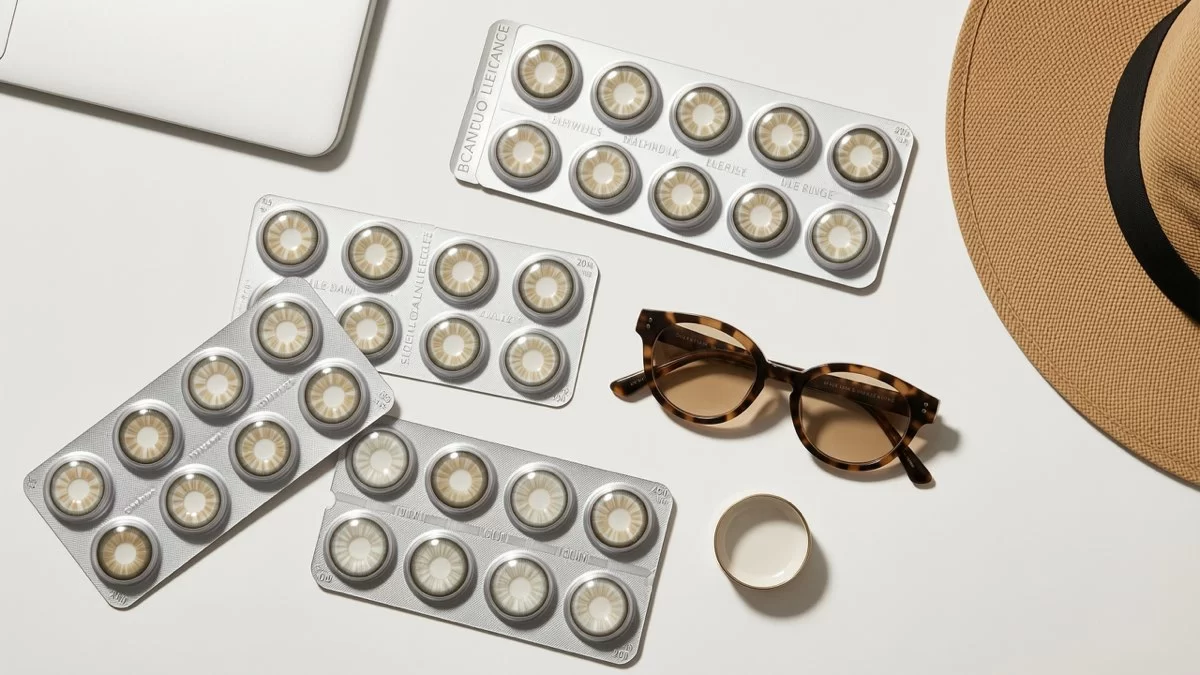
- Packaging print quality, sealing integrity, and blister presentation.
Sampling usually costs money and takes time — typically one to several weeks depending on complexity. That’s normal. Treat sample cost as part of your launch budget.
4. Production capability and lead times
Ask directly:
- What’s the lead time for stock items versus custom orders? At MIOMI, for example, stock items ship in about 7 days and custom orders take around 20 days from artwork confirmation — but whatever factory you choose, get the number in writing before you commit to retail launch dates.
- What’s monthly production capacity? If your brand takes off, you don’t want to discover the factory can’t scale with you.
- What quality control happens between production and shipping? Ask about inspection rates and defect handling policy.
5. Communication and responsiveness
You will have questions — dozens of them — during sampling and production. A supplier that takes two days to answer a simple question during the sales process will be worse after they have your deposit. Response speed during negotiation is your best predictor of service quality later.
The Step-by-Step Launch Process
Here’s the realistic sequence for an OEM/ODM launch.
Step 1: Inquiry and brief. You tell the manufacturer what you want to build: target market, price point, color style (natural enhancement versus bold cosmetic), daily/monthly/yearly replacement schedule, quantities. A clear brief gets a better response than a vague “send me your catalog.”
Step 2: Design. For OEM, you provide or co-develop color artwork and packaging design. For ODM, you select from existing designs and agree on any modifications. This stage also covers regulatory paperwork for your target market.
Step 3: Sampling. The factory produces samples. You test them — visually, on wearers, and through whatever compliance checks your market requires. Expect one or two revision rounds. Rushing this stage is the most common cause of expensive mistakes later.
Step 4: Production. Samples approved, deposit paid, production starts. Lead time runs from this point — roughly 7 days for stock-based orders, around 20 days for fully custom work, as a planning reference.
Step 5: Delivery and launch. Final inspection, balance payment, shipping. Plan your logistics: lenses are small and light, but they’re regulated goods, so customs documentation matters. Have your marketing content ready to go before the stock arrives, not after.
Branding and Packaging: Where Brands Win or Lose
The lens itself is only half the product. In a category where buyers choose between dozens of brands with similar specs, packaging and positioning do heavy lifting.
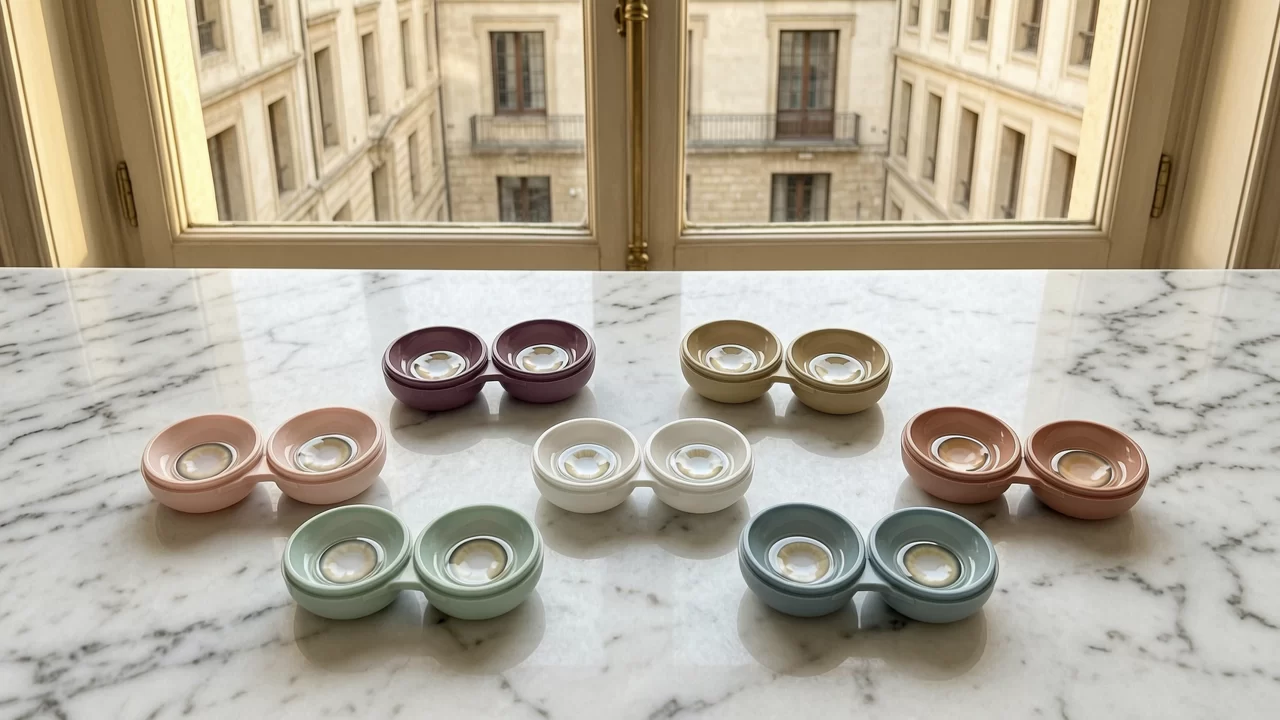
- Blister and box design. This is your shelf presence. Look at how Korean and Japanese lens brands design for gifting and social sharing — the unboxing is part of the product.
- Color naming. “Hazel Brown 3” sells worse than a name with personality. Build a naming system that matches your brand voice.
- Compliance on pack. Every market has labeling rules: power range, diameter, base curve, water content, expiry, manufacturer info, CE/FDA marks where applicable. Get this reviewed before print, not after.
- Visual assets. Try-on photos and video across multiple eye colors (dark, medium, light) are the single highest-converting content asset a lens brand can have. Budget for a real photo shoot.
Pricing: What to Expect (Ranges Only)
Every project is different, so treat these as directional rather than fixed:
- Private label / stock: the lowest entry cost; you can often launch a small multi-SKU test order for a modest total budget, with unit costs low enough to support 2–4× retail markup.
- ODM with packaging customization: moderate step up; you pay for custom packaging runs (printing has its own MOQs) while lenses come from stock designs.
- Full OEM custom design: the largest upfront commitment — lens design setup, sampling, custom packaging — but the best unit economics at volume and the only route to a truly defensible product.
Always ask for a full landed-cost view: unit price, sampling, packaging, shipping, and duties. A cheap unit price with expensive custom packaging is not actually cheap.
Common Mistakes to Avoid
- Skipping regulatory checks for your target market. Selling non-cleared lenses in the US or EU isn’t a risk, it’s a countdown. Marketplaces and customs both enforce this.
- Ordering based on price alone. The lens market punishes comfort complaints brutally. One bad review cycle about dry or irritating lenses can kill a young brand.
- Launching too many SKUs. Eight to twelve well-chosen colors beat forty scattered ones. Depth of inventory in your best sellers matters more than breadth.
- Ignoring powered lenses. Plano-only brands leave the prescription segment — often the most loyal buyers — on the table.
- Not planning the reorder cycle. If your lead time is three weeks and your sell-through is faster than that, you’ll stock out at exactly the moment your marketing peaks. Order the second batch before the first sells out.
- Treating the supplier as a vendor instead of a partner. The brands that grow fastest are usually the ones whose factory actively helps them improve product, fix problems, and plan new launches.
Final Thought
Starting a colored contact lens brand in 2026 is less about having capital and more about making two decisions well: who your customer is, and who makes your product. Get those right and the process — inquiry, design, sampling, production, delivery — is well-trodden and manageable. Get the manufacturer wrong and everything downstream gets harder.
If you’re at the inquiry stage and want a straight answer about MOQs, certifications, or which route (OEM, ODM, or private label) fits your budget, that’s exactly the conversation we have with brand builders every day. Reach out with your target market and rough quantities, and we’ll map out options — no obligation.