In the colored contact lens business, your product photos do most of the selling. A customer decides to click, trust and buy based on images — often before reading a single line of copy.
And here’s the hard truth: most lens brands photograph their products badly. Colors look washed out or oversaturated, the pattern detail disappears, and the “how will this look on me” question goes unanswered. Every one of those problems costs sales.
Here’s how to fix your lens photography, whether you’re shooting for a product page, a marketplace listing or social content.
Rule 1: Color Accuracy Is Everything
The single most important thing in colored lens photography is showing the true color. Customers’ biggest fear is “this will look different on me than in the photo” — and inaccurate colors make that fear come true, driving returns and bad reviews.
- Shoot in consistent, neutral light. Daylight-balanced (around 5500K) lighting shows colors true. Warm household bulbs shift everything yellow; cool blue lights wash colors out.
- Don’t over-edit saturation. A common temptation is to boost color so the lens “pops.” But oversaturated photos set false expectations. Slightly enhance clarity and contrast instead — never invent color that isn’t there.
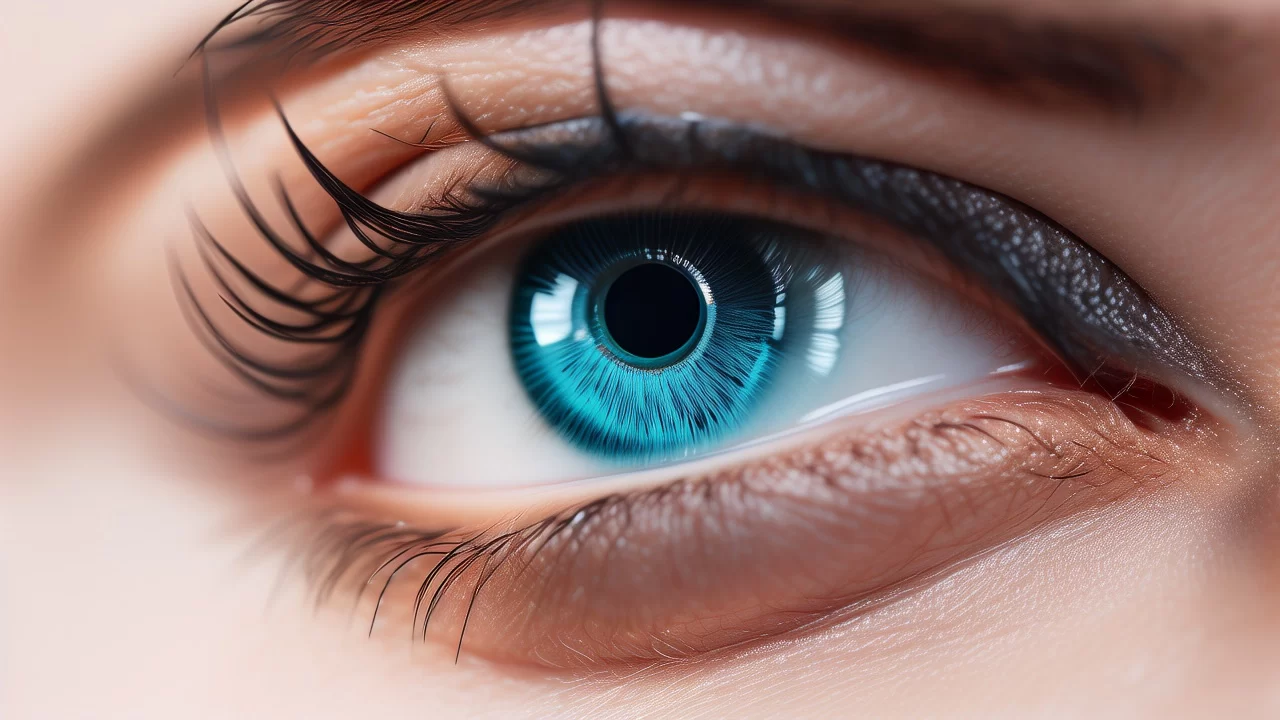
- Show the color on a real eye, not just the lens. A lens in a blister or on a white background looks nothing like it does when worn. Always include at least one on-eye shot.
Rule 2: Show It on the Eye Colors That Matter
This is where most brands fail. They photograph lenses only on one eye color — usually a light one — and assume it’s representative.
If your market is mostly dark-eyed, your hero shots must show the lens on dark eyes. A honey lens photographed only on blue eyes tells your dark-eyed customers nothing about what they’ll get.
The best practice: show the same lens on at least two eye colors (one dark, one light). Side-by-side comparisons are among the highest-converting images in the category, because they directly answer the customer’s real question.
Rule 3: Capture the Pattern and Depth
Good colored lenses have texture — dot patterns, limbal rings, multi-tone blending. Flat photos flatten all of that and make a premium lens look cheap.
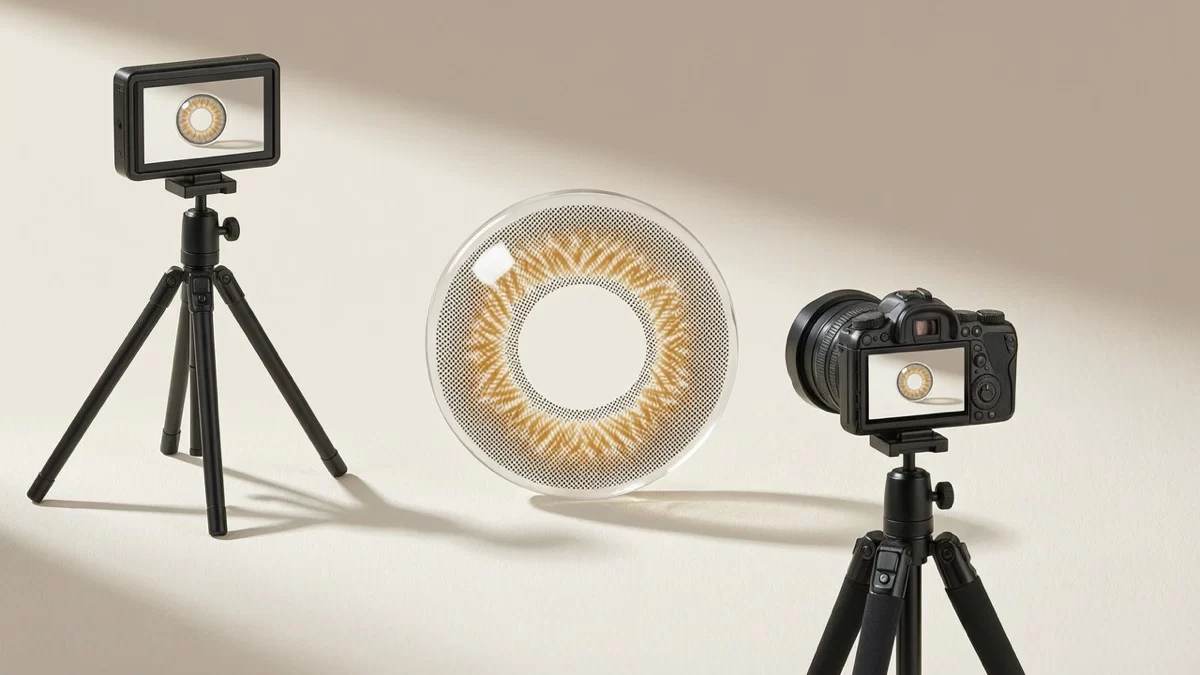
- Use macro shots to reveal the pattern detail. A close-up that shows the dot-matrix texture communicates quality instantly.
- Catch natural highlights. A small, well-placed catchlight in the eye photo shows dimension and makes the lens look alive rather than painted on.
- Avoid harsh direct flash, which blows out the iris detail and creates an unflattering, flat look.
Rule 4: Build Trust With Context
Beyond beauty, your photos should reassure. Customers buying something that goes on their eyes need trust signals:
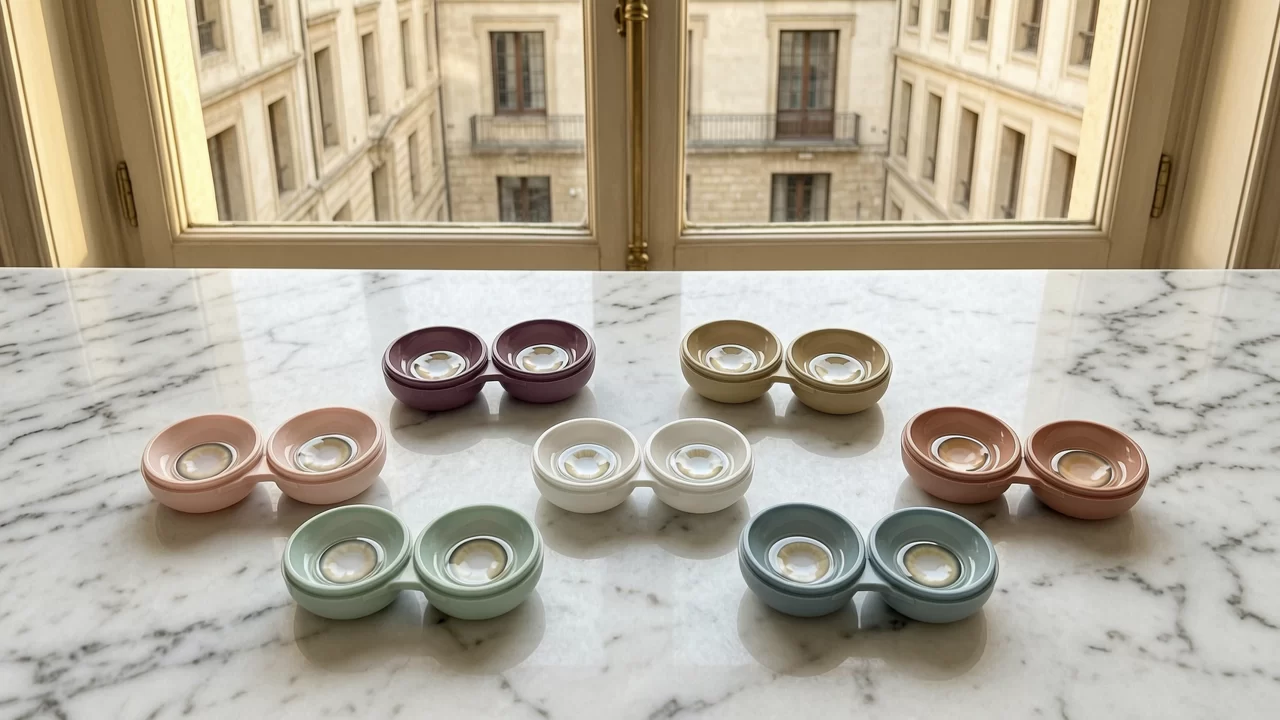
- Show clean, professional packaging alongside the lenses.
- Include certification marks (CE and relevant marks) in at least one image.
- Keep backgrounds clean and uncluttered. A messy or cheap-looking backdrop undermines a medical product’s credibility.
Rule 5: Shoot for the Platform
Different channels want different images:
- Product pages: a consistent set — lens close-up, on-eye dark, on-eye light, packaging, and a size/parameter graphic. Consistency across your whole range makes the brand look established.
- Marketplaces (Shopee, Amazon, etc.): a strong, color-accurate main thumbnail that stands out at small size. The thumbnail does the work of the first impression.
- Social (TikTok, Instagram): real, relatable content beats studio polish here. Try-on videos, before/after, and “this on my dark eyes” clips convert because they feel authentic.
A Practical Minimum Setup
You don’t need a studio. A workable setup:
- A daylight-balanced LED panel or a window with soft, indirect light
- A clean white or neutral background
- A macro-capable camera (a modern phone macro mode works for starters)
- Two models (or one model shot under two conditions) representing dark and light eyes
- Careful, minimal editing focused on clarity — not saturation
The brands that treat photography as a real investment — not an afterthought — consistently convert better, get fewer returns and build stronger brand recognition. In a category where the product is invisible until worn, your images ARE the product.
We provide high-resolution, color-accurate digital assets of our lens designs to help OEM/ODM partners launch with professional visuals. Contact sales@miomicon.com for details.