If you’re building a contact lens brand, choosing your manufacturer is the single most important decision you’ll make. Get it right, and you’ve got a partner who grows with you, catches problems before they reach your customers, and actually helps you make more money. Get it wrong, and you’re looking at delayed launches, quality complaints, lost inventory, and — worst case — regulatory trouble that can sink your entire business before it even gets off the ground.
I’ve worked with dozens of brands over the years. I’ve seen the “we found a cheap factory on Alibaba” horror stories, and I’ve seen the “we found the right partner on our first try” success stories. The difference isn’t luck. It’s knowing what to look for — and what to run from.
In this guide, I’m going to walk you through the seven red flags that should make you walk away immediately, and the five green lights that tell you you’ve found a keeper.
The 7 Red Flags: Run If You See These
1. “We Can Do Everything — No Problem!”
When a manufacturer tells you they can handle every product type, every certification, every packaging request, and every custom design you throw at them — for the lowest price you’ve seen — that’s not a good sign. It usually means they’re a trading company, not a real factory, or they’re outsourcing everything to whoever is cheapest that week.
Real manufacturers have specialties. Some are great at daily disposables but don’t do colored lenses. Some are masters of cosmetic color contact lenses but don’t have the cleanrooms for medical-grade toric lenses. A good partner will tell you what they’re not good at and might even refer you to someone else.
How to test: Ask them, “What’s one type of product you don’t manufacture, and why?” If they can’t give you a straight answer, be wary.
2. Vague or Evasive Answers About Certifications
This is the big one. Contact lenses are medical devices in most countries. That means your manufacturer needs the right certifications for every market you sell into.
A factory that hesitates when you ask for CE certificate numbers, FDA registration details, or ISO 13485 documentation — or that says “we’re in the process of getting it” — is a factory you should walk away from. “In process” in this industry can mean years, if it ever happens at all.
What to actually check:
- Ask for certificate numbers, not just PDF copies
- Verify them on the issuing body’s website
- Make sure the certificate covers the exact product type you’re ordering (a CE cert for daily disposable clear lenses doesn’t cover yearly colored lenses)
I’ve seen brands spend tens of thousands on packaging and marketing, only to discover their factory’s CE certificate expired two years ago. Don’t be that brand.
3. Prices That Seem Too Good to Be True
You know the saying. If one factory quotes you $0.15 per pair and every other reputable factory is in the $0.40–$0.80 range, there’s a reason — and it’s never a good one.
The hidden costs of cheap manufacturing:
- Higher defect rates (you’re paying for rejects you don’t catch)
- Shorter lens lifespan (customers complain about tearing)
- Inconsistent color matching (your “hazel” looks different every batch)
- Thinner material that damages more easily
- Cutting corners on raw materials (not medical-grade)
A slightly higher per-unit cost from a quality factory almost always saves you money in the long run. The real cost of a bad batch isn’t just the lenses — it’s the customer refunds, the bad reviews, and the regulatory fines.
4. No Factory Visit Option (Virtual or In-Person)
Any legitimate factory will happily show you around. If they make excuses — “it’s a busy time,” “our policy is no visits,” “we can send you photos instead” — that’s a major warning sign.
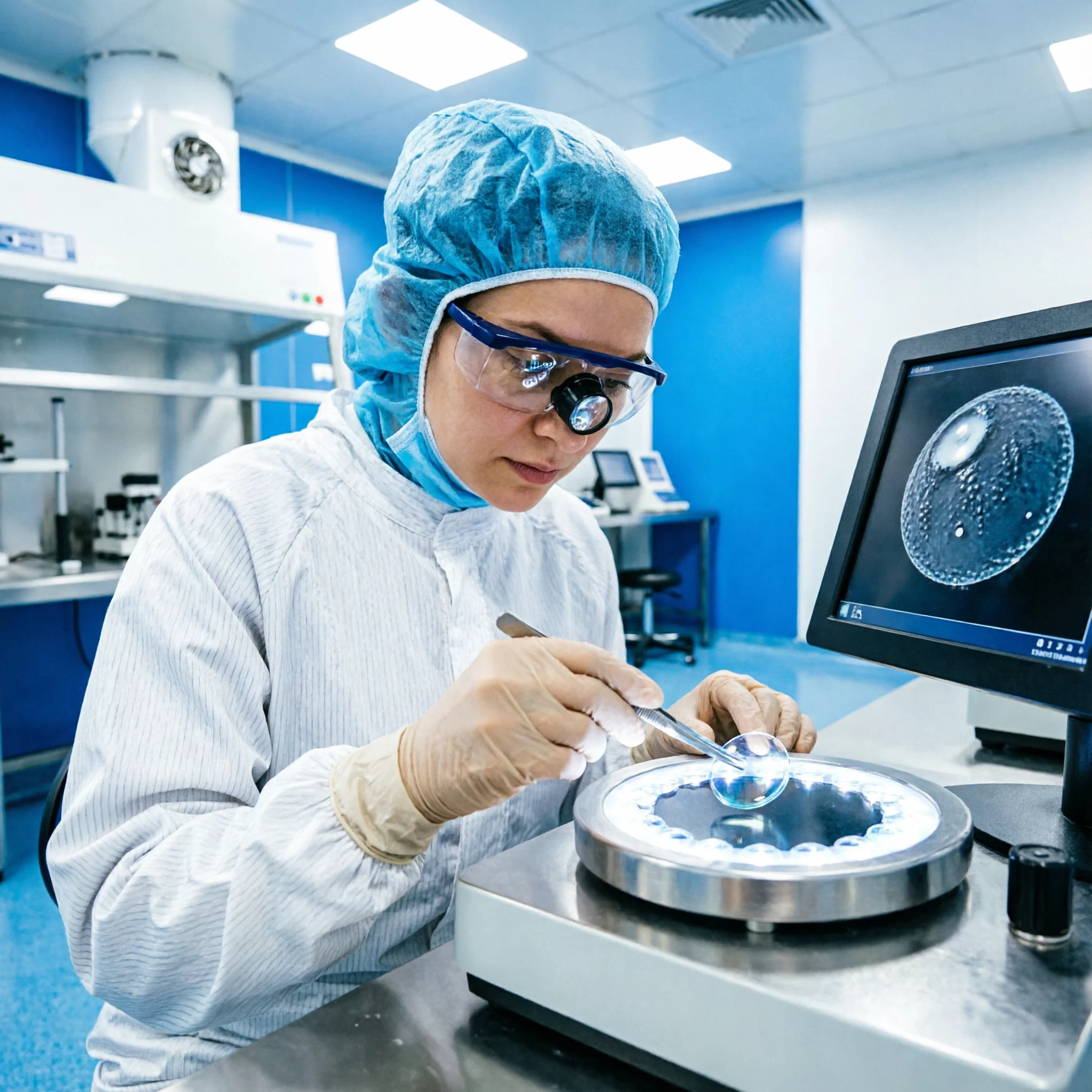
In the post-pandemic world, virtual factory tours are standard. A good manufacturer will set up a video call, walk you through the cleanrooms, show you the production lines, and even introduce you to the quality control team.
What to look for during a tour:
- Are workers properly suited up in cleanroom gear?
- Is the equipment modern and well-maintained?
- Is there a dedicated QC area, or does it look like an afterthought?
- Do they have proper raw material storage (temperature-controlled, organized)?
If they won’t show you their factory, they’re hiding something.
5. “MOQ? Whatever You Want!”
Wait, low MOQ is good, right? Yes — up to a point. But a real contact lens factory has minimums because the production process requires them. Setting up a mold, calibrating the machines, preparing the sterile environment — these all have costs, and they take time.
If a “factory” tells you they can do 50 pairs of a custom design for $2 each, they’re not manufacturing. They’re taking stock lenses, putting them in your packaging, and marking them up. There’s a place for that (private labeling existing designs), but it’s not OEM manufacturing, and they shouldn’t pretend it is.
Realistic MOQs to expect:
- Stock designs (private label): 100–500 pairs per SKU
- Custom color design: 1,000–3,000 pairs per design
- Fully custom mold/tooling: 5,000+ pairs per design
If someone’s quoting way below these numbers for custom work, ask more questions.
6. They Only Communicate Through Sales Chat
You know the pattern: you message them on a B2B platform, they respond instantly with enthusiasm, they answer every question… but you never talk to the same person twice, and you never get a direct contact.
A real manufacturing partnership needs an account manager — someone who knows your brand, remembers your specs, and picks up the phone when there’s a problem. If you’re always talking to a random sales rep reading from a script, you’ll have zero accountability when something goes wrong.
Look for: A dedicated contact person with a name, a direct email, and ideally a WhatsApp or WeChat for urgent matters.
7. They Rush You to Place a Large Order
“Special discount if you order this week!”
“Our production slots are filling up fast!”
“If you don’t commit now, we can’t guarantee delivery this quarter.”
Legitimate manufacturers don’t need to pressure you. Their production capacity and quality speak for themselves. High-pressure sales tactics are a sign that the factory is desperate for orders — which usually means their existing clients aren’t reordering.
A good partner will encourage you to start with samples, do a small trial order, and build up gradually. They want you to succeed long-term, not just make one big sale.
The 5 Green Lights: These Mean You’ve Found a Keeper
1. They Ask You as Many Questions as You Ask Them
This is my number one green light. When a manufacturer doesn’t just answer your questions but starts asking you questions — about your target market, your branding, your sales channels, your expected volumes — that means they’re thinking like a partner, not a vendor.
I remember working with one new brand owner who was dead set on yearly disposable lenses for the US market. A good factory told her straight: “Yearly lenses are declining in the US. You’ll have a harder time getting FDA clearance, and your competition will undercut you on dailies. Have you considered starting with monthly colored lenses instead?”
She took the advice, launched with monthly colored lenses, and did 3x her first-year projections. That’s the value of a manufacturer who actually cares about your success.
2. Clear, Transparent Sampling Process
A great manufacturer will have a well-defined sampling process with clear timelines and costs. They won’t promise “free samples” (quality samples cost money to make) but they’ll be upfront about what you’re paying for and how long it takes.
What a good sampling process looks like:
- You pay a reasonable sample fee (often credited toward your first order)
- They provide digital mockups within 2–3 days
- Physical samples arrive in 7–14 days for stock designs, 15–25 days for custom
- They include a sample specification sheet with all technical details
- They follow up to get your feedback and make revisions
If their sampling process is smooth and professional, their production process probably is too.
3. They Have Case Studies or References for Similar Brands
The best way to know if a manufacturer is right for your brand is to see what they’ve done for brands like yours.
Don’t just ask for “references.” Ask specifically:
- “Can you share 2–3 brands similar to mine that you work with?”
- “What’s the average order size for brands at my stage?”
- “How long have your top 5 clients been working with you?”
Long-term client relationships are one of the strongest indicators of a reliable manufacturer. If their clients have been with them for 3, 5, 10 years, that tells you everything you need to know about consistency and service.
4. They Proactively Bring Up Quality Control and Testing
Quality control shouldn’t be something you have to beg for. A great manufacturer will volunteer information about their QC process:
- How many inspection points are in the production line?
- What percentage of lenses get inspected?
- What tests do you run (diameter, base curve, water content, tensile strength)?
- Do you do third-party testing?
- What’s your defect rate?
A factory that’s proud of its QC process will want to tell you about it. A factory that sees QC as a cost center will avoid the topic.
5. They’re Honest About Lead Times — and They Hit Them
In this industry, “20 days” from a cheap factory usually means 35–40 days in reality. A good manufacturer will give you a realistic timeline and then deliver on it — or better, early.
What to look for:
- They give you a specific date range, not “around 2 weeks”
- They build in buffer time for quality checks
- They communicate proactively if there’s going to be a delay
- They hit their quoted delivery dates consistently
Reliable lead times are worth paying for. Nothing kills a product launch faster than inventory arriving three weeks late, after you’ve already spent money on marketing.
The Bottom Line: It’s About Partnership, Not Price
When you’re just starting out, it’s tempting to go with the cheapest option. Every dollar feels like it matters when you’re bootstrapping. But here’s what I’ve seen again and again: brands that choose based on price alone end up spending more — sometimes much more — fixing problems, replacing bad inventory, and rebuilding customer trust.
The right manufacturer isn’t the cheapest one. They’re the one who:
- Tells you when your idea needs adjustment
- Catches quality issues before they ship
- Hits their deadlines so you can plan your marketing
- Grows with you as your brand scales
- Treats your business like it’s their business
That’s a partner. And finding one is worth every extra cent.
Ready to Evaluate Your Options?
If you’re currently looking for a contact lens manufacturer and want a second opinion on a quote you’ve received, or if you’d like to see what MIOMI can offer for your brand, reach out to our team. We’ll give you an honest assessment — even if we’re not the right fit for you.
Got questions about choosing a manufacturer? Drop them in the comments below, and I’ll answer every one.