How to Choose the Right Colored Contact Lens Diameter for Your Market
For colored contact lens brands and distributors, choosing the right diameter is a critical decision that affects both product performance and customer satisfaction. The diameter of a colored lens not only influences the visual effect but also impacts comfort, fit, and even safety.
Many overseas sellers make the mistake of assuming that one standard diameter works for all markets. However, consumer preferences for colored lens diameters vary significantly across regions, cultures, and age groups. Understanding these differences is essential for building a successful product line.
What Is Contact Lens Diameter?
The diameter of a contact lens is the measurement of the lens from edge to edge, typically expressed in millimeters (mm). For colored contact lenses, this measurement is especially important because it determines how much of the eye is covered by the colored portion.
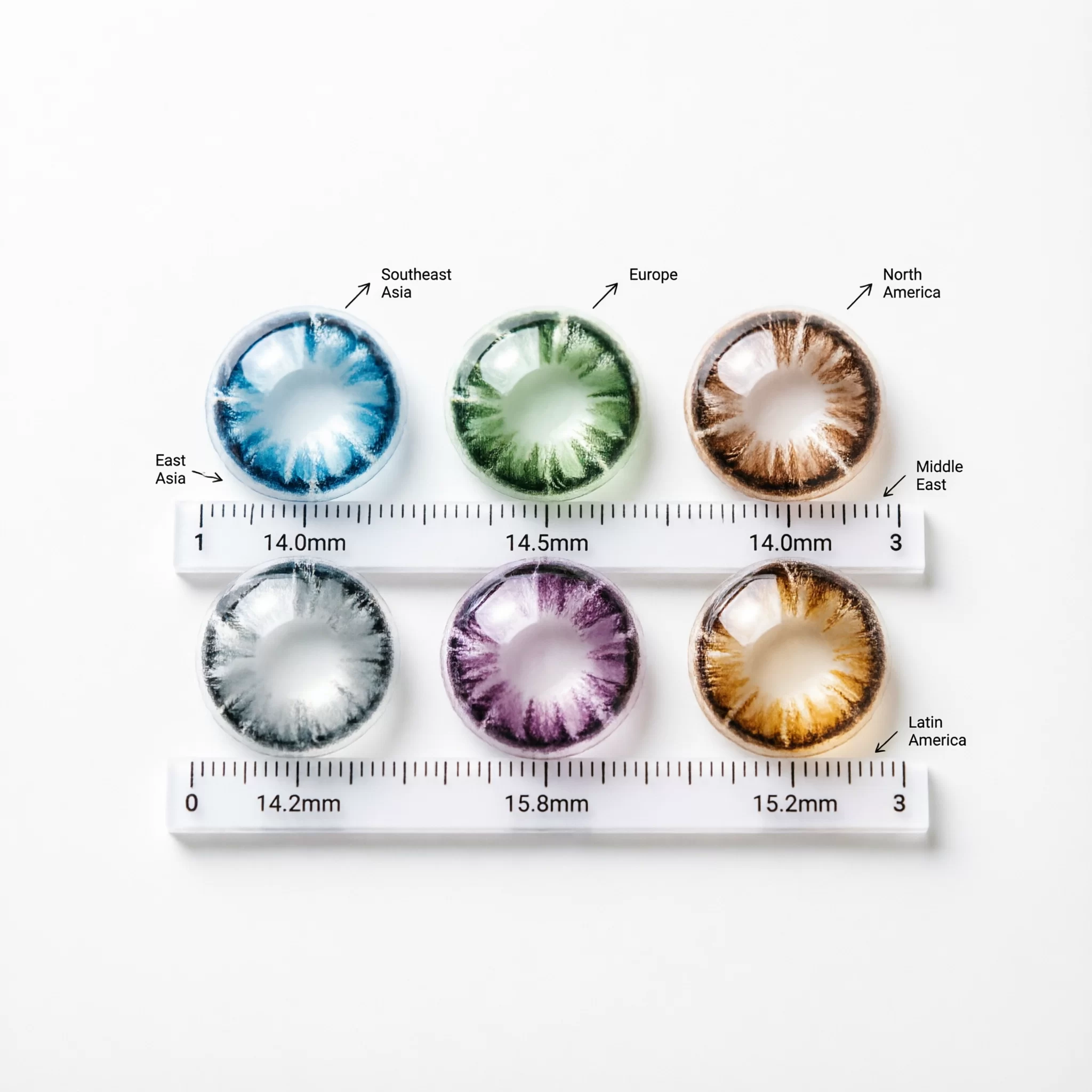
Common colored contact lens diameters range from 14.0 mm to 14.5 mm, with 14.2 mm being the most widely used standard size in many markets. However, some products may have diameters as small as 13.8 mm or as large as 14.8 mm for dramatic effects.
Why Diameter Matters
1. Visual Effect
The diameter of a colored lens directly affects the “enlargement” effect. Larger diameters (14.3 mm – 14.5 mm) create a more dramatic “doll eye” look that is popular in some Asian markets, particularly among younger consumers. Smaller diameters (14.0 mm – 14.2 mm) provide a more natural appearance that enhances the eye color without looking overly artificial.
2. Comfort and Fit
The right diameter is crucial for comfort and fit. A lens that is too large may feel tight, cause redness, or move excessively on the eye. A lens that is too small may not provide adequate coverage, leading to discomfort and an uneven visual effect.
3. Safety
Using a lens with the wrong diameter can potentially cause safety issues. A lens that is too large may interfere with tear flow, leading to dryness and irritation. It may also increase the risk of corneal abrasions or other eye injuries.
Regional Preferences for Colored Lens Diameters
Asian Markets
In many Asian markets, particularly in East and Southeast Asia, larger diameter colored lenses (14.3 mm – 14.5 mm) are very popular. The “enlargement” effect is highly sought after, especially among younger consumers and beauty influencers.
However, it’s important to note that preferences can vary within regions. For example, consumers in South Korea may prefer slightly smaller diameters than those in Japan or China. Additionally, mature consumers may opt for more natural-looking lenses with smaller diameters.
Western Markets
In Western markets, such as Europe and North America, consumers generally prefer more natural-looking colored lenses with smaller diameters (14.0 mm – 14.2 mm). The focus is on enhancing the eye color rather than creating a dramatic enlargement effect.
However, there is a growing trend among younger consumers in these markets towards slightly larger diameters, particularly for special occasions or cosmetic purposes. This trend is driven by social media and the influence of beauty trends from other regions.
Middle Eastern and African Markets
Preferences for colored lens diameters in the Middle East and Africa are diverse. In some regions, consumers may prefer more natural-looking lenses with smaller diameters, while in others, larger diameters may be more popular for their dramatic effect.
Cultural and religious factors can also influence preferences. For example, in some conservative regions, consumers may prefer lenses that provide a subtle enhancement rather than a dramatic change.
Key Factors to Consider When Choosing Diameter
1. Target Market
Understanding the preferences of your target market is the most important factor in choosing the right diameter. Conduct market research to determine what sizes are popular in your target region and among your specific customer demographic.
2. Product Positioning
Your product positioning should also influence your diameter choice. If you are targeting younger consumers and beauty influencers, larger diameters may be more appropriate. If you are targeting mature consumers or optical professionals, smaller diameters may be a better fit.
3. Lens Design
The design of your colored lens can also impact the perceived diameter. For example, lenses with a larger colored portion may appear to be larger than their actual measurement. Conversely, lenses with a smaller colored portion may appear to be smaller.
4. Comfort and Safety
Never compromise on comfort and safety for the sake of trends. Always choose a diameter that provides a comfortable fit and meets safety standards. Conduct wearability tests to ensure that your chosen diameter works well for your target market.
Practical Tips for Choosing Diameter
1. Start with the Standard Size
If you are new to the colored contact lens market, start with the standard 14.2 mm diameter. This size works well for most consumers and provides a balance between natural appearance and comfort.
2. Offer a Range of Sizes
To cater to diverse consumer preferences, consider offering a range of diameters. For example, you could offer a standard 14.2 mm size, a smaller 14.0 mm size for natural looks, and a larger 14.3 mm size for dramatic effects.
3. Conduct Market Research
Invest in market research to understand the preferences of your target audience. This could include surveys, focus groups, or analyzing sales data from similar products in your target market.
4. Test Products Before Launch
Always test your products before launching them in a new market. Conduct wearability tests with a diverse group of consumers to ensure that your chosen diameter provides a comfortable fit and meets expectations.
Conclusion
Choosing the right colored contact lens diameter is a critical decision that affects product performance, customer satisfaction, and market success. By understanding regional preferences, product positioning, and comfort considerations, you can build a product line that meets the needs of your target audience.
At MIOMI, we offer a range of colored contact lens diameters to suit diverse market needs. Our products are designed with both visual appeal and comfort in mind, ensuring that your customers get the best possible experience. If you need help choosing the right diameter for your market, please contact us for more information.