For many new beauty brands, colored contact lenses are attractive for a simple reason: one small product can change a whole look. A customer can wear the same makeup, the same outfit, and the same hairstyle, but a different lens color can make the final impression softer, brighter, bolder, or more natural. That emotional effect is why the category keeps pulling in founders from cosmetics, lash, hair, fashion, and creator-led businesses.
But when a brand starts talking to factories, the excitement often meets a practical problem: MOQ.
Minimum order quantity is not just a number on a quotation sheet. It shapes cash flow, SKU planning, warehouse pressure, launch timing, and even how confident a brand feels when presenting the collection. A low MOQ can give a young brand breathing room. It allows the team to test designs, learn what customers actually repeat-buy, and avoid locking too much money into slow-moving colors.
The mistake is thinking that low MOQ means “launch anything and see what happens.” That approach usually creates a messy product line before the brand has even found its voice. A stronger approach is to use low MOQ as a disciplined testing tool: start small, but start with a clear point of view.
Low MOQ Is Not a Shortcut. It Is a Control System.
A small-batch launch works best when the brand understands what it is trying to learn. Are you testing whether your customers prefer natural brown lenses or brighter grey lenses? Are you checking if monthly lenses sell better than daily disposable lenses in your market? Are you validating packaging style before committing to a larger order?
When the question is clear, the MOQ becomes useful. You are not just buying inventory. You are buying market feedback.
This is especially important in colored contact lenses because color performance is difficult to judge from a design file alone. A lens pattern may look beautiful on a flat screen, but once placed on a real eye, the effect changes depending on iris color, pupil size, lighting, camera angle, and customer expectations. A low-MOQ project gives brands the chance to test these details before scaling.
For overseas distributors and DTC sellers, this can reduce risk in three areas:
- **Inventory risk:** fewer units tied up in unproven designs.
- **Positioning risk:** easier to refine the product line before the brand becomes known for the wrong look.
- **Customer feedback risk:** faster learning from real buyers without overcommitting.
The key is to treat small-batch production as a structured launch phase, not as a random sample sale.
Start With a Tight Color Story
One of the most common mistakes new colored contact lens brands make is launching too many unrelated colors. They choose a blue because it looks pretty, a grey because competitors sell grey, a brown because everyone needs brown, and maybe a green because it feels trendy. The result is a collection with no clear personality.
A better low-MOQ strategy is to start with a tight color story.
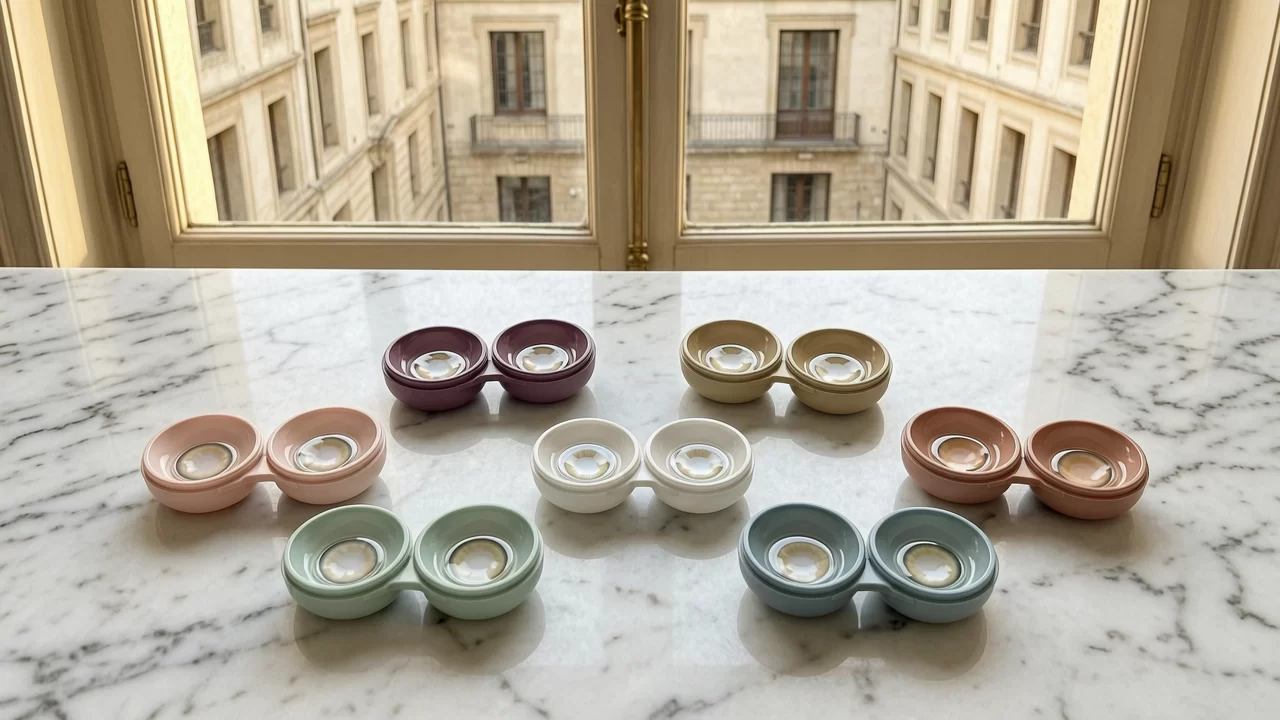
For example, a brand could build its first collection around “soft everyday enhancement.” That might include warm brown, olive brown, light hazel, and natural grey. Another brand might choose “camera-ready bold eyes,” with sharper limbal rings, brighter grey, icy blue, and honey tones. A Middle Eastern distributor might focus on lenses that show clearly on dark irises without looking harsh. A European-style beauty brand might prefer subtle patterns, smaller visual diameter, and natural blending.
The point is not that one direction is better than another. The point is that the first collection should feel intentional.
A focused line helps customers understand the brand quickly. It also makes content creation easier. Your product photos, influencer briefs, packaging, and website copy can all speak the same language. If every SKU tells a different story, marketing becomes harder and customers have to work too much to understand you.
Choose Fewer SKUs, But Give Each SKU a Job
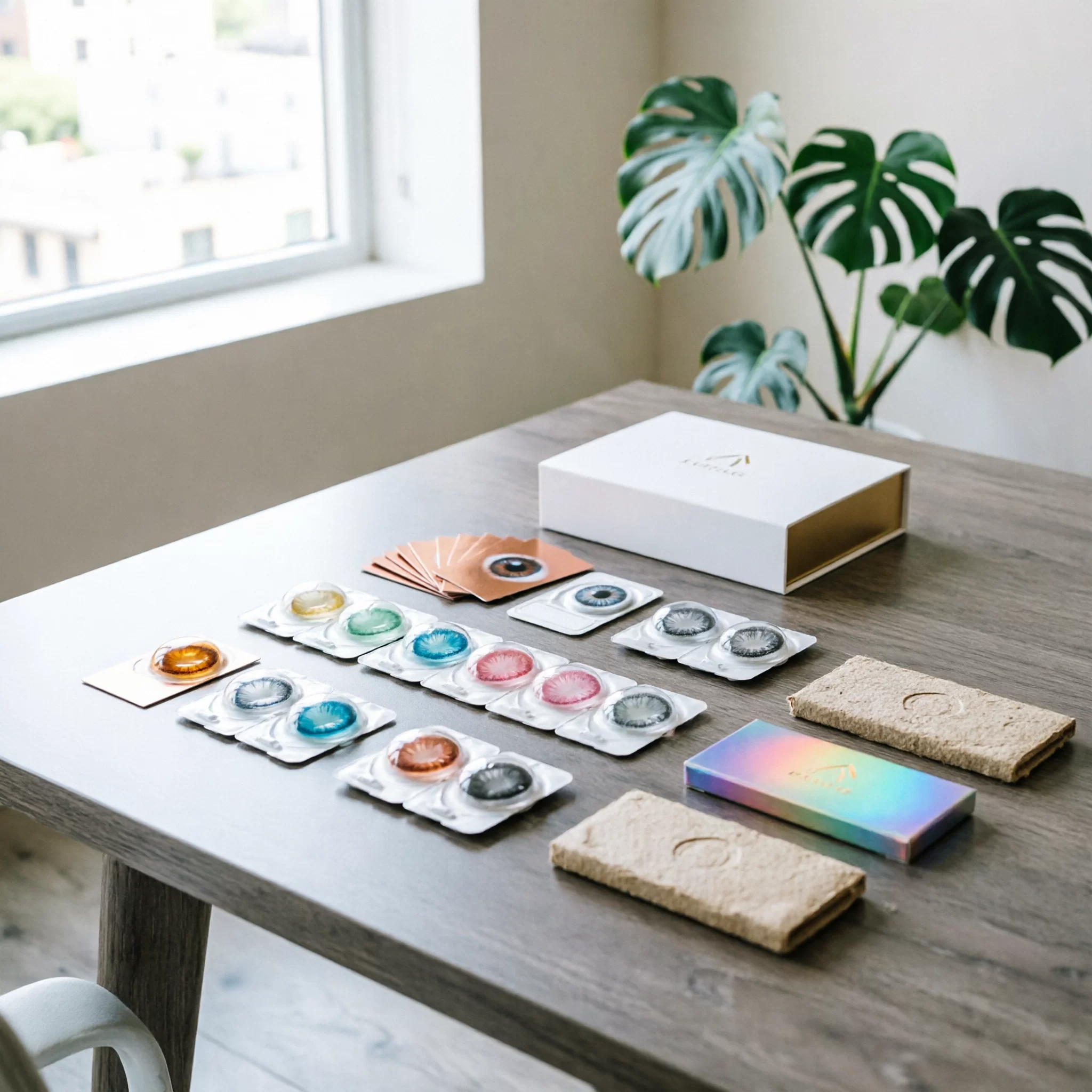
Low MOQ does not mean the brand needs ten or twenty SKUs at launch. In many cases, four to six well-chosen SKUs are enough to test the market properly.
Each SKU should have a role. A simple structure could look like this:
- **The safe bestseller candidate:** usually a natural brown or hazel shade that works for everyday wear.
- **The social media color:** a more noticeable grey, blue, or honey tone that photographs well.
- **The dark-iris solution:** a color designed to show on deeper eye colors without looking flat.
- **The soft natural option:** a lens for customers who want enhancement without obvious drama.
- **The seasonal or trend test:** one SKU that allows the brand to explore a fresh look without risking the whole line.
This kind of planning sounds basic, but it prevents a common problem: every SKU competing for the same customer moment. If all the colors are similar, the customer gets confused. If all the colors are too bold, repeat purchase may suffer. If all the colors are too subtle, the brand may struggle to create visual excitement online.
Good SKU planning creates balance.
Do Not Ignore Diameter and Graphic Diameter
In colored contact lenses, color gets attention, but size often decides whether customers feel comfortable with the final look. Diameter and graphic diameter affect how large the eye appears, how natural the lens looks, and how easy it is for customers to adopt the product into daily routines.
For many B2B buyers, the practical question is not simply “what diameter is popular?” It is “what diameter fits our market and brand promise?”
Some markets prefer a larger, doll-eye effect. Others are moving toward more natural enlargement. Some customers want lenses that look obvious in selfies; others want a change that friends notice only after looking twice. The wrong size choice can make even a beautiful color feel unsuitable.
When working with an OEM/ODM supplier, brands should ask for real-eye photos or samples showing the same color across different iris shades. They should also compare not only full diameter, but visual diameter and edge design. A soft edge can make a lens look more natural, while a strong limbal ring can create a more defined effect.
For low-MOQ projects, it is usually safer to avoid extreme specifications in the first launch unless the brand already knows its audience well. Start with wearable choices, collect feedback, then use the next order to sharpen the direction.
Packaging Should Support Trust, Not Just Decoration
Packaging is often where young brands want to express personality. That is understandable. A beautiful box helps the product feel more premium, especially in beauty and fashion categories. But in contact lenses, packaging also has another job: trust.
Customers want to feel that the product is clean, properly labeled, and professionally handled. Retail partners and distributors also pay attention to packaging because it affects shelf presentation, compliance review, and customer confidence.
For a low-MOQ launch, brands do not need the most complicated packaging structure. In fact, overly customized packaging can increase cost and slow down the project. A cleaner approach is to focus on the essentials:
- clear brand name and product name;
- lens parameters such as DIA, BC, water content, and replacement cycle;
- color name and quantity;
- manufacturing and expiry information;
- proper usage and safety instructions;
- market-specific labeling requirements where applicable.
Design matters, but clarity matters more. A box that looks fashionable but hides basic information can create friction for both consumers and distributors.
A good supplier should be able to guide the brand on what information needs to appear on labels and cartons. However, the brand should still check local regulations in its target market, especially if selling in regions with stricter medical device rules.
Use Samples Like a Serious Buyer
Sampling is not only for checking whether the color is pretty. It is a business decision stage.
When samples arrive, the team should review them systematically. Look at color under daylight, indoor lighting, phone camera, and studio lighting. Try the lens on different iris colors if possible. Compare comfort feedback after short wear and longer wear. Check whether the printed pattern matches the brand’s intended style. Review packaging, labels, blister information, and color naming.
It helps to create a simple scorecard. Rate each sample on:
- color accuracy;
- naturalness or impact;
- comfort feedback;
- photo performance;
- match with brand positioning;
- expected commercial potential;
- any concerns from testers.
This keeps the decision from becoming too emotional. Founders often fall in love with one dramatic color that looks amazing in photos, while customers may quietly prefer a more wearable shade. A scorecard helps balance instinct with evidence.
Plan the First Reorder Before the First Launch
A smart low-MOQ launch includes a reorder plan before the first unit is sold. This does not mean guessing perfectly. It means deciding what data will trigger the next step.
For example:
- If one color sells through 60% of inventory within the first month, prepare a reorder.
- If customers ask repeatedly for prescription options, discuss expanding powers.
- If a bold color gets high engagement but low conversion, adjust product photography or pricing before reordering.
- If a natural brown gets strong repeat purchase, consider building a family of similar everyday shades.
This is how low MOQ becomes a growth tool. The first order teaches the brand what to do next.
Without a reorder plan, brands often react too late. A good SKU sells out, customers lose interest, influencers continue posting a product that is unavailable, and the brand loses momentum. In contact lenses, production and logistics take time, so planning ahead matters.
Ask Better Questions Before Confirming the Order
Before placing a low-MOQ OEM/ODM order, B2B buyers should ask their supplier practical questions, not only price questions. Useful questions include:
- Which existing molds and color patterns are available for small-batch customization?
- What specifications can be adjusted at low MOQ, and what requires a larger order?
- Can we customize packaging, label, color names, or inserts?
- What certificates and test reports are available for the target market?
- What is the sampling timeline and production timeline?
- How should we prepare artwork files for packaging?
- What quality checks are performed before shipment?
- Can we reorder the same design consistently later?
These questions reveal whether the supplier understands brand building, not just manufacturing. A reliable partner will help the buyer reduce risk, explain limitations clearly, and suggest practical options based on the brand’s stage.
The Best Small Launches Feel Bigger Than Their Quantity
A low-MOQ colored contact lens launch does not have to look small. With focused colors, clear positioning, professional packaging, and thoughtful content, a first collection can feel complete even with limited inventory.
The goal is not to pretend to be a large brand on day one. The goal is to look organized, trustworthy, and ready to learn.
For new brands, low MOQ is valuable because it creates room for improvement. It allows a business to test real demand, protect cash flow, and build a product line based on evidence rather than guesswork. For distributors, it can open the door to market-specific collections without carrying unnecessary stock. For beauty entrepreneurs, it makes the first step into the contact lens category more realistic.
The brands that win are not always the ones that launch the most colors. Often, they are the ones that understand their customers fastest, refine their offer carefully, and work with suppliers who can support both flexibility and consistency.
Small-batch production is not a smaller ambition. Used well, it is the first disciplined step toward a stronger contact lens brand.