If you’re in the business of launching your own contact lens brand, you know that the sampling phase can make or break your project. A clear, comprehensive brief isn’t just paperwork—it’s the foundation of a successful partnership with your OEM/ODM supplier. I’ve seen too many brands waste weeks (or even months) and thousands of dollars because of vague instructions.
The High Cost of Poor Communication
Last year, a startup client came to us frustrated after going through three rounds of samples with another supplier. The colors were wrong, the packaging didn’t match their brand identity, and the fit wasn’t comfortable for their target market. When we looked at their initial brief, it was less than a page long and mostly focused on “making something trendy.”
The problem? They assumed the supplier could read their mind. But contact lens manufacturing is a highly technical process, and every detail matters—from the curve of the lens to the thickness of the packaging seal. A poor brief doesn’t just lead to bad samples; it erodes trust between you and your supplier.
The 8 Elements of a Perfect Brief
1. Brand Identity Guidelines (Non-Negotiable)
Your supplier needs to understand your brand personality to create products that resonate with your target market. Include:
- Brand mission and values: What does your brand stand for?
- Target audience profile: Age, lifestyle, preferences (e.g., “20-35-year-old fashion-conscious consumers in Southeast Asia”)
- Visual brand guidelines: Logo, color palette, typography (attach files if possible)
- Brand voice and tone: Are you playful and youthful, or sophisticated and premium?
2. Product Specifications (Technical Details Matter)
This is where you get into the nitty-gritty. Be specific about:
- Lens type: Daily, monthly, or yearly disposable?
- Material: Hydrogel, silicone hydrogel, or something else?
- Water content: This affects comfort—higher water content means more hydration but shorter wear time
- Diameter and base curve: These determine fit. Standard diameter is 14.0-14.5mm, base curve is 8.6-8.8mm
- Color and design: Specify Pantone colors or provide reference images
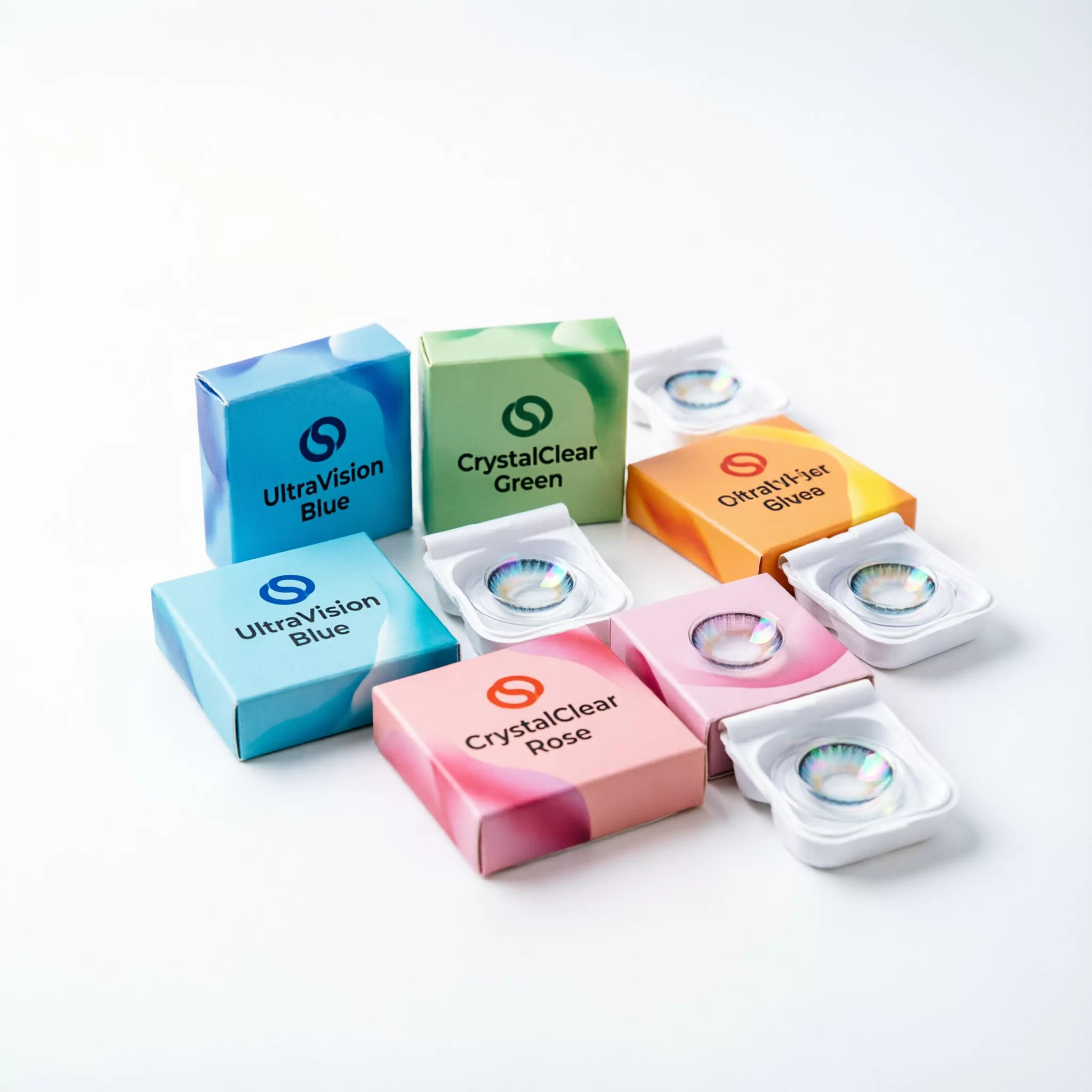
- Packaging requirements: Blister pack size, box design, labels (include barcodes if needed)
3. Quality Standards and Certifications
Don’t assume your supplier will automatically meet your market’s requirements. Clearly state:
- Target market regulations: FDA (USA), CE (EU), ISO (international)
- Quality control expectations: Defect rate limits, inspection procedures
- Testing requirements: Biocompatibility, shelf life, packaging integrity
4. Production Timeline and Quantity
Be realistic but specific about your timeline:
- Sample delivery date: When do you need the first samples?
- Production lead time: How long do you expect manufacturing to take?
- Minimum order quantity (MOQ): Start with a small MOQ if you’re testing the market
- Delivery schedule: Frequency of shipments, preferred carriers
5. Budget Considerations
Transparency about budget helps your supplier propose the right options:
- Target price per unit: Include packaging in this number
- Total budget: For both sampling and initial production
- Payment terms: Net 30, advance payment, etc.
- Cost breakdown: Ask for a detailed quote (material, labor, shipping, etc.)
6. Technical Files and References
Visual references are worth a thousand words:
- Design files: CAD diagrams, vector graphics
- Reference samples: If you like a competitor’s product, include a sample
- Material specifications: Detailed descriptions of materials to use or avoid
- Testing protocols: Any specific tests you require
7. Communication Protocol
Set clear expectations for how you’ll work together:
- Primary contact person: Who will handle day-to-day communication?
- Response time: How quickly do you expect replies to questions?
- Meeting frequency: Weekly check-ins, milestone meetings
- Approval process: Who signs off on samples, production, and delivery?
8. Contingency Plans
Things don’t always go as planned. Include:
- Alternative materials: If your preferred material is unavailable
- Backup timeline: What if production is delayed?
- Quality issue resolution: How will defects or non-compliance be handled?
- Termination clause: Conditions under which the partnership can end
Common Mistakes to Avoid
Mistake 1: Assuming “Trendy” is Specific
Instead of saying “make something trendy,” say “create a lens that looks like fresh green grass with a subtle sparkle—popular among Gen Z consumers on TikTok.”
Mistake 2: Skipping Market Research
Don’t rely on your personal preferences. Show your supplier market research data—customer surveys, social media trends, or sales figures from similar products.
Mistake 3: Ignoring Cultural Differences
Colors and designs that work in one market might not work in another. For example, red is considered lucky in China but might be associated with danger in some Western countries.
Mistake 4: Being Unrealistic About Timelines
Rushing the sampling phase usually leads to poor quality. Give your supplier at least 2-3 weeks for the first samples.
Mistake 5: Neglecting to Review Every Detail
Before approving samples, check every aspect against your brief—even the small things like font size on packaging.
The Payoff of a Great Brief
When you invest time in creating a comprehensive brief, you’re not just saving money—you’re building a strong foundation for your brand. A clear brief:
- Reduces the number of sample revisions
- Speeds up the production timeline
- Minimizes the risk of costly mistakes
- Establishes trust with your supplier
- Ensures the final product matches your vision
A Real Success Story
One of our best clients, a Korean beauty brand, came to us with a 10-page brief that included everything from their brand story to detailed color specifications. They even provided reference samples from their competitors. The result? We got the samples right on the first try, and the product launched on time and within budget. It went on to become one of our top-selling products in the Southeast Asian market.
Final Thoughts
Creating a detailed brief for your contact lens OEM/ODM supplier might seem like a lot of work, but it’s the most important investment you can make in your brand. It’s not just about avoiding mistakes—it’s about setting your project up for success from day one.
Remember, your supplier is your partner, not just a vendor. When you communicate clearly and transparently, you’re creating a relationship that will help your brand grow for years to come.
So before you send that email to your supplier, ask yourself: “Would I understand exactly what to do if I received this brief?” If the answer is “no,” it’s time to add more details.