How Contact Lens Distributors Can Reduce Returns Without Cutting Prices
Most contact lens distributors focus heavily on getting the first sale. That makes sense. New customers, new shops, new online orders — these are the numbers everyone wants to see growing.
But there is another number that quietly decides whether your business is healthy: returns and complaints.
A distributor can sell a lot of lenses and still lose money if customers keep returning products, asking for replacements, or leaving negative reviews. In contact lenses, returns are not just a logistics issue. They are a product strategy issue, a customer education issue, and sometimes a supplier selection issue.
The good news is that many returns can be reduced without lowering prices. In fact, the strongest distributors usually protect margin by improving product fit, communication, packaging, and reorder planning — not by racing to the bottom.
Here is how to think about it.
First, Understand Why Returns Happen
Contact lens returns usually fall into a few common categories:
- The customer chose the wrong product type
- The color looked different from expectations
- The lens felt uncomfortable after wearing
- The customer misunderstood diameter, base curve, or water content
- The packaging or labeling created confusion
- The product quality was inconsistent
- The customer did not know proper care or wearing rules
Some of these are manufacturing problems. Some are sales problems. Some are education problems. If you treat every return as “customer changed their mind,” you will miss the real pattern.
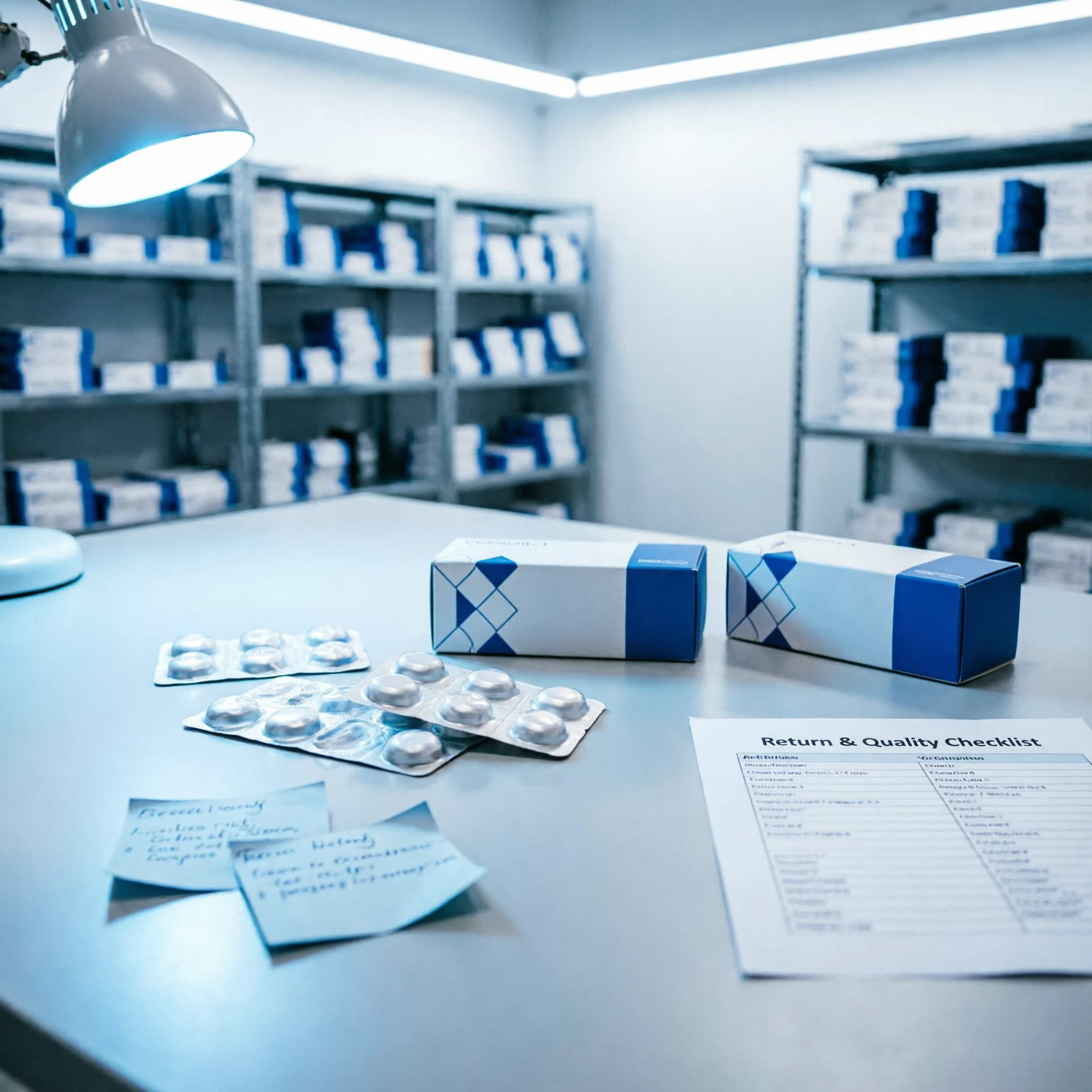
A smart distributor tracks returns by SKU, color, batch, sales channel, and complaint reason. That is where the useful information appears.
1. Stop Selling Every Lens to Every Customer
One of the fastest ways to reduce returns is to improve product matching.
Not every lens is suitable for every customer. A bold 14.5mm gray lens may look good in campaign photos, but it may not be the best first lens for a customer who wants a natural office look. A high-water-content lens may sound comfortable, but may not perform best in dry or air-conditioned environments. A dramatic enlargement design may create expectation problems if the customer only wanted subtle enhancement.
Distributors should build simple customer-facing guidance:
- Best for natural daily wear
- Best for dark brown eyes
- Best for photos and events
- Best for first-time users
- Best for short wear, not all-day wear
- Best for customers who prefer subtle color change
This does not require complicated technology. Even a clear product page, shop training sheet, or WhatsApp reply template can reduce wrong purchases.
2. Make Color Expectations More Realistic
Colored contact lens returns often happen because the customer expected a different visual effect.
The same lens can look different depending on natural eye color, lighting, makeup, skin tone, and camera settings. A lens that looks bright on a model with light brown eyes may look much softer on a customer with very dark eyes.
If your product photos are too edited or only show one model, you are increasing return risk.
Better product presentation includes:
- Photos on dark eyes and lighter eyes
- Natural light and indoor light photos
- Close-up and full-face images
- Short videos instead of only static photos
- Clear notes such as “subtle,” “medium change,” or “high impact”
This helps customers choose correctly before they buy. It also builds trust because the product feels more honestly presented.
3. Train Retail Staff and Resellers
If you sell through optical shops, beauty stores, salons, influencers, or small resellers, your product education must reach them too.
Many returns begin at the point of sale. A reseller recommends the wrong diameter. A shop assistant cannot explain wearing cycle. An influencer overpromises comfort. A customer buys based only on color without understanding care instructions.
Give partners simple training materials:
- Top 5 best-selling colors and who they fit
- Basic lens parameter explanation
- Daily/monthly wearing and care reminders
- Common customer questions and answers
- What not to promise in marketing
- When to advise customers to consult an eye care professional
A one-page PDF can reduce a surprising number of avoidable problems.
4. Improve Instructions and After-Sales Communication
Many new wearers do not know how to handle contact lenses properly. They may touch the lens with dry hands, use the wrong solution, wear it too long on the first day, sleep in it, or store it incorrectly.
If you are selling colored lenses to beauty consumers, you cannot assume they understand lens care just because they understand makeup.
Clear instructions should cover:
- Hand washing before handling lenses
- Recommended first-wear time
- Proper storage and cleaning
- Do not sleep while wearing lenses
- Do not share lenses
- Stop wearing if irritation occurs
- Follow local eye care guidance
These instructions should appear in packaging, product pages, post-purchase messages, and reseller training. Repetition is useful. Customers rarely absorb everything from one small leaflet.
5. Watch SKU-Level Complaint Patterns
Returns are not always evenly spread across your catalog. Usually, a few SKUs create most of the trouble.
For example:
- One gray lens gets many “too light” complaints
- One large-diameter design gets more comfort complaints
- One batch has more packaging defects
- One color sells well but has low repeat purchase
- One reseller creates more complaints because they oversell the effect
If you do not track by SKU, you may make the wrong decision. You might blame the whole supplier when the issue is one design. Or you might keep reordering a color that sells quickly but damages customer satisfaction.
A simple spreadsheet is enough at the beginning. Track:
- Product name
- Color/design
- Batch number
- Sales quantity
- Return quantity
- Main complaint reason
- Sales channel
- Repeat purchase rate
After one or two months, patterns become much clearer.
6. Do Not Use Discounts to Hide Product Problems
Discounting is tempting when returns rise. A distributor may think: “If we lower the price, customers will complain less.”
Sometimes that works temporarily, but it does not solve the underlying issue. If the product is poorly matched, badly explained, or inconsistent, cheaper pricing only attracts more buyers into the same problem.
Instead of cutting prices first, improve the offer:
- Better product photos
- Clearer color descriptions
- More accurate customer guidance
- Improved packaging instructions
- Better reseller training
- Removal of weak SKUs
- More reliable manufacturer support
Healthy margin comes from fewer mistakes, not just higher sales volume.
7. Choose Suppliers That Support Consistency
Some return problems come from inconsistent manufacturing. Color differences between batches, weak packaging control, unclear labeling, and unstable comfort can create distributor headaches.
Before scaling orders, ask your supplier:
- How do you track batches?
- How do you control color consistency?
- What quality checks happen before shipment?
- Can you provide stable reorder specifications?
- How do you handle complaints after delivery?
- Can you help identify whether feedback is product, packaging, or user-related?
A low unit price is not helpful if inconsistent quality increases replacements, refunds, and damaged reviews.
8. Build a Return-Reduction Loop
The best distributors do not treat returns as isolated events. They build a loop:
- Collect complaint data
- Identify the top reasons
- Check whether the issue is product, education, packaging, or channel-related
- Adjust product pages, training, or SKU mix
- Share feedback with the manufacturer
- Change reorder quantities based on real performance
This turns returns into business intelligence. Every complaint becomes a signal that helps you refine the product line.
The Bottom Line
Contact lens distributors do not need to cut prices to reduce returns. They need better product matching, clearer color expectations, stronger reseller training, responsible customer education, SKU-level tracking, and reliable manufacturing support.
Returns are expensive, but they are also useful. They show you where the customer journey is weak. Fix that weakness, and you protect both margin and brand reputation.
At MIOMI, we help distributors and private label brands build contact lens product lines with practical SKU planning, specification guidance, packaging support, and reorder strategy. If you want to reduce avoidable complaints while keeping your margin healthy, contact us or email sales@miomicon.com.