Introduction
The colored contact lens industry has seen remarkable growth over the past decade, driven by increasing fashion consciousness, social media influence, and advancements in manufacturing technology. As we enter 2026, the market is undergoing significant changes that will shape the future of the industry. For brand owners and wholesalers, staying ahead of these trends is crucial for long-term success.
In this article, we’ll explore the most important trends shaping the global colored contact lens industry in 2026, including market dynamics, consumer preferences, technological advancements, and regulatory changes. Whether you’re a seasoned brand owner or just starting out, this information will help you make informed decisions and position your business for growth.
1. Market Growth and Regional Dynamics
Global Market Size and Projections
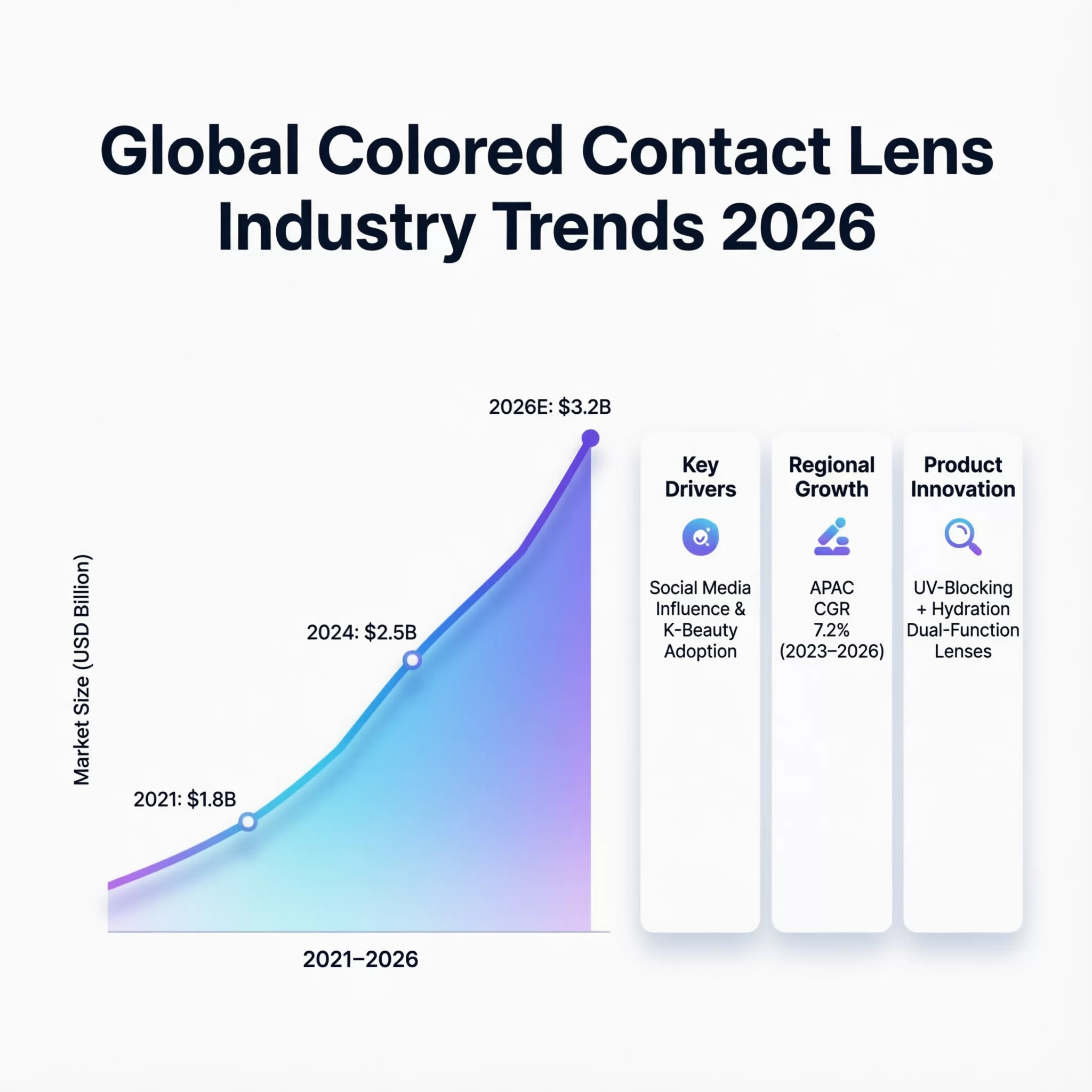
The global colored contact lens market is expected to reach $18.5 billion by 2026, growing at a CAGR of 6.8% from 2021 to 2026. This growth is driven by several factors:
– Increasing Fashion Consciousness: More people are using colored contact lenses as a fashion accessory rather than just a vision correction tool.
– Social Media Influence: Platforms like Instagram, TikTok, and YouTube have made colored contact lenses more visible and accessible to a global audience.
– Advancements in Manufacturing Technology: New materials and production methods are making colored contact lenses more comfortable, durable, and affordable.
Regional Market Trends
Asia-Pacific
The Asia-Pacific region is expected to remain the largest market for colored contact lenses in 2026, accounting for over 45% of global sales. Key trends include:
– China: The Chinese market is growing rapidly, driven by a large young population and increasing disposable income.
– South Korea: South Korea is a major hub for colored contact lens manufacturing and innovation, with many brands focusing on high-quality, innovative products.
– Southeast Asia: Countries like Indonesia, Thailand, and Vietnam are emerging as important markets, with growing demand for affordable colored contact lenses.
Europe
The European market is expected to grow at a CAGR of 5.2% from 2021 to 2026. Key trends include:
– Increasing Demand for Premium Products: European consumers are willing to pay more for high-quality, innovative colored contact lenses.
– Regulatory Changes: The European Union is implementing stricter regulations on contact lens safety and labeling, which will impact manufacturers and brand owners.
North America
The North American market is expected to grow at a CAGR of 4.8% from 2021 to 2026. Key trends include:
– Rising Popularity of Daily Disposable Lenses: More consumers are choosing daily disposable lenses for convenience and hygiene.
– Increasing Demand for Customized Products: Brand owners are offering more customized options, such as personalized lens colors and designs.
Middle East and Africa
The Middle East and Africa market is expected to grow at a CAGR of 7.5% from 2021 to 2026, making it the fastest-growing region. Key trends include:
– Increasing Disposable Income: Economic growth in countries like Saudi Arabia and the United Arab Emirates is driving demand for colored contact lenses.
– Growing Fashion Consciousness: Young consumers in the region are increasingly using colored contact lenses as a fashion accessory.
2. Consumer Preferences and Behavior
Fashion Trends
Fashion trends play a significant role in shaping consumer preferences for colored contact lenses. In 2026, we expect to see:
– Natural-Looking Colors: Demand for natural-looking colors like brown, hazel, and gray is expected to remain strong, especially in Western markets.
– Vibrant and Bold Colors: Bright, vibrant colors like blue, green, and purple are expected to be popular in Asian and Middle Eastern markets.
– Seasonal Trends: Limited-edition seasonal colors and designs are expected to become more common, as brands look to capitalize on holiday and festival seasons.
Lifestyle Factors
Consumer behavior is also influenced by lifestyle factors, such as:
– Convenience: Daily disposable lenses are becoming increasingly popular due to their convenience and hygiene benefits.
– Comfort: Consumers are demanding more comfortable lenses with better moisture retention and oxygen permeability.
– Sustainability: There is growing interest in eco-friendly and sustainable contact lens products, including biodegradable lenses and recycled packaging.
Digital Influence
Social media and digital marketing are playing an increasingly important role in shaping consumer behavior. Key trends include:
– Influencer Marketing: Brands are partnering with social media influencers to promote their products and reach new audiences.
– Augmented Reality (AR) Try-Ons: Many brands are offering AR try-on features, allowing consumers to see how different lens colors will look on them before purchasing.
– E-Commerce: Online sales of colored contact lenses are growing rapidly, with many consumers preferring to purchase products online rather than in stores.
3. Technological Advancements
Materials and Manufacturing
Advancements in materials and manufacturing technology are driving innovation in the colored contact lens industry. Key developments include:
– Silicone Hydrogel Lenses: Silicone hydrogel lenses are becoming more popular due to their superior oxygen permeability and moisture retention.
– Customization Technology: New manufacturing methods are making it easier and more affordable to produce customized colored contact lenses with unique designs and colors.
– Smart Lenses: There is ongoing research into smart contact lenses that can monitor health parameters like glucose levels and intraocular pressure.
Digital and Analytics
Digital technology is also transforming the industry, with brands using data analytics to:
– Understand Consumer Behavior: Brands are using data to analyze consumer preferences and purchasing patterns.
– Personalize Marketing: Digital technology allows brands to create personalized marketing campaigns based on individual consumer data.
– Improve Supply Chain Management: Data analytics is being used to optimize supply chain management and reduce costs.
4. Regulatory and Compliance Trends
Global Regulatory Landscape
The colored contact lens industry is highly regulated, with strict safety and quality standards in most countries. Key regulatory trends in 2026 include:
– Stricter Safety Standards: Many countries are implementing stricter safety standards for colored contact lenses, including more rigorous testing and labeling requirements.
– Increased Scrutiny of Online Sales: Regulators are paying more attention to online sales of colored contact lenses, especially from unregulated vendors.
– Sustainability Requirements: Some countries are implementing requirements for sustainable packaging and product design.
Regional Regulatory Changes
European Union
The European Union is implementing new regulations on contact lens safety and labeling, which will take effect in 2026. Key changes include:
– Enhanced Safety Requirements: Lenses must meet stricter safety standards, including more rigorous testing for biocompatibility and performance.
– Improved Labeling: Labels must include more detailed information about lens specifications, usage instructions, and safety precautions.
– Increased Accountability: Manufacturers and distributors will be held more accountable for the safety and quality of their products.
United States
In the United States, the Food and Drug Administration (FDA) is expected to introduce new regulations on colored contact lenses in 2026. Key changes include:
– Stricter Approval Process: New lens products will need to go through a more rigorous approval process.
– Enhanced Post-Market Surveillance: The FDA will be increasing its post-market surveillance of contact lens products.
– Increased Enforcement: The FDA will be taking a more aggressive approach to enforcing contact lens regulations, including cracking down on unregulated online sales.
5. Competitive Landscape
Key Players
The global colored contact lens industry is highly competitive, with several major players dominating the market. Key players include:
– Johnson & Johnson Vision: A leading manufacturer of contact lenses, including colored lenses under the Acuvue brand.
– CooperVision: A global leader in contact lens manufacturing, with a strong presence in the colored lens market.
– Alcon: A major player in the eye care industry, offering a range of colored contact lenses.
– Bausch + Lomb: A well-established company with a long history in the contact lens industry.
– Asian Manufacturers: There are also several major Asian manufacturers, including Miomi, GEO, and NEO, which are popular in Asian markets.
Market Consolidation
The industry is expected to see further consolidation in 2026, as larger companies acquire smaller players to expand their market share. This trend is likely to continue as companies look to capitalize on growth opportunities in emerging markets.
Innovation and Differentiation
To stay competitive, brands are focusing on innovation and differentiation. Key strategies include:
– Product Innovation: Developing new materials, designs, and features to improve lens comfort and performance.
– Brand Building: Investing in brand building and marketing to differentiate themselves from competitors.
– Customer Experience: Improving the customer experience through better service, personalized marketing, and digital tools like AR try-ons.
6. Challenges and Opportunities
Challenges
The colored contact lens industry faces several challenges in 2026, including:
– Regulatory Compliance: Meeting strict regulatory requirements can be time-consuming and expensive, especially for small and medium-sized businesses.
– Intense Competition: The industry is highly competitive, with many brands vying for market share.
– Counterfeit Products: The proliferation of counterfeit contact lenses is a major concern, as these products can pose serious health risks to consumers.
Opportunities
Despite these challenges, there are also significant opportunities for growth in the industry, including:
– Emerging Markets: Growing demand in emerging markets like Southeast Asia and the Middle East presents significant opportunities for brand owners and wholesalers.
– Innovation: Technological advancements are creating opportunities for new products and services, such as smart lenses and AR try-ons.
– E-Commerce: The growth of e-commerce is making it easier for brands to reach new audiences and expand their customer base.
Conclusion
The global colored contact lens industry is undergoing significant changes in 2026, driven by market growth, changing consumer preferences, technological advancements, and regulatory changes. For brand owners and wholesalers, staying ahead of these trends is crucial for long-term success.
By understanding market dynamics, consumer behavior, and technological developments, brands can position themselves for growth and success in the years to come. Whether you’re a seasoned brand owner or just starting out, now is the time to invest in innovation, build strong brands, and focus on the customer experience.
If you’re looking to enter the colored contact lens market or expand your existing business, feel free to reach out to us at sales@miomicon.com. We have years of experience in the industry and can help you navigate the challenges and opportunities ahead.
About the Author
Hey! I’m Diana, the Overseas Business Strategy Director at MIOMI Optical Ltd. I’ve been working in the contact lens industry for over 5 years, and I’m passionate about helping brands succeed in the global market. If you have any questions or need advice, don’t hesitate to reach out to me directly.