Water content is a key factor in contact lens comfort and performance. Understanding it helps you recommend the right lenses to your customers.
What Is Water Content?
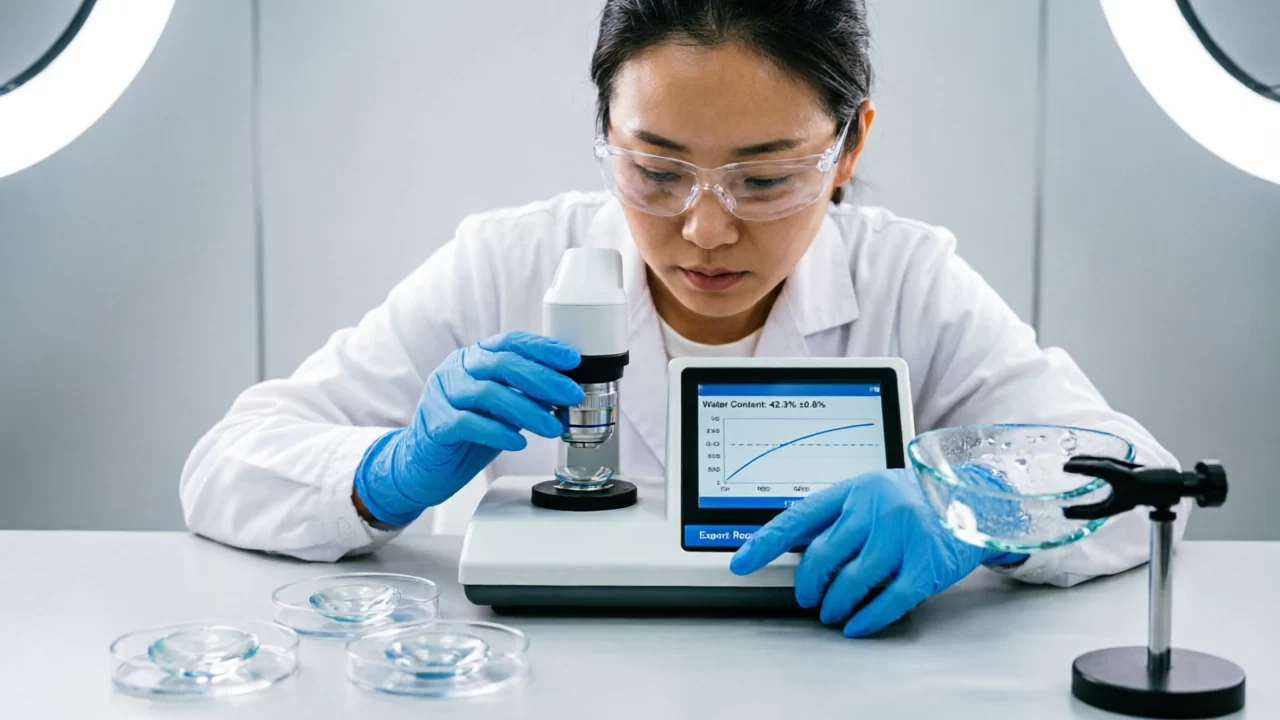
Water content is the percentage of water in a soft contact lens. It affects oxygen transmission, comfort, and moisture retention.
Categories
- Low water: 30-40%
- Medium water: 40-60%
- High water: 60%+
How Water Content Affects Performance
Low Water Content (30-40%)
Advantages
- More durable, less prone to tearing
- Deposits less protein
- More oxygen permeable (in hydrogel)
- Better for dry environments
Disadvantages
- Can feel less comfortable initially
- May absorb tears to reach equilibrium
Best For
- Dry eye sufferers
- Long wear times (10+ hours)
- Dry climates (desert, air conditioning)
- First-time wearers
Medium Water Content (40-60%)
Advantages
- Balance of comfort and durability
- Good oxygen transmission
- Most common range
Disadvantages
- May not suit extreme dry or oily eyes
Best For
- Most wearers (universal choice)
- Daily 8-10 hour wear
- Normal tear production
High Water Content (60%+)
Advantages
- Very soft, comfortable initially
- Excellent oxygen transmission (in silicone hydrogel)
- Feels natural on eye
Disadvantages
- More fragile, easier to tear
- Attracts more protein deposits
- Can dehydrate in dry environments
- Shorter lifespan
Best For
- Short wear times (4-6 hours)
- Occasional wear (weekends, events)
- Humid climates
- Experienced wearers with good tear quality
Water Content vs Material Type
Hydrogel Lenses
In traditional hydrogel, oxygen transmission depends on water content. Higher water = more oxygen.
- Low water hydrogel: Dk/t 8-15
- High water hydrogel: Dk/t 25-40
Silicone Hydrogel Lenses
In silicone hydrogel, oxygen travels through silicone, not water. Water content is less critical for oxygen.
- Can have low water but high oxygen (Dk/t 100+)
- Better for dry eye sufferers
- More expensive material
Regional Preferences
Southeast Asia
Preferred: 38-45% (low-medium)
Hot, humid climate but heavy air conditioning use. Low water content performs better.
Middle East / GCC
Preferred: 38-45% (low-medium)
Dry desert climate. High water lenses dehydrate quickly.
Europe
Preferred: 45-55% (medium)
Moderate climate, balanced preference.
North America
Preferred: 45-60% (medium-high)
Varied climate, preference for comfort-focused lenses.
Common Water Content Myths
❌ Higher Water = Better
Not true. High water lenses can dehydrate and cause dryness. Match water content to customer needs.
❌ Water Content Is the Only Factor
Material type, surface treatment, and fit matter equally.
❌ All Customers Can Wear Any Water Content
Dry eye sufferers should avoid high water content (>55%).
For Brand Owners: Product Line Strategy
Entry-Level Line
- 38-42% water content
- Hydrogel material
- Affordable pricing
- Target: occasional wearers, budget-conscious
Standard Line
- 45-50% water content
- Hydrogel or entry silicone hydrogel
- Mid-range pricing
- Target: daily wearers
Premium Line
- 50-55% water content
- Silicone hydrogel
- Premium pricing
- Target: comfort-focused, dry eye sufferers
Customer Recommendation Guide
| Customer Profile | Recommended Water | Material |
|---|---|---|
| Dry eyes | 38-45% | Silicone hydrogel |
| Long wear (10+ hrs) | 40-50% | Silicone hydrogel |
| Occasional wear | 50-55% | Hydrogel |
| First-time wearer | 40-45% | Hydrogel |
| Air conditioning environment | 38-45% | Either |
| Outdoor/active lifestyle | 45-50% | Silicone hydrogel |
At MIOMI Optical
We offer various water content options:
- Standard hydrogel: 38%, 42%, 45%, 50%, 55%
- Silicone hydrogel: 40%, 45%, 50%
- Custom: 30-60% range (MOQ applies)
- Documentation: Water content clearly labeled
Contact us: eye@miomi.cc | miomicon.com