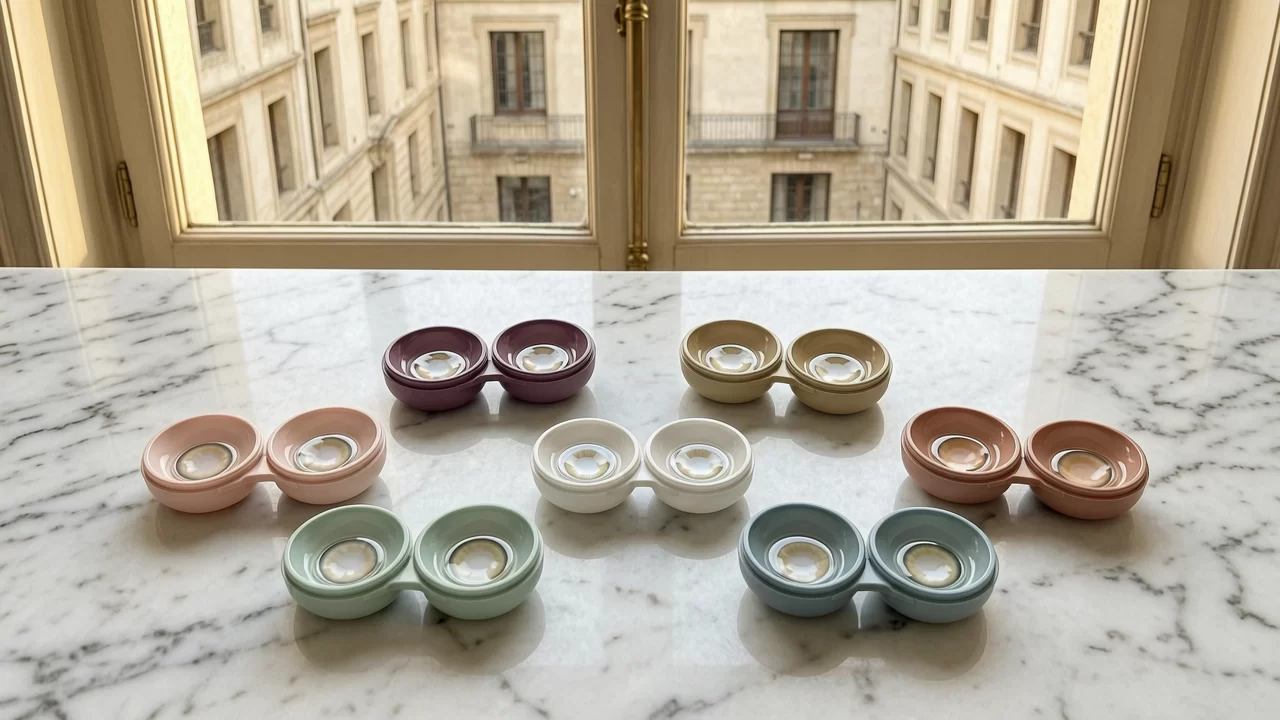
For a long time, the colored contact lens business was discussed in a very visual way: new shade, new pattern, softer limbal ring, better before-and-after photos, a color chart with fifty options instead of twenty. That side of the business still matters. Nobody buys colored lenses because the compliance folder looks beautiful. The first hook is almost always the look.
But if you speak with distributors, small brand owners, beauty retailers, and e-commerce sellers long enough, you start hearing a different question underneath the usual product discussion: “Will customers actually come back for this lens?” That is where comfort starts to beat color.
In 2026, more B2B buyers are becoming less impressed by an endless shade catalog and more interested in whether a product can reduce complaints, support repeat purchases, and survive real daily use. A lens can look good in a campaign photo and still fail as a business product if too many customers say it feels dry, moves too much, or cannot be worn comfortably for a full day.
Why comfort is becoming a commercial issue
Comfort used to be treated as a technical detail. Buyers would ask about diameter, base curve, water content, material, and replacement cycle, but often only after choosing the colors they liked. In many projects, the visual design led the conversation and the technical specifications followed. That order is changing.
There are practical reasons for it. Social media has made customer feedback fast and public. If a shade looks different from the photo, customers complain. If the lens feels uncomfortable after two hours, they complain even louder. One unhappy video can do more damage than a product listing can repair.
Many colored lens brands are also competing in the same visual territory. Natural brown, hazel, gray, olive, and soft enlarging designs are everywhere. When the colors start to look similar across brands, customer experience becomes the separator.
Repeat purchase matters more than one-time launch sales. A brand can sell a first batch with good photos, influencer content, and discounts. The harder question is whether customers reorder without being pushed. Comfort has a direct effect on that answer. For B2B buyers, comfort is not only an eye-care topic. It is a margin topic, a review topic, and a brand survival topic.
The problem with choosing products only by samples
Sampling is necessary, but it can be misleading if it is handled too casually. A buyer may try a lens for ten minutes, look in the mirror, take a few photos, and decide that the product is attractive. That is useful, but it is not enough.
Real customers wear lenses in different climates, under makeup, during long workdays, in air-conditioned rooms, while staring at screens, and sometimes for longer than recommended. A short sample test cannot show the full picture.
For B2B product selection, samples should answer more than “Does this color look good?” They should help answer whether the lens feels acceptable after several hours, whether it moves naturally with blinking, whether the edge design is smooth enough for sensitive users, and whether the color remains attractive on both dark and light irises.
This does not mean every buyer needs to run a clinical study before placing an order. But a more disciplined sample review process can prevent expensive mistakes. A simple approach is to test fewer designs more seriously. Instead of ordering twenty sample styles and choosing based on photos, choose a smaller shortlist and evaluate each design for visual effect, comfort, handling, packaging fit, and customer positioning.
Specifications buyers should not treat as decoration
Colored contact lens specifications are sometimes copied into product pages without much thought. Diameter, base curve, water content, material, replacement cycle, and power range become a neat little table. But these numbers are not decoration. They shape the wearing experience and the type of customer the product can serve.
Diameter affects both appearance and fit. A larger diameter may create a stronger enlarging effect, which can work well in some Asian and beauty-driven markets. But bigger is not automatically better. If the lens does not suit the customer’s eye shape or wearing expectations, it may increase discomfort or look less natural.
Base curve is another detail buyers should respect. It affects how the lens sits on the eye. If the fit is not appropriate, customers may feel movement, tightness, or irritation. Brands do not need to turn every product page into an optometry lesson, but buyers should understand why base curve cannot be selected randomly.
Water content is often used as a selling point, but it is easy to oversimplify. Higher water content may sound more comfortable, yet the relationship between water content and comfort depends on material, lens design, tear film, wearing time, and user habits. A responsible supplier should be able to explain the logic behind the specification rather than simply saying “high water content is best.”
Replacement cycle also matters. Daily disposable colored lenses are gaining attention in some markets because they are convenient and can feel cleaner to consumers. Monthly or yearly lenses may remain attractive in price-sensitive markets, but they require stronger education around care, hygiene, and replacement.
Natural-looking designs are still winning, but not by themselves
Natural colored lenses continue to perform well in many regions. Soft browns, warm grays, subtle hazels, and low-contrast patterns are easier to sell because they fit daily makeup and do not scare first-time users. For distributors, natural designs also reduce the risk of unsold inventory compared with extreme or seasonal colors.
Still, natural design is not a complete strategy. If every brand launches the same soft brown, customers will compare price, comfort, delivery speed, trust signals, and reviews. The design gets the buyer into the conversation, but the wearing experience keeps the customer in the business.
This is why more serious buyers are asking suppliers for balanced product lines. A healthy line may include core natural colors for repeat sales, a few trend shades for campaigns, and perhaps one or two bolder styles for content creation. Trend colors can create attention. Core products create revenue.
What comfort-first sourcing looks like
A comfort-first sourcing process does not mean ignoring design. It means putting design and wearability in the same conversation from the beginning. Before asking a manufacturer for “popular colors,” buyers should define the actual customer profile.
Is the product for first-time users or experienced lens wearers? Is the market more interested in daily natural beauty or dramatic transformation? Will customers wear the lenses for short photo sessions, office days, events, or regular daily use? Is the climate humid, dry, hot, or heavily air-conditioned? Those answers affect product choice.
A first-time consumer market may need safer natural colors, easy handling, clear instructions, and conservative claims. A beauty influencer-driven market may accept more visual impact, but the product still needs to be wearable enough to avoid backlash. A price-sensitive wholesale market may care about cost, but if complaints are high, cheap inventory becomes expensive very quickly.
Buyers should also ask suppliers more specific questions: Which lens designs are most stable for repeat wholesale orders? What specifications are commonly used for this target market? Can the supplier provide product documentation for import and compliance review? How are color consistency and edge quality checked during production? What complaint patterns should buyers watch for after launch?
Good suppliers will not answer every question with a quick “yes.” Sometimes the best answer is a warning: that a certain size may be too aggressive for the market, or that a design looks beautiful but is not the best first SKU for a new brand. That kind of honesty is valuable.
The link between comfort and brand trust
Colored contact lenses sit in an unusual position. They are beauty products in the customer’s mind, but they are still medical devices or regulated products in many markets. This creates a trust gap. Customers want beauty, but they also worry about safety, irritation, hygiene, and authenticity.
A brand that takes comfort seriously can close that gap faster. This shows up in small things: clear product parameters, realistic photos, responsible wearing guidance, proper packaging information, and customer service that does not treat every discomfort complaint as the customer’s fault.
Trust is not always loud. Sometimes it looks like fewer returns, better reviews, more repeat orders, and retailers reordering the same SKU without asking for a discount every time. Customers recommend a shade because it “feels good,” not only because it looks pretty. That is the kind of brand equity many colored lens businesses should be chasing.
A practical way to plan the next product line
For buyers preparing a new colored contact lens order, a useful planning method is to divide the line into three layers. The first layer is the comfort-tested core. These are the SKUs expected to sell repeatedly. They should be easy to wear, not too risky visually, and supported by clear specifications and stable production.
The second layer is the visual signature. These are designs that give the brand personality. They may have a unique pattern, a slightly different tone, or a more recognizable look. They should still be wearable, but they can carry more style.
The third layer is the campaign product. These are seasonal shades, influencer-friendly colors, or limited designs. They can create content and excitement, but they should not carry the whole business. This structure helps buyers avoid a common mistake: building a catalog that looks exciting on launch day but has no stable repeat-purchase base.
The bottom line
The colored contact lens market is not moving away from beauty. It never will. Color, pattern, and photography will always matter.
But B2B buyers are becoming more realistic about what makes a lens successful after the first sale. Comfort, fit, documentation, consistency, and customer feedback are no longer secondary details. They are part of the product’s commercial performance.
For brands, wholesalers, and private-label buyers, the message is simple: choose lenses that customers can live with, not just lenses they can click on. A beautiful shade may win attention. A comfortable lens wins the reorder.