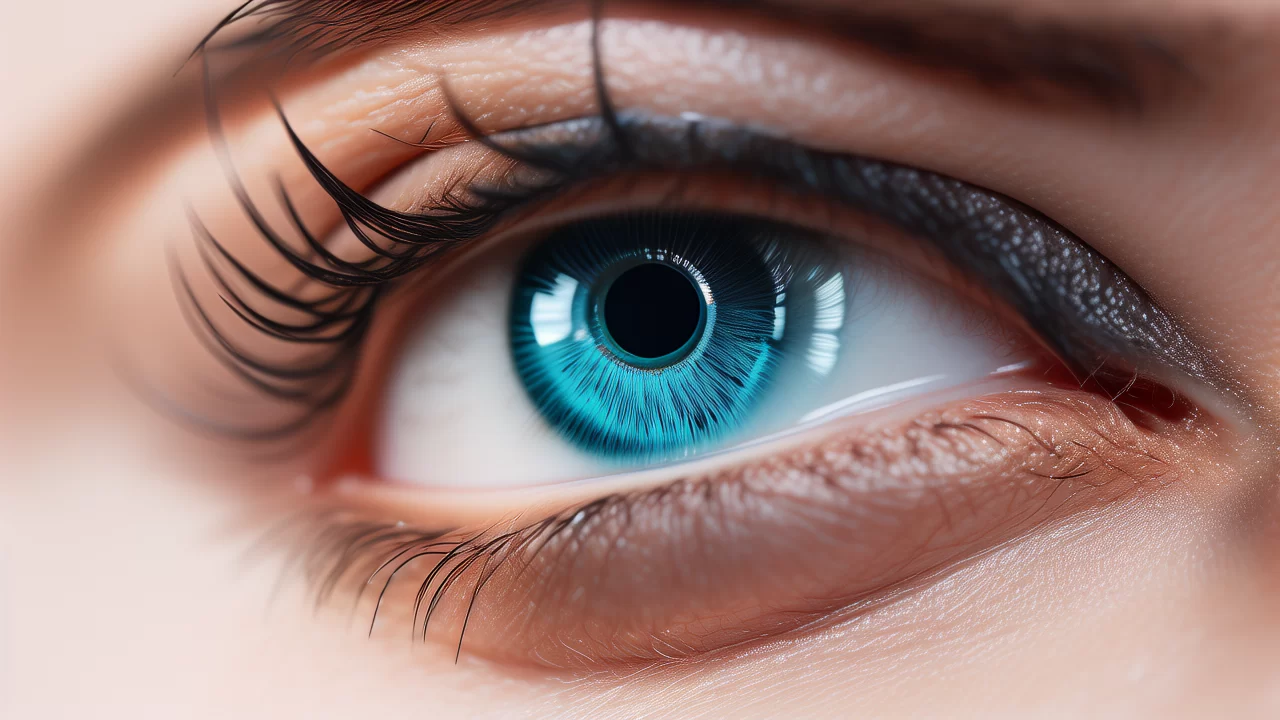
If you run a beauty salon, a cosmetics shop, or a fashion retail store, you’ve probably noticed something: customers are asking about colored contact lenses more than ever. Not the theatrical Halloween kind — everyday shades that make their eyes look brighter, more defined, or subtly different.
The problem? Most small business owners have no idea where to start. What do you stock? How do you handle the regulatory side? What margins are realistic? And how do you avoid ending up with boxes of unsold inventory in shades nobody wants?
I’ve been working with beauty retailers across Southeast Asia, the Middle East, and Europe for years now. Here’s what I’ve learned about stocking colored contact lenses without making expensive mistakes.
Why Colored Lenses Belong in Your Shop Right Now
Let’s start with the obvious question: why colored contact lenses, and why now?
The global colored contact lens market is projected to reach $4.2 billion by 2028, growing at roughly 8% annually. But that number doesn’t tell the full story. What matters for retailers is the shift in how people buy them.
Three years ago, most customers ordered colored lenses online after researching for hours. Today, a growing percentage want to see options in person, get recommendations from someone they trust, and walk out with a product the same day. That’s you.
Beauty salons are particularly well-positioned. A customer getting her hair done or her nails finished is already in a “treat myself” mindset. Showing her a lens shade that complements her new look isn’t pushy — it’s good service. Some salons in Bangkok and Kuala Lumpur are already reporting that lens sales account for 15-20% of their add-on revenue.
Understanding the Product Before You Stock It
Here’s where most retailers stumble. They treat colored contact lenses like any other beauty product — something you pick based on packaging and price. That’s a mistake that can cost you in returns, complaints, and worse, customer eye health issues.
Colored contact lenses are medical devices in most countries. They sit directly on the cornea. The parameters matter:
Diameter (DIA): Most colored lenses range from 14.0mm to 14.5mm. Smaller diameters look more natural; larger ones create a “doll eye” effect popular in East Asian markets. Stock a mix, but lean toward 14.2mm as your safest bet — it works for most eye shapes.
Base Curve (BC): This determines how the lens fits on the eye. Most lenses sit between 8.4mm and 8.8mm. If a customer buys a lens with the wrong base curve, it’ll be uncomfortable or won’t stay in place. This is why carrying lenses from suppliers who offer consistent BC specs matters.
Water Content: Higher isn’t always better. Lenses with 38-42% water content tend to be more durable and easier to handle. High water content (55%+) sounds comfortable but can actually draw moisture from the eye over time, causing dryness. For retail, mid-range water content (40-50%) hits the sweet spot.
Material: You’ll see hydrogel and silicone hydrogel. Hydrogel is standard and affordable. Silicone hydrogel offers better oxygen permeability and suits customers who plan to wear lenses for longer periods. For a first stock, hydrogel is fine — it’s what most customers expect at this price point.
What Shades to Stock (And What to Skip)
This is the question I get most often from new retailers. Here’s my honest advice based on what actually sells across different markets.
Always stock:
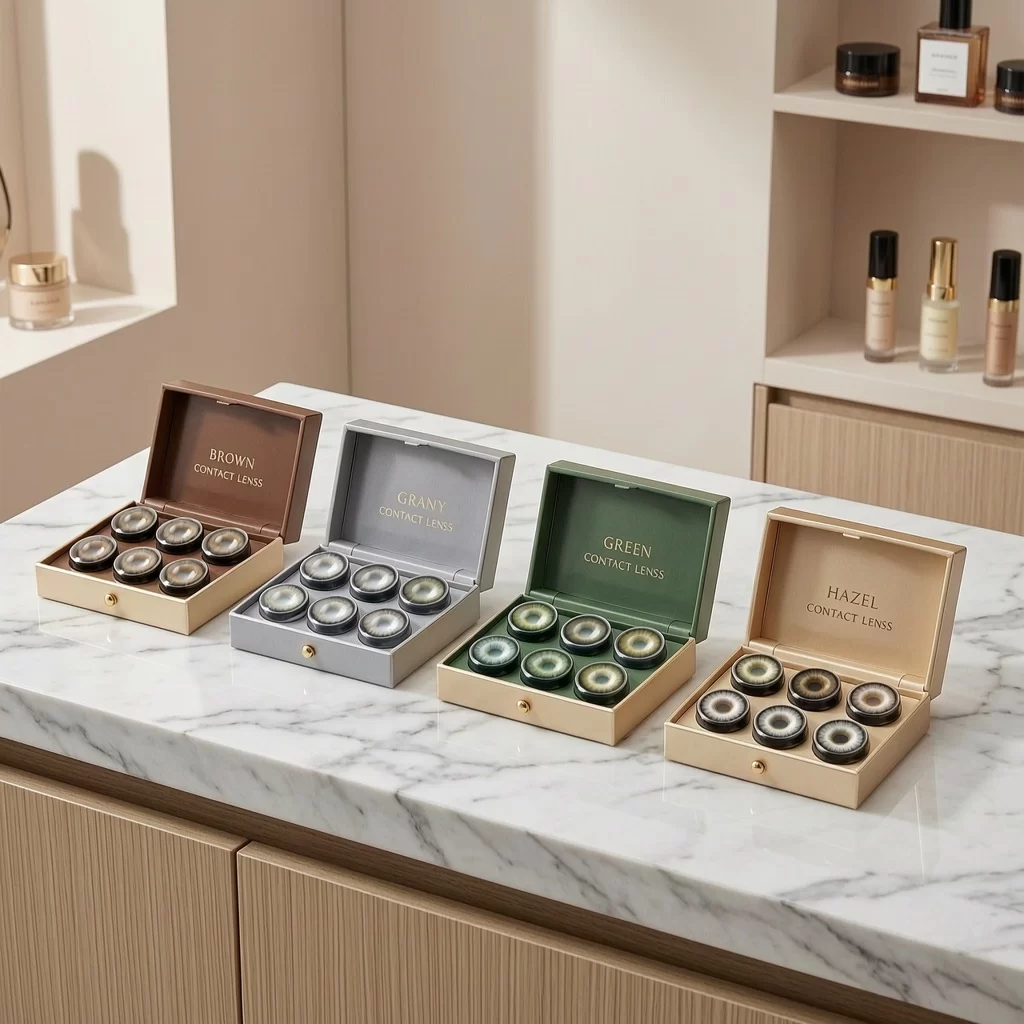
- Natural brown and hazel — these outsell everything else in most markets. They work for everyday wear and suit a wide range of skin tones.
- Gray and light gray — popular in Southeast Asia and the Middle East. Creates a subtle, brightening effect.
- Green — surprisingly strong seller in Europe and the Middle East.
Stock selectively:
- Blue — popular but tricky. Looks great on some skin tones, unnatural on others. Keep one or two options, not a full range.
- Violet/purple — niche but loyal following. One or two SKUs are enough.
- Amber/honey — growing trend, especially in East Asian markets. Worth testing.
Skip (at first):
- Red, white, crazy patterns — these are costume lenses. Different market, different customers, different regulations. Don’t mix them with your everyday beauty stock.
- Extreme enlargement lenses (15mm+) — trending in some markets but higher return rate due to comfort issues.
A good starting assortment: 8-12 SKUs across 4-6 colors, with brown and gray getting the deepest inventory.
Finding the Right Supplier
This is where your business either thrives or suffers. The supplier you choose affects your margins, your product quality, and your ability to sleep at night knowing your customers are safe.
Certifications are non-negotiable. Your supplier should hold CE marking (for Europe), FDA registration (for the US market), or equivalent certifications for your region. If they can’t show you valid certificates, walk away. No exceptions.
Ask about their manufacturing process. The safest colored lenses use “sandwich” or “print-inside” technology, where the color pigment is sealed between lens layers and never touches the eye. Older printing methods that put pigment on the lens surface are cheaper but carry higher risk. Your customers’ eye health depends on this.
MOQ matters for small retailers. Many large manufacturers require minimum orders of 5,000-10,000 pieces per SKU. If you’re just starting out, look for suppliers who offer lower MOQs — some go as low as 500 pieces per color. Yes, the per-unit cost is slightly higher, but you won’t end up with dead stock.
Request samples before committing. A reliable supplier will send you sample pairs to test. Check the print quality, lens flexibility, packaging, and whether the parameters match what’s listed. If the samples are inconsistent, the bulk order will be worse.
Pricing and Margins: What’s Realistic
Let’s talk numbers, because this is a business.
For standard colored contact lenses (monthly replacement, hydrogel), wholesale costs from a reputable manufacturer typically range from $1.50 to $4.00 per pair, depending on volume and customization.
Retail pricing varies by market:
- Southeast Asia: $8-15 per pair
- Middle East: $10-20 per pair
- Europe: $15-30 per pair
- North America: $20-40 per pair
That gives you a 3x-8x markup, which is healthy for a beauty accessory. But remember — you’re also providing a service. You’re helping customers choose the right shade, ensuring proper fit, and being a trusted local source. That’s worth the premium.
Don’t compete on price with online discounters. Compete on trust, convenience, and expertise. Customers will pay more when they can see the product, ask questions, and get immediate help if something isn’t right.
The Regulatory Side (Yes, It Matters)
I know this isn’t the exciting part. But getting this wrong can shut your business down.
In most countries, contact lenses — including colored cosmetic ones — are classified as medical devices. That means:
- You may need a retail license or registration to sell them
- Your supplier’s products must be registered with your local health authority
- You need to provide basic usage instructions and safety information to customers
- Some markets require that lenses are dispensed with a valid prescription
Check your local regulations before you stock anything. In the UAE, for example, selling contact lenses without proper licensing can result in fines and product confiscation. In the EU, CE marking is mandatory. In the US, you technically need a prescription even for plano (non-corrective) colored lenses.
A good supplier will help you navigate this. They should have experience exporting to your region and understand what documentation you need. If they shrug off regulatory questions, that’s a red flag.
Practical Tips for Your First 90 Days
Start with a display, not a stockpile. A small, well-lit display case with lens samples (unopened, of course) and shade charts is more effective than boxes stacked in a corner. Let customers see the options.
Train your staff on the basics. They don’t need to be optometrists, but they should understand diameter, base curve, and water content well enough to answer common questions. A customer who gets a bad recommendation once won’t come back.
Offer a “first pair” promotion. A discount on the first purchase lowers the barrier for curious customers who haven’t tried colored lenses before. Once they’ve experienced the effect, repeat purchases follow naturally.
Collect feedback and adjust. Track which shades sell and which don’t. After 60 days, you’ll have clear data on what your specific customers want. Adjust your next order accordingly.
Partner with local beauty influencers. A recommendation from a trusted local face can move inventory faster than any display. Offer free pairs in exchange for honest reviews on social media.
The Bottom Line
Colored contact lenses aren’t just another beauty trend — they’re a growing category with real margins and repeat customers. For salons and retail shops, they represent an add-on revenue stream that fits naturally into the beauty experience you’re already providing.
The key is starting smart: stock the right shades, work with a certified supplier, understand the regulations, and focus on customer education over hard selling. Do that, and you’ll build a lens business that grows steadily without the headaches.
If you’re looking for a reliable OEM/ODM partner for colored contact lenses — whether you need small-batch stock or want to build your own branded line — we’d be happy to help you figure out what makes sense for your market. Drop us a line at sales@miomicon.com or reach out on WhatsApp at +86 13862973905.
MIOMI Optical is a contact lens manufacturer specializing in OEM/ODM customization, small-batch wholesale, and private-label development for beauty retailers and brand owners worldwide.