If you’ve ever received customer complaints about lenses that “feel off” or “keep sliding around,” there’s a good chance the issue has nothing to do with lens quality — and everything to do with base curve.
Base curve is one of those parameters that gets talked about in optometry school and then completely forgotten by the time someone starts a contact lens brand. But here’s the thing: it might be the single most important factor in determining whether your customers actually love your product or return it within the first week.
Let me break down what base curve really means, why it matters for your brand, and how to get it right when you’re working with an OEM supplier.
What Base Curve Actually Measures
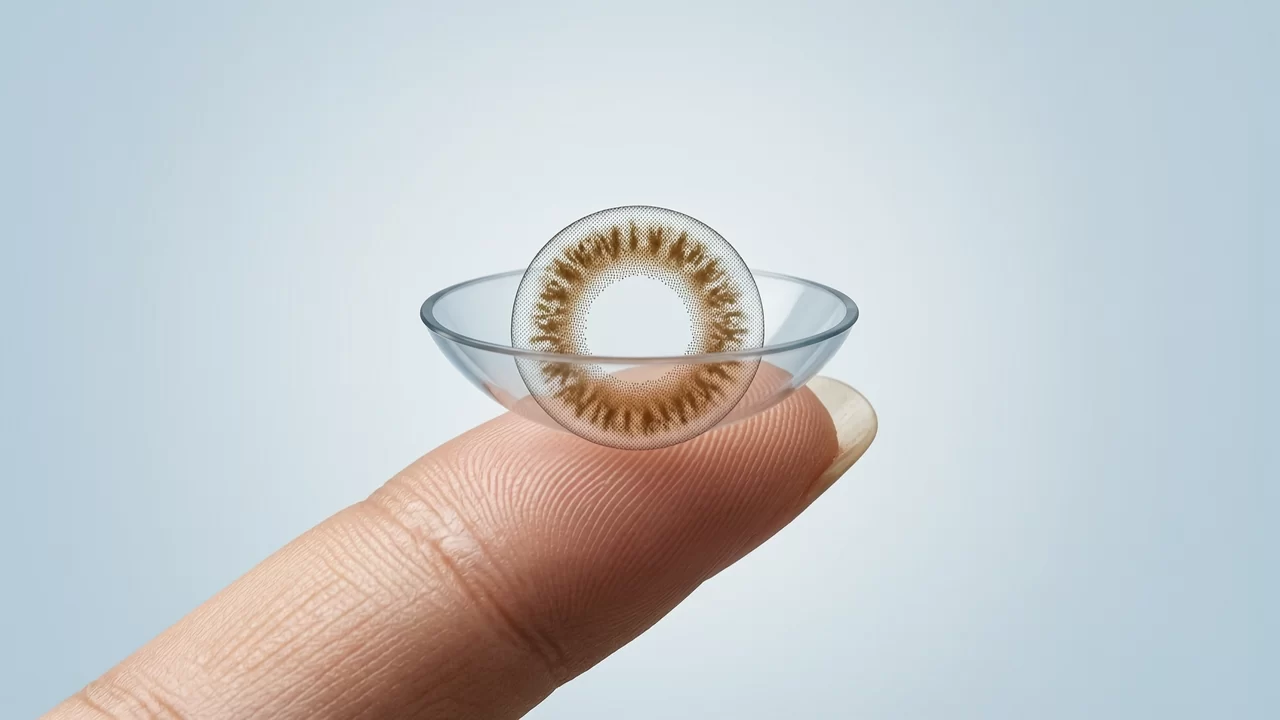
Base curve (BC) is the curvature of the contact lens, measured in millimeters. Think of it like the curve of a spoon. A smaller number means a steeper curve (like a soup spoon), while a larger number means a flatter curve (like a serving spoon).
Most soft contact lenses fall somewhere between 8.3mm and 8.8mm. The average human cornea sits around 8.6mm, which is why you see 8.6mm as such a common base curve in the market.
But here’s what most brand owners don’t realize: the “average” doesn’t tell the whole story. Corneal curvature varies significantly between individuals, and even more so between different ethnic populations.
Why Base Curve Makes or Breaks the Wearing Experience
When base curve doesn’t match the wearer’s cornea, you get one of two problems:
Too tight (base curve too steep for the eye): The lens grips the cornea too aggressively. This restricts tear flow underneath the lens, which means less oxygen reaches the eye. Customers complain about redness, discomfort, and that “suction cup” feeling when they try to remove the lens. Long-term, this can lead to serious corneal health issues.
Too loose (base curve too flat for the eye): The lens slides around every time the customer blinks. Vision becomes unstable — they might notice their vision briefly blurs with each blink. The lens might even pop out during sports or when rubbing their eyes. Customers describe this as “the lens that never stays put.”
Neither scenario leads to repeat purchases. And in the colored contact lens market, where brand loyalty is everything, a poor fit is a brand killer.
The Population Variation Problem
Here’s where things get interesting for brand owners targeting different markets.
Studies have shown that average corneal curvature varies by ethnicity. East Asian populations tend to have slightly steeper corneas (smaller base curve numbers, often around 8.4-8.5mm) compared to Caucasian populations (often closer to 8.6-8.7mm).
This means a lens that fits perfectly in your Shanghai market might feel uncomfortably tight in your Berlin or Los Angeles market — even though it’s technically the same product.
If you’re selling globally, you have a few options:
Option 1: Stick with 8.6mm as your universal base curve. This is what most brands do. It’s a reasonable middle ground that works “well enough” for most people. But “well enough” isn’t great.
Option 2: Offer multiple base curves for different markets. Some premium brands do this — selling 8.4mm in Asia and 8.7mm in Western markets. It complicates your inventory, but it can genuinely improve customer satisfaction.
Option 3: Design for the majority and educate the minority. Pick the base curve that works for your primary target market, and make sure your customer education materials explain that fit might vary. This is the most practical approach for new brands.
What This Means for Your OEM/ODM Project
When you’re briefing your manufacturer on a new product line, base curve is one of those details that needs to be decided early — not as an afterthought.
Here’s what you should discuss with your OEM partner:
1. What base curve options does the factory offer?
Most manufacturers have standard molds, typically in 8.6mm or 8.7mm. Some larger factories can produce custom base curves, but this usually requires higher MOQs because they need to create or source different mold tooling.
2. What’s the tolerance range?
Even within a “8.6mm” lens, there’s manufacturing variance. A reputable factory will tell you their tolerance (usually ±0.1mm or ±0.15mm). If they can’t give you this number, that’s a red flag.
3. How does base curve interact with diameter?
This is where it gets technical. A larger diameter lens on a steeper base curve might fit similarly to a smaller diameter lens on a flatter base curve. Your manufacturer should be able to advise on the overall “fit profile” of the lens, not just individual parameters.
4. Have they done fitting studies?
Some factories have in-house optometrists who can provide fitting data from real-world trials. This is incredibly valuable, especially if you’re launching in a new market. Ask for it.
The Comfort Factor: Beyond Base Curve
I’d be remiss if I didn’t mention that base curve is just one piece of the comfort puzzle. Edge design, lens material, water content, and surface treatments all play roles in how a lens feels.
But here’s the hierarchy: if base curve is wrong, nothing else matters. A lens made from the most advanced silicone hydrogel material, with perfect water content and beautifully smooth edges, will still be uncomfortable if the base curve doesn’t match the wearer’s eye.
Get base curve right first. Then optimize everything else.
Questions to Ask Before Launching Your Next Product
Before you sign off on specs for your next colored contact lens SKU, make sure you can answer these questions:
– What base curve are we specifying, and why?
– Does this base curve work for our target market’s population?
– What’s the manufacturing tolerance, and how does it affect fit consistency?
– Have we tested this base curve with real wearers in our target market?
– If we get fit complaints, what’s our plan — adjust base curve, or adjust other parameters?
If you can’t answer these confidently, you’re not ready to launch.
The Bottom Line
Base curve isn’t sexy. It doesn’t show up in marketing materials or Instagram ads. But it’s the foundation of lens comfort, and lens comfort is the foundation of customer retention.
In a market where customers have hundreds of colored lens brands to choose from, the ones that win long-term are the ones that feel good from day one. And that starts with getting the base curve right.
If you’re developing a new contact lens product line and want to talk through these technical decisions with a manufacturing partner who understands fit science, not just production volume, reach out to our team at MIOMI. We’ve helped brands across Southeast Asia, the Middle East, and Europe nail their lens specifications — and we can help you, too.
Want to learn more about contact lens parameters and how they affect product quality? Check out our other guides on choosing the right lens material and understanding diameter options.