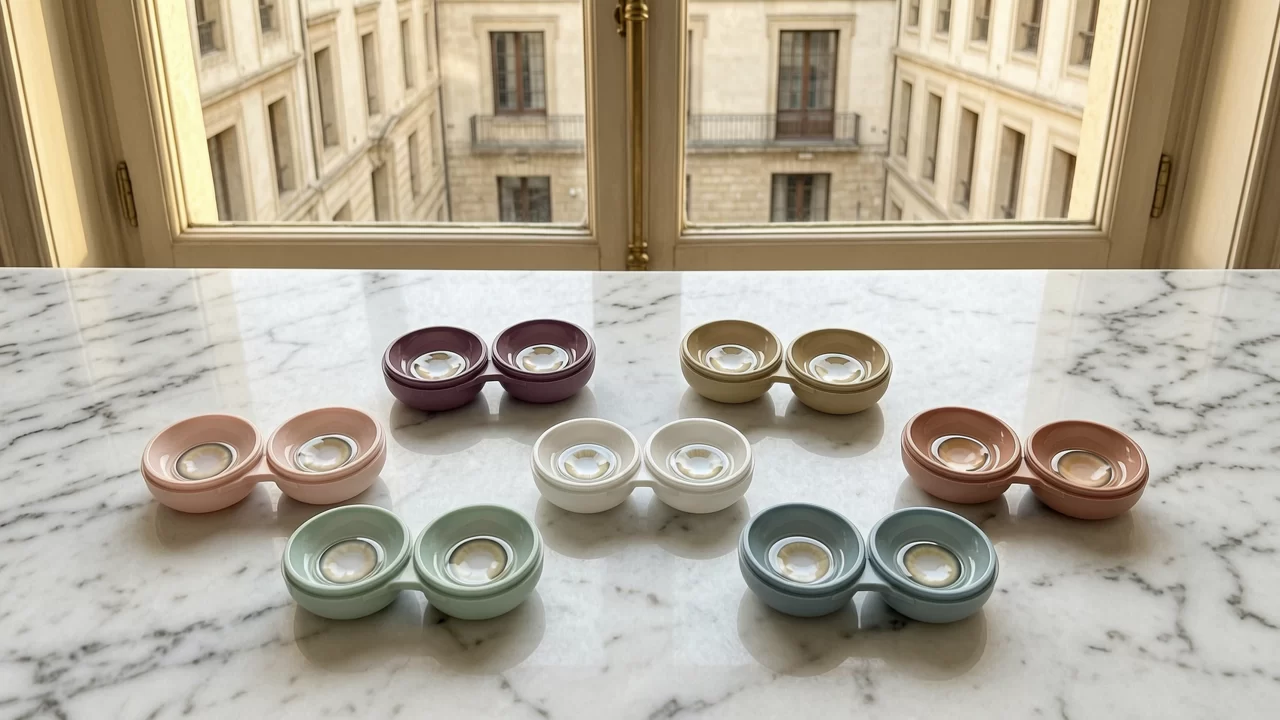
Walk into any beauty trade show in 2026 and you’ll notice something: the contact lens section has gotten a lot bigger. A lot louder. And honestly, a lot more confusing.
If you’re building a brand, expanding your product line, or entering a new market — you’re not just competing with the same five manufacturers anymore. You’re navigating a landscape that’s shifting faster than most buyers expected.
Here’s what’s actually happening in the contact lens industry right now — the trends that matter, the ones that are overhyped, and what they mean for your business.
1. Color Contacts Aren’t a Niche Anymore — They’re the Driver
Let’s start with the obvious one, because it’s the one most people underestimate.
Colored contact lenses used to be a small segment of the market — something you stocked alongside your clear lenses as an afterthought. That changed. Fast.
In Southeast Asia, color contacts now represent a significant portion of lens sales in countries like Thailand, Vietnam, and Indonesia. In the Middle East, the demand for natural enhancement shades — think honey, hazel, soft grey — has created an entirely new product category that didn’t exist five years ago.
What does this mean for buyers? If your catalog doesn’t have a strong color lens range, you’re leaving money on the table. Not next year. Now.
The brands that are winning aren’t the ones with the most colors. They’re the ones with the right colors for their specific market. A shade that sells in Dubai might flop in Manila. Understanding your audience’s preferences matters more than having a 50-color catalog.
2. Daily Disposables Are Eating Into Monthly Sales — Globally
This isn’t a Western market trend anymore. It’s everywhere.
Daily disposable lenses are growing at a pace that’s making monthly and bi-weekly lens manufacturers rethink their production strategies. The drivers are straightforward: convenience, hygiene, and the fact that consumers in emerging markets are willing to pay more for products that feel premium.
For brand owners, this creates both opportunity and complexity. Daily disposables mean higher repeat purchase rates — which is great for revenue. But they also mean you need to manage higher order volumes, faster supply chain turnaround, and more demanding quality consistency.
The manufacturers who’ve invested in daily disposable production lines are seeing their order books fill up. The ones who haven’t are watching their competitors take that volume.
3. Private Label Is the New Normal — Not a “Premium” Service
Five years ago, getting your own branded contact lenses required significant minimum orders and a serious commitment. Today, private label is becoming table stakes.
Small and medium brands — the kind run by beauty influencers, regional distributors, and first-time entrepreneurs — want their own products. Not someone else’s. Theirs.
The shift has been driven by two things: manufacturers lowering their MOQs to capture this market, and platforms like Shopify making it easier than ever to launch a branded store without massive upfront investment.
For buyers, this is a buyer’s market. You have more options, more flexible terms, and more manufacturers willing to work with smaller orders. The challenge isn’t finding a supplier anymore — it’s finding the right one who understands quality, compliance, and your market.
4. Compliance Is Getting Stricter — And That’s a Good Thing
Here’s the part nobody talks about at trade shows, but everyone should: regulatory scrutiny is tightening.
Markets that were previously loose on medical device certification are starting to enforce standards more seriously. The EU’s MDR (Medical Device Regulation) has ripple effects beyond Europe. Southeast Asian countries are updating their medical device frameworks. Even some African markets are moving toward more structured import requirements.
This might sound like a headache. But if you’re a serious brand owner, it’s actually a competitive advantage.
Stricter compliance means fewer fly-by-night operators can enter your market. It means consumers develop trust in certified products. And it means brands that invest in proper certification from their manufacturer build a moat that competitors without certification can’t easily cross.
When you’re evaluating a manufacturer, ask about their certifications upfront. CE, FDA, ISO 13485 — these aren’t just paperwork. They’re signals of whether your supplier takes this seriously.
5. Sustainability Is No Longer Optional — Even in Medical Devices
It was easy to ignore sustainability when contact lenses were seen purely as medical devices with no environmental footprint discussion. That’s changing.
Consumers are asking about packaging. Retailers are asking about supply chain practices. And in markets like Europe and Australia, sustainability credentials are starting to influence purchasing decisions — even in categories where you might not expect it.
The industry is responding. Biodegradable packaging options are emerging. Some manufacturers are exploring lens materials with reduced environmental impact. These developments are early-stage, but they’re accelerating.
For forward-thinking brands, this is an opportunity to differentiate. A contact lens brand that communicates its sustainability commitment — even in small, genuine ways — stands out in a category that historically hasn’t talked about it at all.
6. The Supply Chain Story Is Your Marketing Story
This is the trend that connects everything else.
Buyers and consumers increasingly want to know where products come from, who makes them, and how. Transparency isn’t just a supply chain concern — it’s a marketing asset.
Brands that can tell the story of their manufacturing process — the technology, the quality control, the certifications, the people behind the product — are building stronger connections with their audience than brands that can’t.
This is particularly true in the contact lens space, where consumers are making decisions about products they put directly into their eyes. Trust is the currency, and transparency builds it.
What This Means for Your Next Move
Here’s the bottom line: the contact lens industry in 2026 rewards brands that move with intention.
The market is growing. The opportunities are real. But the brands that win won’t be the ones that chase every trend — they’ll be the ones that understand which trends matter for their specific market, and build their product strategy around that understanding.
Whether you’re launching your first private label line, expanding into a new region, or simply refreshing your catalog — the industry conditions are favorable right now. The question isn’t whether to act. It’s how quickly.
At MIOMI, we’ve been watching these trends play out through our work with brands across Southeast Asia, the Middle East, Europe, and beyond. The patterns are consistent: the brands that succeed are the ones that combine quality products with genuine market understanding.
If you’re exploring any of these directions, we’re always happy to share what we’re seeing on the ground. Reach out — no pitch, just a conversation.