If you’re running a contact lens brand or wholesale business, you already know the obvious stuff: you need good products, competitive pricing, and reliable shipping. But here’s what nobody tells you — the things that separate the brands that last five years from the ones that fold after eighteen months.
After working with hundreds of contact lens brands across Southeast Asia, the Middle East, Europe, and North America, I’ve seen the patterns. The successful ones aren’t necessarily the ones with the biggest budget or the flashiest marketing. They’re the ones who get the fundamentals right and avoid the stupid, expensive mistakes that sink most new brands.
1. Stop Competing on Price Alone
This is the number one mistake new brands make. They see the market, panic, and decide the only way to win is to be cheaper than everyone else.
Here’s the problem: there’s always someone cheaper. Somewhere in the world, a factory will undercut you by 10%. Then another one by 20%. Before you know it, you’re racing to the bottom and your margins are thinner than a daily disposable lens.
The brands that thrive don’t compete on price — they compete on everything else. Better design. Faster turnaround for custom orders. Stronger branding. Education content that actually helps their customers. Reliable certification that lets their clients sell without regulatory headaches.
Action step: Write down three things your brand does better than the cheapest competitor. If you can’t think of any, you have a positioning problem, not a pricing problem.
2. Certifications Are Not Optional — They’re Your Ticket to Play
I cannot tell you how many brand owners come to us saying, “We’ll worry about FDA and CE certification once we start making sales.” That’s backwards. It’s like opening a restaurant and saying you’ll get a food safety license after you serve your first hundred customers.
Contact lenses are medical devices, not fashion accessories. Every major market treats them that way. Skip certification and you’re not just risking fines — you’re risking your entire inventory getting seized at customs. I’ve seen it happen. It’s ugly.
What you need depends on your market:
- Europe: CE marking (medical device directive)
- USA: FDA clearance (510(k) or De Novo classification)
- South Korea: KFDA approval
- Southeast Asia: Varies by country — Thailand’s FDA, Malaysia’s MDA, Indonesia’s BPOM
- Middle East: SFDA for Saudi Arabia, MOHAP for UAE
Yes, certification costs money and takes time. But here’s the good news: work with the right OEM partner and most of this work is already done for you. At MIOMI, for example, our standard catalog products already have CE and FDA certification, so our brand partners can hit the ground running without spending six months in regulatory limbo.
3. Your MOQ Strategy Will Make or Break You
Minimum Order Quantity is the tension point of every OEM relationship. Factories want higher MOQs because it’s more efficient. Brands want lower MOQs because cash flow is real.
Here’s what I tell new brand owners: don’t just ask, “What’s your MOQ?” Ask, “What’s the MOQ at each level?”
The reality is that MOQ isn’t a single number. It’s a ladder:
- Stock items / white label: Low MOQ (often just a few hundred pairs per design) — perfect for testing the market
- Custom design (existing mold): Medium MOQ — your artwork, standard lens parameters
- Completely custom (new mold): Higher MOQ — unique lens design from scratch
- Exclusive formulas or materials: Highest MOQ — niche but powerful differentiation
Smart brands start at the bottom of the ladder and work their way up. They test 5-10 designs with low MOQ orders, see which ones sell, then scale the winners with custom tooling. It’s not glamorous, but it’s how you build a brand without betting the farm on your first collection.
4. Product Photography Matters More Than You Think
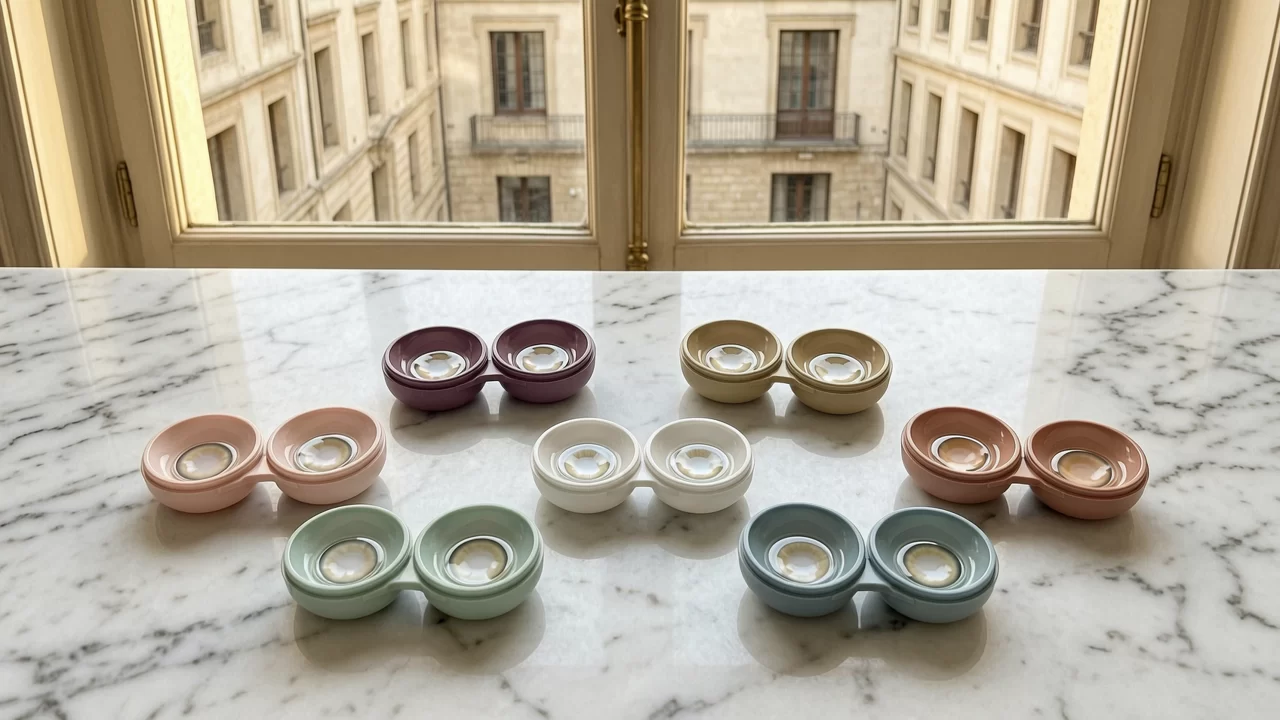
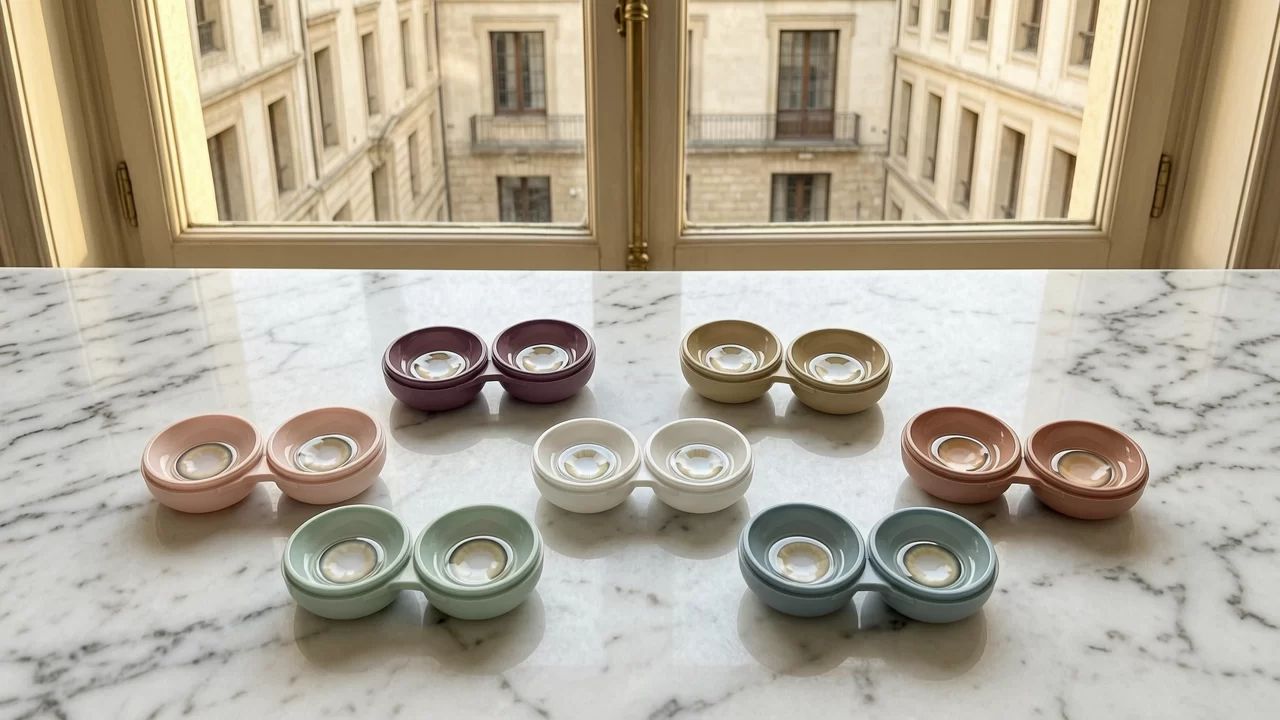
Contact lenses are visual products. People buy them because they want to look a certain way. And yet, so many brands use terrible product photos — blurry eye shots, weird lighting, colors that don’t match the actual product.
Here’s a brutal truth: in e-commerce, your photo is your product. If the photo looks cheap, the customer assumes the product is cheap. Period.
You don’t need a $20,000 photoshoot, but you do need:
- Consistent lighting across all your product shots
- Real eye photos, not just lens-on-white-background shots
- Multiple eye colors showing how the lens looks on different people
- Accurate color representation (customers hate receiving a lens that’s a completely different shade than advertised)
- Before-and-after comparisons when possible
One of our clients in Dubai quadrupled their conversion rate just by reshooting their product photos with a professional photographer and a diverse set of models. Same lenses, same website, same price. Just better photos. Think about that.
5. Build Your Email List From Day One
Social media is great for discovery, but it’s rented land. Instagram can change its algorithm. TikTok can ban your account. Your website can get de-indexed from Google. But your email list? That’s yours.
Every contact lens brand should be building an email list from their very first customer. Here’s why:
- Contact lens wearers are repeat buyers. If someone buys monthly lenses, they’ll need more in 30 days. Email is the perfect channel for that reminder.
- Email has way higher conversion rates than social media. We’re talking 3-10x higher, depending on the brand.
- It’s the best way to launch new designs. Send a preview to your list before the public launch and you’ll have sales on day one.
- Customer education. Teach people how to care for their lenses, explain the difference between materials, build trust.
And no, “we’ll start collecting emails once we have more products” is not a strategy. Start with a simple popup offering 10% off the first order. It’s basic, it works, and every subscriber is an asset that compounds over time.
6. Don’t Neglect the B2B Side of Your Business
Most new brands focus exclusively on D2C — selling direct to consumers through their website. And there’s nothing wrong with that. But here’s what they’re missing: B2B wholesale revenue is often more stable, more predictable, and has lower customer acquisition cost.
Think about it. One optical store ordering 50 pairs a month is worth dozens of individual customers. And once the relationship is established, they’ll reorder like clockwork.
Who should you target?
- Independent optical shops and optometry clinics
- Beauty salons and spas (especially for colored lenses)
- Online beauty retailers
- University campus stores
- Fashion boutiques in trend-forward areas
The key is to have a clear wholesale program with tiered pricing, minimum order quantities, and marketing support for your retailers. If you make it easy for them to sell your product, they will.
7. Inventory Management Is a Skill — Learn It
I’ve seen brands fail not because they couldn’t sell, but because they couldn’t manage inventory.
The classic pattern: a new brand launches with ten designs, eight of them sell okay, two are surprise hits. They reorder more of everything, but they reorder based on gut feeling instead of data. Six months later, they’re sitting on thousands of pairs of slow-moving designs and running out of stock on their bestsellers.
Sound familiar?
Good inventory management isn’t glamorous, but it’s the backbone of a profitable contact lens business. Here are the basics:
- Track sell-through rate by SKU. Not just “how many we sold” but “what percentage of our inventory sold in this period.”
- Know your reorder lead time. If it takes 25 days to get a custom order, don’t wait until you’re sold out to reorder.
- Have a safety buffer for your top sellers. Running out of stock on your #1 design costs you sales and customers.
- Run promotions on slow movers. Discounts, bundle deals, gift-with-purchase — anything to convert dead stock into cash.
- Be ruthless about cutting losers. If a design has been sitting for six months with 10% sell-through, stop reordering it. Clear it out and move on.
8. Pick Your Factory Partner Like You’re Hiring a Cofounder
Your OEM manufacturer is not just a supplier. They’re your most important business partner. The quality of their product, the reliability of their delivery, their responsiveness when things go wrong — all of this directly reflects on your brand.
So many brands just search Alibaba, pick the cheapest quote, and roll the dice. Then they’re shocked when the product arrives with quality issues, the order is three weeks late, and nobody answers their emails.
When evaluating a factory, look for:
- Experience with your target markets. A factory that knows FDA requirements is worth more than one that doesn’t, even if their prices are slightly higher.
- Communication quality. Can you get a clear answer within 24 hours? Do they understand what you’re asking for?
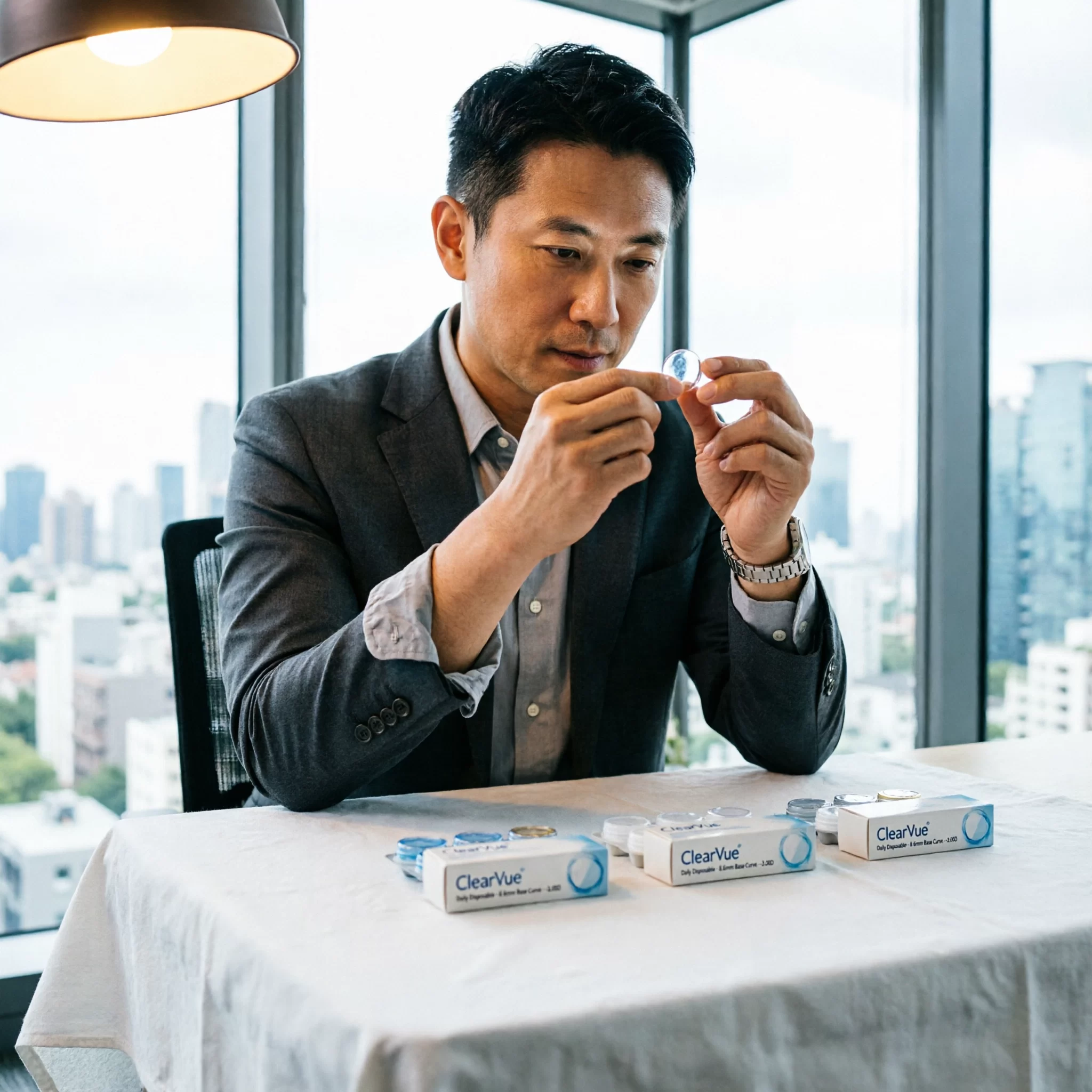
- Sample quality. Always order samples first. And not just “show samples” — production-quality samples that represent what you’ll actually receive.
- MOQ flexibility. Can they handle small orders for testing and large orders for scaling?
- Design support. Can they help you with artwork, or do you need to provide everything print-ready?
- Transparency. Do they explain their pricing, their process, and their timelines clearly?
And here’s a pro tip: visit the factory if you can. There’s no substitute for seeing the production line, meeting the team, and getting a sense of how the place operates. If a factory actively discourages visits, that’s a huge red flag.
The Bottom Line
Building a contact lens brand isn’t rocket science, but it’s also not easy. The brands that succeed are the ones who treat it like a real business from day one — not a side hustle or a get-rich-quick scheme.
They get the fundamentals right: solid positioning, proper certification, smart inventory, professional imagery, and a reliable manufacturing partner. They build multiple revenue streams (D2C + B2B + marketplaces). And they play the long game, understanding that a sustainable brand takes years to build, not months.
None of this is particularly flashy. None of it will go viral on TikTok. But it works. And in an industry where most new brands don’t make it past their second year, “it works” is worth more than any trend or hack.
If you’re thinking about launching a contact lens brand — or if you already have one and you’re looking to level up — get in touch with us. We’ve helped brands on every continent go from idea to shelf, and we can help you avoid the expensive mistakes that slow most new brands down.