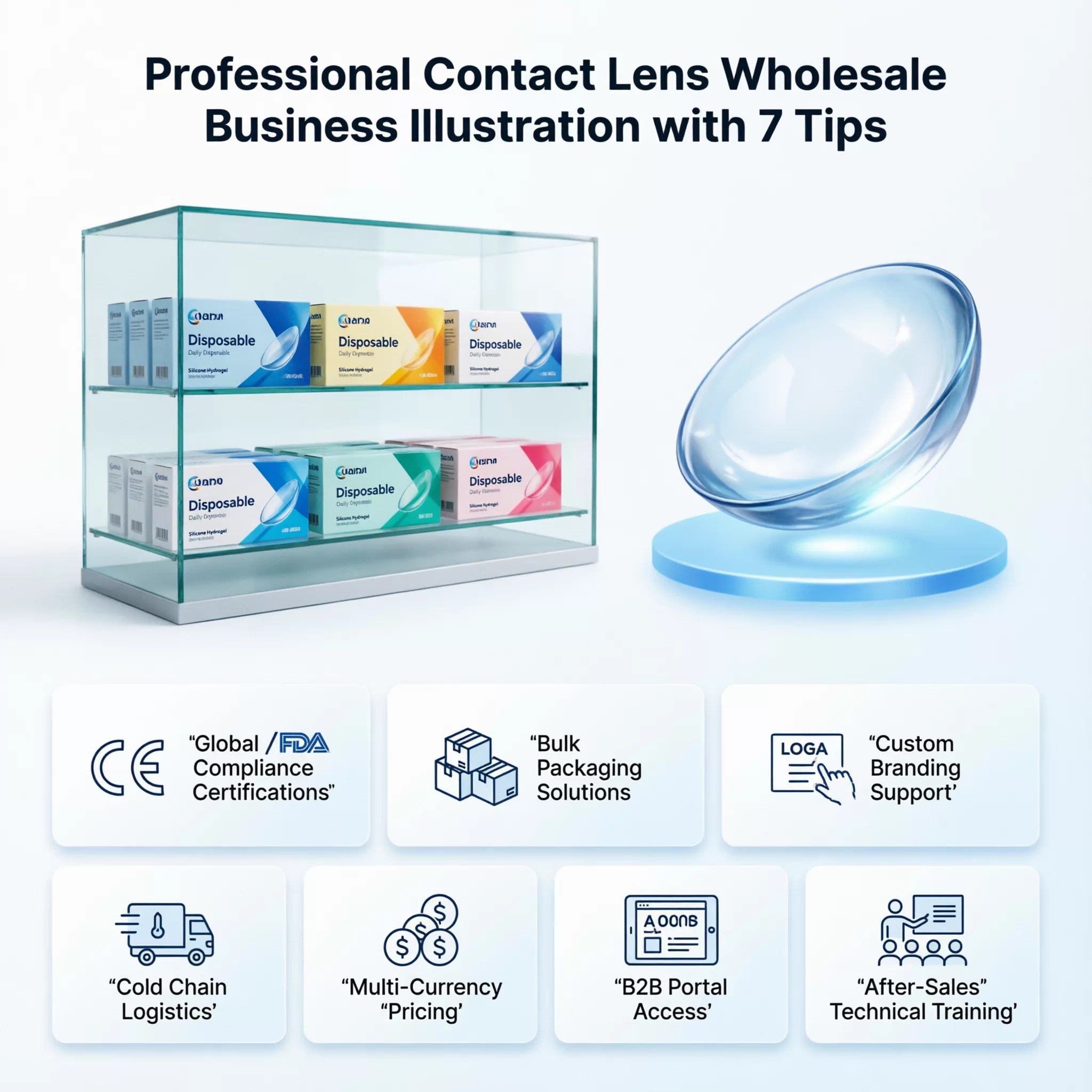
As someone who’s been working in the contact lens industry for years, I’ve seen firsthand how the landscape has changed. From the rise of e-commerce to evolving consumer preferences, staying ahead of the curve is crucial for any wholesale or B2B contact lens business. In this article, I’ll share 7 practical tips that have helped me and many of our clients thrive in this competitive market.
1. Understand Your Target Market Inside Out
One of the biggest mistakes I see new wholesale contact lens businesses make is trying to sell to everyone. The contact lens market is incredibly diverse, and what works for one customer segment may not work for another. For example:
- A local optician in Germany will have very different needs than an e-commerce store targeting Gen Z in Southeast Asia
- A budget-conscious retailer in India may prioritize low prices, while a luxury beauty brand in the Middle East will focus on premium quality and packaging
- A B2B customer looking for daily disposables for their office wellness program will have different requirements than a makeup brand looking for color lenses for photo shoots
Take the time to research your target market:
– What’s the average disposable income of their customers?
– What are their biggest pain points?
– Are there any cultural or regulatory considerations you need to be aware of?
– What channels do they use to source products?
By understanding your target market’s specific needs, you can tailor your offerings and marketing messages to resonate with them, which will ultimately lead to higher sales and customer loyalty.
2. Focus on Quality Over Quantity
In the contact lens industry, quality is not just a nice-to-have—it’s a necessity. Poor-quality lenses can cause eye irritation, infections, and even long-term damage, which can ruin your reputation and lead to legal issues.
When sourcing products, always:
– Look for suppliers with relevant certifications such as FDA, CE, or ISO
– Request samples and test them yourself before placing a large order
– Ask for detailed product specifications and quality control processes
– Build relationships with suppliers who have a proven track record of consistency
Remember, customers are willing to pay more for high-quality products that they can trust. By focusing on quality, you’ll attract customers who value reliability and are more likely to become repeat buyers.
3. Offer Customization Options
In today’s competitive market, offering generic products is no longer enough. B2B customers are increasingly looking for customization options to differentiate themselves from their competitors.
Consider offering:
– Custom packaging with their branding
– Private label products
– Custom lens colors or designs for special occasions
– Custom prescription ranges to cater to specific customer needs
Customization not only allows you to charge a premium for your products but also helps you build stronger relationships with your customers. When a customer feels that their needs are being met with a personalized solution, they’re more likely to become a long-term partner.
4. Build Strong Relationships with Suppliers
Your suppliers are your business partners, and the quality of your relationships with them will directly impact your success. Here are some tips for building strong supplier relationships:
- Pay your invoices on time to establish trust and reliability
- Communicate clearly and regularly about your needs and expectations
- Be open to feedback and willing to work together to find solutions
- Consider long-term partnerships over short-term gains
By building strong relationships with suppliers, you’ll have access to better pricing, priority production, and more flexibility when it comes to customization. You’ll also have a reliable partner who can help you navigate any challenges that may arise.
5. Invest in Digital Marketing
In today’s digital age, having a strong online presence is essential for any B2B business. Even if you primarily sell offline, many of your customers will research products and suppliers online before making a purchasing decision.
Here are some digital marketing strategies to consider:
– Build a professional website that showcases your products and services
– Optimize your website for search engines (SEO) to make it easier for customers to find you
– Create valuable content such as blog posts, case studies, and whitepapers to establish yourself as an industry expert
– Use social media platforms such as LinkedIn and Instagram to connect with potential customers and share industry insights
– Consider email marketing to nurture leads and keep existing customers informed about new products and promotions
Investing in digital marketing may require an upfront investment, but it can pay off in the long run by helping you reach more customers and generate more leads.
6. Stay Ahead of Industry Trends
The contact lens industry is constantly evolving, and staying ahead of the latest trends is crucial for maintaining a competitive edge. Here are some trends to watch out for in 2026:
- The rise of sustainable and eco-friendly contact lenses
- Increased demand for color contact lenses as a fashion accessory
- Growth of online sales and direct-to-consumer models
- Advancements in lens technology, such as smart lenses that can monitor eye health
- Changing regulatory requirements in different regions
To stay informed about industry trends:
– Follow industry publications and news websites
– Attend trade shows and conferences
– Join industry associations and networks
– Keep an eye on your competitors’ offerings and strategies
By staying ahead of the latest trends, you’ll be able to adapt your offerings and marketing strategies to meet the changing needs of your customers.
7. Provide Excellent Customer Service
In the B2B world, customer service is often overlooked, but it’s just as important as it is in the B2C sector. Good customer service can help you retain existing customers and attract new ones through word-of-mouth referrals.
Here are some tips for providing excellent customer service:
– Respond to customer inquiries and issues promptly
– Be transparent about your products and services
– Go above and beyond to meet customer needs
– Ask for feedback and use it to improve your offerings
Remember, a happy customer is more likely to become a repeat customer and refer their friends and colleagues to your business.
Conclusion
Running a successful wholesale contact lens business in 2026 requires a combination of strategic planning, quality products, and excellent customer service. By understanding your target market, focusing on quality, offering customization options, building strong supplier relationships, investing in digital marketing, staying ahead of industry trends, and providing excellent customer service, you’ll be well on your way to growing your business and achieving long-term success.
As someone who’s been in this industry for years, I can tell you that it’s not always easy, but the rewards are well worth the effort. If you’re passionate about contact lenses and committed to providing value to your customers, there’s no reason why you can’t build a thriving wholesale business.