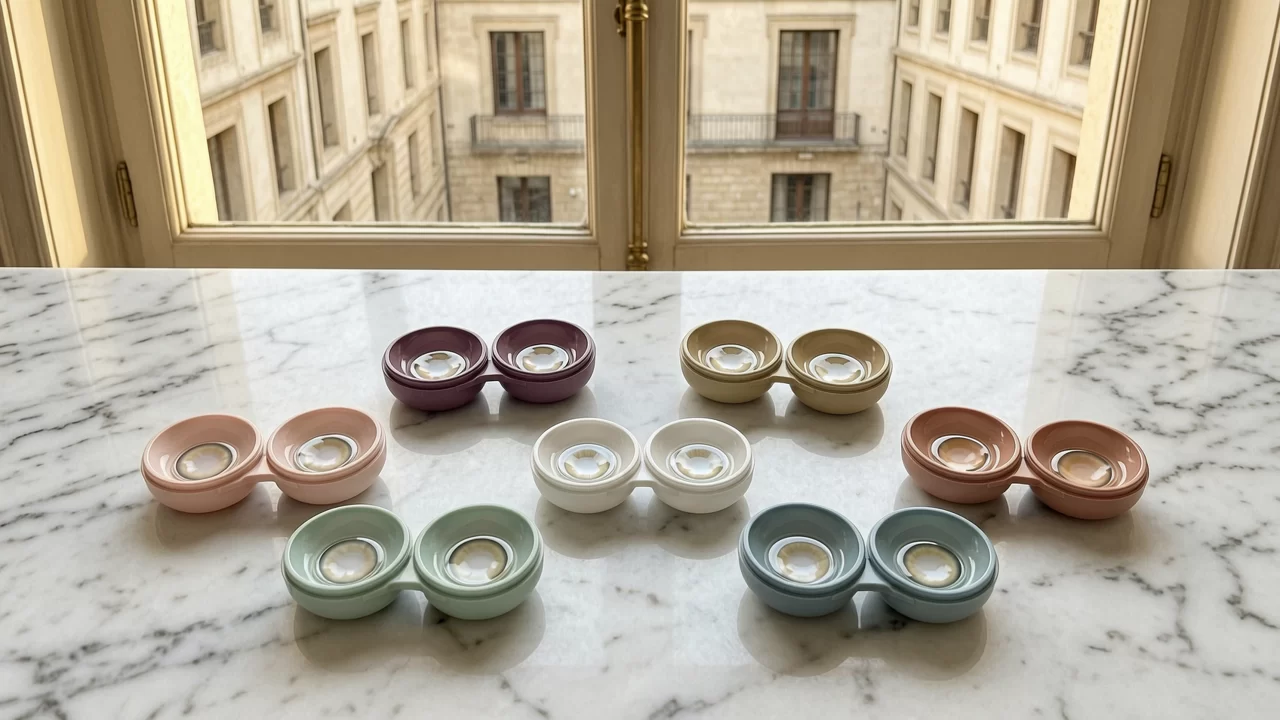
If you’re thinking about launching your own colored contact lens brand, you’re probably excited about the design part — picking colors, naming the lenses, imagining your packaging on the shelf. That’s the fun stuff, and I get it.
But after working with more than a hundred brands over the past decade at MIOMI, I can tell you this: the brands that fail usually don’t fail because their designs were bad. They fail because they made avoidable mistakes in the back end — things they didn’t know to check before they placed their first order.
In this article, I’m going to walk you through the seven most common mistakes we see new brands make, and more importantly, how to avoid them. These aren’t theoretical — every single one of these has cost a real client real money.
Mistake #1: Skipping Certification Research Until After Design
This is by far the number one mistake. I’ve lost count of how many brands come to us with beautiful designs ready to go, only to find out they can’t sell those lenses in their target market because they don’t meet the local regulatory requirements.
Here’s the hard truth: colored contact lenses are medical devices in almost every major market. That means:
- USA: FDA clearance is mandatory. No shortcuts.
- Europe: CE marking under the MDR (Medical Device Regulation) is required.
- Australia: TGA registration.
- Middle East: SFDA (Saudi Arabia), MOHAP (UAE), and others vary by country.
- Southeast Asia: Each country has its own system — some strict, some more relaxed.
Many new brands design their entire line first, then discover that the manufacturing process or materials they chose don’t qualify for certification in their primary market. By then, they’ve already spent money on design, branding, and packaging.
The fix: Start with certification, not with design. Figure out which markets you want to sell in, find out what certifications are needed, and then work backward from there to choose a manufacturer and material that can support those certifications. A good OEM partner will walk you through this from day one — if they don’t, that’s a red flag.
Mistake #2: Choosing the Cheapest Manufacturer They Can Find
I get it. When you’re starting out, budget is tight. And let’s be honest — a lot of factories out there will quote you a price that seems too good to be true.
Usually, it is.
Here’s what cheap pricing usually means you’re giving up:
- Quality control: Fewer inspection steps, higher defect rates.
- Material quality: Lower-grade HEMA instead of premium materials.
- Certification support: They might have a CE certificate, but it’s not registered to your brand — which is what you actually need.
- Communication: Time zone gaps, language barriers, slow responses.
- Consistency: Your second batch might not match your first batch.
I’ve seen brands switch to a cheaper supplier to save $0.20 per pair, only to have a 15% defect rate and end up losing customers and money on returns. The math never works out.
The fix: Compare factories on total value, not just unit price. Ask about defect rates, certification support, minimum order quantities, and whether they can provide references from other brands in your market. A slightly higher per-pair cost is almost always worth it if it means consistent quality and a partner who actually helps you succeed.
Mistake #3: Ordering Way Too Much (or Way Too Little) for Their First Run
The MOQ question is always tricky. Order too many, and you’re sitting on inventory you can’t sell. Order too few, and you sell out fast but miss momentum — or worse, your manufacturer won’t take your order seriously.
I’ve seen both extremes:
- The over-orderer: A brand that ordered 50,000 pairs for their first launch because the per-unit price was better. They sold 3,000 in the first year and had to write off the rest. That’s a brutal way to learn a lesson.
- The under-orderer: A brand that ordered 500 pairs total across 10 SKUs — 50 pairs per color. They launched, got some traction, and then… nothing. They couldn’t restock fast enough, and their audience moved on.
The fix: Start with what you can realistically sell in 6-9 months, not what you hope to sell in 2 years. For most new brands, that’s somewhere between 1,000-3,000 pairs total for a first order, spread across 3-5 core SKUs.
Better yet, work with a manufacturer that offers low MOQ customization. The per-unit cost might be slightly higher, but you’ll have the flexibility to test which colors sell before committing to large production runs. At MIOMI, for example, we work with brands on MOQs as low as 300 pairs per design — specifically so they can validate their line without risking a warehouse full of unsold inventory.
Mistake #4: Neglecting the Base Curve and Diameter Debate
Here’s something most new brand founders don’t think about: one size does not fit all.
Many start with the standard 14.2mm diameter and 8.6mm base curve because that’s what everyone else uses. And honestly, that works for most people. But “most” isn’t “all.”
If your target market has a higher percentage of people with smaller or larger corneas — and yes, this varies by ethnicity and region — your standard fit might not be comfortable for a significant portion of your customers.
I’ve seen brands launch in Southeast Asia, for example, and get a flood of complaints about lenses sliding around or being too tight. It wasn’t a quality issue — it was a fit issue. They were using parameters optimized for Western eyes, and they were selling to an Asian market.
The fix: Talk to your manufacturer about parameter options for your specific target market. A good partner will have data on what works best in different regions and can help you choose parameters that maximize comfort for your customer base. It’s a small detail that makes a huge difference in customer satisfaction and return rates.
Mistake #5: Not Testing the Product Before Launching
You’d be surprised how many brands launch their entire line without ever actually wearing the lenses themselves.
They approve the designs on screen, they check the sample photos, but they never put them in their own eyes. Then they launch, and the first reviewers say things like “uncomfortable after 4 hours” or “the color looks nothing like the website photo.”
Don’t be that brand.
The fix: Always, always get physical samples and test them yourself. Better yet, have a small group of people with different eye colors and sensitivities test them too. You want to know:
- How do they look on different eye colors?
- How comfortable are they after 2 hours? 4 hours? 8 hours?
- Do they dry out?
- Do they move around when you blink?
- Is the color opacity what you expected?
You should also test them under different lighting — natural light, office lighting, evening lighting. Color contact lenses can look dramatically different depending on the light, and your customers will notice.
Mistake #6: Underestimating the Importance of Packaging
I know what you’re thinking. “It’s about the lenses, not the box.” And you’re right — sort of.
But here’s the reality of the colored contact lens market: your customer is buying a beauty product as much as a medical device. The packaging is part of the experience. It’s what they see first. It’s what they post about on Instagram and TikTok.
I’ve seen perfectly good lenses flop because the packaging looked cheap. And I’ve seen decent lenses sell like crazy because the packaging was on point.
But this mistake goes deeper than just aesthetics. Bad packaging can also cause real problems:
- Lenses that aren’t properly sealed → contamination risk
- Packaging that doesn’t clearly show the prescription → regulatory issues
- Labels that don’t include required information → customs problems
- Vials that break during shipping → lost inventory
The fix: Invest in good packaging design, but also make sure it meets all the regulatory requirements for your market. Your manufacturer should be able to guide you on what information needs to be on the packaging and in what format. And if they offer custom packaging services, take advantage — it’s one less thing you have to coordinate.
Mistake #7: Not Having a Clear Marketing Plan Before Production
Last but definitely not least: a lot of new brands treat their first production run as the finish line. They think, “Once I have the lenses, then I’ll figure out how to sell them.”
That’s backwards.
Your production run should be the starting line, not the finish line. By the time your order arrives, you should already have:
- A website that’s ready to take orders
- Social media accounts set up and growing
- An influencer marketing plan
- A launch strategy
- At least some idea of where your first customers will come from
I’ve seen brands sit on inventory for six months or more because they had no plan for how to actually sell the product. Lenses have a shelf life, people — they don’t get better sitting in a warehouse.
The fix: Start building your audience before you have product to sell. Create content around your niche, engage with potential customers, build an email list or a following on social media. That way, when you do launch, you have people who are already excited to buy.
And if you’re not sure how to build that audience, find someone who does. There’s no shame in partnering with people who have skills you don’t — that’s what building a business is all about.
The Common Thread: Not Asking for Help
Looking at all seven mistakes, there’s a pattern here. Almost all of them come down to the same thing: trying to figure everything out alone.
The contact lens industry has a steep learning curve. There’s regulation, manufacturing, quality control, logistics, packaging, marketing… it’s a lot for one person to handle, especially if this is your first brand.
The best piece of advice I can give you is this: find a partner who has been there before.
A good OEM/ODM partner doesn’t just manufacture lenses. They guide you through certification. They help you choose the right parameters for your market. They tell you when your MOQ is too high (or too low). They point out potential issues before they become expensive problems.
At MIOMI, we’ve worked with brands at every stage — from first-time entrepreneurs launching their first 500 pairs to established brands scaling to hundreds of thousands. The common trait among the successful ones? They don’t try to reinvent the wheel. They find a partner they trust, and they listen.
If you’re thinking about launching a colored contact lens brand and you want to avoid the mistakes I’ve seen so many others make, reach out to us. We’re happy to have a conversation about your project and give you honest feedback — even if you end up working with someone else.
Because at the end of the day, a well-built brand is good for everyone in this industry.