So You Want to Launch a Custom Contact Lens Line. Here’s What Nobody Tells You.
I’ve sat across the table from dozens of brand owners over the past few years. Entrepreneurs, beauty influencers with massive followings, established cosmetics companies looking to expand — they all show up with the same energy. Excited. Convinced they’re six months from launch.
And I always have to be the one to say it: “It’s going to take longer than you think. But if you do it right, it’ll be worth it.”
The contact lens OEM/ODM process isn’t mysterious. But it is full of decisions that seem small at the time and end up defining whether your product succeeds or sits in a warehouse. After watching brands succeed — and watching others struggle — I’ve put together the mistakes I see most often and how to avoid them.
1. Starting Without a Clear “Who”
Here’s the most common opener I hear: “We want to make colored contact lenses for young women.”
Okay. Which young women? A 19-year-old college student in Jakarta shopping on Shopee has very different needs from a 32-year-old marketing manager in Dubai browsing Instagram. Different budgets, different wearing habits, different aesthetic preferences, different regulatory requirements.
Before you talk to a single supplier, write down a one-paragraph description of your ideal customer. Not demographics — behavior. How often will she wear them? Daily or occasionally? What’s she willing to pay? What does she care about more: comfort, color intensity, or wearing time?
This isn’t marketing fluff. It determines your lens material, diameter, water content, replacement cycle, and price point. Get this wrong, and you’ll spend months sampling a product that doesn’t fit your market.
2. Confusing OEM and ODM (and Why It Matters for Your Budget)
People use these terms interchangeably. They shouldn’t.
OEM (Original Equipment Manufacturing): You pick from the supplier’s existing lens designs and put your branding on the packaging. The lens itself — its color pattern, material, parameters — is already developed and tested. You’re customizing the wrapper, not the product.
ODM (Original Design Manufacturing): You work with the supplier to create a new lens design. New color patterns, possibly new parameters, possibly new materials. Your brand owns something unique.
Here’s why the distinction matters for your wallet:
- OEM: Lower minimum orders (sometimes as low as 500 pairs), faster turnaround (2-4 weeks), lower development cost. You’re leveraging work that’s already done.
- ODM: Higher minimums (typically 5,000-10,000 pairs per SKU), longer timelines (2-4 months for sampling alone), and development fees that can run into the thousands.
If you’re launching your first brand with limited capital, there’s no shame in starting OEM. Prove the market, build the customer base, then invest in custom designs. I’ve seen brands do this successfully. I’ve also seen brands burn through their runway trying to fund a full ODM launch before they had a single customer.
3. Underestimating the Sampling Phase
This is where timelines blow up. Here’s what a typical sampling process actually looks like:
- Brief preparation (1-2 weeks): You write detailed specs. Not “I want a natural brown” — but “14.2mm diameter, 8.6mm base curve, three-tone brown pattern with limbal ring, 42% water content, monthly replacement.”
- First sample round (3-4 weeks): Supplier produces samples. You test them. Something’s always off — the color is slightly different under indoor lighting, the lens feels thicker than expected, the packaging doesn’t look right.
- Revisions (2-4 weeks per round): You send feedback. Supplier adjusts. Most projects need 2-3 revision rounds.
- Final approval (1 week): You sign off on the golden sample.
Total: 8-14 weeks for sampling alone. If someone tells you it’ll take a month, they’re either lying or they’ve never done this before.
The shortcut that actually works: Be obsessively specific in your initial brief. Send reference photos. Describe the exact lighting conditions where your customers will wear these. The more precise your brief, the fewer revision rounds you need.
4. Ignoring Regulatory Requirements Until the Last Minute
Contact lenses are medical devices. In most markets, you can’t just ship them and hope for the best.
Here’s a quick reality check by market:
- USA: FDA 510(k) clearance required. Your manufacturer must be FDA-registered. Timeline: 6-12 months if you’re starting from scratch.
- Europe: CE marking under MDR. You’ll need a notified body involved. Timeline: 3-6 months.
- Middle East (Saudi Arabia): SFDA registration. Halal certification is a plus (and sometimes expected).
- Southeast Asia: Varies by country. Indonesia (BPOM), Thailand (FDA), Vietnam (MOH) all have their own processes.
Here’s the mistake: Brands spend months perfecting their lens design, then discover they need regulatory approval that takes another six months. They either launch late or launch without approval (which is illegal and can get your shipment seized).
The fix: Start your regulatory research before you finalize your product. Talk to your supplier about what certifications they already have. Many established manufacturers have FDA registration, CE marks, and other certifications in place — you just need to ensure your specific product is covered.
5. Not Thinking About Packaging Until It’s Too Late
Packaging isn’t an afterthought. In the contact lens world, it’s a critical part of the product experience — and it has its own set of decisions:
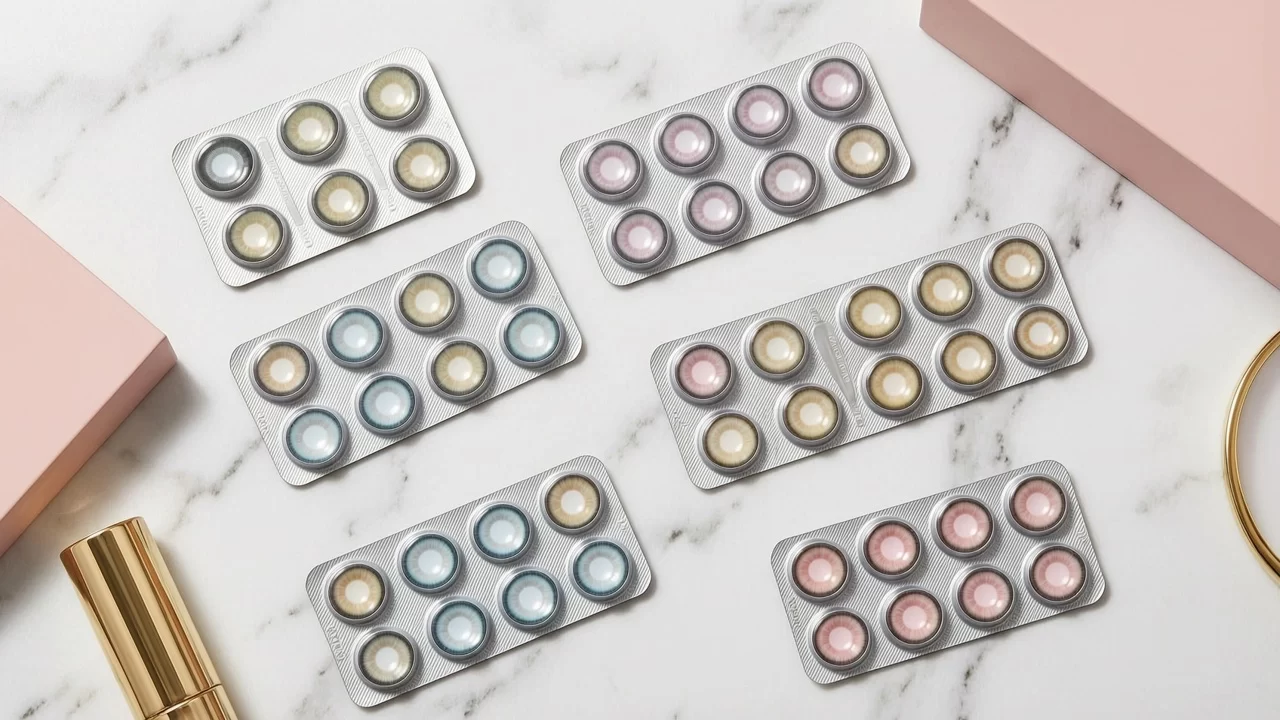
- Blister packs vs. glass vials: Most colored lenses use blister packs today. Cheaper, lighter, more modern.
- Solution type: Buffered saline is standard. Some brands add moisturizing agents — this is a marketing claim that needs to be substantiated.
- Labeling: Every market has different labeling requirements (language, warnings, ingredient lists, lot numbers, expiry format). Get this wrong and customs holds your shipment.
- Outer packaging: This is where your brand lives. Box design, insert cards, instructions — all of this needs to be ready before production starts.
I’ve seen brands finalize their lens and then panic because they haven’t designed packaging. Or they designed packaging that looks great but doesn’t meet the labeling requirements of their target market. Plan packaging in parallel with lens development, not after.
6. The Pricing Conversation Nobody Wants to Have
Here’s an uncomfortable truth: Your landed cost per pair needs to leave room for everything that comes after.
Let’s say your OEM lens costs $2.50 per pair. That’s not your cost. Your actual landed cost includes:
- Shipping and customs: $0.30-0.80 per pair depending on volume and origin
- Packaging: $0.20-0.50 per unit
- Warehousing and fulfillment: $0.50-1.50 per order
- Marketing cost per acquisition: $5-15 depending on channel
If you plan to sell DTC at $25 per pair, your landed cost needs to be under $5-7 to have a viable business after marketing. If your OEM quote comes in at $8 per pair, the math doesn’t work — no matter how beautiful the lens is.
Have this conversation with your supplier early. Tell them your target retail price and work backwards. A good supplier will tell you honestly whether your target is achievable. If they just say “yes” to everything without pushing back, that’s a red flag.
The Bottom Line
Launching a custom contact lens brand isn’t easy. But it’s not magic either. It’s a process with clear steps, and the brands that succeed are the ones that respect the process instead of trying to shortcut it.
Start with your customer. Understand the difference between OEM and ODM. Budget realistic timelines for sampling. Get serious about regulatory requirements. Plan packaging in parallel. And do the math on pricing before you fall in love with a product you can’t afford to sell.
If you’re at the beginning of this journey and want to talk through the specifics — your target market, your budget, your timeline — we’re happy to have that conversation. No pressure, no sales pitch. Just honest advice from a team that’s been doing this for a long time.
Reach out to us at sales@miomicon.com or on WhatsApp at +86 13862973905.