# How to Vet a Contact Lens Supplier Before Committing to Your First Order
You found a supplier on Alibaba. Their prices look great. Their factory photos are impressive. They claim to have “10 years of experience” and “FDA/CE certification.”
Should you place an order?
Not yet.
I’ve watched too many brand owners skip the due diligence phase, rush into production, and end up with inventory they can’t sell — or worse, inventory that gets seized at customs. The contact lens industry is heavily regulated, and a bad supplier relationship can cost you far more than just money. It can cost you your brand reputation, your import licenses, and sometimes even legal trouble.
Here’s the checklist I wish every new brand owner had before signing their first purchase order.
## 1. Verify Their Certifications — Actually Verify Them
Anyone can write “CE certified” on their Alibaba profile. That doesn’t mean they are.
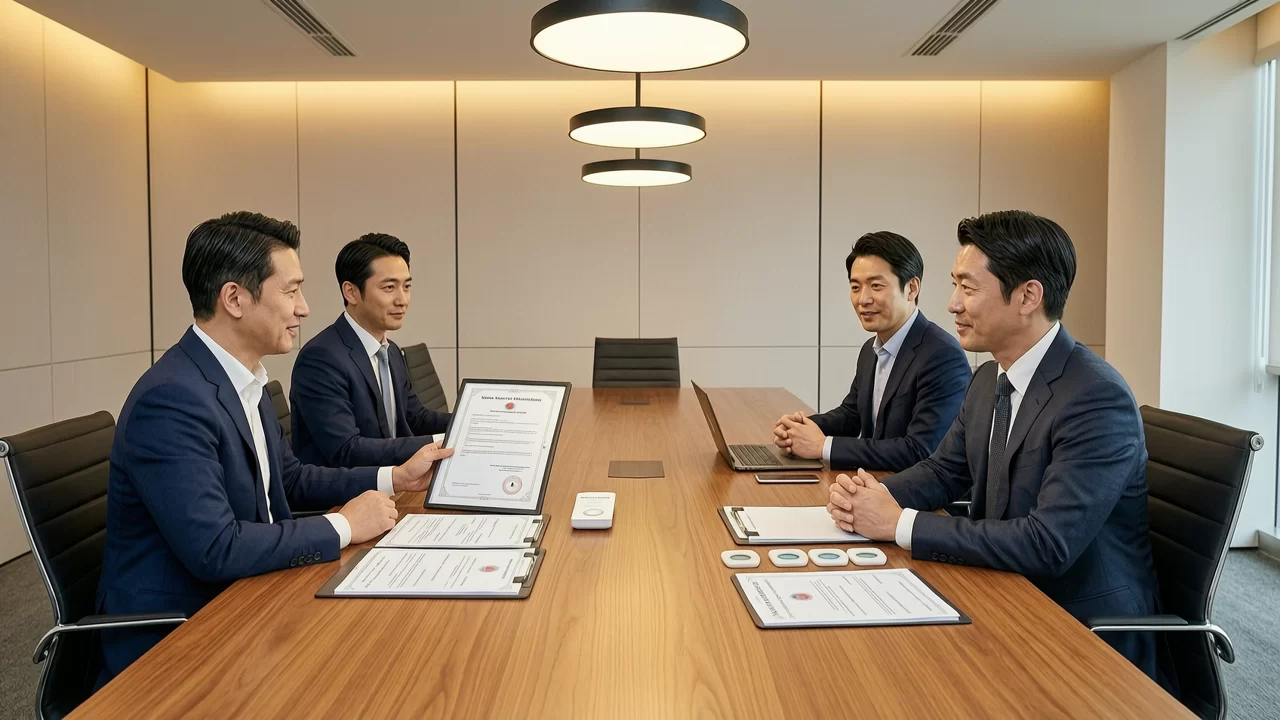
Ask for the actual certificate documents. Then check:
– **Certificate number** — Is it traceable? Can you verify it with the issuing body?
– **Scope of certification** — Does it cover the specific product category you’re buying? A CE mark for surgical gloves doesn’t help you with colored contact lenses.
– **Expiration date** — Certifications lapse. A 2019 CE certificate might not be valid today.
– **Company name match** — Does the name on the certificate match the company you’re talking to? Sometimes suppliers “borrow” certificates from partners.
For the European market, you need CE marking under the Medical Device Regulation (MDR). For the US, you need FDA 510(k) clearance. These aren’t optional. Customs will check.
**Red flag:** If a supplier hesitates to share certificate documents or says “we’ll send them later,” walk away. Legitimate manufacturers are proud of their compliance and share it immediately.
## 2. Ask About Their Cleanroom Standards
Contact lenses are medical devices. They need to be manufactured in controlled environments.
Ask your supplier:
– What class is your cleanroom? (ISO 7 or ISO 8 is standard for contact lenses)
– How often do you monitor particle counts?
– What’s your gowning protocol for production staff?
– Do you have air showers and pass-through boxes?
If they can’t answer these questions clearly, they’re not running a proper cleanroom — or they’re not running one at all.
**Pro tip:** Ask for a video tour of their production floor. Not a polished marketing video, but a live walkthrough. You’ll learn more from 10 minutes of live video than from 100 pages of brochures.
## 3. Request Samples — and Test Them Yourself
Never place a bulk order without testing samples first.
When you receive samples, check:
– **Lens diameter and base curve** — Do they match the specs? Measure them.
– **Color accuracy** — Is the color consistent across the lens? Are there visible printing defects?
– **Edge quality** — Run the lens edge across your finger. Is it smooth, or does it catch?
– **Water content** — Does it feel appropriate for the stated hydration level?
– **Packaging** — Is the blister pack sealed properly? Is the labeling clear and accurate?
Better yet, give samples to actual contact lens wearers. Their feedback is worth more than any spec sheet.
**Red flag:** If a supplier charges exorbitant sample fees or refuses to send samples before payment, they’re not interested in a partnership. They’re interested in a quick transaction.
## 4. Understand Their Production Capacity and Lead Times
“How quickly can you deliver?” is not just a logistics question. It’s a capability question.
Ask:
– What’s your monthly production capacity?
– How many production lines do you have?
– What’s your typical lead time for stock items vs. custom orders?
– What happens if I need to reorder quickly — do you keep safety stock?
A supplier who says “we can produce anything, anytime” is probably overstating their capacity. Real manufacturers know their limits and are honest about them.
**Pro tip:** Ask about their peak season. If they’re fully booked during Q3 (back-to-school and holiday prep), you’ll want to plan your orders around their schedule, not yours.
## 5. Check Their Export Experience
Manufacturing great lenses is only half the battle. Getting them to your warehouse is the other half.
Ask:
– Which countries do you currently export to?
– Are you familiar with [your country’s] import regulations for medical devices?
– Can you provide the documentation needed for customs clearance? (Commercial invoice, packing list, certificate of origin, certificate of free sale, etc.)
– Have you ever had shipments seized or rejected at customs?
A supplier who’s never exported to your region might not understand the documentation requirements. That means delays, additional costs, or worse — your shipment gets held at the border.
**Red flag:** If they say “we’ve never had any problems,” ask for specific examples of export documentation they’ve prepared. Vague answers are a warning sign.
## 6. Get References — and Actually Call Them
Ask for three current customers in your region or market. Then contact them.
Ask:
– How long have you been working with this supplier?
– What’s their quality consistency like?
– How do they handle complaints or defects?
– Would you recommend them to a new brand owner?
If the supplier can’t provide references, that’s a problem. If they provide references but you can’t reach anyone, that’s an even bigger problem.
**Pro tip:** Look for the supplier’s name in online forums, trade show attendee lists, or industry groups. Sometimes the best references come from people you weren’t expecting.
## 7. Clarify Payment Terms and MOQ Flexibility
Payment terms tell you a lot about a supplier’s confidence in their product.
Standard terms in the contact lens industry:
– 30% deposit, 70% before shipment (common for first orders)
– Net 30 or Net 60 (for established relationships)
– Letter of Credit (for large orders or new markets)
Be wary of suppliers who demand 100% upfront. That’s not standard practice, and it gives you zero leverage if something goes wrong.
Also ask about MOQ flexibility. If you’re launching a new brand, you might not want to commit to 10,000 pairs per SKU right away. A good supplier will work with you on smaller initial orders, even if the per-unit cost is slightly higher.
**Red flag:** If a supplier refuses to negotiate payment terms or MOQ, they’re not interested in a long-term relationship. They’re looking for a one-time sale.
## 8. Visit the Factory (If Possible)
Nothing replaces an in-person visit.
When you visit:
– See the production floor with your own eyes
– Meet the quality control team
– Check the raw material storage
– Review their batch records and traceability system
– Have dinner with the owners (you’ll learn a lot about their values over a meal)
If you can’t visit in person, hire a third-party inspection company to audit the factory on your behalf. It costs a few hundred dollars, but it’s worth every penny.
**Pro tip:** Ask to see their defect rate records. Every manufacturer has defects. The good ones track them obsessively and can show you the data.
## The Bottom Line
Vetting a supplier takes time. It might add 2-3 months to your launch timeline. But those 2-3 months can save you from:
– Receiving unusable inventory
– Getting stuck with customs violations
– Damaging your brand reputation
– Losing your initial investment entirely
The contact lens industry is full of legitimate, high-quality manufacturers. But it’s also full of middlemen posing as factories, and factories cutting corners to win price wars.
Your job as a brand owner is to tell the difference.
Do the due diligence. Ask the hard questions. Verify everything.
Your future self — and your customers — will thank you.
—
*Looking for a contact lens manufacturing partner who’s transparent about certifications, capacity, and quality? [Let’s talk](https://miomicon.com/contact/) — we’ve been helping brand owners navigate OEM/ODM for over a decade.*