The Gulf Cooperation Council countries — Saudi Arabia, the UAE, Kuwait, Qatar, Bahrain, and Oman — are quietly becoming one of the most exciting markets for colored contact lenses in the world. And if you’re a brand owner looking for your next expansion move, this is a market you cannot afford to ignore.
Here’s what’s driving the boom, and what it means for brands ready to enter the region.
The Numbers Tell the Story
The Middle East beauty and personal care market is projected to exceed $35 billion by 2027. Within that, the color cosmetics segment — which includes decorative contact lenses — is growing faster than almost any other category. Saudi Arabia alone accounts for roughly a third of the entire GCC beauty market.
But here’s what makes this market different from, say, Southeast Asia or Latin America: the average spend per customer is significantly higher. GCC consumers are willing to pay premium prices for quality products with proper certifications. They’re brand-conscious, quality-conscious, and increasingly sophisticated about what they buy.
For colored contact lens brands, that’s a rare combination — high volume potential with healthy margins.
Why Colored Lenses Specifically?
Several cultural and market factors converge to make colored lenses particularly popular in the Gulf:
Beauty standards emphasize the eyes. In GCC culture, where many women wear hijab or niqab, eye makeup and eye appearance carry outsized importance in beauty routines. Colored contact lenses aren’t just an accessory — they’re a core part of the daily beauty regimen for millions of women.
Social media influence is massive. The Gulf has some of the highest social media penetration rates globally. Saudi Arabia and the UAE both have Instagram and Snapchat usage well above 70% of the population. Beauty influencers in the region regularly showcase different lens colors and styles, driving demand among younger consumers who want to replicate the looks they see online.
A growing willingness to try new products. Unlike some markets where consumers stick to the same brands for years, GCC beauty consumers are enthusiastic early adopters. New lens colors, new designs, and new brands get picked up quickly — especially if they’re endorsed by trusted local influencers.
What Brands Need to Know Before Entering
Understanding the opportunity is one thing. Actually succeeding in the GCC market requires some specific preparation.
Regulatory Requirements Are Non-Negotiable
This is where many brands stumble. Each GCC country has its own medical device regulations, and colored contact lenses are classified as medical devices — not cosmetics. That means you need proper registrations before you can sell legally.
In Saudi Arabia, you’ll need SFDA (Saudi Food and Drug Authority) registration. In the UAE, it’s the Ministry of Health and Prevention. The process takes time — typically 3 to 6 months — and requires documentation of your manufacturing standards, product specifications, and quality control procedure.
The good news? If you’re working with a reputable OEM manufacturer that already has CE or FDA certifications, much of the groundwork is in place. But you still need to plan for country-specific registrations.
Halal Considerations Matter
While not every GCC country requires formal halal certification for medical devices, being able to demonstrate that your products comply with Islamic principles is a significant competitive advantage. This isn’t just about the materials — it’s about your entire supply chain and manufacturing process.
Most contact lens materials (whether hydrogel or silicone hydrogel) are inherently halal-compliant. The key is being transparent about your ingredients and manufacturing process. If a buyer or distributor asks whether your lenses contain any animal-derived components, you need a clear, honest answer.
Packaging and Branding Should Reflect Local Preferences
This is a detail that too many international brands get wrong. Your packaging needs to work for the GCC market — and that means more than just translating text into Arabic.
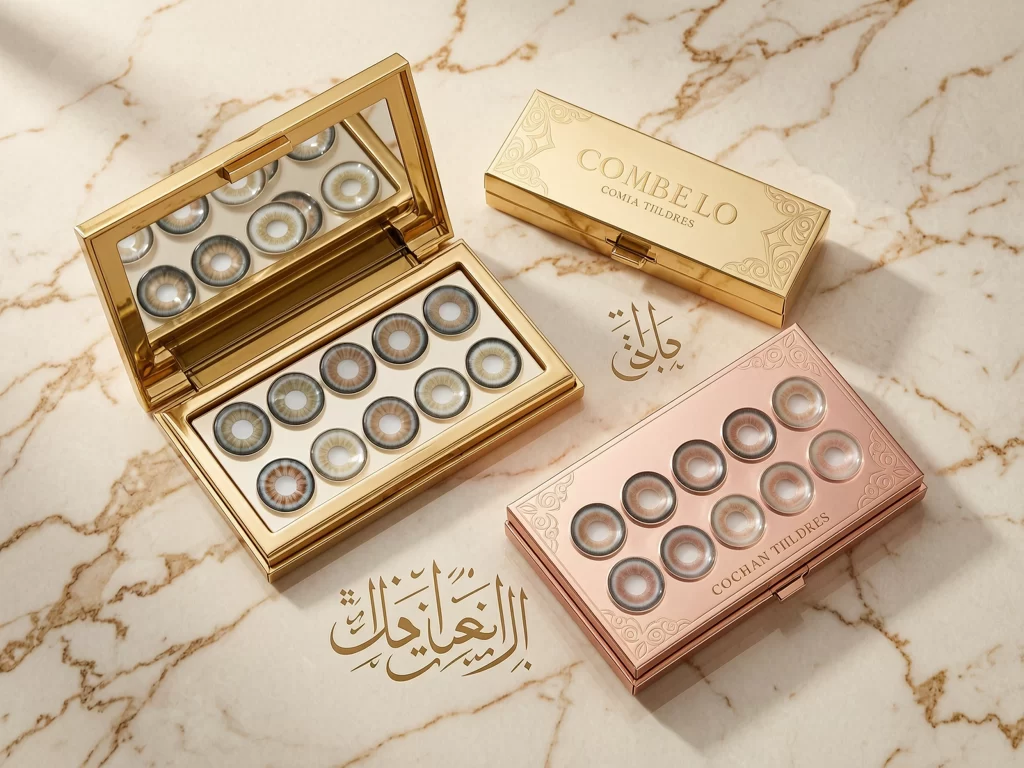
Design aesthetics in the Gulf tend toward premium, luxurious packaging. Gold accents, rich colors, and high-quality materials resonate well. Product names should be carefully chosen to work in both English and Arabic. And any marketing claims need to be culturally appropriate — what works in a European or American market may not land well in the Gulf.
The Distribution Landscape
The GCC market has a well-developed retail infrastructure, but the channels work differently than in Western markets.
Optical shops and pharmacies are still the primary point of sale for contact lenses. If you want shelf presence, you need distribution partnerships with the major optical retail chains in each country.
E-commerce is growing fast, particularly in the UAE and Saudi Arabia. Amazon.sa, Noon.com, and brand-specific Shopify stores are all viable channels. But remember — even for online sales, you’ll need the proper medical device registrations.
Beauty salons and specialized retailers represent an emerging channel. Some high-end salons in Dubai and Riyadh now carry colored lenses alongside their beauty product offerings.
Pricing Strategy
Here’s where the GCC market really stands out. Consumers in this region are accustomed to paying for quality. The race-to-the-bottom pricing that characterizes some Southeast Asian markets is much less prevalent here.
A premium branded colored contact lens can command $25-40 per pair in the GCC — compared to $10-15 in more price-sensitive markets. That doesn’t mean you can overcharge, but it does mean there’s room for brands that position themselves as quality leaders.
The key is matching your price point to your brand positioning. If you’re entering as a premium brand, your packaging, marketing, and product quality all need to support that price. If you’re going mid-market, emphasize value and variety.
What This Means for Your Brand
If you’re considering expanding into the GCC market, here’s my practical advice:
- Start with Saudi Arabia or the UAE. These two markets account for the bulk of GCC demand and have the most established distribution channels.
- Invest in proper registrations before you try to sell. Cutting corners on SFDA or MOH registration will come back to haunt you — and could get your products pulled from shelves.
- Find a local distribution partner. Trying to manage GCC distribution remotely from China or Europe is a recipe for frustration. You need someone on the ground who understands the market.
- Build your brand story for the region. Generic international marketing won’t cut it. Invest in localized content, work with local influencers, and show that you understand GCC beauty culture.
- Be patient. Building a brand in the GCC takes time, but the payoff is significant. Brands that establish themselves properly in this market enjoy strong loyalty and healthy margins for years.
The Bottom Line
The GCC colored contact lens market isn’t a flash in the pan. It’s a structural growth story driven by demographics, cultural preferences, rising incomes, and social media influence. For brand owners who are willing to do the homework — proper registrations, local partnerships, culturally aware marketing — the opportunity is substantial.
And if you need help navigating the OEM and regulatory side of bringing a colored lens product to the GCC market, that’s exactly what we do at MIOMI. We’ve helped brands launch in the Middle East with proper certifications, competitive MOQs, and products designed for the preferences of GCC consumers.
The market is growing. The question isn’t whether to enter — it’s when.
Have questions about launching your colored contact lens brand in the Middle East? Get in touch with our team — we’re happy to help you navigate the process.