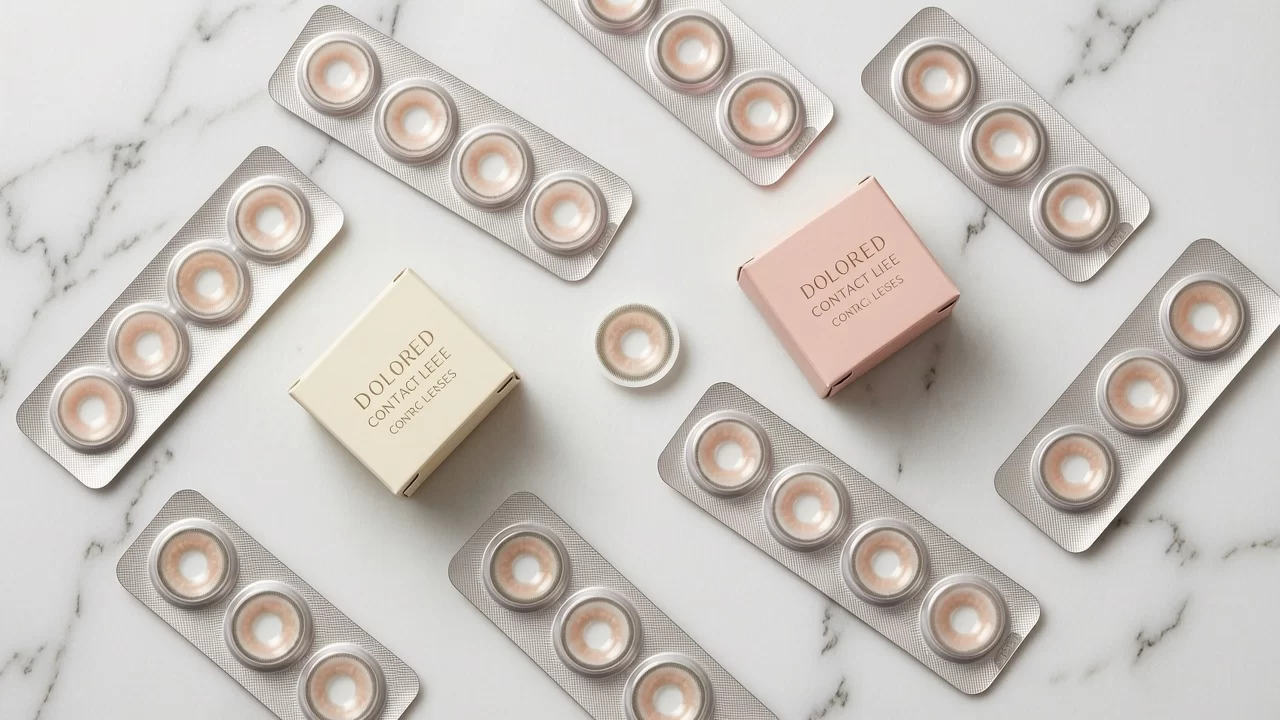
If you’ve been in the contact lens business for more than five years, you’ve probably noticed something shifting beneath the surface. The daily disposable colored lens segment — once a niche corner of the market — is now driving a disproportionate share of new brand launches and consumer switching behavior. And it’s not just a young-consumer trend anymore.
I’ve spent the last few months talking to brand owners, distributors, and retail operators across Southeast Asia, the Middle East, and Europe. The same pattern keeps coming up: brands that built their reputation on monthly or yearly colored lenses are now scrambling to add daily options. Not because they want to, but because their customers are asking for them.
Here’s what’s actually happening in this segment, and what it means if you’re building or scaling a contact lens brand right now.
The Convenience Factor Is No Longer Optional
Let’s start with the obvious. Daily disposables solve a problem that monthly lenses always carried: maintenance burden. You don’t need solution, you don’t need a case, you don’t need to think about replacement schedules. For a growing segment of consumers — particularly those who wear colored lenses occasionally rather than daily — that’s the entire value proposition.
But here’s what’s less obvious: the convenience argument has quietly become a hygiene argument. Post-pandemic consumers are more aware of eye health than they were five years ago. They’ve read about protein buildup, about solution contamination, about the risks of sleeping in lenses you’ve been wearing for three weeks. Daily disposables eliminate most of those concerns in one product decision.
For brand owners, this matters because it changes the conversation. You’re no longer selling “beautiful eyes at a lower annual cost.” You’re selling “beautiful eyes with zero maintenance and lower infection risk.” That’s a different pitch, and it reaches a different buyer.
The Price Gap Has Closed More Than You Think
Three years ago, the cost difference between daily and monthly colored lenses was significant enough that most brands positioned dailies as a premium tier. That positioning made sense at the time — daily lenses required more sophisticated manufacturing, thinner molds, and higher material costs per unit.
But manufacturing efficiency has improved faster than most brand owners realize. The gap between a premium monthly lens and a standard daily lens, in terms of production cost, has narrowed to the point where the retail price difference is often less than consumers expect. In many markets, a 30-pack of daily colored lenses now costs roughly the same as three months of premium monthlies.
This pricing convergence is creating a new middle tier. Consumers who used to buy monthlies as their “standard” option are now looking at dailies as an upgrade that doesn’t feel like a luxury purchase. And consumers who used to reserve dailies for travel or special occasions are starting to wear them full-time.
If you’re a brand owner and your daily colored lens SKU is still positioned as your most expensive option, it might be time to revisit that strategy. The market is moving toward dailies as the default, not the exception.
Regional Differences Matter More Than You’d Expect
Not every market is moving at the same speed. In Southeast Asia — particularly Thailand, the Philippines, and Indonesia — daily colored lenses are growing fast, but monthly lenses still dominate volume. The reason is simple: price sensitivity. Even though the per-day cost gap has narrowed, the upfront purchase price of a 30-pack of dailies is still higher than a single pair of monthlies. For consumers buying with monthly budgets, that matters.
In the Middle East, the pattern is different. Daily disposables are growing fastest among professional women — the segment that wears colored lenses daily as part of their appearance routine, not as an occasional accessory. These consumers value convenience and hygiene over absolute lowest cost, and they’re willing to pay for it.
In Europe, regulatory environment is shaping adoption. The EU’s medical device classification means colored lenses face stricter compliance requirements than in some other markets. Daily disposables, with their simpler care requirements and lower infection risk profile, align well with the regulatory direction of travel. Brands that can certify their daily lenses to CE standards have a structural advantage in this market.
North America is interesting because the daily disposable segment is already well-established for clear lenses, but colored dailies are still underpenetrated relative to the consumer demand for eye color enhancement. The opportunity here isn’t convincing consumers to wear colored lenses — they already do. It’s convincing them to switch from monthly to daily within the colored segment.
What This Means for Your Product Line
If you’re a brand owner reading this, you’re probably thinking about what it means for your own product strategy. Here are the patterns I’m seeing work well:
Don’t replace your monthly line — extend it. The brands that are winning in daily disposables aren’t abandoning their monthly products. They’re adding daily options as a new tier, often with different packaging and branding that signals the convenience benefit. Your monthly lens buyers aren’t going away, but your daily lens buyers are a new revenue stream.
Consider hybrid packaging. Some brands are experimenting with mixed packs — 10 daily lenses plus one pair of monthlies for “long wear days.” This works particularly well in markets where consumers are transitioning from monthly to daily and aren’t ready to commit fully.
Invest in daily-specific marketing. The selling points for daily colored lenses are different from monthly. You’re not talking about durability or cost-per-wear. You’re talking about convenience, hygiene, freshness, and the feeling of putting on a new lens every morning. Your marketing needs to reflect that.
Don’t ignore the care product cross-sell. Here’s a counterintuitive insight: brands that sell daily colored lenses often see increased sales of their lens care products. Why? Because daily lens wearers still use solution for the lenses they don’t wear every day, and they tend to be more health-conscious about eye care in general. The daily lens buyer is a good customer for your entire product ecosystem.
The Manufacturing Side: What’s Changed
From a production standpoint, daily colored lenses have become significantly easier to manufacture at scale over the past few years. The mold technology is more mature, the color layering processes are more consistent, and the material options have expanded.
For OEM and ODM partners, this means shorter lead times and lower minimum commitments for daily lens SKUs than you might remember from even two years ago. If you’ve been hesitant to add daily lenses to your brand because you assumed the MOQ would be prohibitive, it’s worth having that conversation again.
The quality baseline has also risen. Consumers who tried daily colored lenses three years ago and were disappointed by comfort or color payoff are likely to have a very different experience with today’s products. That means there’s a segment of “lapsed daily lens users” who might come back to the category if you can reach them with the right product.
Looking Ahead: What’s Next
The daily disposable colored lens segment isn’t going to overtake monthlies overnight. But the trajectory is clear. Over the next two to three years, I expect daily lenses to become the default entry point for new colored lens consumers in most major markets, with monthlies positioned as the choice for established, high-frequency wearers who have already optimized their care routine.
For brand owners, the question isn’t whether to enter the daily segment — it’s how to do it in a way that strengthens your overall brand rather than fragmenting it. The brands that figure that out first will have a meaningful head start.
If you’re exploring daily disposable colored lenses for your brand and want to understand what’s feasible in terms of customization, MOQ, and timeline, the conversation starts with understanding your target market and your existing product positioning. That’s the work we do every day.
MIOMI Optical is a contact lens manufacturer specializing in OEM/ODM customization and small-batch wholesale for global brands. Whether you’re launching your first colored lens line or expanding into daily disposables, we can help you navigate product development, certification, and production.