Starting a colored contact lens brand in 2026 is one of those ideas that sounds simple until you actually sit down and do it. You see brands popping up on Instagram and TikTok — sleek packaging, gorgeous model shots, a handful of color options — and you think, “I could do that.”
And you probably can. But “probably” isn’t a business plan.
I’ve spent the last several years working with brand owners who’ve gone through this exact journey. Some of them nailed it. Some of them burned through $30,000 before they sold a single pair. The difference almost always came down to one thing: whether they understood the OEM/ODM process before committing money.
So here’s the honest, no-fluff version of what it actually takes.
First: Are You Building a Brand or Just Reselling?
This question matters more than you think, because it determines everything that comes next.
Reselling means you buy stock lenses from a supplier’s existing catalog, slap your logo on the packaging, and sell them under your name. It’s faster, cheaper, and a legitimate way to test the market. Most people who “start a contact lens brand” are actually doing this.
Building a brand means you’re designing custom colors, diameters, packaging, and potentially lens materials. You’re creating something that didn’t exist before. It takes longer, costs more upfront, and gives you a defensible market position.
Neither approach is wrong. But if you’re going the custom route, you need to understand what your OEM partner is actually doing behind the scenes — because you’re about to enter a world of regulatory paperwork, material science, and manufacturing timelines that most brand guides conveniently leave out.
Step 1: Find Your OEM/ODM Partner (This Takes Longer Than You Think)
The contact lens manufacturing world is smaller than you’d expect. There are maybe a dozen serious factories globally that can produce colored contact lenses at scale with proper certifications. Most of them are in South Korea, and a growing number are in mainland China.
Here’s what to look for:
- Certifications that match your target market. If you’re selling in the US, your factory needs FDA clearance. Europe requires CE marking. South Korea has KFDA. Saudi Arabia and the UAE want SFDA registration. Don’t assume one certification covers everything — it doesn’t.
- Willingness to work with small brands. Most major factories have MOQs (minimum order quantities) of 10,000–50,000 pairs per SKU. If you’re just starting, you need a partner who’ll do 500–2,000 pairs per color while you validate demand.
- Sampling capability. You should be able to get physical samples before committing to production. If a factory won’t send samples, walk away. No exceptions.
The sourcing process itself — finding factories, comparing quotes, requesting samples, negotiating terms — typically takes 4–8 weeks. Budget for it.
Step 2: Product Development (Where Most Brands Get Stuck)
Once you’ve chosen a partner, the real work begins. Here’s what you’ll need to decide:
Lens parameters: Diameter (usually 14.0–14.5mm for colored lenses), base curve (typically 8.6–8.8mm), water content (38–55%), and replacement cycle (daily, monthly, or yearly disposables). These aren’t arbitrary choices — they affect comfort, safety, and which regulatory path you’ll need to follow.
Color design: This is where the magic happens. Colored lenses use a sandwich printing technique — pigment layers are sealed between two hydrogel layers so the color never touches the eye. Your OEM partner will have a color catalog, but if you want custom shades, you’ll need to work with their design team. Expect 2–4 rounds of color sampling before you’re happy.
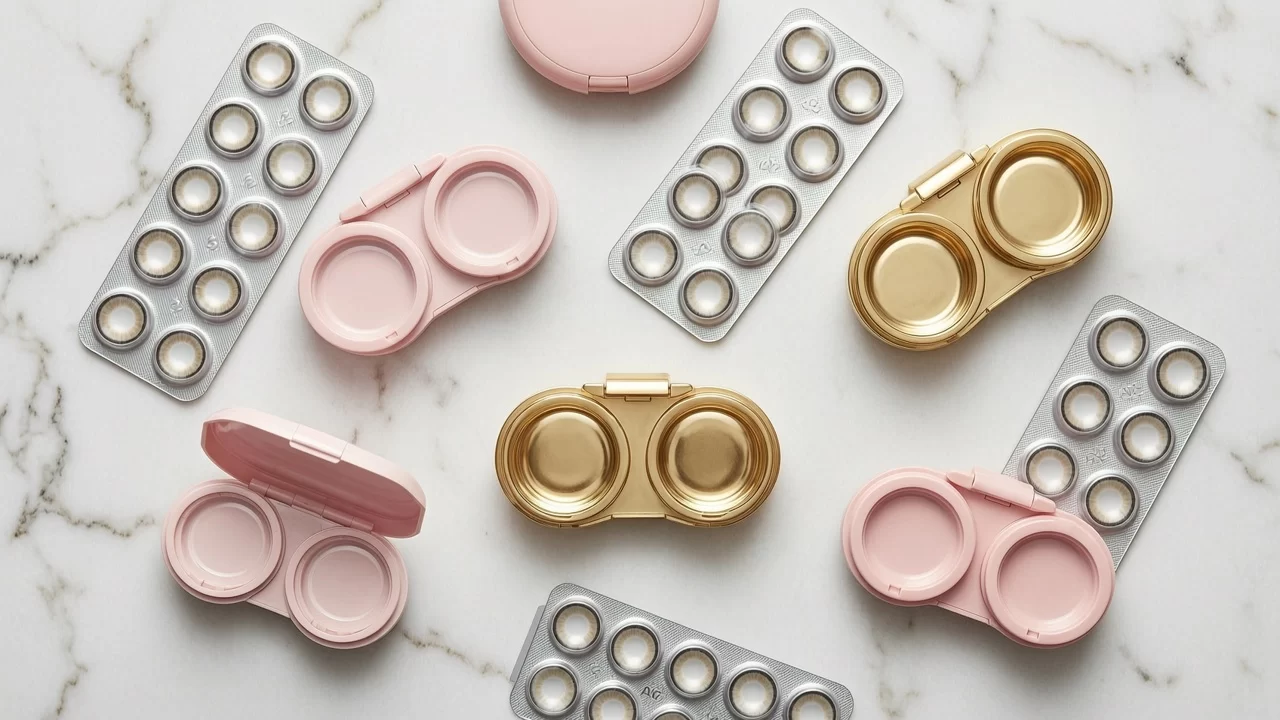
Packaging: Blister packs, glass bottles, or plastic cases? Each has different cost structures and MOQs. Custom packaging molds can cost $2,000–$5,000 and take 3–4 weeks to produce.
The entire product development phase — from first sample to approved final product — usually takes 2–3 months. If someone tells you it can be done in two weeks, they’re either lying or they’re using stock designs.
Step 3: Regulatory Compliance (The Part Nobody Wants to Talk About)
Colored contact lenses are medical devices. In most countries, you can’t just sell them like regular cosmetics. You need:
- Product registration with the relevant health authority (FDA 510(k) for the US, CE technical file for Europe, etc.)
- A qualified responsible person or local authorized representative in some markets
- Proper labeling that includes prescription warnings, ingredient lists, and manufacturer information
- Post-market surveillance — you need a system to track complaints and adverse events
Your OEM partner should handle most of the technical documentation, but the legal responsibility ultimately falls on you as the brand owner. Get a regulatory consultant if you’re unsure. It’s cheaper than a product recall.
Step 4: Pricing and Margins (Do the Math Before You Launch)
Here’s a rough cost breakdown for a small-batch custom colored lens line:
- Per-unit manufacturing cost: $1.50–$4.00 per pair (depends on volume, complexity, and packaging)
- Sample development: $500–$2,000 per color
- Packaging mold: $2,000–$5,000 (one-time)
- Regulatory registration: $3,000–$15,000 (varies wildly by market)
- Initial inventory (500 pairs × 3 colors): $2,250–$6,000
Most branded colored lenses retail for $15–$40 per pair. Your gross margin should be 60–75% after accounting for shipping, marketing, and platform fees. If the numbers don’t work at your expected retail price, you need to either raise prices or find cost savings elsewhere — not ignore the problem and hope volume makes up for it.
Step 5: Launch and Marketing (Where the Real Work Starts)
Having a great product means nothing if nobody knows it exists. The colored contact lens market is crowded, and your target customers are scrolling through hundreds of brand options every day.
What actually works in 2026:
- TikTok and Instagram Reels. Before/after try-on videos are the single most effective content format for colored lenses. Partner with micro-influencers (10K–100K followers) in your target market. They’re cheaper than big names and their audiences trust them more.
- Virtual try-on technology. Several AR tools now let customers see how lenses look on their actual eye color through their phone camera. If your website doesn’t have this, you’re losing conversions.
- Community building. The most successful lens brands have active communities — Discord servers, Facebook groups, or Telegram channels where customers share looks, ask questions, and feel like insiders.
The Honest Timeline
If you’re starting from scratch today, here’s what a realistic timeline looks like:
- Month 1–2: Research, factory sourcing, initial outreach
- Month 2–3: Sampling, color development, packaging decisions
- Month 3–4: Regulatory paperwork, first production run
- Month 4–5: Website build, photography, content creation
- Month 5–6: Soft launch, influencer seeding, first sales
Six months from idea to first revenue. Not six weeks. Six months.
What I Wish Someone Had Told Me Earlier
Three things:
1. Your first color won’t be your bestseller. Most brands launch with what they think is a safe, universally flattering shade. Then they discover that the weird, unexpected color — the violet, the ice blue, the heterochromia pair — is what goes viral. Don’t overthink your initial lineup. Launch with 3–5 colors and let the market tell you what works.
2. Customer service is your moat. People are putting something on their eyeballs. They’re going to have questions, concerns, and occasionally complaints. How you handle those moments defines your brand more than any marketing campaign ever will.
3. Don’t skip the boring stuff. Business registration, insurance, proper contracts with your supplier, clear return policies — none of this is sexy, but it’s what separates a real business from a side project that happens to have a logo.
Final Thought
Starting a colored contact lens brand in 2026 is absolutely still viable. The market is growing, the technology is better than ever, and consumers are more comfortable buying lenses online than they’ve ever been.
But it’s not a get-rich-quick play. It’s a real business that requires real planning, real capital, and real patience. If you go in with your eyes open (pun intended), you’ve got a much better shot at building something that lasts.
If you’re exploring an OEM/ODM partnership for colored contact lenses and want to understand what’s possible with your budget and timeline, feel free to reach out. We work with brand owners at every stage — from first-time entrepreneurs to established companies expanding into new markets.