The Middle East Colored Contact Lens Market: Opportunities and Cultural Considerations for B2B Partners
If you’ve been watching the global colored contact lens market, you already know that Southeast Asia and North America get most of the attention. But there’s a region that’s been quietly becoming one of the fastest-growing markets for cosmetic eye wear — and most brand owners are barely paying attention to it.
The Middle East, particularly the GCC countries (Saudi Arabia, UAE, Kuwait, Qatar, Bahrain, and Oman), is experiencing a surge in demand for colored contact lenses. The drivers are different from what you’d see in East Asia or the West. The buying behavior is different. And if you’re going to enter this market, you need to understand those differences before you ship a single box.
Let me walk you through what makes this market tick — and how to position your brand so it actually resonates.
Why the Middle East Is a Goldmine Right Now
The numbers tell the story. The GCC beauty and personal care market is projected to exceed $30 billion by 2027, and eye cosmetics are one of the fastest-growing segments. Several factors are converging:
A young, digitally connected population. Over 60% of the GCC population is under 35. These consumers are on Instagram and TikTok daily, exposed to global beauty trends but also creating their own. Colored contact lenses show up constantly in beauty tutorials, influencer content, and social media looks.
High disposable income. The GCC has some of the highest per-capita spending power in the world. Consumers here aren’t price-shopping on the same level as Southeast Asian markets. They’re looking for quality, safety, and brand prestige. That means better margins for you — if you position correctly.
Cultural emphasis on eye beauty. In a region where many women wear hijab or niqab, the eyes become the primary canvas for self-expression. This isn’t a new phenomenon, but the social media era has amplified it dramatically. The demand for eye-enhancing products — including colored lenses — has moved from niche to mainstream.
A booming salon and beauty services industry. Dubai and Riyadh are becoming global beauty capitals. The professional beauty channel is a distribution pathway that most overseas brands haven’t tapped yet.
What Buyers in This Market Actually Want
Here’s where a lot of Western and East Asian brands get it wrong. They assume the Middle East is just another market and push the same products, the same colors, the same marketing. It doesn’t work.
Color Preferences Are Specific
The most popular colors in the GCC are not the same ones trending in Seoul or Tokyo. Based on what we’ve seen from distributor conversations and order patterns:
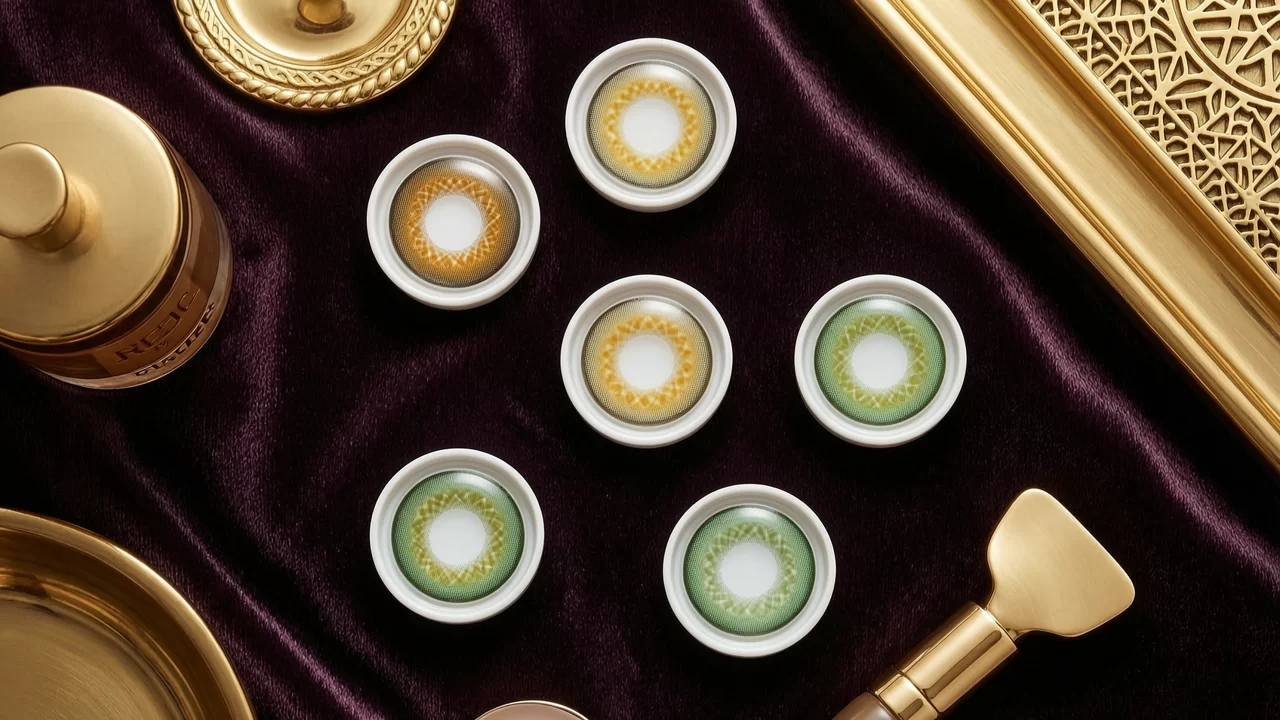
- Hazel and honey tones consistently outperform other shades. They enhance the natural dark brown eyes common in the region while still looking noticeably different.
- Green tones (especially olive and emerald) have a strong following. They’re seen as exotic but still wearable.
- Gray and blue are popular for special occasions and dramatic looks, but they sell less as everyday wear compared to the warmer tones.
- Natural dark enhancers — lenses that deepen or brighten the natural eye color without an obvious “lens look” — are a fast-growing segment. Think of them as the “no-makeup makeup” of colored lenses.
If your color card only has the standard Asian-market palette (vivid blue, purple, ice gray), you’re going to struggle here. You need shades designed for darker base eye colors.
Quality and Safety Are Non-Negotiable
This is not a market that accepts cheap, no-name products. GCC consumers are well-informed, and they care deeply about what goes into their eyes. Two things matter:
Certifications. You need CE marking at minimum. For Saudi Arabia specifically, SFDA (Saudi Food and Drug Authority) registration is required for colored contact lenses sold through retail and optical shops. The UAE has its own regulatory pathway through the Ministry of Health. Don’t assume one certification covers the whole region.
Material quality. Silicone hydrogel is strongly preferred over traditional hydrogel in this market. The climate is hot and dry, and comfort over long wearing hours is a major concern. If your product can demonstrate high oxygen permeability and moisture retention, that’s a genuine selling point — not just a spec sheet number.
Packaging and Branding Must Respect Cultural Norms
This is where brands stumble more than anywhere else. A few things to keep in mind:
- Model imagery. If your packaging or marketing materials feature models, make sure they reflect the region’s diversity and dress modestly. A bikini-clad model on your box will not fly in Saudi Arabia.
- Language. Arabic text on packaging is not just a legal requirement in most GCC countries — it signals respect and seriousness. Bilingual packaging (English + Arabic) is the standard.
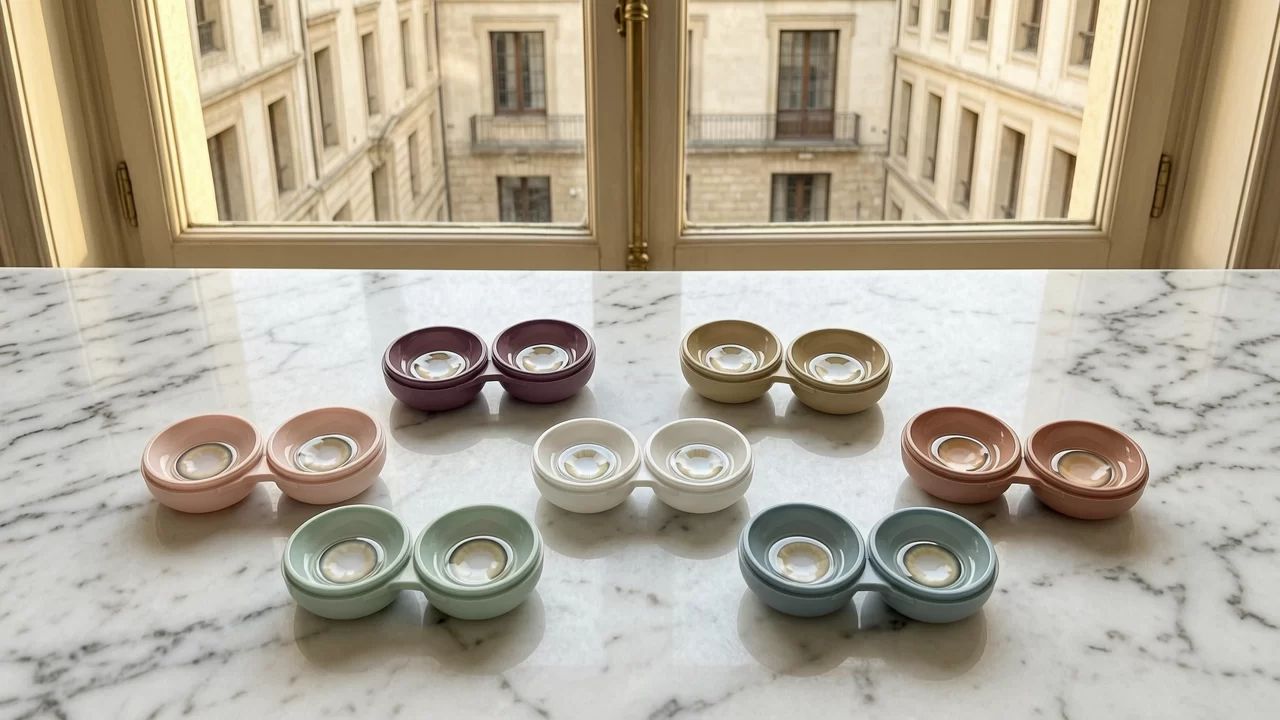
- Color psychology. Gold, black, and deep jewel tones communicate luxury. Pastels and minimalist “K-beauty” packaging can work for a younger demographic, but the premium segment expects a certain visual weight.
How to Actually Enter This Market
OK, so you understand the demand. How do you get your product onto shelves — or into customers’ hands — in the GCC?
Path 1: Find a Local Distributor
This is still the most common route, and for good reason. A good GCC distributor handles:
- Regulatory registration (SFDA, MOH, etc.)
- Relationships with optical shops, pharmacies, and beauty retailers
- Import logistics and customs clearance
- Local marketing and trade show presence
The challenge is finding the right partner. Major distributors in Dubai and Riyadh get approached constantly. If you’re a small brand with no track record, you’ll struggle to get their attention. That’s where having your certifications in order and a professional brand presentation makes the difference between getting a meeting and getting ignored.
Path 2: E-Commerce and Cross-Border Selling
Amazon.ae (UAE) and Amazon.sa (Saudi Arabia) are growing rapidly for beauty products. Noon.com is another major regional marketplace. These platforms let you test demand without committing to a full distribution deal.
The catch: you still need proper product registration for each country. You can’t just ship from a warehouse in China and hope for the best. The customs authorities in the GCC are becoming stricter, not more lenient.
Path 3: OEM/ODM for Local Brands
Here’s an angle that a lot of overseas manufacturers miss. There are GCC-based entrepreneurs who want to launch their own colored contact lens brands but don’t have manufacturing capabilities. They need an OEM partner who understands:
- The color preferences specific to this market
- The regulatory requirements for their target countries
- How to produce small batches with premium quality
If you can position yourself as the “Middle East specialist” OEM — meaning you already have the right color palette, the certifications, and the willingness to do low-MOQ runs — you’ll stand out from the dozens of generic suppliers competing on price alone.
Cultural Mistakes That Kill Deals
I’ve seen brands lose opportunities in this market because of avoidable cultural blunders. A few that come up repeatedly:
Ignoring Ramadan timing. The month of Ramadan is the biggest retail season in the GCC — bigger than Christmas is in the West. If your marketing calendar doesn’t account for Ramadan (which shifts every year based on the lunar calendar), you’re missing the peak. But also: don’t try to run aggressive, upbeat ad campaigns during the holy month. The tone should be respectful.
Assuming the whole region is the same. Saudi Arabia is not Dubai. Kuwait is not Oman. Each country has its own regulatory environment, consumer preferences, and business culture. Treating “the Middle East” as one market is like treating “Europe” as one market.
Being impatient. Business relationships in the GCC take time to build. Expect multiple meetings, lots of small talk, and a longer decision cycle than you might be used to. But once a relationship is established, the loyalty and order volumes can be substantial.
What This Means for Your Brand Strategy
The Middle East isn’t a market you enter with a spray-and-pray approach. It rewards brands that:
1. Do the regulatory homework first. Get your CE, SFDA, and relevant country registrations before you start reaching out to distributors.
2. Develop region-specific color palettes. Don’t just send your standard catalog. Show that you understand what sells in this market.
3. Invest in professional, culturally appropriate branding. Arabic-language packaging, modest model imagery, premium materials.
4. Build relationships, not just transactions. Visit the region. Attend trade shows like Beautyworld Middle East (Dubai). Meet potential partners face to face.
5. Think long-term. The first order might be small. But if your product sells and your partner trusts you, the reorders can be very significant.
The brands that figure this out early — before the market gets crowded — are going to have a real advantage. The window is open right now. The question is whether you’ll walk through it.
Looking to launch or expand your colored contact lens brand in the Middle East? MIOMI Optical offers OEM/ODM services with GCC-specific color palettes, CE certification, and low-MOQ options. [Get in touch](https://miomicon.com/contact/) to discuss your project.