Starting a colored contact lens brand is exciting. You’ve got the vision, the marketing plan, maybe even a name picked out. But here’s the thing that keeps most brand owners up at night: finding a supplier you can actually trust.
I’ve been in the contact lens manufacturing space for over a decade, working with brands from Southeast Asia to North America. I’ve seen deals go beautifully—and I’ve seen them go terribly wrong. The difference almost always comes down to one thing: how well you vetted your supplier before signing anything.
So let me walk you through what to watch for. These are the real signals, not the stuff you read in generic “how to find a supplier” articles.
Red Flag #1: They Say “Yes” to Everything
You ask about custom colors, unusual diameters, specific water content levels, and tight timelines. The supplier nods along and says, “No problem, we can do all of that.”
Run.
A trustworthy supplier will tell you what they can’t do—or at least what they shouldn’t do without proper testing. Every parameter change affects safety, comfort, and regulatory compliance. If someone’s promising you a 14.8mm diameter with 38% water content in a color they’ve never produced before, and they’re saying it’ll be ready in two weeks? They’re either lying or they don’t understand their own production process.
Green flag: The supplier asks detailed questions about your target market, explains technical limitations clearly, and pushes back when something doesn’t make sense. That’s expertise, not stubbornness.
Red Flag #2: No Certifications, or “We’re Getting Them Soon”
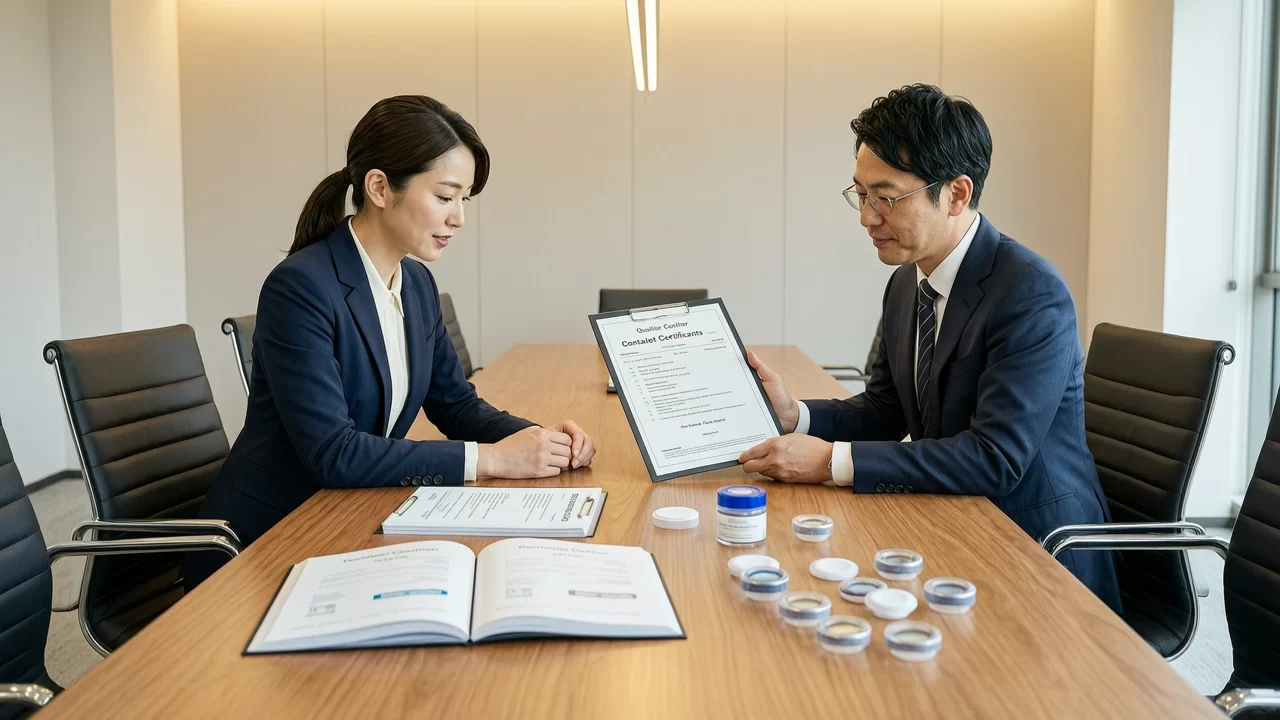
This one seems obvious, but you’d be surprised how many brand owners gloss over it. If your supplier can’t show you current, valid certifications for your target markets—CE for Europe, FDA registration for the US, SFDA for Saudi Arabia, NMPA for China—walk away.
I’m not talking about “we have ISO 13485 so we’re good.” Medical device regulations are specific. You need the exact certifications for the exact markets you’re selling into.
Green flag: The supplier volunteers certification information early in the conversation. They send you copies without you having to ask. They know which markets require which documents and can explain the differences.
Red Flag #3: Vague Answers About Materials
“What material do you use?” “Hydrogel.” “What’s the water content?” “It depends.” “Can you send me the material safety data sheet?” “We’ll get back to you on that.”
If your supplier can’t clearly articulate what materials they use—and back it up with documentation—you’re building your brand on quicksand. Material composition affects everything: oxygen permeability, deposit resistance, comfort, shelf life. This isn’t proprietary information you shouldn’t have access to. You’re the one putting your name on the packaging.
Green flag: The supplier provides technical specifications sheets for every product, including material type (etafilcon A, polymacon, whatever they use), water content ranges, Dk/t values, and manufacturing process details.
Red Flag #4: Prices That Seem Too Good
Here’s the reality of contact lens manufacturing: the margins are what they are. Raw materials cost what they cost. Clean room operations cost what they cost. Quality control costs what it costs.
If Supplier A quotes you $0.80 per pair and Supplier B quotes you $2.20 per pair for what sounds like the same product, Supplier A isn’t being generous. They’re cutting corners somewhere—maybe in material quality, maybe in QC processes, maybe in clean room standards.
Green flag: The supplier’s pricing is in the same range as other qualified suppliers you’ve talked to. They can explain what drives the cost differences between product tiers. They don’t compete on price alone—they compete on value, reliability, and support.
Red Flag #5: No Sample Process, or “Samples Cost $500”
Sampling is how you verify everything before you commit to a production run. A legitimate supplier will have a clear sampling process: you specify what you want, they make it, you test it, you approve it or request changes.
If a supplier tells you samples aren’t available, or they want to charge you hundreds of dollars for a handful of lenses, that’s a warning sign. Samples should be reasonably priced (you’re not getting them for free, but $50-150 for a custom sample batch is normal). The cost is usually credited toward your first production order.
Green flag: The supplier has a straightforward sampling process with clear timelines (usually 7-15 days for custom samples). They encourage you to test thoroughly before committing to production.
Red Flag #6: Poor Communication During the Inquiry Phase
This is the easiest red flag to ignore because you’re so eager to get started. But pay attention: how does the supplier respond to your initial inquiries? Do they answer within 24-48 hours? Do they address your specific questions, or send generic copy-paste responses? Do they ask clarifying questions to make sure they understand what you need?
The inquiry phase is the best case for communication. Once you’ve placed an order and they have your money, it only gets harder to reach them. If they’re slow, vague, or disorganized now, imagine what production issues will be like.
Green flag: Responsive, detailed communication from day one. They assign you a specific contact person. They follow up proactively. They treat your inquiry like it matters—even if you’re just starting out.
Red Flag #7: No References or Track Record
“Who else do you work with?” If the answer is “we can’t disclose that for confidentiality reasons” without offering any references, that’s a problem. Yes, some brand partnerships are confidential. But a supplier with a solid track record should be able to point you to at least a few current clients willing to vouch for them, or show you case studies of brands they’ve helped launch.
Green flag: The supplier can connect you with existing clients, especially in your target market. They have a portfolio of successful brand launches. They’re proud of their work and willing to show it.
The Bottom Line: Trust Is Built on Transparency
Here’s what I’ve learned after years in this business: the best supplier relationships aren’t built on trust falls and handshake deals. They’re built on transparency, documentation, and consistent communication.
A good supplier will:
- Answer your questions thoroughly, even the uncomfortable ones
- Provide documentation without you having to chase it down
- Set realistic expectations about timelines, costs, and capabilities
- Admit when something is outside their expertise
- Treat you like a partner, not just another order number
Yes, this vetting process takes time. You might spend weeks talking to suppliers before finding the right one. But those weeks of due diligence will save you months of headaches—or worse, a product recall that destroys your brand before it even gets started.
Your brand’s reputation is on the line every time someone wears your lenses. Choose a supplier who understands that responsibility as deeply as you do.
Looking for a contact lens manufacturing partner who checks all these boxes? Get in touch with our team—we’ll walk you through our process, show you our certifications, and connect you with brands we’ve helped launch. No pressure, just a conversation about what’s possible.