When consumers buy colored contact lenses, they mostly think about color. When brands order them, the conversation has to be much more technical. Diameter, base curve, water content, material — these four parameters determine whether your lenses feel great or feel awful, who your product actually fits, and how you can honestly position it.
This guide explains each parameter in plain language, shows how the choices affect your target market, and lists exactly what you should specify when ordering OEM or ODM lenses.
Diameter: It’s Two Numbers, Not One
“Diameter” sounds simple, but in the colored lens world it hides a distinction that matters a lot for how the product looks and sells.
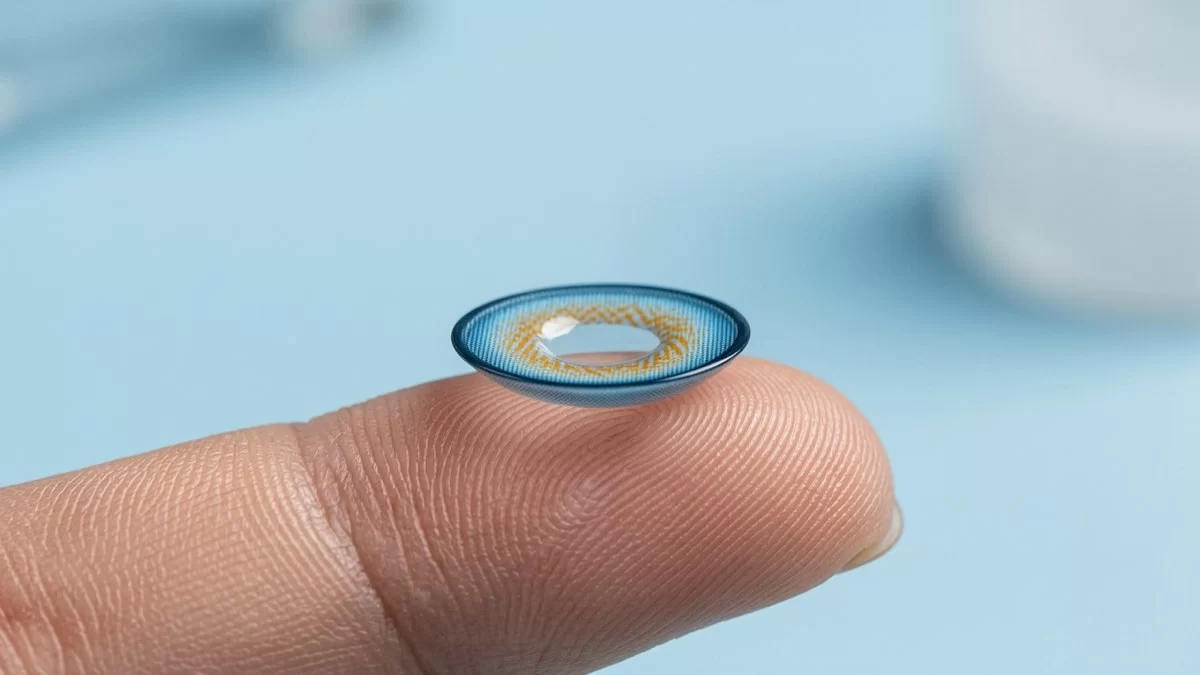
Total diameter (DIA) is the physical size of the lens from edge to edge. For colored contact lenses, the typical range is 14.0mm to 14.5mm, with some products pushing slightly higher for a more dramatic effect.
Graphic diameter is the size of the printed color area. This is the number that actually determines the visual effect. A 14.2mm lens with a 13.0mm graphic diameter looks natural; the same lens with a 13.8mm graphic diameter creates the wide-eyed “doll eye” effect popular in Asian markets.
Why this matters for brand positioning:
- Natural-enhancement markets (US, Europe, Middle East everyday wear) tend to favor graphic diameters around 12.8–13.4mm — subtle color change, believable result.
- “Big eye” markets (East and Southeast Asia especially) want graphic diameters of 13.5mm and up, where the enlargement effect is the point.
- Total diameter still has to fit the eye. Going much beyond ~14.5mm shrinks the potential customer base and can raise comfort issues, so bigger isn’t automatically better.
When you look at competitor products, don’t just note their DIA — dig out the graphic diameter. That’s where the real design differentiation lives.
Base Curve: The Fit Parameter
Base curve (BC) is the curvature of the back surface of the lens, measured in millimeters — essentially how steep or flat the bowl is. Typical soft lens base curves run from 8.4mm to 8.8mm.
A smaller number means a steeper curve; a larger number means flatter. The lens needs to match the curvature of the wearer’s cornea closely enough to stay centered, move slightly with each blink, and not squeeze the eye.
In practice:
- 8.6mm is the industry workhorse. If a brand sells one BC, it’s almost always 8.6.
- 8.4mm suits steeper corneas and is common in some Asian-market products.
- 8.8mm suits flatter corneas, more common in some Western populations.
Most mass-market colored lenses ship in a single base curve (8.6) because the soft material flexes enough to fit a wide range of eyes acceptably. Premium or prescription-focused lines sometimes offer two curves.
For a brand, the decision is really about market. Selling primarily in East Asia? 8.4–8.6mm is the safe zone. Targeting European or American consumers? 8.6–8.8mm. If you offer only one curve, 8.6mm covers the most ground.
Fit problems are rarely blamed on base curve by consumers — they just say the lens “slides around” or “feels tight” — but that’s what it usually is. It’s worth testing sample lenses on wearers with different eye shapes before locking your spec.
Water Content: The Comfort Trade-Off Everyone Gets Wrong
Water content is the percentage of the lens material that’s water, typically somewhere between 38% and 55% for soft colored lenses.
Here’s the counterintuitive part: higher water content does not automatically mean a more comfortable lens.
- High water content (50%+) feels soft and breathable on the first wear. But high-water lenses are like sponges — they draw moisture from the tear film to maintain their own hydration. Over a long day, especially in dry or air-conditioned environments, they can dry out and start feeling scratchy. They’re also mechanically softer and more fragile.
- Low water content (38–42%) feels slightly firmer at insertion but holds up better over hours. They dehydrate more slowly, which paradoxically makes them more comfortable for all-day wear for many people. They’re also more durable.
Middle-range water content (~42–48%) is the most common compromise for colored lenses, partly because color printing processes constrain the material choices.
How this maps to positioning:
- Daily disposable lines often lean on high water content in marketing because of the “fresh and soft” first-impression story.
- Monthly and yearly lenses benefit from lower or mid water content, since comfort-after-hours is what generates repeat purchases and good reviews.
- If your target customer wears lenses 10+ hours a day or lives in a dry climate, mid-to-lower water content with good edge design will outperform a high-water lens in reviews, even if it loses the spec-sheet comparison.
One more thing: don’t let marketing copy claim “55% water = more comfortable” without testing. Educated consumers and opticians both push back, and review culture remembers.
Material: HEMA vs Silicone Hydrogel
The two dominant material families tell a bigger story about where your product sits.
HEMA (hydrogel) is the traditional soft lens material. It’s inexpensive, well-understood, easy to color-print, and dominates the colored lens market today. Nearly all fashion colored lenses on shelves are HEMA-based. If your product is fashion-driven, price-sensitive, and replacement-scheduled (daily to yearly), HEMA is the practical choice.
Silicone hydrogel transmits substantially more oxygen to the cornea, which is why it dominates the clear prescription lens market. The catch for colored lenses: color printing on silicone hydrogel is harder, the material is pricier, and far fewer factories do it well. Silicone hydrogel colored lenses exist and are growing — they’re the right choice if your positioning is premium comfort and eye health, and you’re willing to accept higher cost and a more limited design catalog.
A useful framing: HEMA wins on color range, cost, and speed. Silicone hydrogel wins on oxygen transmissibility and long-wear health story. Your target customer and price point usually decide for you.
How Parameters Shape Your Target Market
Pulling it together, here’s how the four parameters combine into product positions:
| Position | Typical spec profile |
|---|---|
| Natural everyday (Western markets) | 14.0–14.2mm DIA, ~13.0–13.3mm graphic DIA, BC 8.6, mid water content, subtle color designs |
| Big-eye beauty (Asian markets) | 14.2–14.5mm DIA, 13.4–13.8mm graphic DIA, BC 8.4–8.6, mid water content, defined limbal rings |
| Cosplay / bold fashion | Larger graphic diameters, saturated or unusual colors, monthly or yearly replacement, HEMA |
| Premium health-focused | Silicone hydrogel where available, daily disposable, conservative diameters, strong oxygen story |
Notice that none of these is “better.” They’re different products for different buyers. The brands that struggle are usually the ones whose spec sheet doesn’t match the audience their marketing is talking to.
What to Specify When Ordering OEM
When you place an OEM order (or evaluate ODM options), this is the checklist to put in writing:
- Total diameter — e.g., 14.2mm, with tolerance expectation.
- Graphic diameter — the number that defines your visual effect; request sample photos on dark and light eyes.
- Base curve — e.g., 8.6mm; state whether you want single or dual curve.
- Water content — e.g., 42%; ask what options the factory’s color process supports.
- Material — HEMA or silicone hydrogel, and which generations the factory offers.
- Power range — plano only, or powered (common ranges run 0.00 to around -8.00; confirm what the factory can do and whether they stock astigmatic options).
- Replacement schedule — daily, monthly, yearly; this interacts with material and water content choices.
- Color design and printing method — sandwich printing (color layer sealed between polymer layers so pigment doesn’t touch the eye) is the standard you should insist on.
- Edge design — often overlooked; a well-designed thin edge is a big share of perceived comfort.
- Compliance target market — which regulatory regime the product must satisfy (FDA, CE, KFDA/MFDS), because it constrains material and design options.
Bring this list to your first manufacturer conversation and you’ll get better quotes, faster answers, and fewer surprises at sampling.
Test on Real Eyes Before You Commit
Spec sheets don’t wear lenses; people do. Before finalizing any OEM order:
- Fit samples on at least 8–10 wearers with different eye shapes and tear profiles.
- Track comfort at insertion, at 4 hours, and at 8 hours.
- Photograph the color result on dark brown, medium, and light eyes — this is both your fit check and your future marketing content.
- Watch for decentration (lens not centered) and excessive movement, which point to base curve issues.
A week of structured wear-testing is the cheapest insurance you can buy against a production run of lenses that get returned or reviewed badly.
The Bottom Line
Consumers buy color. Brands are built on parameters. Diameter and graphic diameter decide what the product looks like; base curve decides who it fits; water content and material decide how it feels at hour eight. Understanding these four variables lets you position your line honestly, brief your manufacturer precisely, and avoid the classic failure of a beautiful lens that nobody can wear all day.
If you’re choosing specs for an upcoming launch and want a second opinion — what works in your target market, what’s manufacturable, what’s worth paying for — bring your brief and we’ll talk it through.