When most contact lens brands think about expansion, they think Europe or Southeast Asia. The Middle East rarely makes the shortlist — and that’s exactly why it deserves attention. It’s one of the last major regions where colored contact lenses carry genuine cultural weight, high purchasing power, and surprisingly fragmented competition.
We’ve shipped to Gulf and wider Middle Eastern buyers for years, and the patterns we’ve learned don’t show up in the generic market reports. This article covers what actually matters if you’re a wholesaler or brand owner thinking about the Middle East in 2026: the demand drivers, the cultural nuances, the regulations, and the mistakes we watch outsiders make repeatedly.
The Demand: Why Colored Lenses Are More Than Fashion Here
Start with a fact that reframes everything: in parts of the Middle East — the Gulf states especially — colored contact lenses aren’t a novelty item. They’re part of everyday grooming, on par with fragrance or eyewear. Wearing them to work, to family gatherings, to weddings is normal, not a costume choice.
A few structural factors keep demand strong:
- High disposable income in the Gulf. The UAE, Saudi Arabia, Qatar, and Kuwait rank among the highest per-capita spenders on beauty and personal care globally. Price sensitivity is lower than most brands expect — what matters is perceived quality and brand trust.
- A young, digitally connected population. Over 60% of the GCC population is under 35. Social media — Instagram, Snapchat, and increasingly TikTok — drives discovery, and lens aesthetics are highly visible content.
- Weddings, Eid, and event culture. Seasonal gifting and event dressing create predictable demand spikes. Ramadan and Eid periods, plus wedding seasons, reliably lift sales — plan inventory around them.
- Aesthetic preferences that differ from the West. This is where most foreign brands stumble, so we’ll cover it properly below.
Color Preferences: Read This Before You Pick Your Range
The single most common mistake we see: brands entering the Middle East with the same color palette they sell in Europe or North America.
The preferences are different, and meaningfully so:
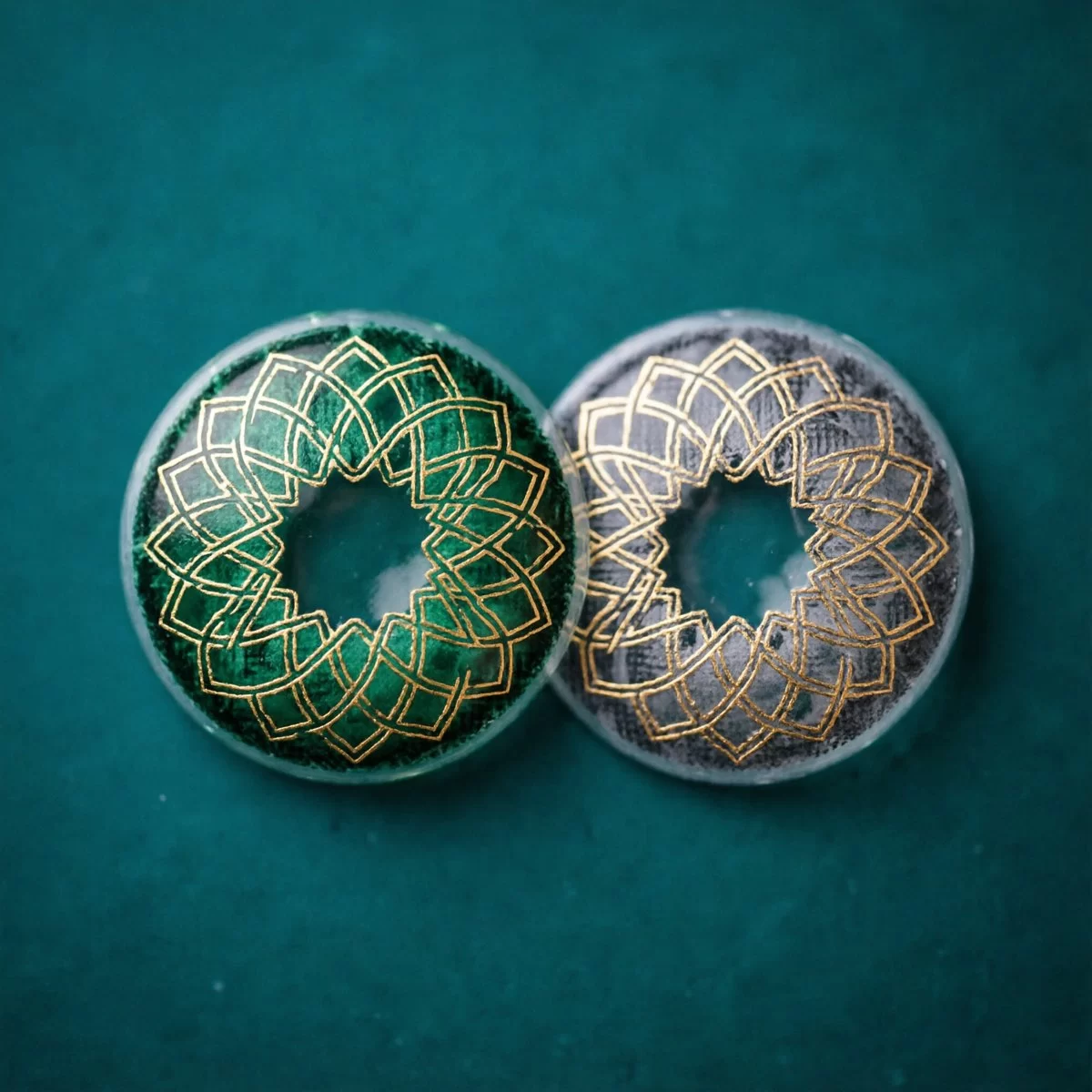
- Green is the signature color. Across the Gulf and Levant, green lenses — from deep emerald to lighter olive tones — are consistently the best seller. If you’re building a starter range, green should anchor it.
- Gray has real staying power. Smoky gray and gray-green blends are close behind, especially among younger buyers.
- Bolder colors have a genuine audience. Unlike many Western markets where “natural enhancement” dominates, vivid blues, honey ambers, and even violet tones sell steadily here — particularly for events and occasions. Don’t assume subtle is always safer.
- Larger diameters perform better. Defined limbal rings and a slightly larger visible diameter (14.0–14.5mm range) align with regional beauty standards. The ultra-natural “barely there” look that works in Europe is a smaller niche here.
Practical advice: if you’re ordering your first Middle Eastern assortment, weight it roughly 40% green, 25% gray family, 20% honey/amber and brown blends, 15% bold statement colors. Adjust after your first season of real sales data — but start there, not with your European best sellers.
Climate Changes the Product Requirements
Hot, dry climates with heavy air conditioning are hard on contact lenses. This has real sourcing implications:
- Comfort complaints concentrate in the afternoon. Dehydration is the top complaint driver. Lower-to-mid water content lenses (38–50%) and strong moisture-retaining designs consistently generate fewer returns.
- Daily disposables are growing fast. Hygiene convenience plus comfort is winning share, especially in the UAE and Saudi Arabia. If your range only offers yearly lenses, you’re missing the fastest-moving segment.
- UV exposure matters. UV-blocking features are a genuine marketing asset in this region, not a checkbox spec.
Regulation: Where Serious Brands Win and Hasty Ones Get Stuck
Regulatory scrutiny in the region has tightened noticeably over the past several years — colored lenses are medical devices in the eyes of most authorities, not cosmetics:
- Saudi Arabia (SFDA) requires product registration for medical devices, including contact lenses. Selling without registration is a growing risk as enforcement strengthens.
- UAE (MOHAP) similarly regulates lenses as medical devices, with import and registration requirements.
- Gulf-wide, the GCC medical device harmonization framework continues to raise the bar on documentation, traceability, and labeling — including Arabic labeling requirements in several jurisdictions.
What this means for you as a buyer: your supplier’s certification portfolio is not a footnote. CE-marked, ISO-compliant manufacturing with clean documentation is the baseline that keeps your import process smooth and your retail partners willing to stock you. Grey-market lenses are losing shelf space to documented, registered products. The compliance burden is real — but it’s also a moat that filters out low-effort competitors.
Our standard advice to Middle Eastern buyers: choose an OEM partner with CE certification, provide clean technical documentation from day one, and build your registration strategy into your launch timeline rather than scrambling after customs holds your first shipment.
Distribution: The Channels That Actually Move Volume
Channel strategy in the region doesn’t look like Europe’s:
- Optical retail chains remain king for trust. Even digitally native buyers often want to pick up lenses from a physical optical store. Chain presence gives your brand instant legitimacy.
- Instagram-first DTC is real but relationship-driven. Gulf consumers buy heavily through Instagram and WhatsApp — but the conversion path runs through direct conversation, not self-checkout. Expect your sales team to close orders in chat, not on a product page.
- Influencer partnerships are table stakes. Local beauty and fashion influencers — especially Arabic-language creators — drive category discovery more effectively than paid ads. Micro-influencers with loyal local followings often outperform big names on conversion.
- Marketplace growth (Noon, Amazon.ae) is accelerating but lens categories face listing restrictions tied to medical device rules. Check current category approval requirements before planning inventory there.
Pricing and Perception: Don’t Race to the Bottom
Here’s something counterintuitive for many Western brands: in the Gulf, a premium price point can actively help you. Pricing that signals quality outperforms aggressive discounting in most of the region. Deep discounts can read as “cheap product” — and in a category worn inside the eye, trust is everything.
Position with quality-first messaging: material, oxygen permeability, certification, manufacturing standards. Those are the claims that win here, and they’re claims your supplier needs to back with documentation.
Five Mistakes We Watch Foreign Brands Make
- Exporting their European palette. (Green and gray first — always.)
- Ignoring Arabic-language presence. Your packaging inserts, support channels, and social content need Arabic to be taken seriously.
- Skipping regulatory groundwork. Customs holds and retail rejection are expensive lessons.
- Offering only yearly lenses. The daily segment is where growth is happening.
- Treating the region as one market. The Gulf, Levant, Egypt, and North Africa behave differently in price sensitivity, channel mix, and color preferences. Segment your approach.
How to Enter: A Realistic First-Year Playbook
- Start narrow. One or two countries (UAE + Saudi Arabia is the classic combination), one focused color range anchored on green and gray.
- Order a real sample round. Test comfort through a full wear day in local conditions before committing bulk volume. Climate fit is a make-or-break detail.
- Register early. Begin SFDA/MOHAP documentation work in parallel with your first order, not after it.
- Build the chat-first sales motion. WhatsApp and Instagram DMs, Arabic-capable support, fast response times.
- Time your launches. Align first major pushes with Ramadan/Eid or wedding season for built-in demand spikes.
Where MIOMI Fits In
We’ve supported Middle Eastern brands and distributors through exactly this path: color ranges tuned to regional preference, comfort specs suited to hot dry climates (with the water content selection we covered in detail in our product knowledge series), CE-certified production with documentation ready for registration processes, and low MOQs so you can validate the market before scaling volume.
If you’re planning a Middle Eastern launch or expanding an existing range, email sales@miomicon.com or WhatsApp us at +86 13862973905. Tell us your target market and budget — we’ll map out a realistic entry plan, including what to order first and what to skip.
MIOMI Optical Ltd — OEM/ODM customization, small-batch wholesale, and low-MOQ colored contact lens manufacturing for brands worldwide.