Let me start with a confession. When I first got into this industry, I thought the hard part was getting a customer’s first order.
It wasn’t.
The hard part — the part nobody really talks about enough — is getting them to order a second time. And a third. And then becoming the kind of customer who doesn’t just reorder every quarter, but actually recommends you to their network.
If you’re selling colored contact lenses wholesale, running a D2C brand, or building a private label line, you’ve probably noticed the same thing: getting that first purchase is just the entry fee. The real money — and the real business stability — comes from repeat customers.
In this article, I want to share what we’ve learned at MIOMI about customer retention in the contact lens industry. Some of these lessons came from watching our most successful brand partners. Others came from (let’s be honest) messing up and figuring out what didn’t work. Either way, they’re actionable, and you can start implementing most of them this week.
Why Retention Matters More Than You Think (Even in B2B)
I know what you might be thinking. “Retention is for D2C brands with subscription boxes. I’m a wholesaler / OEM supplier. My customers reorder when they need inventory.”
That’s partly true. But it’s also a dangerous way to think.
Here’s the reality of the contact lens industry:
- The cost of acquiring a new B2B customer is 3-5x higher than keeping an existing one. (This isn’t just a contact lens stat — it’s across B2B generally, and our own data aligns with it.)
- Existing customers spend 67% more than new ones. Once a brand owner trusts you with their OEM production, they tend to expand SKUs, add new colors, and increase order volumes.
- Word of mouth in this industry is everything. There aren’t that many serious contact lens brands, and owners talk. A retained customer who’s happy with you is your best salesperson.
Still not convinced? Let me put it this way: if you’re spending all your time chasing new customers and none keeping the ones you have, you’re running on a treadmill. And treadmills don’t take you anywhere.
The First 30 Days: Make or Break
The first month after a customer’s first order is the most critical window. Get this right, and you dramatically increase the odds they’ll reorder. Get it wrong, and you may never hear from them again.
Here’s what the best brand partners and wholesalers we work with do in those first 30 days:
1. The “We Got Your Order” Call (or Email)
This isn’t an automated confirmation. It’s a personal touch.
Within 24 hours of receiving a first-time order, someone from your team should reach out personally. Not to sell anything — just to confirm you’ve got everything, walk them through the timeline, and answer any questions they haven’t asked yet.
For OEM clients, this might be: “Hey, just confirming we received your design files. Our team is reviewing them now and we’ll have the first draft of your mockup by end of day Wednesday. Quick question on the packaging — did you want matte or glossy finish?”
For wholesale buyers: “Got your order for the 12-color sample pack. Just so you know, we’ve got 10 of those colors in stock and we’re expecting the other two early next week. Should we ship what we have now, or wait and send everything together?”
The point isn’t the exact words. It’s that you’re showing up as a partner, not a faceless supplier. And you’re giving them a chance to voice concerns before they turn into problems.
2. The Mid-Fulfillment Check-In
About halfway through production or shipping, check in again. Not every single time — use your judgment for repeat customers — but definitely for first orders.
Why? Because silence is anxiety-inducing. If a brand owner has placed a $2,000 OEM order and hasn’t heard anything in 10 days, their brain starts inventing problems. “Did they forget about me?” “Is there something wrong with my order?” “Should I start looking for another supplier?”
A simple update kills all that: “Quick update — your lenses are in the final inspection stage. Should be ready to ship by Friday. I’ll send tracking as soon as we have it.”
Thirty seconds of work. Massive trust dividend.
3. The Post-Delivery Follow-Up
The order arrives. They sign for it. And then… radio silence from you?
That’s a mistake.
Within 48 hours of delivery, reach out and ask how everything looks. Are the products as expected? Any issues with packaging? Questions about how to merchandise them?
For OEM clients specifically, ask about the unboxing experience. Did the packaging hold up in transit? Do the colors match the proofs?
Here’s the thing: most people won’t tell you about small problems. They’ll just quietly decide not to reorder. But if you ask, and you’re genuinely receptive to feedback, you can fix small issues before they become dealbreakers.
And if everything looks great? That’s the perfect moment to mention your reorder timeline or your next available production slot.
Building a Retention System That Works
The first 30 days are critical, but real retention is about what happens after that. You need a system — not just good intentions.
Here are five strategies that actually work in the contact lens industry:
Strategy 1: The Reorder Reminder That Doesn’t Feel Spammy
Contact lenses are consumable. That means your customers will need more eventually. The question is: will they remember to order from you, or will they try someone else?
Don’t leave this to chance. Set up a reorder reminder system.
The key is to make it helpful, not pushy. Here’s what works for our partners:
- For D2C brands: Remind customers 2 weeks before their lenses would typically run out (based on their purchase type — daily, monthly, quarterly).
- For wholesale buyers: Remind based on their typical order volume and frequency. If someone orders 500 pairs every 90 days, reach out on day 75.
- For OEM clients: Check in 30-45 days after delivery to see how sales are going, and remind them about production lead times for reorders.
The message should sound like a partner looking out for them, not a sales pitch. Something like: “Hey, just a heads-up that based on your typical reorder cycle, you might want to think about placing your next order soon. Our production queue is filling up for September, and I’d hate for you to run out.”
Strategy 2: Loyalty That Actually Means Something
Loyalty programs get a bad rap because so many of them are… well, kind of lame. “Spend $1000, get a $20 coupon” isn’t exactly thrilling.
The best loyalty programs in our industry aren’t about points. They’re about status and access.
For B2B clients, this might mean:
- Priority production slots for repeat customers (they jump the queue during busy seasons)
- Early access to new designs before they’re available to everyone else
- Exclusive pricing tiers that kick in after a certain volume threshold
- Personalized product recommendations based on what’s been selling well for them
For D2C brands, it could be:
- Subscription discounts with flexible delivery schedules
- Referral bonuses — give them a free pair for every friend who signs up
- Early access to limited edition drops
The common thread: make your loyal customers feel like insiders. Because once they feel that way, they won’t want to leave.
Strategy 3: Content That Keeps You Top of Mind
You’re reading this article, so you already understand the value of content marketing. But here’s what many brands miss: content isn’t just for attracting new customers. It’s also for retaining the ones you already have.
Think about it. If a customer buys from you once and then never hears from you again (except when you’re trying to sell them something), you’re easy to forget.
But if every two weeks they get a useful email from you — something like:
- “5 display ideas that are working for our top wholesale partners”
- “How to handle contact lens returns without losing money”
- “The 3 new color trends our design team is seeing for next quarter”
Then you’re not just a supplier. You’re a valuable resource. You’re the person they think of when they have questions about this industry.
The key rule here: 80% value, 20% promotion. Most of your communication should be helpful information. Only a small fraction should be direct selling.
Strategy 4: The Win-Back Playbook
Despite your best efforts, some customers will go quiet. They’ll order once, then disappear.
That doesn’t mean they’re gone forever.
Here’s a win-back sequence that works for us:
Step 1 — Day 60 since last order: Send a genuine check-in email. Not “BUY MORE THINGS.” Just “Hey, it’s been a couple of months since we heard from you. Everything okay? Any feedback on how we could serve you better?”
You’d be surprised how many people reply honestly to this. Sometimes it’s “oh, we were testing another supplier, and honestly yours are better.” Sometimes it’s “we had cash flow issues but we’re ready to reorder now.” And sometimes it’s useful feedback you can act on.
Step 2 — Day 75: If no response, send a small incentive. Maybe a discount on their next order, or free shipping, or a free add-on. Something that lowers the friction to come back.
Step 3 — Day 90: If still nothing, send one final note. Keep it short and gracious. “No worries if you’re not ready to reorder. We’ll be here when you are. All the best.”
Then stop. Don’t keep emailing. Put them on a quarterly newsletter list so they still hear from you occasionally, but stop the direct outreach.
Why? Because if someone needs three reminders, they probably aren’t coming back. And the last thing you want is to be annoying.
Strategy 5: The “Surprise and Delight” Moments
This one is my favorite, because it’s where personality shines through.
Every now and then, do something unexpected for your customers that makes them go “wow.”
It doesn’t have to be expensive. Examples:
- Include a free sample of a new product in their regular order, with a handwritten note: “Thought you might want to try this — let me know what you think!”
- Remember something personal from your conversations (they mentioned a birthday coming up, or a big event they were preparing for) and reference it next time you talk.
- For your top 10 customers, send a small gift at the end of the year — something branded but useful, not junk.
- If you see an article about their business or their market, forward it to them with a quick note: “Saw this and thought of you.”
These moments cost almost nothing, but they create emotional connection. And emotional connection is what turns a transactional relationship into a long-term partnership.
The Biggest Retention Mistakes We See (And How to Avoid Them)
Let me share the three most common retention mistakes in the contact lens industry, because knowing what not to do is half the battle.
Mistake 1: Taking Existing Customers for Granted
This is the big one. You’re busy chasing new clients, so you give your existing ones less attention. Then one day you notice they haven’t ordered in six months, and by then it’s too late.
The fix: Schedule regular “account reviews” for your top customers. Once a quarter, have a real conversation — not a sales pitch — about how their business is doing and what you could be doing better.
Mistake 2: Making Reordering Hard
If a customer has to fill out a 20-field form just to reorder something they’ve bought five times before, you’re creating friction. And friction kills reorders.
The fix: Make reordering as close to one-click as possible. For B2B clients, have their account rep handle most of the legwork. For D2C, offer subscriptions or saved payment methods.
Mistake 3: Handling Poorly (or Not Handling At All)
Sooner or later, something will go wrong. A shipment gets delayed. A color doesn’t match. A batch has quality issues.
How you handle these moments matters more than almost anything else.
A customer who has a problem and sees you fix it quickly and professionally will often be more loyal than a customer who never had a problem at all. It sounds counterintuitive, but the data backs it up.
The worst thing you can do? Ignore the issue, make excuses, or blame someone else.
The fix: Have a clear process for handling issues:
1. Acknowledge the problem within 24 hours
2. Take responsibility (even if it’s technically not your fault — you can sort that out later)
3. Offer a solution (or better yet, multiple options)
4. Follow up to make sure the fix actually worked
Wrapping Up: Retention Is a Mindset, Not a Tactic
Here’s the honest truth: you can’t hack customer retention. There’s no one trick that will magically make everyone reorder.
What works is treating retention the way you treat acquisition — as a core part of your business, not an afterthought.
It means designing your entire customer experience with retention in mind. It means measuring it and tracking it. It means making sure your team knows that keeping customers is just as important as finding new ones.
For our part, at MIOMI, we’ve found that the brands that focus on retention — the ones who really invest in their customer relationships — are the ones that survive the tough times and thrive in the good ones. They’re also our favorite partners to work with, because they get it.
Your action plan for this week:
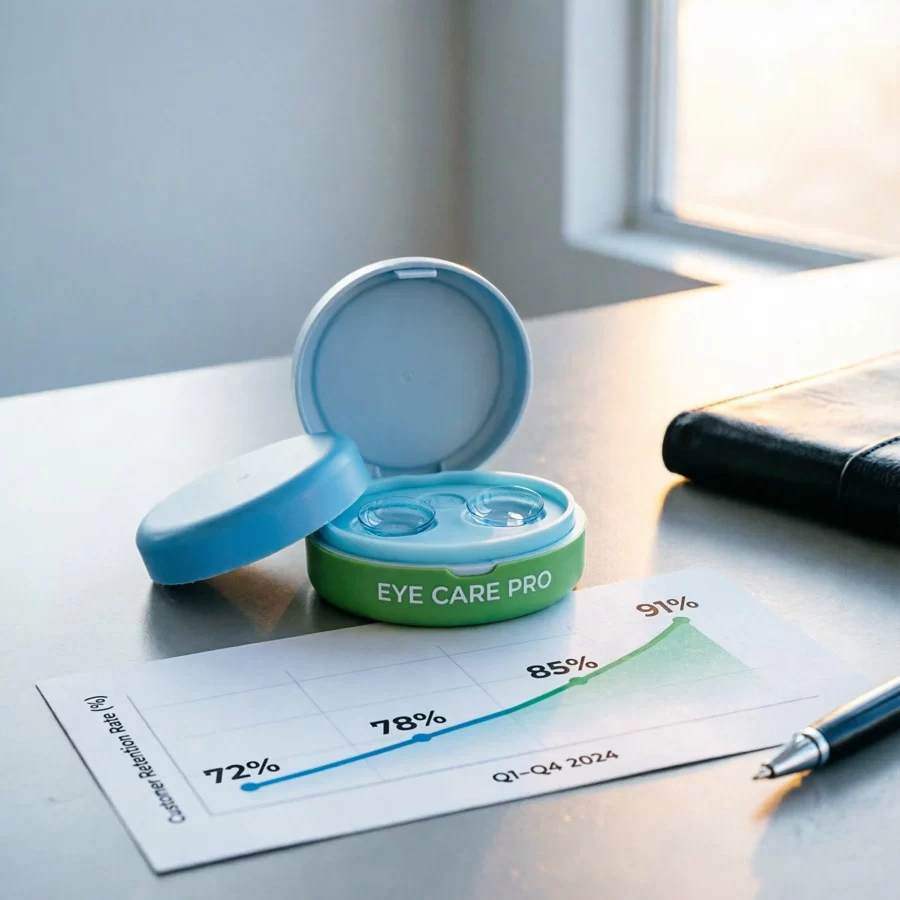
1. Look at your reorder rate. Do you even know what it is? If not, calculate it.
2. Identify three customers who haven’t ordered in a while and reach out personally.
3. Set up one reorder reminder system for your most popular product type.
4. Think about one “surprise and delight” touch you can add to your process.
That’s four things. None of them are complicated. All of them will pay off.
Got a retention strategy that’s working for your contact lens business? Or a question about anything in this article? Drop us a line at sales@miomicon.com — we’re always happy to chat shop with fellow industry folks.