Let me start with a confession. When I first got into this industry, I thought you needed a warehouse full of inventory, a six-figure marketing budget, and a team of ten people just to launch a contact lens brand.
I was wrong.
Over the past several years at MIOMI, I’ve watched brand owners launch with as little as $2,000 and build sustainable six-figure businesses within 18 months. Not all of them, mind you — but enough that I can tell you the pattern works if you know what you’re doing.
The colored contact lens market is growing fast, but you don’t need to be a big player to carve out a profitable corner. You just need to be smart about where you put your money.
Here’s how to do it on a small budget.
Start With Your Niche — Not Your Inventory
Most first-time brand owners do it backwards. They pick out 20 lens designs they like, order a few hundred of each, and then figure out who’s going to buy them.
Don’t be that person.
Pick your niche first, and let the niche tell you which products to carry.
Example niches that work on a small budget:
- Natural-looking lenses for South Asian skin tones — a massively underserved market
- Bold cosplay lenses for Gen Z — high engagement, viral potential
- Prescription color lenses for astigmatism — low competition, high customer loyalty
- Halloween/ costume lenses — seasonal but incredibly profitable if timed right
The narrower you go, the easier it is to stand out. When you’re on a budget, you can’t compete with the big brands on breadth. But you can absolutely beat them on depth and community.
Action step: Spend one day researching Instagram hashtags, TikTok trends, and Amazon reviews in your target niche. Write down the top five complaints people have about existing products. Those complaints are your product roadmap.
Low MOQ Is Your Best Friend
When I talk to new brand owners, the first question they usually ask is, “What’s the minimum order quantity?”
And the second question is, “Can we go lower?”
Here’s the honest truth: you do NOT need 5,000 pairs per design to launch. Not even close.
Reputable OEM/ODM partners like MIOMI offer low MOQ options specifically designed for new brands. We’re talking 50–100 pairs per design for custom-branded products. That means you can launch with three to five SKUs for under $3,000 total.
The whole point of low MOQ is to let you test the market without betting your life savings. Order a small batch, see what sells, reorder the winners, and kill the losers.
Budget tip: Start with 3 designs instead of 10. Why? Because 3 designs with 100 pairs each (300 total) will sell faster and give you better data than 10 designs with 30 pairs each (300 total). You’ll learn which colors resonate, and you’ll avoid having 7 designs collecting dust in your garage.
I’ve seen so many new brands sink because they fell in love with their own product lineup instead of letting customers vote with their wallets. Don’t make that mistake.
Your Website Doesn’t Need to Be Perfect — It Needs to Convert
I see brand owners spend $5,000–$10,000 on a custom Shopify store before they’ve made a single sale. That’s putting the cart so far before the horse that the horse can’t even see the cart anymore.
Here’s what you actually need for a launch-ready store:
- A clean, mobile-friendly theme (free or $200 max)
- 3–5 product pages with good photos and clear descriptions
- A simple about page that tells your brand story
- Trust badges (payment security, shipping info, return policy)
- An email signup form
Total cost: somewhere between $30 and $200, depending on whether you go free or premium theme.
What matters more than design is conversion rate. And the biggest drivers of conversion are:
1. Good product photography — This is worth investing in. If you can’t afford a professional photographer, learn to shoot with your phone on a white background. Natural light + a phone + 10 minutes of watching YouTube tutorials = surprisingly good results.
2. Real customer reviews — Before you launch, send free pairs to 10–20 micro-influencers or friends in your target market in exchange for honest reviews and photos. Put those reviews front and center.
3. Clear sizing and product information — The #1 reason people abandon contact lens purchases is confusion about parameters. Make diameter, base curve, water content, and replacement cycle impossible to miss.
4. Simple checkout — No account required. Guest checkout. Multiple payment options.
You can always redesign the website later when you’re actually making money.
Marketing on a Budget: Pick One Channel and Own It
Here’s another mistake new brands make: they try to be everywhere at once. Instagram, TikTok, YouTube, Pinterest, Facebook ads, Google ads, influencer marketing — all at the same time, with a $500 budget.
Spread that thin, nothing works. Then they conclude that marketing doesn’t work.
The right approach: Pick one channel where your target audience hangs out, and master it before you add a second.
Your Best Options on a Budget:
TikTok / Instagram Reels
If your audience is under 35, this is where you start. Short-form video has the lowest barrier to entry and the highest organic reach of any platform right now. You don’t need fancy equipment — just good lighting and a phone.
The formula that works for colored lenses: before-and-after videos on different eye colors, close-up lens swatches, “get ready with me” style content, and customer testimonials.
Budget impact: $0 for organic. You can boost posts for $5–$10 a day once you find what works.
Instagram DMs + Micro-Influencers
Find 20–50 micro-influencers (1,000–20,000 followers) in your niche and offer free lenses in exchange for a post or story. Micro-influencers have way higher engagement rates than macro-influencers, and many will say yes to free product when they’re just starting out.
This is probably the single highest-ROI marketing tactic for a new contact lens brand.
If your niche leans toward beauty tutorials, costume ideas, or natural everyday looks, Pinterest can drive consistent traffic for years from a single pin. It’s slower to get going than TikTok, but the content has a much longer shelf life.
The key lesson: Don’t try every channel. Pick one. Post consistently for 90 days. Then, and only then, add a second channel.
Packaging: Premium Doesn’t Have to Mean Expensive
Your packaging is the first physical touchpoint customers have with your brand. It shapes their entire perception of quality.
But that doesn’t mean you need custom-molded luxury boxes with gold foil stamping.
Budget-friendly packaging that still feels premium:
- Frosted plastic cases + custom stickers — Super affordable, looks clean, and you can brand it with a high-quality sticker
- Minimalist white boxes with your logo printed — Clean, professional, and significantly cheaper than full-color printing
- Custom tissue paper + thank you cards — Adds an “unboxing experience” without breaking the bank
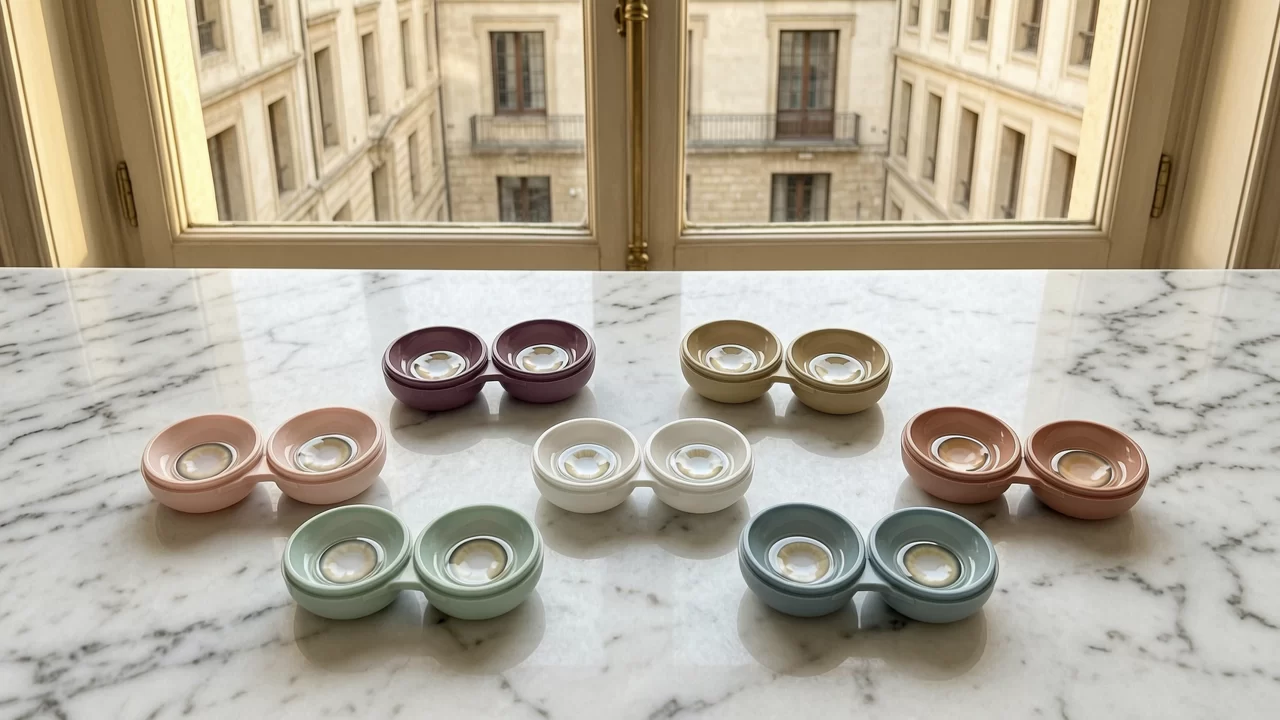
- Branded lens cases — A small branded lens case is practical and reinforces your brand every single day
Here’s what I recommend for a new brand: start with stock packaging and custom stickers. As you get repeat orders and positive cash flow, upgrade to custom-printed boxes.
The difference between “stock packaging + good sticker” and “fully custom packaging” is usually 3–5x the cost. And for a launch, your customers won’t notice or care nearly as much as you think they will.
Cash Flow Is King — Don’t Run Out Before You Hit Traction
The number one reason new brands fail isn’t bad products or bad marketing. It’s running out of money.
Here are the cash flow rules I give every new brand owner:
1. Keep at least 3 months of operating costs in reserve.
Operating costs = website fees + software subscriptions + packaging + shipping supplies + marketing budget. If it takes you 3 months longer than expected to get traction, you should still be able to keep going.
2. Reinvest profits back into inventory — selectively.
When you make your first $1,000 in profit, don’t go order 10 new designs. Take the 1–2 best sellers and increase those stock levels first. Let your winners fund your expansion.
3. Don’t pay for what you can barter.
Need product photos? Trade a year’s supply of lenses for a photographer’s time. Need social media content? Trade products for posts. Barter is underrated and underused.
4. Watch your shipping costs like a hawk.
Shipping is where thin margins go to die. Negotiate rates with multiple carriers. Offer free shipping only above a certain order value. Consider whether you can pass some shipping cost to the customer without hurting conversion.
5. Track every dollar.
You’d be surprised how many new brand owners have no idea what their actual profit per pair is. Know your COGS (cost of goods sold) down to the penny, including shipping, packaging, and payment processing fees.
The 6-Month Launch Plan (Budget Version)
Let me give you a concrete timeline. This is for someone starting with $2,000–$3,000 total budget.
Month 1: Research & Setup
- Pick your niche and target audience
- Register your brand name and domain
- Set up a basic Shopify store ($29/month plan)
- Find an OEM partner with low MOQ options
- Design 3 initial lens concepts based on your niche research
Month 2: Product & Content
- Place your first sample order (100 pairs total across 3 designs)
- Shoot product photos (DIY or barter)
- Set up social media accounts in your niche
- Line up 10–15 micro-influencers for launch
- Write product descriptions and website copy
Month 3: Launch
- Receive inventory and ship to influencers
- Soft launch to your personal network and email list
- Influencer posts go live over a 2-week period
- Post 3–5 times per week on your primary social channel
- Start with $5–$10/day ad budget to boost best-performing organic posts
Month 4–6: Optimize & Scale
- Identify your best-selling design (there will be one clear winner)
- Reorder your winner with a larger quantity to get better per-unit pricing
- Add 1–2 new designs based on customer feedback
- Start testing a second marketing channel
- Begin email marketing to your customer list
By month 6, if you’ve executed well, you should be at $2,000–$5,000 in monthly revenue and profitable. At that point, you’re no longer a startup — you’re a real business, and you can start thinking about real growth.
Final Thought: Start Before You’re Ready
I’ll leave you with this. I’ve talked to hundreds of people who want to start a contact lens brand. Most of them never do.
The ones who succeed aren’t the ones with the most money or the most experience. They’re the ones who start, iterate quickly, and keep going when things don’t work perfectly.
You don’t need a perfect product line. You don’t need a perfect website. You don’t need a huge marketing budget.
You need 3 good designs, a clear idea of who you’re selling to, and the willingness to learn as you go.
If you’re thinking about starting a colored contact lens brand and you want to talk through the low-MOEMI options, feel free to reach out. We’ve helped dozens of small brands get off the ground, and we’re happy to walk you through what’s possible at your budget level.
The market’s only getting bigger. The question is whether you’ll be in it — or still watching from the sidelines.