Introduction
As a contact lens wholesaler or brand owner, understanding the technical parameters of your products is essential for providing quality solutions to your customers. One of the most critical yet often overlooked parameters is the base curve (BC).
In this comprehensive guide, we’ll dive deep into what base curve is, why it matters, how it affects fit and comfort, and how to choose the right base curve for your target market. Whether you’re new to the industry or looking to expand your product knowledge, this guide will provide valuable insights to help you make informed decisions.
What is Base Curve?
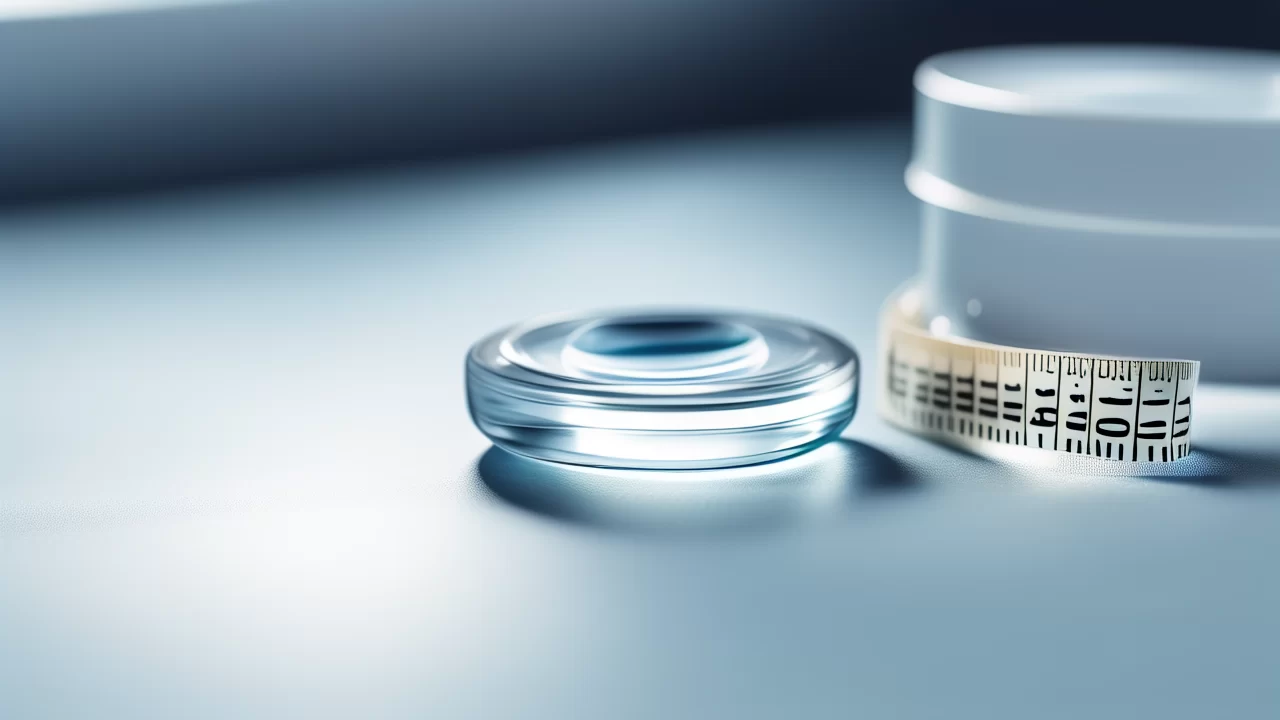
The base curve of a contact lens is a measurement that describes the curvature of the lens’s back surface. It’s typically measured in millimeters (mm) and represents the radius of curvature of a sphere that would match the lens’s back surface.
For example, a lens with a base curve of 8.6mm means that the back surface of the lens would fit perfectly on a sphere with a radius of 8.6mm. The base curve is a crucial parameter because it determines how well the lens conforms to the shape of the eye’s cornea.
Why Base Curve Matters
The base curve plays a significant role in the fit and comfort of contact lenses. Here’s why it’s important:
1. Corneal Conformity
The cornea is the clear front surface of the eye, and it has a natural curvature. Contact lenses are designed to fit this curvature to ensure proper alignment and comfort. If the base curve is too flat for the cornea, the lens may fit too loosely and move around excessively. If it’s too steep, the lens may fit too tightly and cause discomfort or redness.
2. Vision Quality
A properly fitting contact lens will provide clear and stable vision. If the base curve is incorrect, the lens may shift during blinking, causing blurry vision or fluctuations in visual acuity. This can be especially problematic for people with astigmatism or other vision conditions.
3. Comfort and Health
An ill-fitting contact lens can cause discomfort, dryness, and even eye health issues. A lens that’s too tight may restrict oxygen flow to the cornea, increasing the risk of corneal hypoxia or other complications. A lens that’s too loose may cause irritation or foreign body sensation.
Common Base Curve Values
Most soft contact lenses are available in a limited range of base curve values. The most common values for colored contact lenses are 8.6mm and 8.8mm. Some manufacturers also offer lenses with base curves of 8.4mm or 9.0mm to cater to a wider range of corneal shapes.
It’s important to note that the base curve should be selected based on the individual’s corneal curvature, which is typically measured during an eye exam. However, for wholesale and brand owners, understanding the most common base curve values can help you stock products that will fit the majority of your customers.
How to Measure Corneal Curvature
Corneal curvature is typically measured using a device called a keratometer. This instrument measures the radius of curvature of the cornea’s front surface. The measurement is usually taken in two meridians (horizontal and vertical) to determine if the cornea has astigmatism.
For contact lens fitting, the base curve is usually selected based on the steepest meridian of the cornea. This ensures that the lens will fit securely and provide optimal comfort and vision.
Base Curve and Lens Diameter
The base curve and lens diameter are closely related parameters. The diameter (DIA) of a contact lens is the total width of the lens. For most soft contact lenses, the diameter ranges from 13.5mm to 14.5mm.
In general, lenses with a steeper base curve (smaller radius) will have a smaller diameter, while lenses with a flatter base curve (larger radius) will have a larger diameter. This is because a steeper curve requires a smaller lens to fit properly on the cornea.
Choosing the Right Base Curve for Your Market
When selecting base curve values for your product line, it’s important to consider the demographics of your target market. Here are some factors to consider:
1. Regional Differences
Corneal curvature can vary slightly between different ethnic groups and regions. For example, some studies have shown that Asian populations tend to have slightly steeper corneal curvatures than Caucasian populations. This means that lenses with a base curve of 8.6mm may be more suitable for Asian markets, while lenses with a base curve of 8.8mm may be more suitable for Western markets.
2. Age Groups
Corneal curvature can also change with age. Younger people tend to have steeper corneas, while older people may have flatter corneas. This means that you may need to offer different base curve options for different age groups.
3. Product Type
The type of contact lens you’re selling can also influence the base curve selection. For example, daily disposable lenses may have a slightly different base curve than monthly or yearly lenses. Colored contact lenses may also have different base curve options depending on the design and material.
Base Curve and OEM/ODM Customization
If you’re offering OEM/ODM customization services, understanding base curve is crucial for meeting your clients’ specific needs. Here are some tips for working with clients on base curve customization:
1. Gather Customer Data
Work with your clients to gather data on their target market’s corneal curvature. This can help you determine the most suitable base curve values for their products.
2. Offer Multiple Options
Consider offering multiple base curve options to cater to a wider range of customers. This can help your clients expand their customer base and increase sales.
3. Test and Verify
Before mass producing customized lenses, it’s important to test and verify the fit and comfort of the lenses. This can be done through clinical trials or user testing to ensure that the lenses meet the required standards.
Conclusion
Understanding contact lens base curve is essential for wholesalers and brand owners in the contact lens industry. It affects the fit, comfort, and vision quality of contact lenses, and choosing the right base curve can help you provide quality solutions to your customers.
By considering factors such as regional differences, age groups, and product type, you can select base curve values that will fit the majority of your customers. If you’re offering OEM/ODM customization services, working closely with your clients to gather data and test products can help you create lenses that meet their specific needs.
At MIOMI Optical Ltd, we offer a wide range of contact lenses with different base curve options to cater to a diverse range of customers. Our team of experts can also help you with OEM/ODM customization to create products that are tailored to your target market.