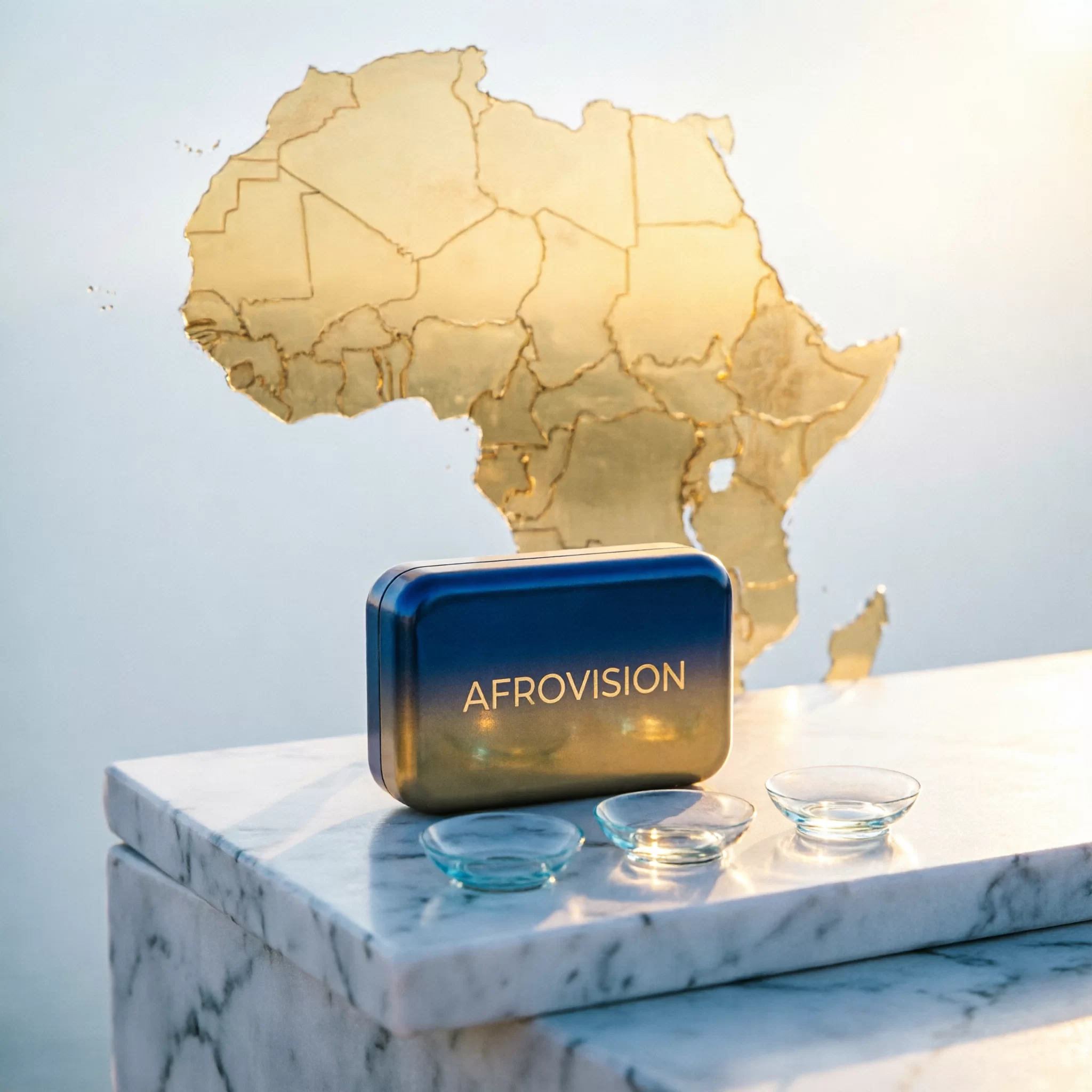
Why Africa’s Contact Lens Market Is About to Surprise You in 2026
Everyone’s looking at Southeast Asia and the Middle East. Fair — those markets are hot right now. But here’s what most distributors miss: Africa is quietly becoming one of the fastest-growing contact lens markets on the planet, and the window to establish yourself as a supplier is still wide open.
The numbers don’t lie. Sub-Saharan Africa’s cosmetic and personal care market is projected to hit $20 billion by 2027, and colored contact lenses are riding that wave. But unlike saturated markets where you’re competing with twenty other private labels, most African markets still have limited local suppliers. That means first-mover advantage is real.
Here’s the breakdown.
South Africa: The Anchor Market
South Africa is already a mature cosmetics market with established retail chains, e-commerce infrastructure, and a growing middle class that’s highly receptive to beauty innovations. Colored contacts are popular for fashion, film, and special events. The regulatory framework through SAHPRA (South African Health Products Regulatory Authority) requires CE or equivalent certification — which our products already carry.
Key advantage: English is the primary business language, making distribution and marketing straightforward for international brands.
Nigeria: The Volume Play
Nigeria is Africa’s largest economy with over 200 million people and a massive youth population. The beauty market is exploding — Lagos alone has one of the most vibrant social scenes on the continent. Colored lenses for fashion and events are in high demand, especially in urban centers like Lagos, Abuja, and Port Harcourt.
The market is still fragmented with limited organized retail distribution. Brands that establish supply chains now will have a significant advantage when the market consolidates over the next few years.
Kenya and East Africa: The Growth Engine
Kenya’s contact lens market is driven by a growing urban middle class in Nairobi and Mombasa. The country has one of the most developed e-commerce ecosystems in Africa, which means brands can reach customers without heavy physical retail investment.
Tanzania, Uganda, and Ethiopia are following similar trajectories. These are markets where a $2-5 retail contact lens carries significant margin for local distributors.
What African Distributors Actually Need
1. CE Certification
Most African countries accept CE marking as a quality standard. South Africa’s SAHPRA, Kenya’s PPB (Pharmacy and Poisons Board), and Nigeria’s NAFDAC all reference international certification frameworks. CE certification plus ISO 13485 manufacturing standards cover you across most markets.
2. Price Points That Match Local Purchasing Power
Unlike European or North American markets where $15-25 per pair is standard, African retail price points typically range from $3-10 depending on the country and product tier. This means wholesale costs need to be correspondingly lower — typically $0.30-0.80 per pair for colored lenses, depending on specification and volume.
3. Trending Colors That Fit the Market
Dark, natural tones dominate in most African markets — deep brown, hazel, and honey shades that enhance rather than dramatically change natural eye color. However, vibrant colors (blue, green, gray) have strong demand for events, photography, and fashion content creation.
The smart approach: carry a balanced catalog with 60% natural tones and 40% fashion colors.
4. Marketing That Works Locally
Instagram and TikTok are the primary platforms for contact lens marketing across African markets. Influencer partnerships are extremely cost-effective compared to Western markets — a micro-influencer with 50,000 followers in Lagos might charge a fraction of what you’d pay for similar reach in London or New York.
Visual content that features local models and cultural context performs significantly better than generic international campaigns.
5. Distribution Models That Scale
The most successful contact lens distributors in Africa use a hybrid model: wholesale to established beauty retail chains for volume, plus direct-to-consumer through social media and e-commerce for margin. Starting with wholesale relationships builds credibility; adding direct sales captures the margin.
The Certification Reality Check
Here’s what most people get wrong about African regulations: it’s not as complex as the European or American frameworks. CE certification is widely accepted, and many countries operate on a notification-based registration system rather than full product approval. South Africa (SAHPRA) has the most rigorous requirements, but even there, CE + ISO 13485 documentation typically satisfies the initial registration.
The barrier isn’t regulation — it’s supply chain reliability. African distributors value suppliers who can consistently deliver on time and maintain quality across orders. That’s where established OEM/ODM manufacturers have a massive competitive advantage.
What This Means for Your Business
If you’re already distributing in the Middle East or Southeast Asia, adding African markets doesn’t require a completely new strategy. The products are the same, the certifications overlap, and the OEM/ODM infrastructure you’ve built can scale across regions.
The difference is in pricing strategy, color selection, and distribution channel. Get those three right, and you’re looking at a market that’s growing faster than most established regions — with a fraction of the competition.
The best time to enter was five years ago. The second best time is now, before the other distributors figure out what’s happening.
Ready to explore what an African market entry looks like for your brand? Let’s talk numbers, product selection, and timelines that actually work for your market. Reach out through our website or add us on WhatsApp (+86 13862973905) to start the conversation.